 Ferndale
 Siding in Lynden: Built for Whatcom County's Weather, Not Just Its Looks
Lynden sits inland from the coast, but that doesn't mean the home exteriors here get an easy ride. Marine air moves in off the Salish Sea and settles into the Nooksack valley, bringing long stretches of damp, overcast weather, driving rain that comes in sideways during winter storms, and a moss season that can stretch from October into May. Add in the wide temperature swings between summer highs and winter cold snaps, and you've got a climate that is genuinely hard on exterior building materials over a 20- or 30-year timeline. We've worked on homes throughout this part of Whatcom County long enough to know which products hold up under those conditions and which ones just look good on install day.
This page walks through what Lynden homeowners should know about siding, roofing, window, and deck work in this specific area, and why we've standardized our siding installs on one product system instead of offering the usual lineup of options.
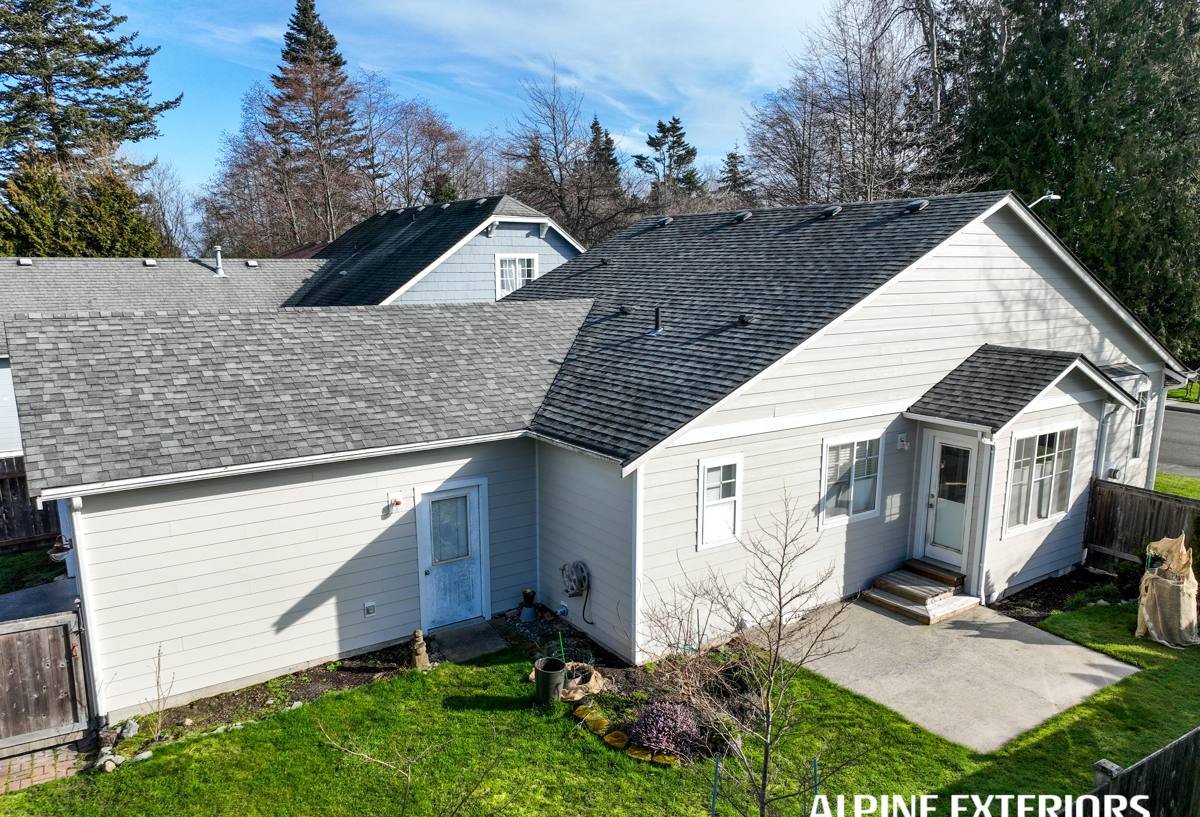
What Lynden's Climate Actually Does to a House
Moisture Is the Constant Enemy
Whatcom County doesn't get hurricanes or extreme heat, but it gets something arguably harder on a house: sustained, low-grade moisture exposure. Rain here isn't always heavy, but it's frequent, and combined with limited direct sun on north- and west-facing walls, siding and trim stay damp longer than they would in a drier climate. Materials that absorb water, swell, or trap moisture behind their surface are working against the odds in a place like this.
Moss, Algae, and Organic Growth
The long wet season and mature tree cover common around Lynden create ideal conditions for moss and algae to take hold on siding, especially in shaded areas or where roof runoff splashes onto walls. Porous or fibrous surfaces give moss something to grip. A dense, factory-finished surface gives it a lot less to hold onto, which matters over a decade of exposure, not just the first year.
Wind-Driven Rain and Wall Assemblies
Driving rain during winter storms doesn't just wet the surface of a wall — it tests the seams, joints, and flashing details behind the siding. A siding product's water resistance is only as good as the installation behind it. This is why we spend as much time on flashing, house wrap integration, and joint detailing as we do on the siding itself.
Why We Install Only James Hardie Fiber Cement
Ferndale Siding does not install vinyl siding, LP SmartSide, Cemplank, Allura, primed spruce, or cedar. That's a deliberate standard, not a lack of options. Each of those products has real strengths, but each also has a trade-off that we've decided isn't worth carrying for a Whatcom County home:
- Vinyl is inexpensive and low-maintenance in mild climates, but it can warp or become brittle over time, and it's a petroleum-based product that doesn't hold color or shape the way fiber cement does over decades of PNW wet-dry cycling.
- LP SmartSide and other wood-strand products perform well when maintained perfectly, but they're wood-based composites, and wood-based products are inherently more vulnerable to the kind of sustained moisture exposure this region delivers. Edge sealing and caulk maintenance become non-negotiable, every year, indefinitely.
- Cemplank and Allura are also fiber cement, and they're not bad products — but we've standardized on one manufacturer's system so we can guarantee consistent factory finish quality, matched trim components, and a warranty structure we fully understand and stand behind. Splitting our installs across multiple fiber cement brands means splitting our expertise too.
- Primed spruce and cedar are beautiful, traditional choices, and we respect why people love the look. But they're wood, full stop — they need repainting on a real cycle, they're vulnerable to moss and moisture intrusion at every cut edge and joint, and in a climate this wet, that maintenance burden adds up fast.
James Hardie fiber cement is non-combustible, engineered specifically for the moisture and temperature patterns of the Pacific Northwest through its HZ5 product line, and finished at the factory with ColorPlus Technology — a baked-on finish that resists fading and chipping far better than field-applied paint. It comes with a strong transferable warranty when installed by a certified crew. That combination is why it's the only siding system we put our name behind.
James Hardie Options for Lynden Homes
| Product Line | Look | Best Suited For |
|---|---|---|
| HardiePlank Lap Siding | Traditional horizontal lap, several texture options | Most Lynden homes, farmhouse and traditional styles |
| HardiePanel Vertical Siding | Clean vertical lines, often paired with lap or trim | Modern builds, accent walls, gable ends |
| HardieShingle Siding | Staggered or straight-edge shingle profile | Craftsman and cottage-style homes |
| HardieTrim Boards | Smooth or textured trim to frame windows, corners, doors | Finishing detail on any of the above |
Color selection matters here too. Whatcom County's overcast-heavy climate changes how colors read outdoors compared to sunnier regions — deeper tones can look almost black under gray skies, while lighter ColorPlus finishes tend to stay true and bright even on cloudy days, which is most days. We walk homeowners through color samples in actual outdoor light before anything is ordered.
How a Siding Project Works, Start to Finish
Assessment and Estimate
We start with a walk-around of the home to check the condition of the existing siding, sheathing, and any trouble spots — window flashing, roof-to-wall transitions, areas with visible moss or moisture staining. This tells us whether it's a straightforward re-side or whether there's underlying sheathing repair to plan for.
Prep and Moisture Barrier
Old siding comes off, and we inspect the sheathing underneath for rot or water damage before anything new goes up. A proper weather-resistive barrier and correctly lapped flashing at every window, door, and penetration go on before a single piece of Hardie siding is installed — this step is what actually keeps water out over the long run, not just the siding itself.
Installation to Manufacturer Spec
James Hardie's warranty depends on installation following their specifications: correct fastening, proper clearances from grade and roof lines, and correct joint treatment. We install to that standard as a matter of course, not as an upsell.
Final Detailing and Walkthrough
Trim, caulking, and touch-up work get finished, and we walk the property with the homeowner before calling the job done.
Roofing, Windows, and Decks in the Same Neighborhood
Siding rarely stands alone. A roof that's shedding granules or holding moss puts extra water load on the walls below it. Old windows with failed seals let moisture into wall cavities right where siding meets the frame. And decks exposed to the same driving rain and moss conditions need materials and fastening that account for it. We handle all four — siding, roofing, windows, and decks — because they're connected systems on a real house, and coordinating them under one crew avoids the finger-pointing that happens when different contractors' work meets at the same joint.
Why a Local Crew Matters in Lynden
Whatcom County weather isn't dramatic, but it's specific — and a crew that works this area regularly knows where moss tends to build first, which wall orientations take the worst of the wind-driven rain, and how local permitting and inspection processes actually run. That's the kind of knowledge that doesn't come from a spec sheet. We're not a national franchise cycling through; we're based here and plan to still be answering the phone in this county a decade from now, which shapes how we build — for the 20-year outcome, not just the walkthrough.
What to Check Before Hiring Any Siding Contractor
- Are they licensed and insured to work in Washington State, and can they show proof without hesitation?
- Do they specify the exact product line and finish, in writing, rather than a vague "fiber cement siding" line item?
- Will they inspect and address sheathing and moisture barrier issues, not just install over what's already there?
- Is the manufacturer's warranty explained clearly, including what voids it?
- Do they have a physical presence and reputation in Whatcom County, or are they a traveling crew?
- Are start dates, timelines, and cleanup expectations put in writing before work begins?
Cost Factors Homeowners Ask About
| Factor | Why It Matters |
|---|---|
| Home size and complexity | More corners, gables, and dormers mean more cutting and detail work |
| Existing sheathing condition | Rot repair found during tear-off adds time and material |
| Siding profile chosen | Lap, panel, and shingle styles differ in labor and material needs |
| Trim and detail level | Extensive trim work around windows and corners adds finish time |
| Access and site conditions | Tight lots or difficult staging areas affect scheduling and labor |
We don't publish flat prices because every home is different, but we do give a clear, itemized estimate after the initial walkthrough so there are no surprises once work starts.
If you're weighing a siding, roofing, window, or deck project on your Lynden home, we're happy to take a look and talk through what we're seeing — no pressure, no obligation. Fill out the form below to schedule a free estimate.