 Ferndale
 Exterior Work Built for Lummi Nation's Coastal Conditions
Lummi Nation sits right where Whatcom County's marine climate is at its most intense — close enough to Bellingham Bay and the Strait of Georgia that homes here take on a different kind of weather load than houses even a few miles inland in Ferndale or Lynden. Salt-laden air, driving rain off the water, and a moss season that can stretch from October well into spring all combine to put real, ongoing stress on a home's exterior. We work throughout this area regularly, and the patterns are consistent: siding that fails first at corners and butt joints, roofs that hold moisture in shaded valleys, and window and door trim that takes on water long before the rest of the wall shows any sign of trouble.
This page is about what that means for your home specifically, and how we approach siding, roofing, windows, and decks differently because of it. We're a local, Ferndale-based crew — this isn't a regional franchise dispatching whoever's closest. We know this stretch of coastline because we work it.
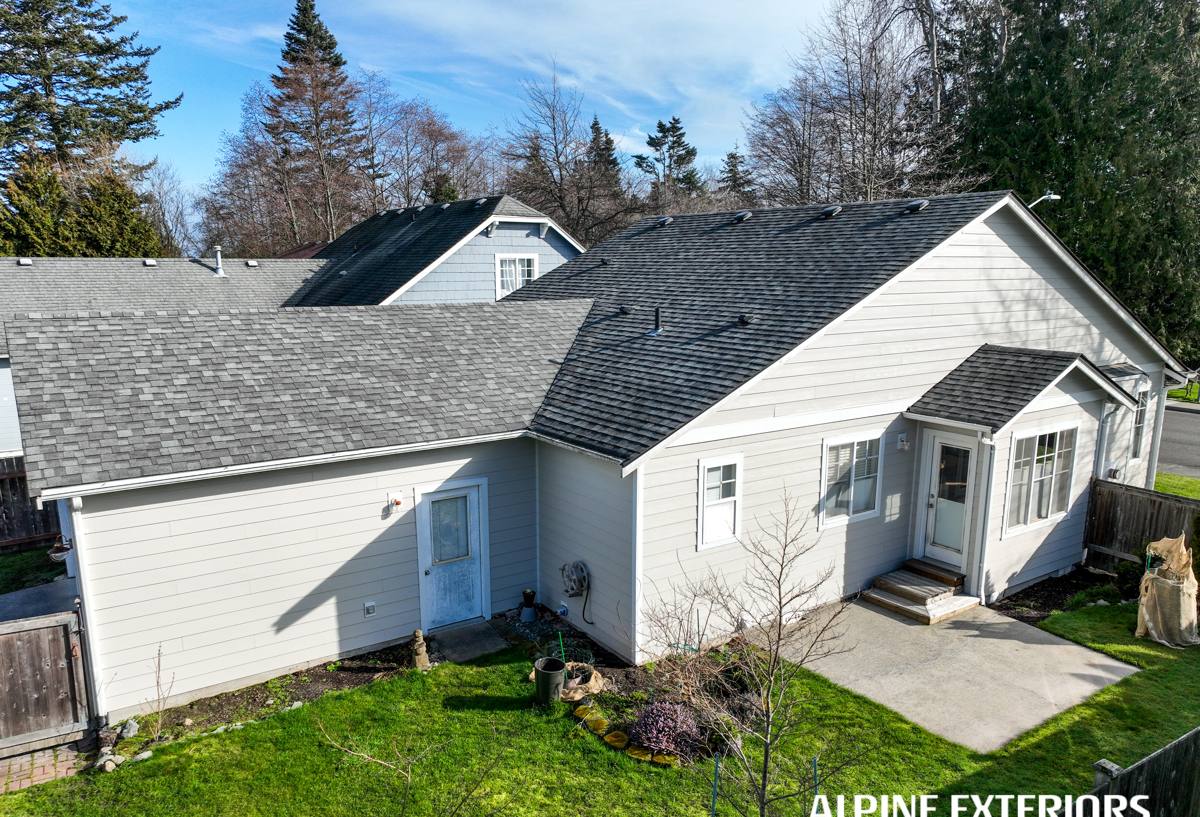
What Salt Air and Driving Rain Actually Do to a House
Salt Air
Homes close to saltwater deal with airborne salt that settles on every exterior surface — siding, trim, metal flashing, fasteners, and roofing hardware. Over time, that salt accelerates corrosion in anything metal that isn't rated for coastal exposure, and it can degrade the surface finish on lower-grade siding materials faster than the same product would wear a few miles inland. It's not dramatic or sudden. It's a slow, cumulative effect that shows up years later as pitting, rust streaks below fasteners, or a chalky, faded look on siding that was supposed to hold its color.
Driving Rain
Wind off the water doesn't just drop rain straight down — it pushes it sideways, into siding laps, under trim, and into any gap in the weather barrier that wouldn't be a problem in calmer conditions. That's why installation quality matters more here than in drier, more sheltered parts of the county. A siding job that's technically "up" but not properly flashed, caulked, and lapped will let water in eventually, and once water gets behind siding on a coastal property, it doesn't dry out quickly — the humidity here just doesn't allow for it.
Moss and Shade
Between tree cover and the persistent damp, moss and algae growth on roofs and north-facing siding is one of the most common calls we get in this area. Moss holds moisture against the roofing surface and can work its way under shingle edges over time, and on siding it traps damp air against the surface longer than the material was ever designed to handle. Regular moss management is part of realistic home maintenance out here — not an occasional chore, but a seasonal one.
Why We Install Only James Hardie Fiber Cement Siding
We made a deliberate choice as a company to install James Hardie fiber cement siding exclusively, and we don't install vinyl, LP SmartSide, Cemplank, Allura, primed spruce, or cedar. That's not a marketing position — it's based on what actually holds up under the conditions we just described.
Fiber cement is non-combustible and dimensionally stable, meaning it doesn't expand and contract with moisture and temperature swings the way wood-based or engineered-wood products do. In a marine climate with constant humidity cycling, that stability matters, because materials that swell and shrink repeatedly are the ones most likely to develop gaps, cracked caulk lines, and eventual water intrusion points. Hardie's ColorPlus factory-applied finish is baked on under controlled conditions rather than field-painted, which gives it more consistent resistance to fading and moisture than a site-applied coating — an advantage that's more noticeable here than in drier regions, simply because the finish gets tested more often.
We're not going to pretend other products don't have legitimate uses elsewhere, or that homeowners who've chosen them made a mistake — every product is a set of trade-offs. But for the specific combination of salt air, sustained rain exposure, and moss-friendly shade that defines this part of Whatcom County, we settled on Hardie because it's the product we're comfortable standing behind for the long term, backed by a strong transferable warranty when installed to spec.
James Hardie Product Lines for This Climate
Hardie makes several siding profiles, and for coastal Pacific Northwest homes we typically steer conversations toward their HZ5 climate-engineered product line, which is formulated specifically for wetter, harsher climate zones like ours (as opposed to HZ10, which is built for hot, dry regions). Within that, homeowners generally choose between a few common profiles:
- HardiePlank lap siding — the most common choice, available in smooth or cedar-textured finishes, installed in traditional horizontal laps.
- HardiePanel vertical siding — often used for accent sections, gables, or a more modern look.
- HardieShingle — a shaped-shingle profile for homes going for a more traditional or coastal cottage appearance.
- HardieTrim — used around windows, doors, and corners to complete the system with matching material rather than mismatched wood trim.
Color selection matters too. ColorPlus finishes come in a range of options, and for homes exposed to more UV and salt spray, we talk through which finishes have historically held their tone best in this kind of exposure versus which are more prone to visible fading over a long ownership period.
What Correct Installation Looks Like Out Here
Material choice is half the equation — installation is the other half, and it's the half that's easy to get wrong without it being obvious for years. In a high-moisture, wind-driven-rain environment, we pay particular attention to:
- Proper weather-resistive barrier installation behind the siding, lapped correctly to shed water downward and outward
- Flashing at every window, door, and roof-to-wall intersection — the most common failure points on any coastal home
- Correct fastener placement and spacing per Hardie's specifications, using fasteners rated for the exposure
- Proper clearance between siding and grade, decks, and roof lines to avoid wicking moisture from the ground or splash-back
- Caulking and sealing details at butt joints and trim intersections, done with materials meant to flex with the building over time
None of this is unusual or exotic — it's simply following the manufacturer's installation specifications closely, which is what preserves both the performance of the siding and the validity of the warranty. It's also where a lot of shortcuts happen on rushed jobs, and it's the first thing we check when we're asked to look at an existing installation that's having problems.
Roofing, Windows, and Decks in the Same Conditions
Siding doesn't work in isolation — the whole exterior envelope has to handle the same climate together, so we look at roofing, windows, and decks through the same lens.
Roofing
Roofs in this area deal with the moss and algae growth mentioned earlier, plus the general wear of near-constant rain exposure. Proper underlayment, ventilation, and flashing details matter as much on a roof as they do on siding — a roof that traps moisture in the attic space will eventually cause problems inside the home, not just on the surface.
Windows
Window flashing and integration with the siding system is one of the most failure-prone details on any home in a wet climate. A window that's watertight on its own can still leak if it isn't properly integrated with the weather barrier and siding around it — this is a detail we coordinate carefully whenever we're doing siding work near existing or replacement windows.
Decks
Decks take a direct hit from both rain and the freeze-thaw cycles that show up in colder stretches of the Whatcom County winter. Proper board spacing, ledger flashing where the deck meets the house, and materials suited to constant moisture exposure all factor into how long a deck holds up before it needs major repair.
Comparing Common Siding Materials in This Climate
| Material | Moisture Behavior | Finish Durability in Salt Air | Long-Term Maintenance |
|---|---|---|---|
| James Hardie Fiber Cement | Dimensionally stable, doesn't swell or warp | Factory ColorPlus finish holds up well | Low — periodic washing, minimal recoating needed |
| Vinyl | Doesn't rot, but can warp or crack in temperature swings | Can fade and become brittle with UV/salt exposure over time | Low, but replacement (not repair) is often the only fix |
| LP SmartSide / engineered wood | Wood-based core, more sensitive to sustained moisture exposure | Site or factory finish varies; edge sealing is critical | Moderate — edge and seam inspection matters |
| Cedar | Natural material, absorbs and releases moisture readily | Requires ongoing finish maintenance to resist weathering | Higher — refinishing on a regular cycle |
This isn't a claim that every alternative product fails — it's a summary of the trade-offs that led us to standardize on one system rather than offering several.
What to Check Before Hiring an Exterior Contractor Here
Whether you go with us or someone else, a few things are worth confirming before any siding, roofing, window, or deck project starts:
- Are they licensed and insured to work in Washington, and can they show proof without hesitation?
- Do they have manufacturer certification for the specific siding system they're proposing?
- Will they walk you through the flashing and weather-barrier plan, not just the finish material?
- Do they have experience with coastal or near-coastal properties specifically, not just general residential work?
- Is the warranty they're offering tied to correct installation, and do they stand behind their own labor separately from the manufacturer's material warranty?
A contractor who can answer these clearly, without vague reassurances, is generally one who's done this kind of work enough times to know why it matters.
Planning a Project on Your Timeline
Most exterior projects in this area — siding replacement, a roof, new windows, or a deck rebuild — go easier when they're planned around the weather rather than around it happening to you. Late spring through early fall generally offers the most stable working conditions for siding and roofing installation, though roofing repairs and smaller window or deck jobs can often be handled in shoulder seasons when scheduling allows. If you're dealing with visible moss buildup, staining, soft trim, or a roof that's due for attention, it's worth getting ahead of it before the wetter months make the work harder and the damage more expensive to reverse.
A Local Crew, Not a Regional Dispatch
We're based in Ferndale, and Lummi Nation is part of the area we know and work in regularly — not a stop on a wider service radius we cover occasionally. That matters for a few practical reasons: we're familiar with how this specific stretch of coastline behaves, we're close enough to respond quickly if something needs a follow-up look, and we're not learning the local climate on your project. When we recommend a product, a detail, or a maintenance schedule, it's based on what we've actually seen hold up — or fail — on homes in this exact area.
If you're weighing a siding, roofing, window, or deck project for a home in Lummi Nation, we're glad to take a look and talk through what makes sense for your specific property. Reach out for a free, no-pressure estimate using the form below.