 Ferndale
 Lummi Island: A Different Climate Than the Mainland
Lummi Island sits out in Whatcom County's marine waters, and that location changes what a house has to withstand compared to a lot in downtown Ferndale or Bellingham. The island gets more direct wind off the water, more salt in the air, and weather that doesn't always match the mainland forecast. Homes here — whether they're older cabins winterized into full-time residences or newer builds on view lots — take a harder beating on their exterior surfaces than most inland houses ever will.
We've worked on homes across Whatcom County long enough to see the pattern clearly: the exterior materials that hold up fine in a sheltered Ferndale neighborhood can fail years early on an exposed island lot. That's not a knock on any one product so much as a fact about the environment. Salt, wind-driven rain, and a long wet season are simply harder on siding, trim, and roofing than most manufacturers design and test for.
Salt Air and Marine Exposure
Airborne salt is corrosive to metal fasteners and hard on painted or coated surfaces, especially on the sides of a house that face open water or catch prevailing wind. Over years, salt exposure accelerates the breakdown of caulking, promotes corrosion at metal flashings and fastener heads, and can dull or degrade paint finishes faster than an inland home would ever experience. Any material or finish that isn't engineered with that in mind will show it first — chalking, fading, or surface breakdown well ahead of schedule.
Driving Rain and Wind-Driven Moisture
Island exposure means wind-driven rain doesn't just fall on a house, it gets pushed sideways into it. That matters at every joint, seam, and penetration in the exterior envelope — around windows, at trim boards, at butt joints in siding courses. A material that swells, wicks water, or relies on paint film alone to stay sealed is going to struggle in a spot that gets this kind of sustained wind-and-rain combination more often than a typical mainland lot.
Moss, Mildew, and the Long Wet Season
Whatcom County's wet season already runs long, and the added humidity and shade from mature trees on many island lots stretches it further. Moss and mildew don't just grow on roofs here — they establish on north-facing siding, in trim details, and anywhere moisture sits without enough sun or airflow to dry it out. Left alone, that growth holds moisture against the surface underneath it, which is exactly the condition that leads to rot in wood-based products and premature coating failure on painted surfaces.
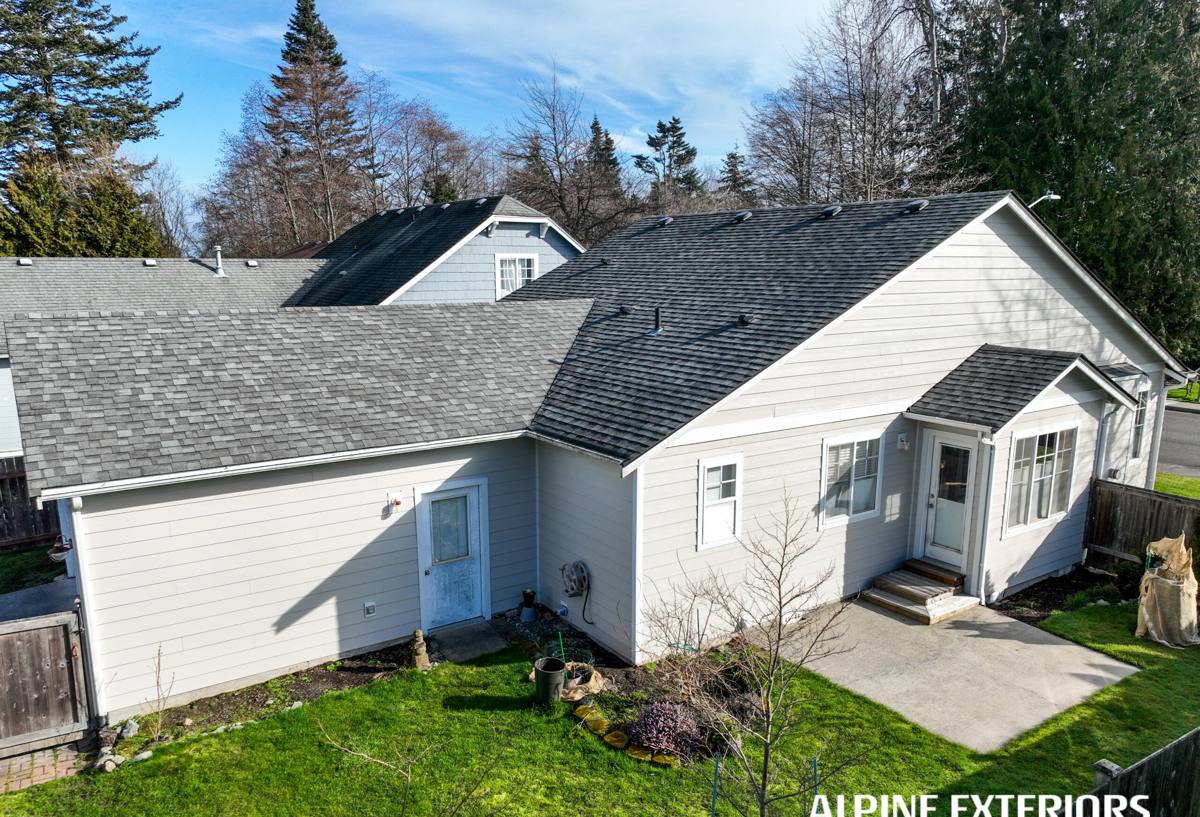
Why We Standardized on James Hardie Fiber Cement
We install James Hardie fiber cement siding exclusively. We don't install vinyl, LP SmartSide, Cemplank, Allura, primed spruce, or cedar siding — not because those products have no merit anywhere, but because after years of doing exterior work across this county, including exposed sites like Lummi Island, we decided we'd rather stand behind one system we trust completely than offer several we have reservations about.
Fiber cement is a mix of cement, sand, and cellulose fiber, pressed and cured into planks and panels. It doesn't rot, it isn't a food source for insects, and it doesn't expand and contract with moisture the way wood-based products do. It's also non-combustible, which matters to a lot of homeowners regardless of location. James Hardie's ColorPlus finish is baked on at the factory under controlled conditions rather than field-applied, and it's backed by a substantial finish warranty — that matters directly in a salt-air environment, where field-applied paint is usually the first thing to fail.
The HZ5 Product Line
James Hardie engineers its siding by climate zone, and the Pacific Northwest falls under their HZ5 designation, built specifically to handle sustained moisture exposure. That's the line we install throughout Whatcom County, including on island and waterfront properties where wind and rain exposure run higher than average. It's a meaningfully different product than the generic fiber cement sold in some big-box lumber aisles.
How Other Common Siding Materials Hold Up in This Environment
Homeowners planning a re-side often ask us to compare options honestly rather than just pitch one product. Here's how the materials we get asked about most often tend to perform under salt air, wind-driven rain, and a long moss season — the specific conditions Lummi Island sees more of than most inland lots.
| Material | Moisture Behavior | Salt Air Durability | Long-Term Maintenance |
|---|---|---|---|
| James Hardie fiber cement | Doesn't swell, rot, or wick water into the substrate | Factory finish resists chalking and fading; not affected by corrosion the way metal is | Occasional wash; repaint interval is long due to ColorPlus finish |
| Vinyl siding | Sheds water on the surface but seams and J-channels can trap moisture behind panels | Can become brittle and discolor faster under UV and salt exposure | Low upkeep but limited repair options once faded or cracked |
| LP SmartSide (engineered wood) | Wood-based; vulnerable at cut edges and joints if moisture gets in | Coating can wear faster in sustained wind-driven rain and salt exposure | Requires diligent caulking and repainting on a regular cycle |
| Cedar or primed spruce | Natural wood movement; prone to swelling, checking, and rot without strict upkeep | Salt accelerates weathering and finish breakdown | Highest maintenance; repainting or restaining on a short cycle |
None of these are unusable products in the right setting — plenty of homes around the country use them successfully. Our position is narrower: for the specific combination of salt air, wind, and moisture that a property like Lummi Island deals with, we think fiber cement engineered for this climate zone is the more sound long-term investment, and it's the only system we're willing to warranty our installation work against.
Full Exterior Work, Not Just Siding
Siding is rarely the only exterior system taking a beating on an island property. We also handle roofing, windows, and decks, because on a lot exposed to this much wind and moisture, those systems interact — a compromised roof edge or a poorly flashed window is often what actually lets water behind good siding in the first place.
- Roofing: proper underlayment, flashing, and ventilation matter more on a lot with heavy moss pressure and driving rain
- Windows: correct flashing and sealing at the window-to-siding transition is one of the most common failure points we find on older island homes
- Decks: exposed decking and railings take the same salt and moisture load as siding, and material choice matters just as much
When we quote a siding project, we're looking at the whole envelope, not just the wall panels, because a new set of siding installed over an unresolved flashing or roofing issue won't perform the way it should.
Working on Lummi Island: What's Different About the Logistics
Island access changes how a project gets planned. Ferry scheduling affects when crews and material deliveries can move, so timing gets built into the plan up front rather than treated as an afterthought. Material staging matters too — getting the right quantity of siding, trim, and flashing over in as few trips as possible keeps a project efficient and keeps a job site from sitting half-finished waiting on a supply run.
Being based in Ferndale, we're close enough to Whatcom County's island and waterfront properties to plan around that reality rather than treat it as a special case that adds friction. A crew that regularly works this part of the county already knows to check tide and ferry schedules alongside the weather forecast.
What Drives the Cost of a Project Out Here
Every project is different, but a few factors consistently move the estimate on island and coastal-exposure homes more than they would on a typical inland lot.
| Cost Factor | Why It Matters |
|---|---|
| Site access and ferry logistics | Affects crew scheduling and how material deliveries are staged |
| Extent of moisture or rot damage found during tear-off | Older siding on exposed walls often hides damage that isn't visible until removal |
| Trim, corner, and flashing detail complexity | More architectural detail means more time spent on the moisture-critical joints |
| Wall exposure and square footage | Sides facing prevailing wind and water view may need extra attention at seams and penetrations |
| Scope — siding only vs. siding plus roofing, windows, or decking | Bundling exterior work can reduce redundant setup and staging trips |
Getting Ready for an Estimate
A little preparation before we come out helps us give you a more accurate number on the first visit, especially with the added logistics of an island site.
- Note any areas where you've noticed moss buildup, soft spots, or paint failure
- Have a rough idea of your ferry/access schedule preferences for site visits
- Think through whether you want siding-only or a combined siding, roofing, window, or deck scope
- Pull any past repair or remodel records if the home has had exterior work done before
- Walk the exterior and photograph anything you're concerned about, especially on wind- or water-facing walls
If you own a home on Lummi Island and you're weighing your options for siding, roofing, windows, or decks, we're happy to come take a look and give you a straightforward, no-pressure estimate — including an honest read on what your current exterior is dealing with and what we'd recommend given the site's exposure.