 Ferndale
 Birch Bay Sits in a Different Climate Than Most of Whatcom County
Birch Bay isn't just another Whatcom County neighborhood with a nice view. Homes here sit close enough to the water that salt-laden air is a daily fact of exterior life, not an occasional nuisance. Add the Pacific storm systems that push driving, wind-blown rain sideways into walls rather than straight down, and a shoulder season that can stay damp and shaded for months at a time, and you've got a exterior envelope that works harder here than it does even a few miles inland in Ferndale proper. We've been doing exterior work throughout this area long enough to know that "coastal" isn't a marketing word — it's a maintenance schedule, a material choice, and sometimes a warranty claim waiting to happen if the wrong product goes up on the wall.
This page is about what that climate actually does to siding, roofing, windows, and decks in Birch Bay, and how we approach exterior replacement and repair for homes in this specific part of the county.
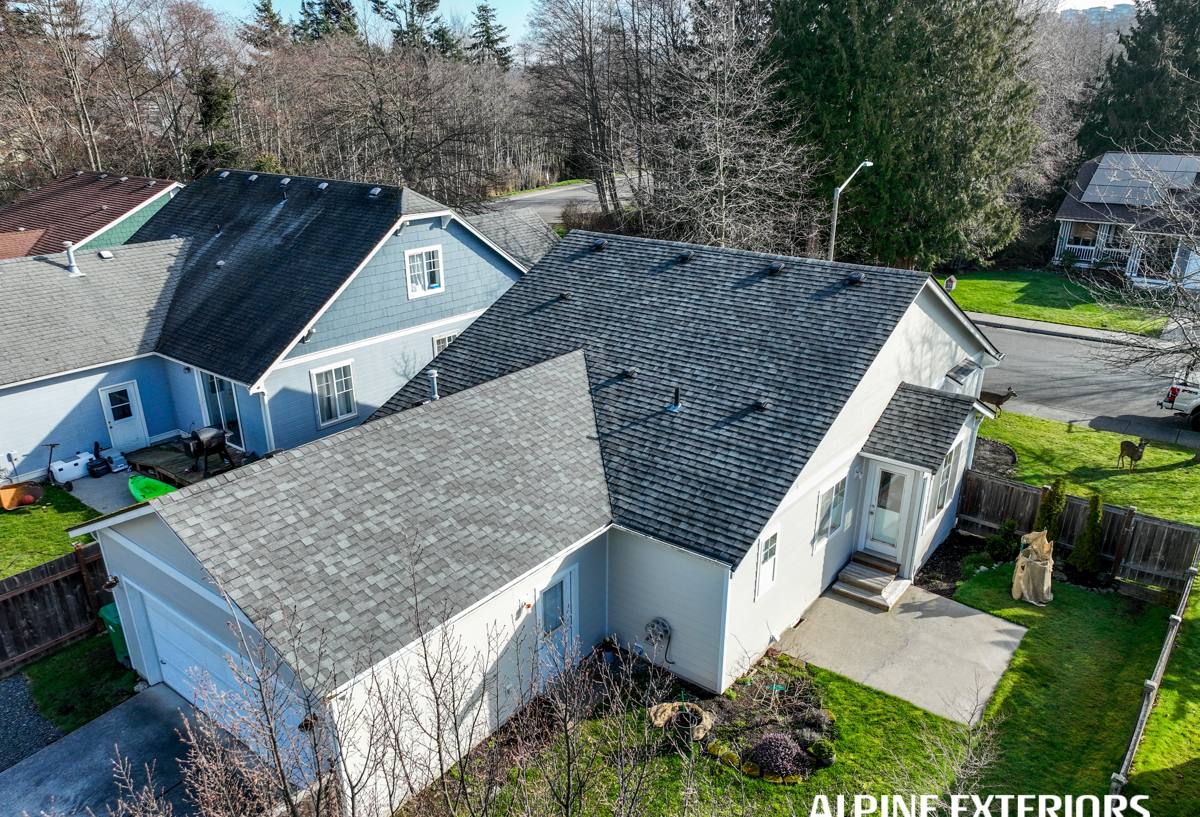
What Salt Air and Driving Rain Actually Do to a Home
Salt Air
Airborne salt is corrosive to metal fasteners, flashing, and hardware, and it accelerates the breakdown of finishes that aren't formulated to resist it. On wood-based products, salt exposure combines with moisture cycling to speed up rot at seams, corners, and anywhere water can sit. On paint, it shortens the interval between repaints because the film degrades faster under repeated salt-and-dry cycles.
Driving, Wind-Blown Rain
Rain that comes in at an angle finds every weak point in a wall system — lap joints, butt seams, window and door trim, and any spot where caulk has started to fail. A siding product that handles vertical rain fine can still let moisture behind the wall when the rain is horizontal, which is a common condition on exposed lots near the bay.
A Long Moss and Mildew Season
Shade, moisture, and cooler temperatures for much of the year create ideal conditions for moss and mildew growth on north-facing walls, roofs, and anywhere airflow is limited. Beyond looking bad, sustained moss and algae growth holds moisture against the surface underneath it, which matters a lot depending on what that surface is made of.
Why Material Choice Matters More in Birch Bay Than Almost Anywhere Else in the County
Every siding material handles this combination of salt, wind-driven rain, and prolonged dampness differently. Wood-based siding products — including engineered wood siding and primed spruce or cedar — depend on an intact factory or field-applied coating to keep moisture out. Once that coating is compromised at a cut edge, a fastener hole, or a damaged corner, the wood substrate underneath can begin absorbing moisture, and in a climate that doesn't dry out quickly, that moisture doesn't get a chance to leave before the next storm arrives. Vinyl siding doesn't rot, but it's a thin material that can become brittle in temperature swings, and its seams and panels rely on lap-and-lock installation that can loosen under sustained wind exposure near open water.
This is the core reason we standardized on James Hardie fiber cement siding for every home we side, and it's especially relevant in a location like Birch Bay. Fiber cement is a cement, sand, and cellulose fiber composite — it doesn't have an organic wood substrate that can rot, and it isn't a thin plastic panel that flexes and gaps under wind load. It's also non-combustible, which matters given how often this region sees dry-season wildfire smoke advisories even in a generally wet climate.
Why We Don't Install LP SmartSide, Vinyl, Cemplank, Allura, or Primed Wood Siding
We get asked about all of these products regularly, and we're happy to explain our reasoning rather than just saying no.
- LP SmartSide is an engineered wood strand product with a resin-treated core and factory finish. It performs reasonably in moderate climates, but it remains a wood-based product, and wood-based products depend entirely on unbroken coatings and correct field sealing at every cut edge to resist moisture — a demanding standard to hold to for the life of a coastal home.
- Vinyl siding is affordable and low-maintenance in mild conditions, but it's a thin, flexible material with a lower heat-distortion point and looser installation tolerances than fiber cement. In areas with sustained wind exposure, panels can loosen, rattle, or blow off in ways that are much rarer with a mechanically fastened fiber cement product.
- Cemplank and Allura are both fiber cement products, similar in composition to Hardie. Our objection isn't to the base material — it's to the factory finish, warranty structure, and consistency of supply and support we've found with James Hardie's ColorPlus finishing system and manufacturer backing, which we consider the strongest combination available in this product category.
- Primed spruce or cedar board siding is a traditional, attractive option, but it puts nearly all of the long-term moisture performance on the paint film and on how well the wood was sealed at every cut, and it requires the most frequent repainting of any option on this list — a real burden in a climate that's damp more months than not.
None of these are bad products in the abstract. They're just products we've decided not to stand behind on homes exposed to Birch Bay's specific mix of salt air, driving rain, and extended dampness.
James Hardie: What's Actually in the Product We Install
James Hardie fiber cement is engineered specifically for regional climate conditions through its HZ5 product line, which is formulated for colder, wetter climate zones like the Pacific Northwest. The ColorPlus factory finish is baked on under controlled conditions, which gives it more consistent coverage and better fade and chip resistance than field-applied paint, and it comes with its own finish warranty separate from the product warranty on the siding itself. Because it's cement-based, it doesn't provide fuel for fire the way wood-based sidings do, doesn't attract wood-boring insects, and holds its shape and fastening under freeze-thaw and wind-driven rain conditions far better than thinner materials.
None of that means Hardie is maintenance-free. It still needs to be installed to manufacturer spec — correct clearances above grade and roofing, correct fastener placement, correctly sealed and flashed joints — and it still needs periodic inspection and caulk maintenance like any exterior product. But the failure modes we see most often on other materials in this area — swollen edges, delaminating panels, cracked corners from wind flex — are rare on a Hardie installation done correctly.
What Correct Installation Looks Like on a Birch Bay Home
| Detail | Why It Matters Here |
|---|---|
| Proper starter strip and clearance above grade | Keeps the bottom edge of the siding out of standing moisture and splash-back from rain-soaked ground |
| Correct house wrap and flashing sequencing | Manages any moisture that gets behind the cladding during wind-driven rain events |
| Stainless or coated fasteners | Resists corrosion from sustained salt air exposure better than standard galvanized fasteners |
| Sealed and caulked joints at trim, windows, and corners | Closes the entry points that wind-blown rain finds first |
| Manufacturer-spec fastener spacing and panel overlap | Keeps panels secure under sustained coastal wind loads |
Skipping or shortcutting any one of these details is usually invisible on the day the job finishes — it shows up two, five, or ten years later, and by then it's a repair job instead of a five-minute install-day fix. This is a big part of why we emphasize installation quality as much as the material itself.
Beyond Siding: Roofing, Windows, and Decks in a Coastal Environment
Roofing
A roof in Birch Bay deals with the same driving rain and moss pressure as the walls below it, plus direct UV and wind exposure. Ventilation and moisture management at the roof deck matter as much as the roofing material itself, especially on north-facing slopes that stay shaded and damp longer through the year.
Windows
Window flashing and seal integrity are especially important on homes exposed to wind-driven rain, since a poorly flashed window is one of the most common places water finds its way into a wall assembly. Replacement windows also give homeowners a chance to improve energy performance against the cooler, wetter shoulder seasons typical of this part of the county.
Decks
Outdoor living spaces in Birch Bay take a similar beating from salt air and moisture cycling, particularly on fasteners, ledger connections, and any wood components exposed to standing water. Decking material and proper ledger flashing both matter more here than they would on a more sheltered inland lot.
Cost Factors for Exterior Work in This Area
| Factor | How It Affects the Job |
|---|---|
| Home size and wall complexity | More corners, gables, and trim details mean more labor and material |
| Extent of moisture damage found during tear-off | Rotted sheathing or framing discovered once old siding comes off adds repair cost |
| Access and site conditions | Waterfront and bluff-adjacent lots can add setup time and equipment needs |
| Scope — siding only vs. combined with roofing, windows, or decks | Bundling exterior work can reduce total disruption and sometimes total cost |
| Color and trim selections | Custom ColorPlus colors and trim profiles vary in price from standard options |
Why a Local Crew Matters for Birch Bay Specifically
Exterior work in Birch Bay isn't identical to exterior work in Bellingham, Lynden, or even the rest of Ferndale. A crew that works this stretch of coastline regularly knows to expect wind-driven rain from certain directions, knows which north-facing walls are going to fight moss no matter what siding goes up, and knows how the local building department and permitting process handles work in this area. That familiarity shows up in small decisions on install day — flashing details, fastener choice, where extra sealant is worth the few minutes it takes — that a crew unfamiliar with the area might not think twice about.
When you're vetting a contractor for a home in this area, it's worth asking directly how they handle coastal exposure, what fastener and flashing details they use, and whether they've worked on homes near the water before. A contractor confident in their process should be able to answer specifically, not generally.
A Simple Maintenance Checklist for Coastal Whatcom County Homes
- Rinse salt residue off siding and windows periodically, especially after storms
- Inspect caulking around windows, doors, and trim annually and re-seal as needed
- Keep gutters clear so water isn't overflowing onto siding or fascia
- Watch north-facing and shaded walls for moss or algae buildup and clean gently when it appears
- Trim back vegetation that keeps walls shaded and damp longer than necessary
- Have roofing and flashing points checked periodically, particularly after major wind events
Let's Look at Your Home
Every home in Birch Bay faces this climate a little differently depending on its orientation, exposure, and age. If you're dealing with aging siding, a roof that's showing its years, drafty windows, or a deck that needs attention, we're glad to come take a look and give you a straight assessment of what's going on and what your options are. There's no pressure and no cost to get an estimate — just fill out the form below and we'll get in touch.