 Ferndale
 Why Decks Fail Faster in Birch Bay
Birch Bay sits close enough to saltwater that a deck here ages differently than one a few miles inland in Ferndale or elsewhere in Whatcom County. Salt-laden air corrodes metal fasteners and connectors from the inside out, often before any surface rust is visible. Driving rain off the water pushes moisture sideways into gaps that a calmer climate would never test, and a long, damp moss season keeps every horizontal surface wet for months at a time. None of this means a deck can't last — it means it has to be built and replaced with those specific stresses in mind, not with a generic approach borrowed from a drier region.
Most of the decks we're asked to look at in Birch Bay aren't failing because the homeowner did anything wrong. They're failing because the deck was built to a standard that assumes normal rainfall and inland air, and the coastal environment simply asked more of it than it could give.
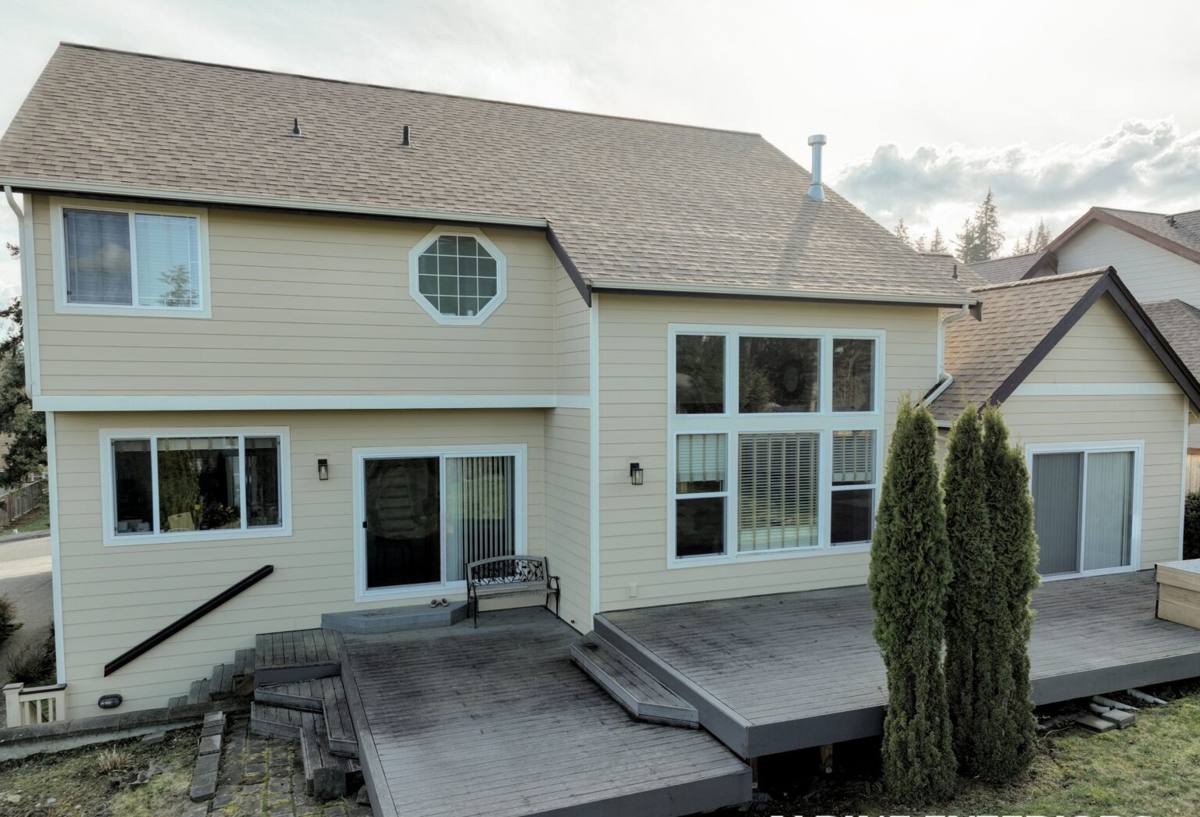
Repair or Replace? Reading the Signs
Not every tired-looking deck needs to come out. But there's a point where patching boards and re-staining stops being a real fix and just delays the same problem. Here's what tells us a deck has crossed that line:
- Soft or spongy decking in more than a couple of spots, especially near the house or along the rim
- Rust streaking or green corrosion staining coming from under the boards, which usually means the fasteners or joist hangers underneath are failing
- A ledger board (where the deck attaches to the house) that's dark, swollen, or separating slightly from the siding
- Persistent moss or black algae film that returns within weeks of cleaning, a sign the wood is staying wet longer than it should
- Visible movement, bounce, or a railing that flexes more than it did a year or two ago
- Framing lumber that was never rated for ground contact or coastal exposure showing rot at joist ends or post bases
If what you're seeing is limited to a few worn boards on an otherwise sound structure, repair can make sense. If the framing, ledger, or fasteners are involved, replacement is almost always the more honest recommendation — repairs on a compromised substructure tend to fail again within a season or two.
What's Usually Hiding Underneath
The decking boards are what you see, but the framing, flashing, and connectors underneath are what actually determine how long a deck lasts near the water. We've opened up plenty of decks in this area where the top surface looked passable but the joists, ledger flashing, or hardware were already badly corroded. That gap between what's visible and what's structurally sound is exactly why a proper inspection matters before deciding between repair and replacement.
What a Correct Deck Replacement Involves
A deck replacement done right is a structural project first and a cosmetic one second. In a marine climate like Birch Bay's, a few steps matter more than they would elsewhere:
- Ledger flashing: The connection between deck and house needs proper flashing and a water-resistant barrier so wind-driven rain can't work its way behind the siding over time.
- Joist tape or capping: Covering the tops of joists protects end grain and fastener holes from sitting water, which is where rot typically starts first.
- Corrosion-resistant hardware: Hangers, screws, and bolts rated for coastal or saltwater-adjacent exposure, not standard galvanized hardware that's fine 20 miles inland but marginal here.
- Post base isolation: Keeping posts off direct concrete or grade contact so they aren't drawing up moisture from below.
- Drainage and slope: Decking spaced and sloped so water sheds instead of pooling, since standing water is what feeds moss and accelerates rot.
Skipping any one of these doesn't show up on day one. It shows up two or three winters later, usually as the exact same failure the old deck had.
Choosing a Decking Material for This Environment
There's no single "best" decking material — there's a best fit for how a homeowner wants to maintain it and what they're willing to trade off. In a salt-air, high-moisture setting, the differences between materials become more pronounced than they would inland.
| Material | How It Handles Salt Air & Moss | Maintenance |
|---|---|---|
| Pressure-treated wood | Affordable, but end grain and fastener holes are vulnerable; needs sealing to resist moss and moisture intrusion | Annual cleaning and periodic re-sealing |
| Cedar | Naturally rot-resistant and handles moisture reasonably well, but surface grays and can host moss without upkeep | Regular cleaning; sealing extends life |
| Composite decking | Resists rot and doesn't absorb water like wood, though surface texture and gaps still need periodic cleaning to prevent moss buildup | Low; occasional washing |
| PVC/capped polymer | Fully resists moisture absorption and rot; best option where drainage or shade makes moss persistent | Lowest; rinse as needed |
Framing and fasteners matter more than decking choice when it comes to structural lifespan — even the best composite board won't outlast corroded hardware underneath it. We'll walk through the honest trade-offs for your specific site (sun exposure, tree cover, proximity to the water) rather than pushing one product as universally right.
Fasteners and Hardware: The Part Nobody Sees
This is worth its own section because it's the single most common cause of early deck failure we see in coastal Whatcom County. Standard galvanized fasteners are built for general outdoor use, not sustained salt exposure. Over a few years near Birch Bay, they can corrode enough to weaken their grip long before the wood around them shows any damage. Using stainless steel or coastal-rated hardware costs more upfront but is one of the cheapest ways to add years to a deck's life relative to the size of the investment.
Our Replacement Process
- On-site assessment: We check the ledger, framing, posts, and footings, not just the surface boards, so the recommendation reflects the real condition of the structure.
- Plan and permit check: Whatcom County and local setback or shoreline requirements can apply depending on your lot's proximity to the water, so we confirm what's needed before work starts.
- Demolition: Full removal of decking and, where needed, framing and ledger connections, with attention to protecting the siding and foundation during teardown.
- Rebuild: New framing sized and fastened for coastal exposure, correct ledger flashing, joist protection, and proper drainage slope.
- Decking and railing installation: Installed to the manufacturer's spec for gapping and fastening, which matters for both appearance and long-term drainage.
- Final walkthrough: We go over care and cleaning specific to your material and site conditions before we call the job done.
Permits and Local Considerations
Deck replacements in and around Birch Bay can involve Whatcom County permitting, and properties closer to the shoreline may have additional review depending on setback rules. This isn't something to guess at — it's worth confirming before demolition starts, and it's part of what we check during the initial assessment rather than something that surprises a homeowner mid-project.
Keeping a New Deck Ahead of Moss Season
A well-built deck still needs some seasonal attention in this climate. A few habits go a long way toward protecting the investment:
- Sweep debris and standing leaves off the deck surface regularly, especially in fall
- Rinse or lightly clean moss and algae film before it establishes rather than after
- Check gaps between boards periodically to make sure drainage paths haven't clogged
- Re-seal wood decking on the schedule recommended for the specific product used
- Watch the ledger area at the house connection for any staining or gaps after storms
None of this is difficult, but skipping it is exactly how a properly built deck ends up needing early attention anyway.
Why Local Experience Matters Here
A deck built to a generic inland standard can look identical to one built for Birch Bay's conditions — until a few winters of salt air and driving rain pass. The difference shows up in the flashing details, the fastener grade, and the framing choices that don't show up in a quick look but determine whether the deck is still solid in ten years or needs rebuilding in four. Working with a crew that already knows this stretch of Whatcom County means those decisions get made correctly the first time, without the homeowner having to know to ask about them.
If your deck is showing its age, or you're planning ahead rather than waiting for a failure, we're happy to take a look and give you a straightforward read on where things stand. Reach out for a free, no-pressure estimate using the form below.