 Ferndale
 New Roof Installation for Cordata Homes
Cordata sits close enough to the water and the foothills that its homes take a different kind of weather beating than roofs just a few miles inland. Between salt-laden air moving off the Strait, driving rain that comes in sideways during winter storms, and a moss season that can run eight months out of the year, a roof here has to do more than shed water in a light drizzle. It has to hold up to sustained, repeated exposure without shortcuts in the materials or the install.
Ferndale Siding installs new roofs for homeowners throughout Cordata and the surrounding Ferndale area, and we treat every job as a chance to actually fix the conditions that wear a roof down in Whatcom County, not just cover the house with new shingles and hope for the best.
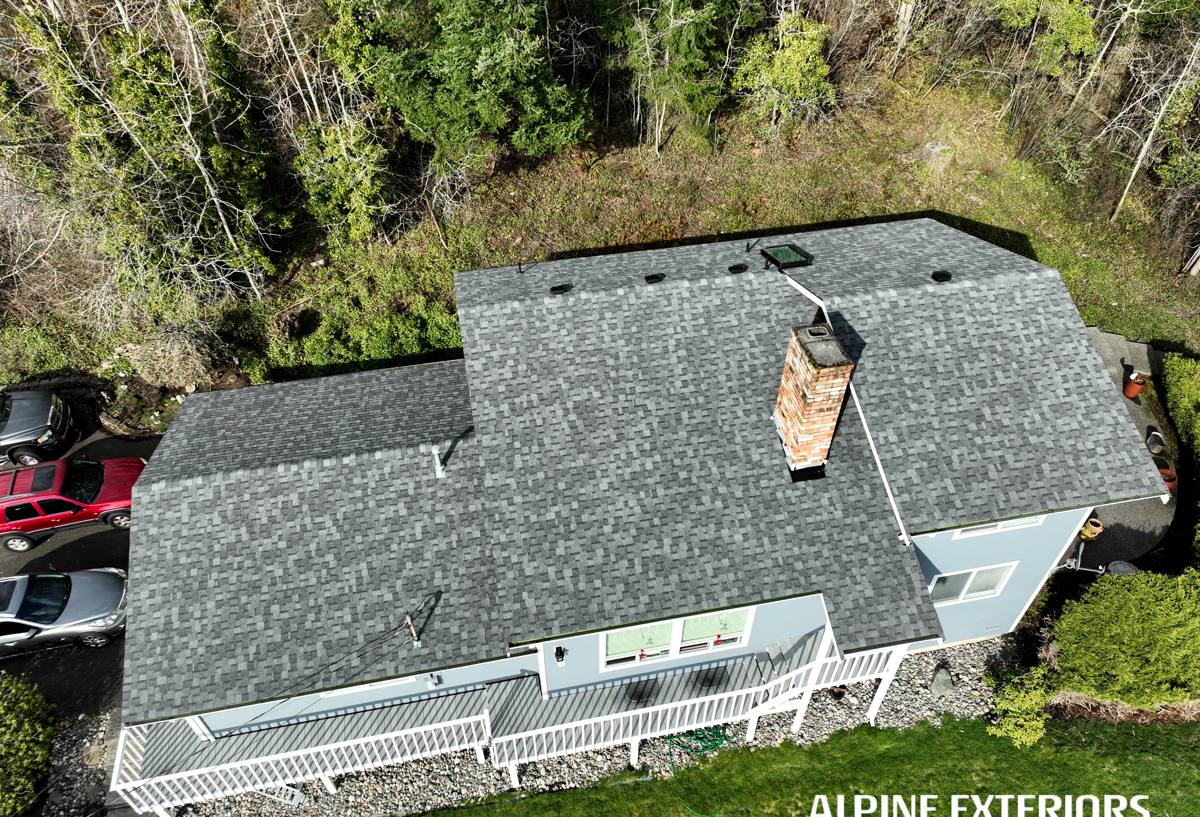
Why Cordata's Climate Changes the Job
Salt Air and Metal Components
Homes in and around Ferndale that sit within reach of marine air see accelerated corrosion on exposed metal — flashing, fasteners, vent caps, and gutter hardware all age faster here than they would inland. A roof install that uses standard-grade fasteners or bare metal flashing in this environment is setting the homeowner up for premature rust staining and eventual leaks at the exact points where a roof is most likely to fail: valleys, chimneys, and penetrations.
Driving Rain and Wind-Driven Water
Pacific storms moving through Whatcom County don't always drop rain straight down. Wind-driven rain gets pushed sideways and upward under eaves, around vents, and along ridge lines — areas that a roof designed for calmer climates simply doesn't need to protect as aggressively. This is why underlayment choice and detail work at transitions matter more here than in drier regions.
Moss and Organic Growth
Ferndale's tree cover, humidity, and long damp season create ideal conditions for moss, algae, and lichen to take hold on a roof surface. Moss doesn't just look bad — it holds moisture against the roofing material, lifts shingle edges as it grows, and can shorten the effective life of a roof by years if it's never addressed. A new roof install is the best time to build in moss resistance from day one, rather than treating it as an afterthought once growth has already started.
What a Correct Roof Install Actually Involves
A new roof is not just shingles nailed to plywood. In a climate like Cordata's, the parts most homeowners never see are often what determines whether the roof lasts 15 years or 30.
Tear-Off and Deck Inspection
We remove the existing roofing down to the deck rather than layering over it. This lets us inspect the sheathing for rot, soft spots, or water staining that indicates a past leak — problems that are invisible from the ground and impossible to catch without pulling the old material off. Any damaged decking gets replaced before anything new goes down.
Underlayment Selection
Given the amount of driving rain Whatcom County sees, we lean toward synthetic underlayments with strong water resistance and ice-and-water shield membrane at the eaves, valleys, and any low-slope transitions. This is the layer that protects the house if wind ever drives water past the top layer of roofing — it's cheap insurance relative to what a leak into the attic or walls costs to repair.
Flashing and Metal Detail Work
Chimneys, skylights, sidewalls, and valleys are where the vast majority of roof leaks originate — not the open field of shingles. We use corrosion-resistant flashing and fastener materials suited to a marine-influenced climate, and we take the time to properly step-flash and counter-flash these transitions rather than relying on sealant alone to hold water out.
Ventilation
Proper intake and exhaust ventilation keeps the attic temperature and moisture level in balance. In a wet climate, poor ventilation traps humid air against the underside of the roof deck, which accelerates rot and can void material warranties. We check existing ventilation on every install and correct it where it's undersized or blocked.
Roofing Materials: What Holds Up in This Climate
There's no single "best" roofing material for every home — the right choice depends on the roof's slope, the home's style, and the homeowner's budget and maintenance expectations. Here's how the common options compare for a Cordata home specifically.
| Material | Moss/Moisture Behavior | Typical Lifespan | Maintenance Considerations |
|---|---|---|---|
| Architectural asphalt shingle | Good with algae-resistant granules; still benefits from periodic cleaning | 25-30 years | Lowest upfront cost; widest color/style range |
| Standing seam metal | Excellent — sheds moisture fast, minimal surface for moss to grip | 40-50+ years | Higher upfront cost; needs correct fastener spec near salt air |
| Synthetic/composite shingle | Good; resists moisture absorption better than wood | 30-50 years | Mid-to-upper cost; mimics shake or slate appearance |
| Cedar shake | Requires active maintenance to resist moss and rot in wet climates | 20-30 years with upkeep | Highest maintenance burden in this climate; needs regular treatment |
For most Cordata homeowners, algae-resistant architectural asphalt shingles hit the right balance of cost and durability. For homes with lower-slope sections or owners who want the lowest possible long-term maintenance, standing seam metal is worth the higher upfront investment. We'll walk through the honest trade-offs for your specific roof rather than pushing whatever has the best margin.
Our Installation Process
We keep the process straightforward and communicate at each stage so there are no surprises mid-project.
- On-site assessment — we inspect the current roof, attic ventilation, and any visible trouble spots before quoting anything.
- Written estimate — a clear breakdown of material, labor, and any deck repair contingencies, so there's no ambiguity about what's included.
- Material selection — we help you weigh options against your budget and how much long-term maintenance you're willing to take on.
- Tear-off and deck repair — old roofing removed, deck inspected and repaired as needed.
- Underlayment and flashing install — the protective layers that do the real work during a Whatcom County winter.
- Roofing material install — installed to manufacturer spec so warranties stay valid.
- Final walkthrough — we go over the finished roof and the ventilation with you before calling the job done.
Signs a Cordata Roof Needs Replacing, Not Repairing
- Granule loss heavy enough that shingles look bald or patchy in sun-facing sections
- Shingles curling, cupping, or cracking at the edges
- Moss or algae growth that returns quickly after cleaning
- Daylight visible through the roof deck from inside the attic
- Water staining on ceilings or in the attic after heavy rain
- A roof that's already had multiple patch repairs in the same areas
- Roof age at or past the manufacturer's expected service life
If you're only seeing one or two of these, a repair may still make sense. If several apply at once, a full replacement is usually the more cost-effective path — repeated patch repairs on an aging roof tend to cost more over time than one correctly done replacement.
Cost Factors for a Cordata Roof Replacement
Every roof is priced based on its own specifics, but the main variables homeowners should expect to affect price are consistent across the area.
| Factor | How It Affects Cost |
|---|---|
| Roof size and number of facets | More square footage and more valleys/hips mean more material and labor |
| Roof pitch | Steeper roofs require more safety setup and slower, more careful work |
| Material choice | Asphalt is the most budget-friendly; metal and composite cost more upfront but last longer |
| Deck condition | Rotted or soft sheathing found at tear-off adds repair cost not visible in the initial quote |
| Access | Difficult access for equipment or material staging can add labor time |
We build deck-repair contingencies into our estimates upfront so a hidden problem under the old roofing doesn't turn into an unpleasant surprise mid-project.
Why Hire a Crew That Already Works in Cordata
Roofing crews unfamiliar with this part of Whatcom County sometimes install roofs the same way they would in a drier, inland climate — standard underlayment, standard fasteners, no particular attention to moss resistance. That approach might hold up fine somewhere else, but it shortens a roof's real lifespan here. A crew that already works Cordata and greater Ferndale knows which details matter: where wind-driven rain actually gets in, which fastener grades hold up against salt air, and how much ice-and-water shield a roof in this specific area really needs versus what's just upsold padding.
We're also familiar with permitting and inspection expectations for roofing work in Whatcom County, which keeps the project moving without avoidable delays.
Maintaining Your New Roof
A correctly installed roof still benefits from basic upkeep in this climate:
- Clear debris from valleys and gutters at least twice a year, more often under heavy tree cover
- Have moss growth treated before it spreads, rather than waiting until it's visible from the street
- Keep attic ventilation paths clear of insulation or stored items
- Schedule a visual inspection after major storms to catch any wind-lifted shingles early
None of this is intensive, but skipping it is one of the most common reasons a roof underperforms its expected lifespan in wet coastal climates.
If you're weighing a roof replacement for your Cordata home, we're happy to take a look and give you an honest read on what your roof actually needs — no pressure, no upsell. Fill out the form below for a free estimate.