 Ferndale
 Asphalt Shingle Roofing for Marietta Homes
Marietta sits close enough to the water that homes here take a different kind of weather beating than roofs a few miles inland. Salt-laden air off Bellingham Bay works on metal fasteners and flashing year-round, driving rain off the Strait finds every weak seam in a roof system, and the long, damp shoulder seasons in Whatcom County give moss and algae months at a time to get established on north-facing slopes. An asphalt shingle roof that's specified and installed correctly can handle all of that for two decades or more. One that isn't — wrong nail pattern, undersized underlayment, ventilation as an afterthought — starts showing problems in year three or four. This page walks through what a correct asphalt shingle roof looks like for a Marietta home, and what our process actually involves from first look to final walk-through.
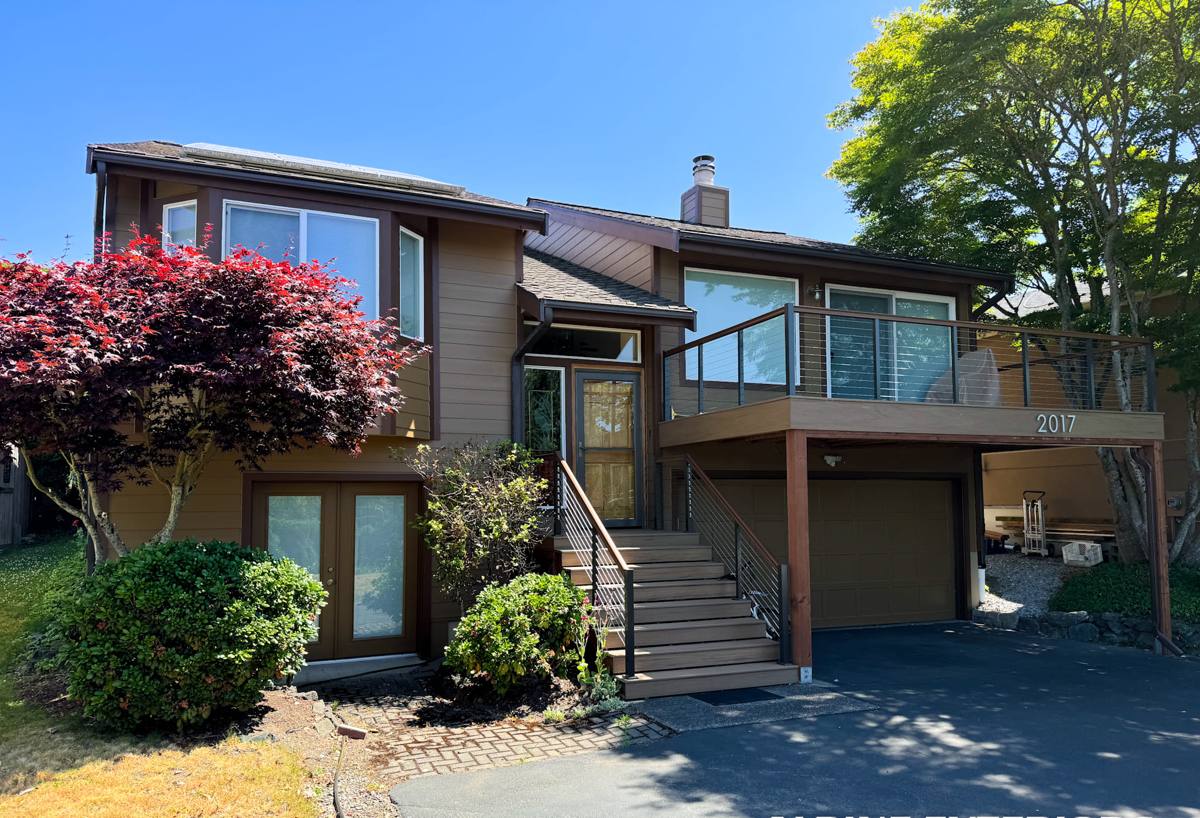
Why Marietta's Climate Is Harder on Roofs Than It Looks
Asphalt shingles are a proven, versatile product across nearly every U.S. climate, but "proven" doesn't mean "install it the same way everywhere." Marietta's specific combination of conditions puts real stress on a roof system in a few distinct ways:
Salt Air and Metal Fatigue
Proximity to saltwater accelerates corrosion on exposed metal — roofing nails, drip edge, flashing, and vent housings all age faster here than they would on an identical roof twenty miles inland. Standard electro-galvanized fasteners can start showing rust streaks and losing holding strength well before the shingles themselves wear out. That's a fastener and flashing spec issue, not a shingle issue, and it's one of the first things we account for on any coastal-adjacent job.
Driving Rain and Wind-Driven Water
Rain in this part of Whatcom County rarely falls straight down. Storms off the Strait of Georgia and the Sound push moisture sideways under eaves, around chimneys, and up under shingle tabs at low-slope transitions. A roof that only shed water well in calm conditions will leak in a sideways storm. That means underlayment coverage, starter strip placement, and flashing details at every penetration matter more here than in drier, calmer regions.
Moss, Algae, and the Long Wet Season
Western Washington's extended cool, damp stretch — often six months or more of consistently wet weather — gives moss spores and algae plenty of time to colonize a roof surface, especially on shaded, north- or east-facing slopes near trees. Left unmanaged, moss doesn't just look bad. It holds moisture against the shingle surface, works its way under tab edges, and can lift shingles enough to let water in underneath. A roof designed with this in mind uses shingle products with algae-resistant granules where it matters most and a maintenance plan that keeps moss from getting a foothold in the first place.
What a Correct Asphalt Shingle Roof Involves
A roof is a system, not a single product. The shingle is the most visible part, but it's only doing its job correctly if everything underneath and around it is installed right. For a Marietta home, that system should include:
- Ice-and-water shield at eaves, valleys, and around penetrations — extended further than the code minimum in areas prone to wind-driven rain
- Synthetic underlayment across the full deck, properly lapped and fastened, as a second line of defense under the shingles
- Starter strip at all eaves and rakes, not cut shingles used as a substitute — this is a common shortcut that leads to early tab lifting
- Corrosion-resistant fasteners and flashing rated for coastal-adjacent exposure, not standard-grade hardware
- Balanced attic ventilation — intake at the eaves, exhaust at the ridge — sized to the attic volume, not guessed at
- Algae-resistant shingle granules on north- and east-facing slopes or shaded roof sections
- Proper valley and step flashing at every roof-to-wall and roof-to-roof transition
Skip any one of these and the roof will likely still look fine on installation day. The problems show up two, five, or ten years later — which is exactly why so many roof failures get blamed on "bad shingles" when the real issue was how the system underneath them was put together.
Ventilation: The Part Homeowners Rarely See
Attic ventilation is one of the most overlooked factors in shingle roof longevity, and it matters more in a marine climate like Whatcom County's than in drier regions. A poorly ventilated attic traps heat in summer and moisture year-round. That trapped moisture condenses on the underside of the roof deck, which accelerates deck rot from below and can shorten shingle life from the inside out — a slow failure that has nothing to do with the shingle brand and everything to do with airflow. We check existing intake and exhaust ventilation on every re-roof and correct imbalances as part of the job, not as an upsell tacked on afterward.
Choosing the Right Shingle for a Marietta Roof
Not every asphalt shingle product is a good fit for this climate. We steer homeowners toward products and specs that hold up to sustained damp exposure and occasional coastal wind rather than the cheapest option on the shelf. The trade-offs generally break down like this:
| Shingle Type | Typical Lifespan Here | Best Fit For | Trade-Offs |
|---|---|---|---|
| 3-Tab (standard) | 15-20 years | Budget-conscious re-roofs, rental or secondary structures | Lower wind rating, less algae resistance without upgraded granules |
| Architectural / Laminate | 25-30+ years | Most Marietta homes — primary residences | Higher upfront cost, but far better wind and moisture performance |
| Premium / Designer | 30-40+ years | Homes wanting a heavier, dimensional look | Highest cost; longer warranty but installation must be precise to earn it |
For most homes in this area, we recommend a mid-to-upper architectural shingle with algae-resistant granules and a wind rating suited to occasional coastal gusts. It's the point on the curve where cost, appearance, and real-world durability line up best for this specific climate.
Our Process, Start to Finish
Homeowners generally want to know two things up front: what's actually wrong with the current roof, and what happens once they say yes. Here's how we handle both.
1. On-Site Inspection
We walk the roof, not just the ground. That includes checking the deck for soft spots, evaluating existing flashing and ventilation, and looking at moss or algae coverage to understand whether it's cosmetic or already causing damage underneath.
2. Written Scope and Estimate
You get a clear, itemized estimate — materials, labor, what's included in tear-off and disposal, and what (if anything) is a separate line item like deck repair. No vague lump-sum numbers that hide what you're actually paying for.
3. Tear-Off and Deck Inspection
Old roofing comes off down to the deck. This is the point where hidden problems — rot, prior water damage, undersized ventilation — actually get found. We flag anything that needs attention before covering it back up, with photos and a straight explanation of cost if it's outside the original scope.
4. System Installation
Ice-and-water shield, underlayment, starter strip, flashing, shingles, and ridge vent installed in that order, to manufacturer spec and local code, with the coastal-exposure adjustments described above.
5. Cleanup and Final Walk-Through
Site cleared of debris and nails (magnetic sweep included), and we walk the finished roof with you before calling the job done.
Maintenance That Actually Extends Roof Life Here
A well-installed shingle roof in Marietta still needs some seasonal attention because of the moss and moisture factors already covered. A short, honest checklist:
- Keep gutters clear — clogged gutters back water up under the shingle edge, especially during heavy Whatcom County rain events
- Trim back overhanging branches to reduce shade and debris on north-facing slopes, which slows moss growth
- Have moss physically removed (not just chemically treated) if it establishes on the roof surface — chemical treatment alone doesn't address moisture already trapped under lifted tabs
- Schedule a visual inspection every year or two, particularly after a hard winter storm season
- Address small flashing or fastener issues early — they're inexpensive fixes at year three, much more expensive at year ten as deck damage
Repair vs. Replacement: How We Help You Decide
Not every roofing issue in Marietta means a full replacement. Isolated flashing failures, a handful of wind-lifted shingles, or moss-related tab damage on one slope can often be repaired if the rest of the roof is sound and the shingles aren't at the end of their service life. We'll tell you honestly when a repair makes sense versus when you're better off putting that money toward a full re-roof — our goal is a roof that performs, not the largest invoice we can write. Signs that usually point toward replacement rather than repair include granule loss heavy enough to see bare asphalt, multiple slopes with curling or cupping shingles, soft spots in the deck found during inspection, or a roof already past 20-25 years old with recurring leak calls.
Why a Crew That Already Works Marietta Matters
Roofing crews unfamiliar with this specific stretch of coastline sometimes install roofs to a generic regional spec — one that might be fine forty miles inland but underperforms here. Working Marietta and the surrounding Ferndale area regularly means we already know which slopes tend to hold moss longest, which fastener and flashing grades actually hold up against the salt air, and how local wind patterns off the water affect shingle and starter strip choices. That's not a marketing point — it's the difference between a roof that's still tight in fifteen years and one that needs flashing repairs by year five.
If you're dealing with an aging roof, visible moss buildup, or just want an honest read on where your current roof stands, we're glad to take a look. Fill out the form below for a free, no-pressure estimate — we'll walk the roof, tell you what we actually see, and give you a clear, itemized quote with no obligation.