 Ferndale
 Decks in Blaine Take a Different Kind of Beating
Blaine sits right up against the water, close enough to Semiahmoo Bay, Drayton Harbor, and the Strait of Georgia that salt air is simply part of daily life here. Add in Whatcom County's long, wet winters and the moss season that seems to stretch a little further every year, and you've got a climate that's genuinely hard on exterior wood and fasteners. A deck that would hold up fine forty miles inland can start failing early in Blaine if it wasn't built with this specific environment in mind.
We work on decks throughout Ferndale and Blaine regularly, and the failure patterns we see are consistent: corroded hardware, soft or delaminating boards near the house line, ledger connections that trapped moisture for years before anyone noticed, and railing posts that rotted from the inside out. None of that is unusual for coastal Whatcom County. It's just what happens when a deck isn't detailed for salt exposure and near-constant moisture.
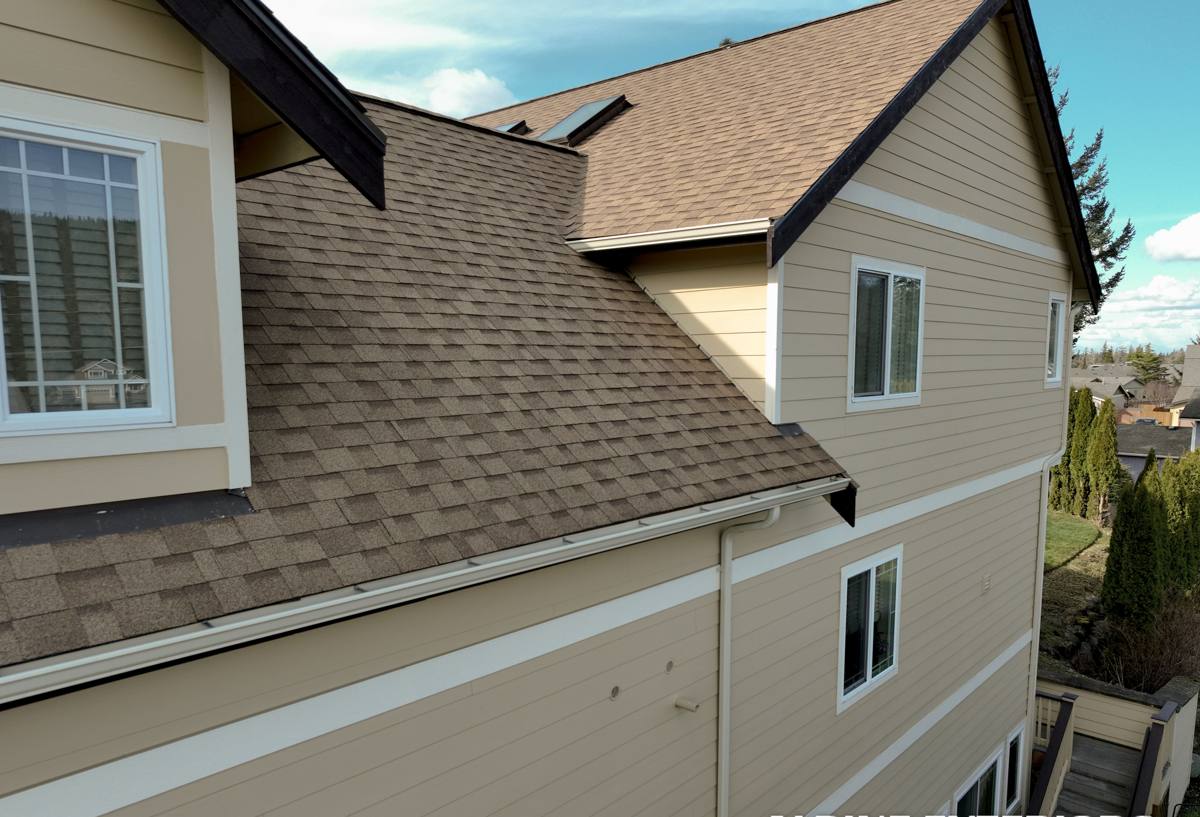
What Blaine's Climate Actually Does to a Deck
Salt Air and Metal Hardware
Salt-laden air accelerates corrosion on fasteners, joist hangers, post bases, and any exposed metal connectors. Standard galvanized hardware that's fine in a drier inland town can start rusting visibly within a few years this close to the water. Once a fastener corrodes, it loses holding strength long before it looks obviously bad, which is part of why deck hardware failures in this area tend to surprise homeowners.
Driving Rain and Water Intrusion
Blaine gets its share of wind-driven rain off the water, and that rain doesn't fall straight down — it gets pushed sideways into ledger boards, under railing caps, and into any gap where flashing was skipped or done poorly. Over time, water finds its way into end grain and fastener holes, and that's where rot starts, usually out of sight until a board feels spongy underfoot.
Moss, Algae, and a Long Damp Season
With extended cloud cover and moisture, moss and algae take hold on deck surfaces for a large part of the year, especially on boards that get partial shade from the house or nearby trees. Beyond looking bad, a mossy deck surface holds moisture against the wood and becomes genuinely slick and dangerous to walk on, particularly on stairs.
Signs Your Blaine Deck Needs Replacement, Not Just Repair
- Soft, spongy, or springy spots when you walk across the boards
- Visible rust streaks below joist hangers or post bases
- Gaps or separation where the deck ledger meets the house
- Railing posts that wobble or flex when pushed
- Persistent moss or dark staining that returns quickly after cleaning
- Boards that have cupped, split, or pulled away from fasteners
- A deck more than 15-20 years old that has never had hardware or flashing upgraded
Not every one of these means a full tear-off. But when several show up together, or when the framing and ledger connection are compromised, patching individual boards just delays a bigger problem — and on a structure people stand on, that's not a risk worth carrying.
What a Correct Deck Replacement Involves Here
Ledger Flashing Done Right
The ledger board — where the deck attaches to the house — is the single most common source of hidden rot on coastal decks. A correct install uses proper flashing that directs water away from the house sheathing, not just a bead of caulk. In a climate with as much driving rain as Blaine sees, this detail matters more than almost anything else on the project.
Corrosion-Resistant Hardware
Given the salt air exposure, we favor hardware and fasteners rated for coastal or high-corrosion environments over standard galvanized products. It costs a bit more upfront, but replacing rusted joist hangers in eight years is a far worse outcome than spending a little more now.
Framing and Structural Inspection
Replacement is also the point where we can actually see the framing underneath — joists, beams, posts, and footings. If there's rot or undersizing that's been hidden under old decking for years, this is when it gets fixed, not covered back up.
Drainage and Airflow Underneath
Decks built low to the ground or against grade with poor airflow underneath stay damp longer, which feeds rot and moss growth. Where possible, we address grading, spacing, and ventilation as part of the rebuild so the new deck isn't fighting the same moisture problem the old one had.
Decking Material Options for Blaine's Climate
There's no single "best" decking material for every home — it depends on budget, how much upkeep you want to do, and how the deck is used. Here's how the common options actually perform in a salt-air, high-moisture environment like Blaine's.
| Material | Moisture & Salt Air Behavior | Maintenance | Typical Lifespan Here |
|---|---|---|---|
| Pressure-treated wood | Prone to checking and fastener corrosion over time; needs sealing to perform well | Annual cleaning and periodic sealing/staining | 10-15 years before major issues |
| Cedar | Naturally moisture- and insect-resistant, but still needs upkeep near salt air | Regular cleaning, occasional oiling | 15-20 years with maintenance |
| Composite decking | Doesn't rot or splinter; handles moisture well; some early composite products struggled with moss/algae staining, newer capped products resist it much better | Occasional washing, no sealing | 25-30+ years, manufacturer warranty backed |
| PVC decking | Fully synthetic, excellent moisture and salt resistance | Very low, occasional cleaning | 25-30+ years, manufacturer warranty backed |
For homes right up against the water in Blaine, we lean toward capped composite or PVC decking for the walking surface, paired with corrosion-resistant fasteners and correctly detailed framing underneath. That said, some homeowners want the look and feel of real wood and are willing to keep up with the maintenance — that's a legitimate choice too, as long as it's made with clear eyes about the upkeep involved.
Our Deck Replacement Process
- On-site assessment — We look at the existing deck, framing, ledger connection, and any moisture or rot damage before recommending anything.
- Honest scope discussion — We tell you what's actually failing, what can be reused if anything, and what a full replacement realistically involves.
- Material selection — We walk through decking, railing, and hardware options based on your budget, maintenance preferences, and how exposed the deck is to weather.
- Tear-off and framing repair — Old decking, railing, and any compromised framing come out; structural issues get corrected, not covered.
- Flashing and hardware installation — Ledger flashing and corrosion-resistant connectors go in first, before a single new board is laid.
- Decking and railing installation — New surface and railing go on to code, with attention to drainage and airflow underneath.
- Final walkthrough — We go over the finished deck with you and answer questions about care and expected maintenance.
Cost Factors to Expect
| Factor | How It Affects Cost |
|---|---|
| Deck size and shape | Larger or multi-level decks require more material and labor |
| Decking material chosen | Pressure-treated is the lowest upfront cost; composite and PVC cost more but reduce long-term upkeep |
| Framing condition | Rotted joists, beams, or posts add repair cost discovered during tear-off |
| Railing style and code requirements | Cable, glass, or custom railing systems cost more than standard baluster railing |
| Height and stairs | Elevated decks with stairs and additional railing runs add material and labor |
| Ledger and flashing work | Correcting a poorly flashed ledger connection to the house adds some cost but is not optional for a lasting deck |
We'll always give you real numbers based on your actual deck and site conditions rather than a rough guess — every property here is a little different depending on exposure and grade.
Why a Crew That Already Works Blaine Matters
Ferndale Siding works throughout Whatcom County, and Blaine's coastal conditions are something we plan for, not something we discover on the job. That means we're not guessing at hardware specs or flashing details on a project this close to salt water — we already know what tends to fail here and build accordingly from the first board.
Local knowledge also means realistic timelines and scheduling around the weather patterns that actually affect this area, rather than assuming conditions match a drier, inland job site. When we quote a deck replacement in Blaine, the plan already accounts for what the site will be dealing with for the next twenty-plus years.
Get a Straight Answer on Your Deck
If your deck in Blaine is showing soft spots, rust, persistent moss, or just feels less solid than it used to, it's worth having someone look at it before it gets worse. We offer free, no-pressure estimates — come take a look, tell you honestly what we see, and lay out real options and pricing so you can decide what makes sense for your home. Use the form below to get started.