 Ferndale
 Why Sandy Point Roofs Wear Differently
Sandy Point sits close enough to the water that its roofs live a different life than a roof ten miles inland in Whatcom County. Salt-laden air moves through the neighborhood constantly, driving rain comes in sideways off the Strait during winter storms, and the tree cover that gives the area its character also means shade, dampness, and a moss season that runs longer than almost anywhere else in the county. None of that is a defect in any particular roof. It's just what coastal exposure does over time, and it means repairs here need to be diagnosed and done with that exposure in mind, not treated like a generic patch job.
We've worked on enough roofs in and around Sandy Point to know the pattern: the failures rarely start where homeowners expect. A stain on a bedroom ceiling often traces back to a flashing detail at a chimney or a wall intersection, not the shingles directly above it. Fastener corrosion shows up faster here than in drier parts of Whatcom County. And moss doesn't just look bad — left alone, it holds moisture against the roofing material and works its way under shingle edges, which is where a cosmetic issue turns into a leak.
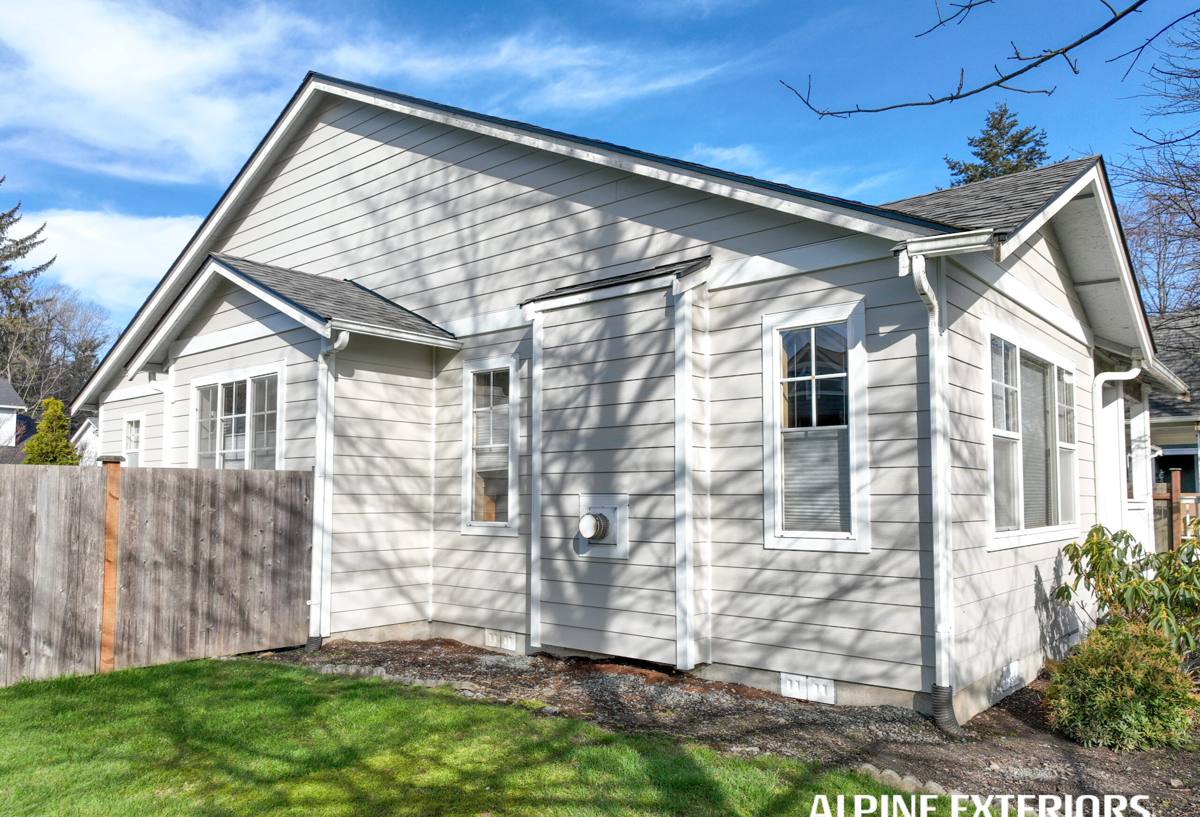
What Salt Air and Driving Rain Actually Do to a Roof
Salt Air and Metal Components
Salt accelerates corrosion on anything metal — flashing, fasteners, vent caps, gutter hardware. Standard fasteners that would last decades further inland can start showing rust streaks or losing their grip years earlier near the water. Once a fastener corrodes, it loosens, and a loose fastener is an open door for water. This is why the specific hardware used in a repair matters more here than the brand of shingle.
Driving Rain and Wind-Driven Water
Rain that comes in at an angle off the water doesn't behave like rain falling straight down. It gets pushed up under shingle edges, into gaps around vents and skylights, and along valleys where two roof planes meet. A repair that would hold up fine in calmer conditions can fail here if the underlying flashing and underlayment details aren't built for wind-driven water specifically.
Moss Season and Moisture Retention
Whatcom County's wet, mild winters already favor moss growth, and the tree cover common around Sandy Point extends that season further. Moss retains moisture against the roof surface long after the rest of the roof has dried out. Over months and years, that trapped moisture degrades shingle granules, softens roof decking, and creates the damp, shaded conditions where minor issues turn into rot if they're not addressed.
Signs a Sandy Point Roof Needs Repair, Not Just Cleaning
Not every mossy or stained roof needs repair — sometimes a cleaning and better drainage solve the problem. But certain signs point to actual damage that needs to be fixed, not just tidied up.
- Interior ceiling stains, especially near chimneys, skylights, or where roof planes meet
- Shingles that are cupping, curling, or missing granules in patches
- Visible daylight through the attic roof deck, or damp insulation below the roofline
- Moss growth thick enough that you can't see the shingle surface underneath it
- Rust streaking below metal flashing, vents, or fasteners
- Sagging sections of roofline, which can indicate decking that's absorbed water over time
- Gutters consistently overflowing or pulling away from the fascia
What a Correct Repair Actually Involves
A roof repair done right starts with figuring out the real source of the problem, not just patching the spot where water showed up inside the house. Water travels along rafters and decking before it drips somewhere visible, so the stain on a ceiling is often several feet from the actual entry point. We trace it back before doing any work, because patching the wrong spot means the homeowner pays for a repair that doesn't actually stop the leak.
Diagnosis First
This means getting on the roof, checking flashing at every penetration (chimneys, vents, skylights), examining valleys and roof-to-wall intersections, and checking the condition of the decking underneath if there's any sign of moisture intrusion. Skipping this step is the most common reason repeat repairs happen.
Matching Materials and Technique
Shingles fade and wear unevenly over time, so an exact color match on an older roof isn't always possible — we're upfront about that rather than promising a seamless blend we can't deliver. What we can guarantee is that the repair is structurally sound: proper shingle nailing patterns, correctly lapped flashing, and underlayment that ties into the existing roof system rather than just sitting on top of it.
Coastal-Appropriate Hardware
Given the corrosion issues salt air causes, we use fasteners and flashing suited to that exposure rather than defaulting to standard-grade hardware. It costs a little more up front and saves a callback in three years.
Moss and Debris Removal Around the Repair Area
If moss or debris is contributing to the problem, we clear it from the repair area and surrounding roof so the fix isn't undermined by the same conditions that caused the original damage.
Our Roof Repair Process
- Inspection. We walk the roof, check the attic where accessible, and identify the actual source of the issue — not just the visible symptom.
- Honest assessment. We tell you what we find, including if the damage is more extensive than a simple patch, or if the roof's overall age means repair money is better spent toward replacement.
- Written estimate. Scope and cost, explained in plain terms before any work starts.
- The repair. Done with materials and fasteners suited to coastal exposure, and flashing details built for wind-driven rain.
- Cleanup and check. We clear debris, check gutters and drainage near the repair, and confirm the fix holds under the conditions it's meant to handle.
Repair or Replace? Honest Factors to Weigh
Not every roof problem calls for a full replacement, and not every leak is fixable with a patch. These are the factors that actually matter when deciding, and we'll walk through them with you honestly rather than defaulting to whichever answer costs more.
| Factor | Leans Toward Repair | Leans Toward Replacement |
|---|---|---|
| Roof age | Under roughly 15 years, or well-maintained | Near or past expected lifespan for its material |
| Extent of damage | Localized — one flashing detail, one section | Multiple areas, or widespread granule loss |
| Decking condition | Solid, dry decking under the damaged area | Soft, spongy, or visibly rotted decking |
| Moss/moisture history | First occurrence, addressed early | Long-term trapped moisture, repeat problem areas |
| Repair history | First repair in this area of the roof | Same area repaired multiple times already |
Why Timing Matters in This Climate
In Whatcom County, the window for exterior roof work is shaped by the wet season, and Sandy Point's exposure makes that window even more important to respect. Repairs done during a dry stretch bond and seal properly. Repairs rushed between rain systems, or attempted on a wet roof, are more likely to fail early because sealants and flashing details need dry conditions to set up correctly. If a leak is active, we'll stabilize it right away regardless of weather — but the permanent repair goes in when conditions actually allow it to hold.
Moss removal timing matters too. Late fall through early spring, when moss growth is heaviest here, is often the worst time to also expect a repair area to stay dry long enough to cure properly. When it's practical, we try to pair moss treatment with repair work during a break in the weather rather than doing them separately.
Preventing the Next Repair
A repair fixes what's broken now. A few ongoing habits reduce how often you need one again, especially in a moss-heavy, salt-air environment like Sandy Point.
- Keep gutters clear so water isn't backing up under roof edges during heavy rain
- Trim back tree limbs that keep sections of the roof shaded and slow to dry
- Address moss while it's a thin layer, before it thickens and holds moisture against the shingles
- Have flashing checked periodically, especially around chimneys and skylights, since that's where most leaks originate
- Get a roof looked at after any major windstorm, even if nothing looks obviously wrong from the ground
Why Local Experience with Sandy Point Roofs Matters
A roofer who mostly works inland can still do competent work, but they won't necessarily know to reach for corrosion-resistant fasteners by default, or to expect moss buildup in spots that would be minor elsewhere. Crews who work Sandy Point and the surrounding Ferndale area regularly see the same failure patterns repeat — the same flashing details fail first, the same shaded roof sections hold moss longest, the same fastener types corrode fastest. That pattern recognition means faster, more accurate diagnosis and fewer repeat visits, which saves homeowners money over the life of the roof.
It also means we're not guessing at what "normal" looks like for this specific stretch of coastline. What would be an alarming amount of moss on a roof in a drier part of the county might be a routine cleaning here. What looks like a minor drip near a chimney might actually be a flashing detail that's been letting water in for a season already. Local, repeat experience is what closes that gap.
Get a Straight Answer on Your Roof
If you're seeing a stain, some curling shingles, or a section of roof that's holding more moss than the rest, it's worth getting a real look before it turns into a bigger repair. We offer free, no-pressure estimates for Sandy Point homeowners — we'll tell you honestly what we find, what it'll take to fix it, and whether repair or replacement makes more sense for your roof. Reach out using the form below to get started.