 Ferndale
 Exterior Work in Marietta's Coastal Climate
Marietta sits close enough to the water that homes here deal with a different set of conditions than siding fifteen miles inland. Salt-laden air, near-constant winter humidity, and driving rain off the water put a steady strain on exterior materials. Add in the moss and algae growth that thrives in Whatcom County's damp, shaded shoulder seasons, and you end up with a climate that is genuinely harder on a house than most manufacturers' marketing materials let on.
We've worked on enough homes along this stretch of the county to know which materials hold up and which ones start showing problems inside five to eight years. That's the whole reason we standardized on one siding product instead of offering a menu of options. We'll get into why below, but the short version is: we install James Hardie fiber cement siding, and we don't install anything else.
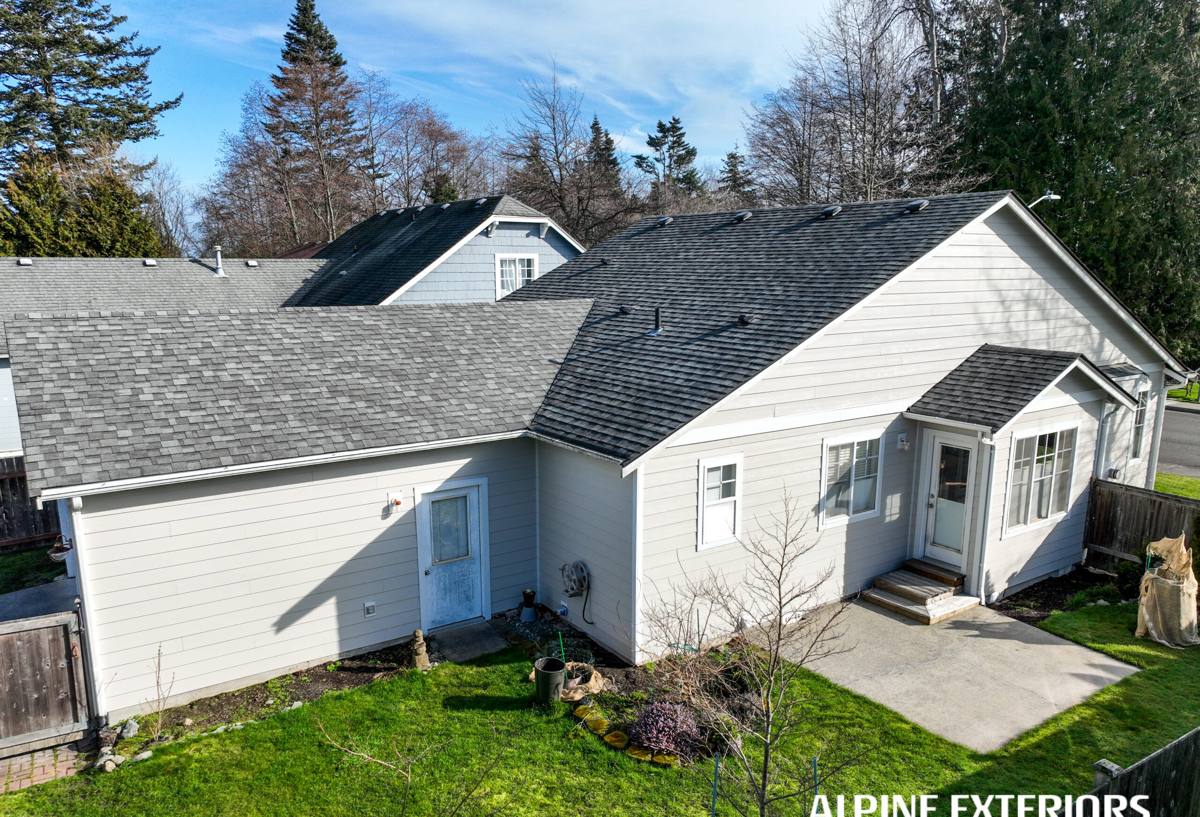
What Marietta's Climate Actually Does to a House
Salt Air and Moisture
Proximity to saltwater accelerates corrosion on fasteners, flashing, and any exposed metal trim. It also means the air rarely fully dries out, even on a clear day. Materials that rely on paint film or a factory coating to keep moisture out are under more pressure here than they would be in a drier inland location.
Driving Rain
Wind-driven rain off the water doesn't just fall on a wall — it gets pushed into laps, seams, and butt joints. Siding systems that swell, wick, or absorb water at cut edges are more exposed to this kind of weather than in a sheltered inland yard.
Moss and Algae Season
Whatcom County's long, mild, wet stretch from fall through spring is ideal moss and algae territory, especially on north-facing walls and anything shaded by trees or a neighboring structure. Porous or wood-based siding gives moss something to hold onto. A hard, factory-finished surface gives it far less to grip.
What This Means for Material Choice
- Fasteners and flashing details matter as much as the siding panel itself in a salt-air environment
- Water management at joints and laps needs to be correct the first time — repairs in this climate are harder to keep dry while work is in progress
- Surfaces that shed moss and mildew reduce the washing and maintenance a homeowner has to keep up with
- Color and finish need to hold up under UV and salt exposure without chalking or fading unevenly
Why We Only Install James Hardie
Homeowners in Marietta are often quoted vinyl, LP SmartSide, or one of the other fiber cement or composite panel products on the market. Each has a place in the industry, and we're not going to tell you any of them are junk — but we made a decision years ago to install one product, to one standard, and stand behind it.
Vinyl
Vinyl is inexpensive and low-maintenance in mild climates, but it's a petroleum-based product that expands and contracts significantly with temperature swings, and it can become brittle over time in cold, damp conditions. In a wind-exposed coastal spot, panels that aren't installed with the right expansion gaps can buckle or blow off in a storm. It's also not fire-resistant, which matters more every year in Washington.
LP SmartSide and Other Engineered Wood
Engineered wood siding has improved a lot over the decades, but it's still a wood-based product, which means it's more sensitive to sustained moisture exposure than fiber cement. In a climate with the humidity and rain load Marietta sees, wood-based products need flawless caulking, flashing, and maintenance to avoid swelling at cut edges and seams over time. Miss a maintenance cycle in a place this wet, and the margin for error shrinks.
Other Fiber Cement (Cemplank, Allura, unfinished spruce or cedar)
Other fiber cement brands are a reasonable product category, but we've standardized on James Hardie specifically for its ColorPlus factory finish (which resists fading and chipping far better than field-applied paint), its HZ5 product line engineered for wetter climates, and its transferable warranty. Primed or unfinished wood siding puts the entire moisture-protection burden on the paint job, which is the first thing to fail in a salt-air environment.
James Hardie in Marietta's Climate
Fiber cement is made from cellulose fiber, sand, and cement — it doesn't rot, it isn't attractive to pests, and it's non-combustible. James Hardie engineers regional product lines specifically for climate zones, and coastal Pacific Northwest homes are typically specified with HZ5 boards, formulated for wetter, more moisture-prone regions.
The factory-applied ColorPlus finish matters as much here as the substrate does. Because the color and topcoat are baked on at the factory under controlled conditions, they hold up far more evenly against salt air and UV exposure than a field-painted surface, and touch-up paint is formulated to match. That translates into fewer repaint cycles over the life of the siding — a real advantage in a spot where scaffolding a house every few years for repainting is neither cheap nor pleasant to schedule around weather windows.
Comparing the Options Homeowners See in Marietta
| Material | Moisture Behavior | Maintenance | Fire Resistance | Typical Lifespan |
|---|---|---|---|---|
| Vinyl | Doesn't absorb, but seams and edges can be vulnerable in wind | Low, but can crack or fade over time | Poor — melts/deforms in heat | 20-30 years |
| LP SmartSide / engineered wood | Wood-based; sensitive to sustained moisture at cut edges | Moderate — requires diligent caulk/paint upkeep | Moderate | 20-30 years with upkeep |
| Unfinished cedar/spruce | Highly moisture-sensitive without consistent finish | High — regular refinishing required | Poor | 15-25 years, finish-dependent |
| James Hardie fiber cement | Non-combustible substrate, factory finish resists moisture intrusion | Low — occasional wash, no repainting for years | Excellent — non-combustible | 30-50 years with proper install |
Installation Quality Is the Real Variable
Fiber cement's reputation depends heavily on correct installation. Hardie itself publishes detailed fastening, clearance, and flashing specifications, and a huge share of the siding problems we get called out to inspect trace back to installation shortcuts rather than the product itself — wrong nail placement, missing kick-out flashing, insufficient ground clearance, or caulking used where flashing should have been. In a coastal, rain-heavy area like Marietta, those shortcuts show up faster than they would somewhere drier.
A local crew that has installed on homes in this specific stretch of Whatcom County knows where the wind-driven rain tends to find weak points, which sides of a house need extra attention for moss, and how the salt air affects fastener choice. That's not something a crew driving in from out of the area picks up from a spec sheet.
Our Process for a Marietta Siding Project
Assessment
We start with a full walk-around, checking for moisture damage, past repair patches, flashing condition around windows and rooflines, and any moss or algae buildup that points to persistent damp areas.
Water Management First
Before a single piece of siding goes up, we address the house wrap, flashing, and drainage plane. This is the step that determines whether the siding performs for thirty years or ten — especially on a home exposed to driving coastal rain.
Installation to Spec
We follow James Hardie's fastening and clearance requirements exactly, including proper ground clearance and roofline flashing, which matters more in a wet climate than in a dry one.
Roofing, Windows, and Decks
Siding rarely fails in isolation from the rest of the exterior. We also handle roofing, window replacement, and deck construction, because flashing at rooflines and windows and drainage at deck ledger boards all interact with how well the siding performs. Addressing them together avoids the finger-pointing that happens when separate trades handle each piece independently.
What a Homeowner Should Expect During a Project
- A written scope that specifies the exact Hardie product line and profile, not just "Hardie siding"
- Clear communication about weather-dependent scheduling, since fiber cement installation needs dry conditions
- Site protection for landscaping and walkways for the duration of the project
- A walkthrough at completion covering care and what routine maintenance (if any) is needed
Signs a Marietta Home May Need Siding Attention
Persistent dark staining, especially on north-facing or shaded walls, is one of the more common signs of moss and algae taking hold. Soft spots near the bottom courses of siding, bubbling paint, or visible gaps at seams and trim are worth a closer look, particularly after a stretch of stormy weather. None of these automatically mean a full replacement is needed — sometimes it's a flashing or caulking fix — but they're worth having someone look at before the next wet season.
Get an Estimate
If you're weighing siding options for a home in Marietta, or dealing with moss, staining, or moisture issues on your current siding, we're happy to take a look and walk you through what we see — no pressure, no obligation. Reach out for a free estimate and we'll give you a straight answer about what your home actually needs.