 Ferndale
 Exterior Work Built for Fairhaven's Coastal Climate
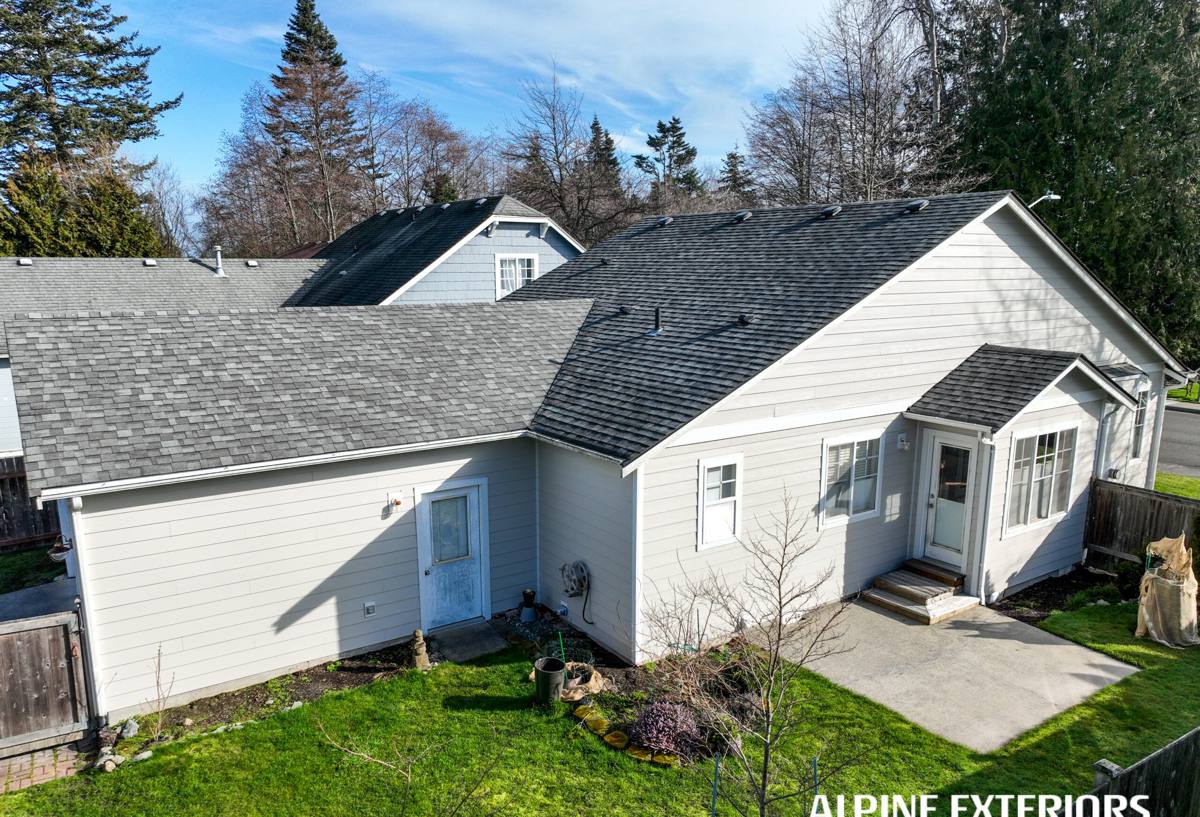
Fairhaven sits close enough to the water that its homes live with a different set of exterior pressures than houses just a few miles inland. Salt-tinged air off the water, driving rain that comes in sideways during winter storms, and a moss season that can stretch from October well into spring all put steady, cumulative stress on siding, roofing, trim, and anything wood-adjacent on the outside of a house. None of that is dramatic on any given day. It's the slow, year-after-year exposure that eventually shows up as swollen trim, streaked and moss-stained roofing, soft spots at the base of siding boards, and paint that fails years earlier than it should.
We're a Whatcom County exterior contractor working siding, roofing, windows, and decks, and Fairhaven is part of our regular service area. That matters more than it might sound — a crew that works this stretch of coastline regularly knows how differently a house here weathers compared to one twenty minutes inland, and builds the work around that instead of applying a generic approach.
What the Local Climate Actually Does to a House
Salt Air and Metal Fatigue
Proximity to Bellingham Bay means airborne salt and moisture settle on exterior surfaces more often than homeowners realize. Salt air accelerates corrosion on unprotected or lower-grade fasteners, flashing, and metal roofing components. It also breaks down cheaper paint finishes faster, which is part of why factory-applied, baked-on finishes hold up so much better here than field-applied paint on wood or composite trim.
Driving Rain and Wind-Driven Moisture
Storms coming off the water don't just drop rain straight down — wind pushes it sideways into wall assemblies, under poorly lapped siding, and into any gap around windows and trim that wasn't sealed correctly. Over time, wind-driven rain finds every weak seam in an exterior. That's a water-management problem as much as a materials problem, and it's where installation quality ends up mattering as much as the product itself.
The Long Moss Season
Whatcom County's damp, mild winters and shoulder seasons give moss and algae a long window to establish themselves on roofing, north-facing siding, decks, and anywhere shade and moisture combine. Moss holds moisture against the surface it's growing on, which shortens the life of roofing materials and can trap dampness against siding and deck boards long after a storm has passed.
Siding: Why We Install James Hardie and Nothing Else
We install James Hardie fiber cement siding exclusively. We don't install vinyl, LP SmartSide, Cemplank, Allura, primed spruce, or cedar. That's a deliberate standard, not a limitation of what we're capable of doing, and it comes down to how those products perform specifically in a climate like this one.
- Vinyl can warp and become brittle under repeated temperature swings and UV exposure, and its seams and J-channels give wind-driven rain more places to get behind the cladding.
- Wood products (cedar, primed spruce) look good on day one but need real maintenance — recoating, caulking, and moisture monitoring — to hold up against this much sustained dampness and moss pressure. Skip a maintenance cycle here and it shows fast.
- LP SmartSide is an engineered wood product, which means its long-term performance still depends heavily on sealed edges and consistent maintenance in a wet climate.
- Cemplank and Allura are also fiber cement, and they're not bad products — but we've standardized on one system, one factory finish, one warranty structure, and one set of installation specs so every job we do gets the same quality control and we know exactly how the product behaves over decades.
James Hardie is non-combustible fiber cement, engineered specifically for climates like the Pacific Northwest through its HZ5 product line, and finished at the factory with ColorPlus Technology — a baked-on finish that resists the fading and chipping that field-applied paint struggles with in salt air and constant moisture. It comes with a strong transferable warranty, and when it's installed to Hardie's spec — correct clearances, proper flashing, factory-finished cut edges sealed — it's built to handle exactly the conditions Fairhaven sees: driving rain, salt air, and long damp seasons that would wear down cheaper materials.
Comparing Siding Options for a Coastal Whatcom County Home
| Material | Maintenance Burden | Moisture/Salt Air Behavior | Our Position |
|---|---|---|---|
| James Hardie Fiber Cement | Low — factory finish, no repainting cycle needed for years | Engineered for wet, coastal climates (HZ5) | What we install |
| Vinyl | Low, but degrades and can't be repainted easily | Seams vulnerable to wind-driven rain; can warp | Not installed |
| Cedar / Primed Spruce | High — ongoing sealing, painting, moisture checks | Prone to moisture absorption without diligent upkeep | Not installed |
| LP SmartSide | Moderate — edge sealing and paint maintenance matter | Engineered wood; performance tied to maintenance | Not installed |
| Other Fiber Cement (Cemplank, Allura) | Low | Comparable material class to Hardie | Not installed — standardized on one system |
Roofing: Standing Up to Moss and Storm Season
Roofing in this part of Whatcom County takes on a specific kind of wear: moss growth on shaded slopes, granule loss from sustained wind and rain, and flashing that has to keep working through repeated wet-dry cycles year after year. A roof inspection here should always include a look at moss coverage, valley and flashing condition, and how well the roof is shedding water in the areas that stay shaded longest. We handle roof repair and full replacement, and we pay particular attention to flashing detail and ventilation — a roof that can't breathe traps moisture underneath the decking, which is a slower but just as damaging problem as surface moss.
Windows: Sealing Out Wind-Driven Rain
Old or poorly installed windows are one of the most common points where wind-driven rain gets into a wall assembly near the water. Failed seals, degraded caulking, and single-pane or aging dual-pane units all lose effectiveness faster in a climate with this much sustained moisture and salt exposure. Replacement windows done right address both performance — energy efficiency and comfort — and, just as important out here, correct flashing and sealing so water has nowhere to travel once it hits the window opening.
Decks: Built to Handle Shade, Moisture, and Moss
Decks in shaded, damp yards near the water are some of the hardest surfaces to keep moss-free and structurally sound. Standing water, debris buildup between boards, and moss holding moisture against the decking surface all shorten the life of a deck faster than most homeowners expect. Whether we're building new or replacing an aging deck, drainage, board spacing, and material selection all get chosen with that reality in mind — not a generic dry-climate assumption.
Signs Your Exterior Needs Attention
- Moss buildup on north-facing siding, roofing, or deck boards that keeps returning after cleaning
- Soft, swollen, or discolored trim and siding, especially near the base of walls or around windows
- Paint that's peeling, chalking, or fading noticeably faster than expected
- Drafts, fogging between panes, or visible gaps around window frames
- Streaking or dark staining on roofing, particularly in shaded valleys
- Deck boards that stay damp long after rain has stopped, or show early rot at fastener points
Why a Local Crew Matters
A contractor who only occasionally works this close to the water can miss the details that matter most here — the extra attention flashing and sealing need, how much longer moss has to establish itself in shaded spots, and how salt air changes the calculus on fasteners and finishes. We work throughout Whatcom County, including the Ferndale area and communities like Fairhaven, and we bring the same standards to every job: James Hardie siding installed to spec, roofing and window work that accounts for wind-driven rain, and decks built with drainage and moisture in mind from the start.
What to Expect When You Work With Us
We start with an honest look at what your exterior is actually dealing with — not a generic checklist. That means checking for the specific wear patterns this climate causes: moss coverage, moisture intrusion points, flashing condition, and how your current siding or roofing has held up so far. From there we walk through what's worth repairing, what's due for replacement, and why we'd recommend James Hardie over the alternatives if siding is part of the conversation.
Questions Worth Asking Any Exterior Contractor Here
- How often do you work on homes close to the water, and what do you change about the job because of it?
- What's your approach to flashing and sealing around windows and siding transitions?
- Which siding products do you install, and why did you choose them?
- How do you handle moss on roofing and decking during an inspection?
- Are your crews your own employees, or subcontracted out?
If your Fairhaven-area home is showing any of the wear this climate causes — moss that won't quit, siding that's starting to fail, a roof past its prime, or windows that let the weather in — we're glad to take a look. Reach out for a free, no-pressure estimate, and we'll give you a straight read on what your exterior actually needs.