 Ferndale
 Exterior Work Built for Sumas, Not Just Sold There
Sumas sits at the far edge of Whatcom County, tucked into the Nooksack lowland against the Canadian border. It's a different kind of place than the coastal towns most exterior contractors focus on, but the exterior challenges homeowners face here come from the same source: a wet, mild Pacific Northwest climate that never really lets a house dry out for long. Ferndale Siding works throughout Whatcom County, and we treat every trip out to Sumas the same way we'd treat a job five minutes from our shop — same crew, same materials, same standards.
Homes in this part of the county deal with long stretches of damp weather, heavy fall and winter rain, seasonal fog sitting low in the valley, and the kind of persistent humidity that gives moss, mold, and algae every opportunity to take hold on north-facing walls, shaded rooflines, and low decks. None of that is unique to Sumas, but it's real, and it's the reason siding, roofing, windows, and decks all need to be chosen and installed with moisture as the central design problem — not an afterthought.
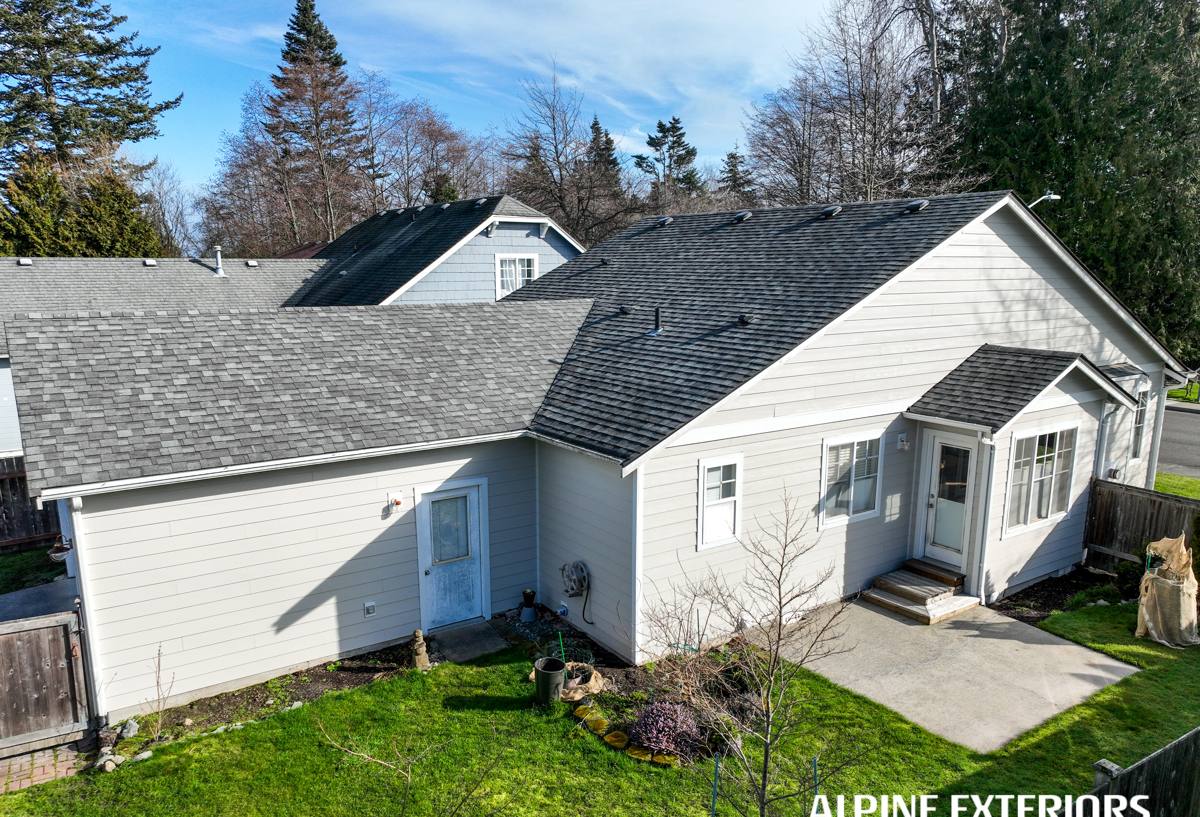
What the Local Climate Actually Does to a House
Moisture Load, Not Just Rainfall Totals
It's not just how much rain falls — it's how long a surface stays wet afterward. In a valley setting like Sumas, air movement is often lighter than it is right on the coast, which means siding, trim, and shaded roof sections can stay damp for days after a storm passes. That extended moisture exposure is what drives moss growth, wood rot, and the slow swelling and warping that shows up in lower-grade siding materials over time.
Freeze-Thaw Swings
Whatcom County winters bring cold snaps that push temperatures below freezing, sometimes right after a soaking rain. Water that's worked its way into a seam, a fastener hole, or a piece of unsealed trim can freeze, expand, and widen that gap — an entry point that gets a little bigger every winter until something fails.
Moss and Organic Growth
Shade, humidity, and mild temperatures are exactly what moss and algae need to thrive. On roofs, that growth holds moisture against shingles and accelerates wear. On siding, it stains and, on porous or wood-based products, can actually feed on the surface itself. On decks, it turns boards slick and starts breaking down the wood fiber from the surface in.
Siding: Why We Install Only James Hardie
Ferndale Siding installs James Hardie fiber cement siding exclusively. We don't offer vinyl, LP SmartSide, Cemplank, Allura, primed spruce, or cedar as alternatives — not because those products don't have a place in the market, but because after years of exterior work in this climate, Hardie is the one product we're confident holds up to the specific combination of sustained moisture, moss pressure, and freeze-thaw cycling that Whatcom County homes face.
Why We Don't Install the Alternatives
- Vinyl siding expands and contracts with temperature swings, can warp or crack in impact, and its seams and panels give moisture more places to work behind the cladding over time.
- LP SmartSide, Cemplank, and Allura are engineered wood or fiber cement products with their own merits, but wood-based composites carry moisture sensitivity at cut edges and fastener points that we're not willing to gamble on in a climate this wet, and other fiber cement brands haven't matched Hardie's factory finish warranty or regional engineering.
- Primed spruce and cedar are real wood — beautiful when new, but they require an ongoing maintenance commitment (repainting, sealing, monitoring for rot) that most homeowners underestimate until the siding is already showing damage.
What James Hardie Gets Right
James Hardie fiber cement is non-combustible, resists moisture far better than wood-based products, and doesn't support moss and mold growth the way organic materials can. It's engineered in HZ5 and HZ10 formulations specifically for climates like ours, meaning the board itself is designed for the freeze-thaw and moisture exposure Whatcom County sees every winter. The ColorPlus factory finish is baked on under controlled conditions, which holds color and resists fading and chipping better than field-applied paint, and it comes with a strong, transferable manufacturer warranty that follows the house if it's ever sold.
Roofing for a Wet, Mossy Climate
Roofs in Sumas take the same punishment as the siding below them, arguably worse, since they're the first surface to catch every storm. A roof system here needs to manage sustained rain without pooling, resist moss colonization on shaded slopes, and hold up to wind events that come through the valley.
What We Look At
- Underlayment quality and ice-and-water shield placement at vulnerable areas like valleys and eaves
- Ventilation — a poorly ventilated attic traps moisture that works its way back into the roof deck from underneath
- Flashing at every penetration, chimney, and wall intersection, since that's where the majority of roof leaks actually start
- Moss-resistant shingle options and treatments for north-facing and heavily shaded roof planes
A roof replacement is also a natural time to correct any existing ventilation or moisture problems before new siding goes on beneath it, which is why we look at the whole exterior system together rather than treating each component in isolation.
Windows: The Weak Point in Most Older Homes
Older single-pane or early dual-pane windows are one of the most common sources of both energy loss and moisture intrusion in Whatcom County homes. Failed seals fog up the glass, and worn weatherstripping or settled frames let wind-driven rain track in around the edges — exactly the kind of driving rain this region sees regularly through fall and winter.
What Matters in a Window Replacement Here
Beyond energy performance, proper flashing and integration with the surrounding siding matter as much as the window unit itself. A high-quality window installed with poor flashing will still leak. We treat window replacement as part of the whole building envelope — the window, the flashing, and the siding around it all need to work together to keep water out.
Decks: Built to Handle Standing Moisture and Moss
Decks take moisture damage differently than siding or roofing — they're horizontal, they collect standing water, and they're often shaded by the house itself, which is a recipe for moss and slow wood decay. In Sumas's valley setting, decks that don't get much direct sun or airflow are especially prone to staying damp long after the rest of the yard has dried.
Design Choices That Actually Matter
- Proper gapping between boards so water drains through instead of sitting on the surface
- Ledger board flashing where the deck attaches to the house — a common hidden rot point
- Material choice matched to how much shade and moisture exposure the deck actually gets
- Railing and post connections detailed to shed water rather than trap it
Comparing Exterior Materials for This Climate
| Material | Moisture Resistance | Maintenance Needed | Typical Longevity Here |
|---|---|---|---|
| James Hardie fiber cement | High — engineered for climates like ours | Low — factory finish, no repainting cycle | Decades, backed by transferable warranty |
| Vinyl siding | Moderate — seams allow moisture behind panels | Low, but prone to warping/cracking over time | Variable, shorter in impact or extreme temp swings |
| Wood/cedar siding | Low without diligent upkeep | High — regular sealing/repainting required | Depends heavily on maintenance follow-through |
| Engineered wood composite (LP, etc.) | Moderate — sensitive at cut edges/fasteners | Moderate | Good if perfectly maintained, at risk if not |
Why a Local Crew Matters More Than It Sounds Like It Should
Exterior work in a place like Sumas isn't just about picking the right product — it's about understanding how that product behaves through an actual Whatcom County winter, not a generic install manual. A crew that works this region regularly knows where moss tends to build up on a north wall, how far to run flashing given the rain this area gets, and which shaded corners of a house need extra attention during installation. That local judgment shows up years later as the difference between siding that still looks new and siding that's already showing streaks and soft spots.
What to Ask Before Hiring Anyone for Exterior Work
- Are they licensed and insured in Washington, and can they provide proof without hesitation?
- Do they install one siding system they stand behind, or a menu of products with varying quality?
- Will they explain flashing and moisture management details, or just talk about the finished look?
- Do they provide a written manufacturer warranty, and is it transferable if you sell the home?
- Can they walk you through how their approach accounts for this region's rain and moss exposure specifically?
Get a Straightforward Estimate
If your home in Sumas is due for new siding, a roof, replacement windows, or deck work, we're happy to take a look and give you an honest read on what's going on and what it would take to fix it. There's no pressure and no obligation — just a straight answer from a local crew that works in this climate every day. Fill out the form below to schedule a free estimate.