 Ferndale
 Why Birch Bay Homes Ask About Siding Sooner Than Most
Birch Bay sits close enough to the water that salt air, wind-driven rain, and long stretches of damp, shaded weather are just part of owning a home there. If you've lived in the area for any length of time, you've probably noticed that exterior materials don't last here the way they do twenty or thirty miles inland. Paint fades faster. Wood trim softens at the edges. Moss finds every north-facing wall and stays for months. None of that is unusual for Whatcom County's marine climate — it's just more concentrated the closer you get to the bay.
That's the backdrop for every siding conversation we have with Birch Bay homeowners. It's not a hypothetical "coastal exposure" bullet point pulled from a brochure — it's the actual weather pattern your walls sit in for most of the year. Siding choice and installation quality matter more here than they do in a lot of other parts of the county, simply because the margin for error is smaller.
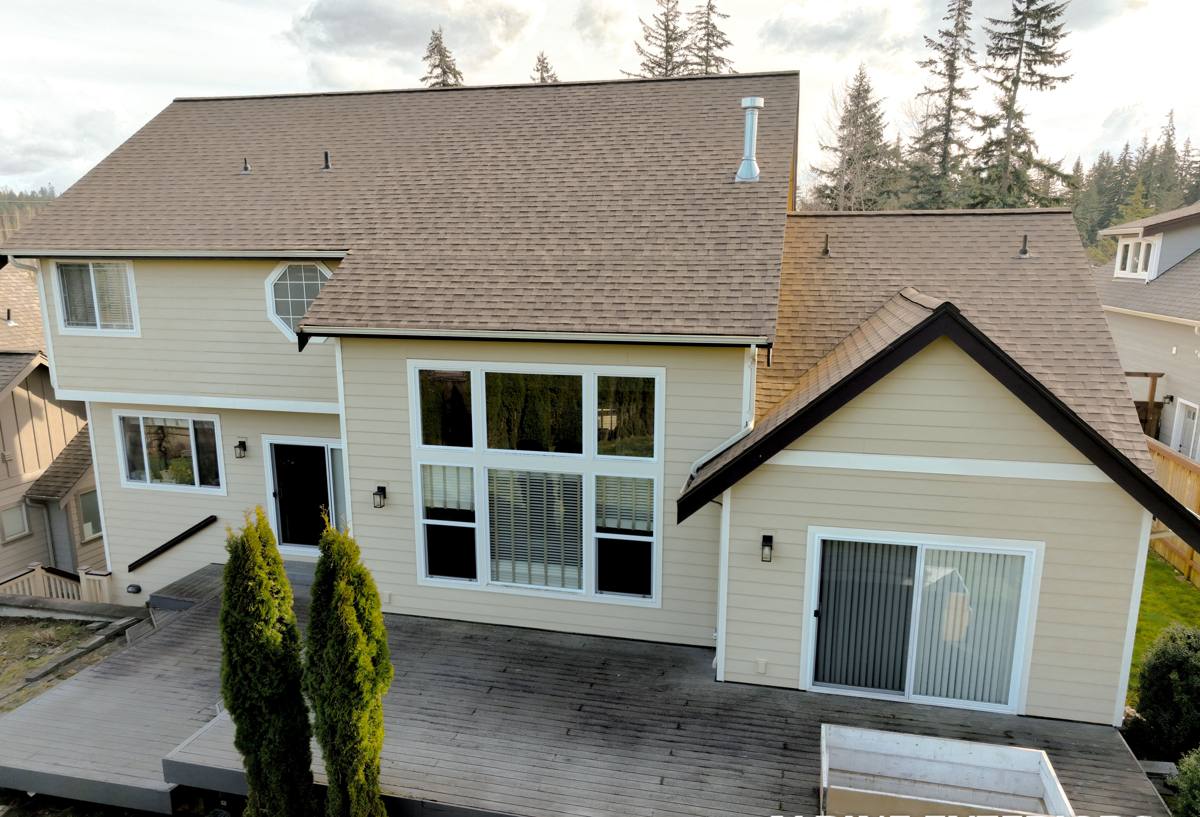
What Birch Bay's Climate Actually Does to Siding
Salt Air and Airborne Moisture
Proximity to saltwater means a steady low-level exposure to salt-laden air, especially on homes closer to the shoreline or in more open, wind-exposed spots. Salt air accelerates corrosion on fasteners, hardware, and any exposed metal trim, and it can be harder on certain paint and finish systems over time. Materials and finishes that aren't built to handle it tend to show wear years before they should.
Driving Rain
Storms coming off the water don't just fall straight down — wind pushes rain sideways into walls, especially on the windward side of a house. That means water is being forced against seams, laps, and penetrations with real force, not just running down the surface. Any weakness in the water-resistive barrier, flashing, or siding joint gets tested repeatedly over a Birch Bay winter.
Extended Moss and Damp Season
Shade, moisture, and mild temperatures are exactly what moss and algae need, and Whatcom County gives them months of it every year. Siding that holds moisture at the surface — or has a finish that lets organic growth get a foothold — stays damp longer, which shortens its usable life and makes the house look neglected even when it isn't.
Why James Hardie Fiber Cement Fits This Environment
We install James Hardie exclusively, and Birch Bay is a good example of why. Hardie's fiber cement is non-combustible and dimensionally stable — it doesn't swell, rot, or delaminate the way wood-based or wood-alternative products can when they stay damp for long stretches. That matters directly here, where "damp" isn't an occasional condition but a season.
Hardie's ColorPlus factory finish is baked on under controlled conditions and is formulated to resist fading and hold up against the kind of coastal UV and moisture cycling Birch Bay sees. It also gives a harder, more consistent surface than field-applied paint, which matters when you're trying to keep moss and algae from getting a grip. And Hardie's HZ5 product line specifically is engineered for cold, wet, high-moisture climates — the Pacific Northwest coast is exactly the kind of environment that line was designed around.
We don't install vinyl, LP SmartSide, Cemplank, Allura, primed spruce, or cedar. Each of those has legitimate uses somewhere, but none of them is what we'd choose to put on a Birch Bay wall that's going to take direct salt air and sideways rain for the next 30 years. We standardized on Hardie because it's the product we're willing to warranty our work against in this specific climate.
What a Correct Installation Looks Like Here
The material is only half the equation. In a high-moisture, wind-driven-rain environment like Birch Bay, installation details decide whether siding performs for decades or starts failing in five years. A correct Hardie install in this area includes:
- A properly lapped and sealed weather-resistive barrier behind the siding, with no gaps at seams or penetrations
- Correct flashing at every window, door, and roofline intersection, directing water out and away from the wall assembly
- Manufacturer-specified fastener spacing and type, chosen to resist the corrosion pressure of salt air
- Proper clearance between the bottom of the siding and grade, decks, or roof lines, so water doesn't wick up into the board
- Correctly caulked and primed cut edges, since exposed raw edges are where moisture intrusion typically starts
- Ventilation behind the cladding where the wall assembly calls for it, so moisture that does get in can dry out
Skip any one of these and you can end up with a house wearing a premium siding product that still fails early — not because the material was wrong, but because the installation didn't respect the climate it's going into.
Common Mistakes We See on Coastal Homes
| Mistake | Why It Matters in Birch Bay |
|---|---|
| Standard fasteners instead of corrosion-resistant ones | Salt air accelerates fastener corrosion, leading to staining and eventual failure at attachment points |
| Skipped or minimal flashing at trim and penetrations | Wind-driven rain finds any gap and pushes water directly behind the siding |
| Siding installed too close to grade or decking | Constant dampness at the base accelerates wear and invites moss growth right where it's hardest to spot |
| Unsealed or unprimed cut edges | Raw edges absorb moisture fastest, becoming the first failure point in a wet climate |
| No rainscreen gap on shaded or wind-exposed walls | Trapped moisture behind the siding can't dry out, extending the effective "wet season" for that wall |
Our Process for a Birch Bay Siding Job
1. On-Site Assessment
We look at your home's specific exposure — which walls face the water and prevailing wind, where moss is already established, where the existing siding or trim is showing the most wear — and use that to plan the job, not just the product.
2. Moisture and Sheathing Check
Before any new siding goes up, we check what's underneath. If there's existing moisture damage from a prior installation's shortcuts, that gets addressed first. Covering a compromised wall with new siding just hides the problem.
3. Weather Barrier and Flashing Detail
This is where most of the long-term performance actually gets decided. We install and lap the weather-resistive barrier correctly and flash every window, door, and transition point to shed water outward, matching what this exposure demands rather than doing the minimum.
4. Hardie Installation to Manufacturer Spec
Fastener type and spacing, board clearances, joint treatment, and caulking are all done to James Hardie's published specifications for this climate zone — not shortcuts that might work in a drier part of the state.
5. Final Walkthrough
We go over the finished work with you, including what maintenance (if any) to expect and how the ColorPlus finish should hold up over time in this environment.
Why Hiring a Crew That Already Works Birch Bay Matters
Siding installation isn't one-size-fits-all across Whatcom County. A crew that mostly works drier, more inland jobs may not think twice about flashing details or fastener choices that are non-negotiable on a wind-exposed Birch Bay wall. We work this area regularly, which means we're not guessing about how hard the rain comes in sideways during a winter storm, or how fast moss establishes on a shaded north wall near the water — we've already seen it, repeatedly, on homes just like yours.
That familiarity shows up in small decisions throughout the job: where to add extra flashing even if it's not strictly required, which walls need a closer look at ventilation, and how much clearance to build in at grade. Those are the details that separate siding that looks good for a year from siding that performs for decades.
What This Means for Your Maintenance Going Forward
Correctly installed Hardie siding in Birch Bay still needs basic upkeep — periodic rinsing to keep salt residue and organic growth from building up, an eye kept on caulking at joints and trim over the years, and prompt attention if a gutter or downspout starts overflowing onto a wall. But it's a far lighter maintenance load than wood-based sidings that need repainting or re-coating on a recurring cycle, especially in a climate that's this hard on exposed finishes.
Ready to Talk About Your Home
If your current siding is showing its age faster than you'd expect, or you're planning ahead for a home that's going to keep facing Birch Bay's salt air and rain for the next several decades, we're happy to take a look. There's no pressure and no obligation — just an honest assessment of what your home needs and what it would take to do the job right. Use the form below to request a free estimate.