 Ferndale
 Birch Bay's Exterior Sits Right at the Edge of Two Problems
Birch Bay homes catch weather that most of Whatcom County doesn't deal with in the same way. You're close enough to the water that salt-laden air is a constant, low-grade presence on every exterior surface, and you're far enough into the Pacific Northwest storm track that driving, wind-pushed rain finds every gap, seam, and fastener a siding job leaves exposed. Add in the shade and dampness that keeps moss and algae established on north- and west-facing walls for much of the year, and you've got a combination that punishes the wrong siding material faster than almost anywhere else in the county.
This page is about one thing: installing James Hardie fiber cement siding correctly on a home in Birch Bay. Not a general overview of siding options, not a company pitch — what this specific climate demands, what a correct installation actually involves, and why the crew doing the work matters as much as the product itself.
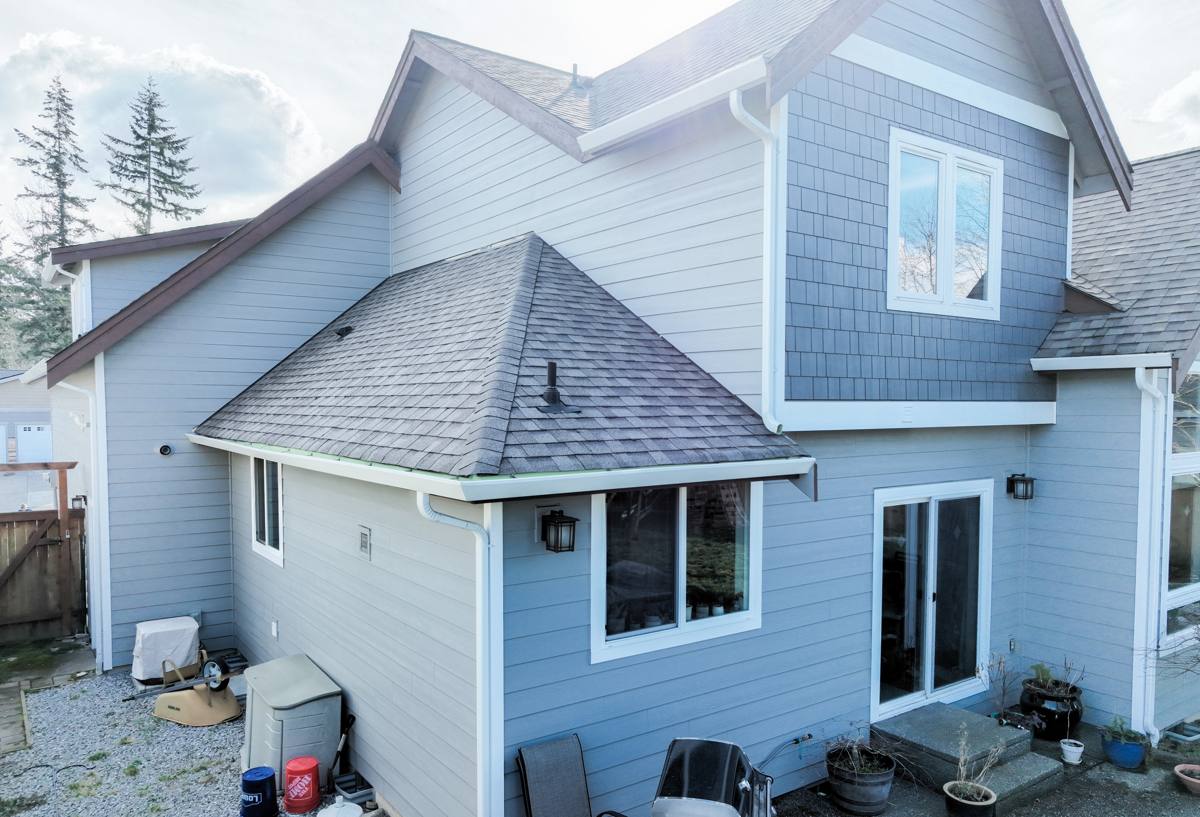
Why Birch Bay Is Harder on Siding Than It Looks
Salt Air
Airborne salt from Birch Bay and the Strait of Georgia settles on siding, trim, and fasteners year-round, not just during storms. Over time it accelerates corrosion on any exposed metal — nail heads, flashing, hose bibs, light fixture mounts — and it can degrade paint films and caulk faster than the same products would wear a few miles inland. Materials and fasteners that aren't rated for coastal exposure show it first at the fastener heads and cut edges.
Driving Rain
Wind off the water doesn't just add rain volume — it changes the direction rain travels. Instead of falling straight down onto a roof and running off, driving rain hits siding horizontally and gets pushed up under laps, around window and door trim, and into any gap where flashing or caulking is incomplete. A siding system that relies on caulk alone to keep water out, rather than proper flashing and drainage behind the cladding, will eventually let water in on a lot at Birch Bay.
Moss and Algae Season
Shaded walls, tree cover, and the region's long wet stretch from fall through spring keep moisture sitting against exterior surfaces for months at a time. That's exactly the environment moss and algae need to take hold. Siding that absorbs moisture stays damp longer and gives organic growth more of a foothold; siding that sheds water and dries quickly resists it.
What Correct Fiber Cement Siding Looks Like Here
We install James Hardie fiber cement exclusively, and in a location like Birch Bay the reasons go beyond the material's baseline durability. Fiber cement is non-combustible, doesn't rot, and doesn't provide a food source for moss and algae the way wood-based products can. James Hardie's ColorPlus factory-applied finish is baked on under controlled conditions rather than field-painted, which matters directly here: a factory finish resists fading and holds up to salt exposure and UV far better than a coat of paint applied on site in variable weather. HardiePlank and the HZ5 product line are engineered for climates like ours — freeze-thaw cycles, high moisture, and coastal exposure — rather than a one-size-fits-all specification.
But the product is only half the equation. A lot of what actually keeps water out of a Birch Bay wall assembly is installation detail:
- Correct fastener type and spacing — stainless or coated fasteners rated for coastal/high-moisture exposure, driven to the manufacturer's specified depth, not overdriven or underdriven
- Proper lap and clearance — minimum overlap on horizontal siding and correct clearance from grade, roof lines, and decks so water sheds away from the wall
- Flashing at every penetration — windows, doors, hose bibs, light fixtures, and anywhere else the wall is broken, with flashing that directs water out and down, not caulk used as the only defense
- A weather-resistive barrier and drainage plane behind the siding, installed and lapped correctly so any water that does get past the cladding has somewhere to go
- Sealed and primed cut edges — factory edges are protected, but every field cut exposes raw fiber cement that needs to be sealed before it's weathered
Skip any one of these on a Birch Bay home and the siding itself can be excellent while the wall behind it still takes on water.
Our Process for a Birch Bay Fiber Cement Job
1. On-Site Assessment
We look at more than square footage. Exposure direction, how close the home sits to the water, existing moss or moisture staining, condition of the current wall assembly, and any trouble spots around windows, decks, or roof-wall intersections all factor into the plan before we quote anything.
2. Tear-Off and Wall Inspection
Once old siding comes off, we inspect the sheathing underneath. In a wet, salt-exposed area like Birch Bay, it's not unusual to find soft or water-damaged sheathing behind old siding, especially near windows or low corners. That gets addressed before anything new goes on — covering it up doesn't solve the problem.
3. Weather Barrier and Flashing
We install and properly lap the weather-resistive barrier, then flash every window, door, and penetration so water is directed out and away from the sheathing, not trapped behind the new siding.
4. Hardie Installation to Spec
Siding, trim, and fasteners go in following James Hardie's published installation instructions for our climate zone — correct nailing pattern, clearances, and lap dimensions — because the manufacturer's warranty depends on it being installed to spec, not just installed.
5. Finish and Walkthrough
Cut edges are sealed, caulking is applied where the manufacturer calls for it (as a secondary defense, not the primary one), and we walk the exterior with the homeowner before calling the job done.
Cost Factors for a Birch Bay Fiber Cement Project
Every job is different, but the factors that move the price on a Birch Bay home tend to be the same ones, and it's worth understanding them before you compare quotes.
| Factor | Why It Matters Here |
|---|---|
| Sheathing condition | Water damage found during tear-off (more common near the shoreline) adds repair scope before new siding can go on |
| Wall exposure | Sides facing prevailing wind and rain need more careful flashing detail and may cost more in labor time |
| Trim and detail work | Homes with more windows, dormers, or architectural trim have more penetrations to flash correctly |
| Siding profile | Lap siding, shingle-style, and panel systems carry different material and labor costs |
| Access and site conditions | Tree cover, slope, and proximity to neighboring structures affect staging and labor time |
Be cautious of any quote that's dramatically lower than the others for the same scope — it's often a sign that flashing detail, fastener spec, or sheathing repair is being skipped to hit a number.
Why Hire a Crew That Already Works Birch Bay
A contractor who mainly works drier, inland areas can install fiber cement siding competently and still miss what matters most in Birch Bay: the flashing details and fastener specs that only become obvious after you've seen what driving rain and salt air do to a wall over a few winters. A crew with local experience knows where water tends to intrude on homes in this specific setting — which corners, which wall orientations, which older assemblies need extra attention — and builds the install around that, rather than applying a generic spec and hoping it holds.
That local knowledge also shows up in smaller ways: knowing which fastener coatings actually hold up near the water, recognizing early moss and moisture patterns during the initial walk-around, and understanding how Whatcom County's permitting and inspection process works for exterior projects.
Signs Your Current Siding Is Losing the Fight
If you're not sure whether it's time to look at replacement, a few signs are worth checking for on a Birch Bay home specifically:
- Soft, dark, or swollen spots along the bottom edge of siding boards, especially near grade or decks
- Persistent moss or algae that returns quickly after cleaning, particularly on shaded or north-facing walls
- Peeling or bubbling paint, which often signals moisture trapped behind the surface rather than just a cosmetic issue
- Visible rust streaking from fastener heads, a sign of corrosion from salt exposure
- Gaps or separation at trim and window edges where caulk has failed and not been replaced
Any of these on their own might just need spot repair. Several together, especially on a home that's had the same siding for a couple of decades, usually means it's worth a full assessment.
What a Correct Fiber Cement Job Buys You Long-Term
Done right, a James Hardie fiber cement installation in Birch Bay should mean fewer emergency repairs after winter storms, less recurring moss and algae treatment, a finish that holds its color without repainting on the schedule wood or vinyl would require, and a wall assembly that's actually managing water correctly rather than just hiding the problem behind new material. It's a bigger upfront project than a patch job, but it's also the difference between siding that fights this climate and siding that eventually loses to it.
If you're weighing a siding project for a Birch Bay home, we're glad to come take a look and give you a straightforward, no-pressure estimate — what we'd recommend, what it would involve, and why.