 Ferndale
 Metal Roofing Built for the Lummi Nation Area's Coastal Climate
Homes in and around the Lummi Nation area, just west of Ferndale, sit close enough to the water that the air itself works against a roof every single day. Salt carried in on the wind, driving rain off the Strait, and long stretches of gray, damp weather all add up to conditions that are harder on a roof than most inland parts of Whatcom County ever see. A metal roof is one of the best answers to that combination, but only if it's specified and installed with this exact climate in mind. A roof that would hold up fine in a drier, calmer part of the state can fail early out here if the details are wrong.
We work this area regularly, which matters more than it might sound. A crew that only occasionally gets out this way doesn't build the same instinct for how salt air, wind direction off the water, and moss growth actually behave on a roof here. That local pattern recognition is a big part of what separates a roof that lasts from one that needs attention again in five years.
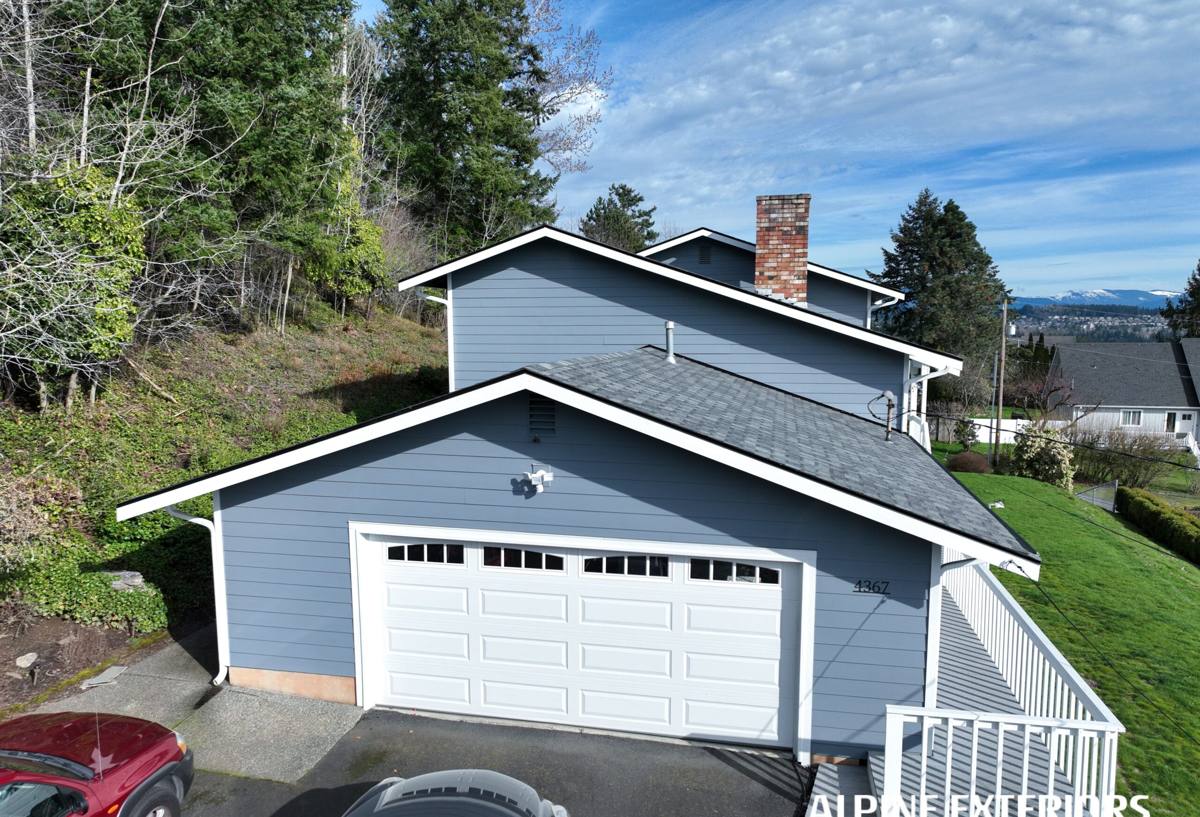
What Salt Air, Rain, and Moss Actually Do to a Roof Out Here
Salt Air and Metal Fatigue
Salt in the air doesn't just sit on a roof's surface — it works its way into any exposed edge, fastener, or scratch in a coating. Over years, that accelerates corrosion at the points where metal roofing is most vulnerable: cut edges, fastener heads, and flashing seams. The right metal choice and finish resist this far longer than a budget product, but no coated metal is immune, which is why detailing at every penetration matters as much as the panel itself.
Driving Rain and Water Path
Wind-driven rain off the water doesn't fall straight down — it gets pushed sideways and upward under laps, trim, and flashing that would keep a calmer rain out just fine. A metal roof depends on every seam, lap, and penetration being detailed to shed water moving in more than one direction, not just downhill.
Moss and the Long Wet Season
Whatcom County's wet season runs long, and shaded, north-facing, or tree-covered sections of roof stay damp for weeks at a time. Moss doesn't just look bad — its root structure holds moisture against the roof surface and can lift or separate coatings and seams over time if it's allowed to spread unchecked. Metal roofing resists moss far better than composition shingle or wood, but it isn't moss-proof, especially where debris collects and holds moisture against the panels.
Choosing the Right Metal Roofing System for This Property Type
Not every metal roofing system is a good fit for a coastal, moss-prone climate. The right choice depends on the home's roof pitch, how exposed it is to wind off the water, and the homeowner's budget and long-term maintenance appetite.
| System | Best For | Coastal Climate Trade-Offs |
|---|---|---|
| Standing seam (concealed fastener) | Most homes in this area, especially higher-exposure sites | Fewer exposed fasteners means fewer corrosion entry points; higher upfront cost, longest service life |
| Exposed fastener panel | Outbuildings, shops, budget-conscious re-roofs | Lower cost, but fastener gaskets age faster in salt air and need periodic inspection |
| Stone-coated steel | Homes wanting a shingle-like appearance | Good moss and impact resistance; more seams and profile detail to flash correctly |
| Aluminum panel systems | Direct waterfront or highest salt exposure | Naturally corrosion-resistant even if coating is compromised; higher material cost than steel |
For most Lummi Nation area homes we look at, standing seam steel with a quality baked-on finish is the workhorse choice — it balances upfront cost against decades of low-maintenance service in a salt-air environment. Aluminum earns its higher price on properties with direct water exposure where salt fatigue on steel edges would be a faster-moving concern.
What a Correct Metal Roof Installation Actually Involves
Metal roofing looks simple from the ground, but the parts nobody sees are what determine whether it lasts twenty years or fifty.
Underlayment and Deck Prep
We start with a synthetic, high-temperature underlayment rated for metal roofing, plus self-adhered membrane at eaves, valleys, and any low-slope transition. In a wet climate like this, the underlayment is the backup plan for the moments — and there will be moments over decades — when wind-driven rain gets past the panel surface.
Fastening and Panel Layout
Panel layout has to account for prevailing wind direction and expected lap exposure to blowing rain, not just square footage. Fasteners, clips, and seam type all get chosen to match the specific roof's pitch and exposure rather than defaulting to whatever's fastest to install.
Flashing and Penetrations
Every chimney, vent pipe, skylight curb, and wall transition is a place water can find its way in. We flash these with the same coastal detailing standard across the whole roof — no shortcuts on the parts that are hardest to reach or slowest to install, because those are usually the parts that leak first.
Ventilation
A metal roof over a poorly ventilated attic can trap moisture underneath the deck, which causes rot and mold regardless of how good the metal itself is. We check and correct intake and exhaust ventilation as part of the job, not as an afterthought.
Our Process From First Call to Final Walkthrough
- On-site assessment: We walk the roof, check the deck condition where accessible, and note exposure to wind, tree cover, and moisture patterns specific to that property.
- Written proposal: A clear scope covering panel system, underlayment, flashing details, ventilation work, and a realistic price range — no vague allowances.
- Scheduling around weather: Metal roofing installs go faster and safer in a dry window, so we plan around forecasts rather than pushing through rain.
- Tear-off and deck inspection: Old roofing comes off, and we inspect the deck for rot or soft spots before anything new goes down — problems get flagged and priced before we cover them up, not after.
- Installation: Underlayment, panels, flashing, and trim go on in sequence, with attention to the coastal detailing points above at every step.
- Final walkthrough: We review the finished roof with the homeowner, point out any maintenance items, and make sure everything is clean before we leave.
Why a Crew That Already Works This Area Matters
A roofing crew that mostly works drier, inland jobs doesn't build the same feel for how salt exposure and moss growth actually play out over years on a roof near the water. We've seen how quickly moss can re-establish on a north-facing slope near tree cover here, and how much faster fasteners can show wear on a home with direct exposure to wind off the water versus one that's more sheltered. That pattern recognition shapes real decisions — panel spacing, flashing sequence, which penetrations get extra attention — not just talking points.
It also means we're not guessing at permitting, typical roof pitches, or the kind of tree cover common to this part of Whatcom County. Familiarity with the area translates into fewer surprises during the job and a more accurate estimate up front.
Maintenance That Actually Matters in This Climate
Metal roofing is low-maintenance compared to shingle or wood, but "low-maintenance" isn't the same as "no-maintenance" in a climate like this.
- Clear debris and needles from valleys and gutters at least twice a year — trapped debris holds moisture against panels and accelerates moss growth
- Have shaded or moss-prone sections checked annually rather than waiting until moss is visibly established
- Avoid pressure washing metal panels directly — it can drive water under laps and damage coatings; a soft wash or gentle rinse is safer
- Inspect exposed fasteners on exposed-fastener systems every few years, since gaskets are the first thing to age in salt air
- Have flashing around chimneys, skylights, and vent pipes checked after any major windstorm off the water
What Drives the Cost of a Metal Roof Here
| Factor | Why It Matters in This Area |
|---|---|
| Panel system chosen | Standing seam and aluminum cost more upfront than exposed-fastener steel but need less attention over time in salt air |
| Roof complexity | More valleys, penetrations, and roof planes mean more flashing detail, which is where labor time and coastal-durability decisions concentrate |
| Deck condition | Rot found during tear-off, more common on long-neglected roofs in a wet climate, adds repair cost before new roofing goes on |
| Ventilation upgrades | Correcting inadequate attic ventilation adds some cost but protects the investment from the inside out |
| Access and pitch | Steeper or harder-to-access roofs take longer and require more safety setup |
Because of these variables, an honest metal roofing estimate has to be based on an actual look at the property. Broad per-square-foot numbers thrown out over the phone rarely hold up once someone's actually on the roof measuring pitch, checking the deck, and counting penetrations.
Signs It's Time to Have Your Roof Looked At
- Visible moss or dark streaking on north-facing or shaded sections
- Rust bleeding at fastener heads or cut panel edges
- Granule buildup or debris pooling in valleys instead of draining freely
- Soft spots, sagging, or discoloration on the ceiling below the roof deck
- A roof that's approaching or past the expected service life of its current material
- Loose, lifted, or missing flashing around chimneys, vents, or skylights after a windstorm
None of these automatically mean a full replacement is needed — sometimes a repair and a maintenance plan is the right call. But catching these early, before wind-driven rain finds its way past a small gap, is what keeps a small problem from becoming a deck replacement.
Get a Straight Answer, Not a Sales Pitch
If you're weighing metal roofing for a home in the Lummi Nation area or anywhere around Ferndale, we're happy to come take an honest look and tell you what we actually see — whether that's a full replacement, a targeted repair, or just a maintenance plan to get more years out of what's already up there. The estimate is free, there's no pressure attached to it, and you can use the form below to get one scheduled.