 Ferndale
 Why Siding Replacement in Fairhaven Is Its Own Job
Fairhaven sits close enough to the water that the air itself is part of the problem. Homes here don't just deal with Whatcom County's normal rain totals — they take on salt-laden marine air, wind-driven rain that hits walls at an angle instead of falling straight down, and a moss season that runs long into a year most other parts of the county consider dry. Siding that would last two decades in a drier, more sheltered part of Ferndale can start showing real damage in half that time on a Fairhaven-facing wall. That's not a knock on any particular product — it's just what happens when cladding is asked to do more work, more often, with less recovery time between wet spells.
A siding replacement done right in this kind of setting isn't just a materials swap. It's a chance to fix the water management behind the old siding, correct flashing details that were never right to begin with, and put a cladding system on the house that's actually built for a marine-influenced climate instead of one that merely tolerates it.
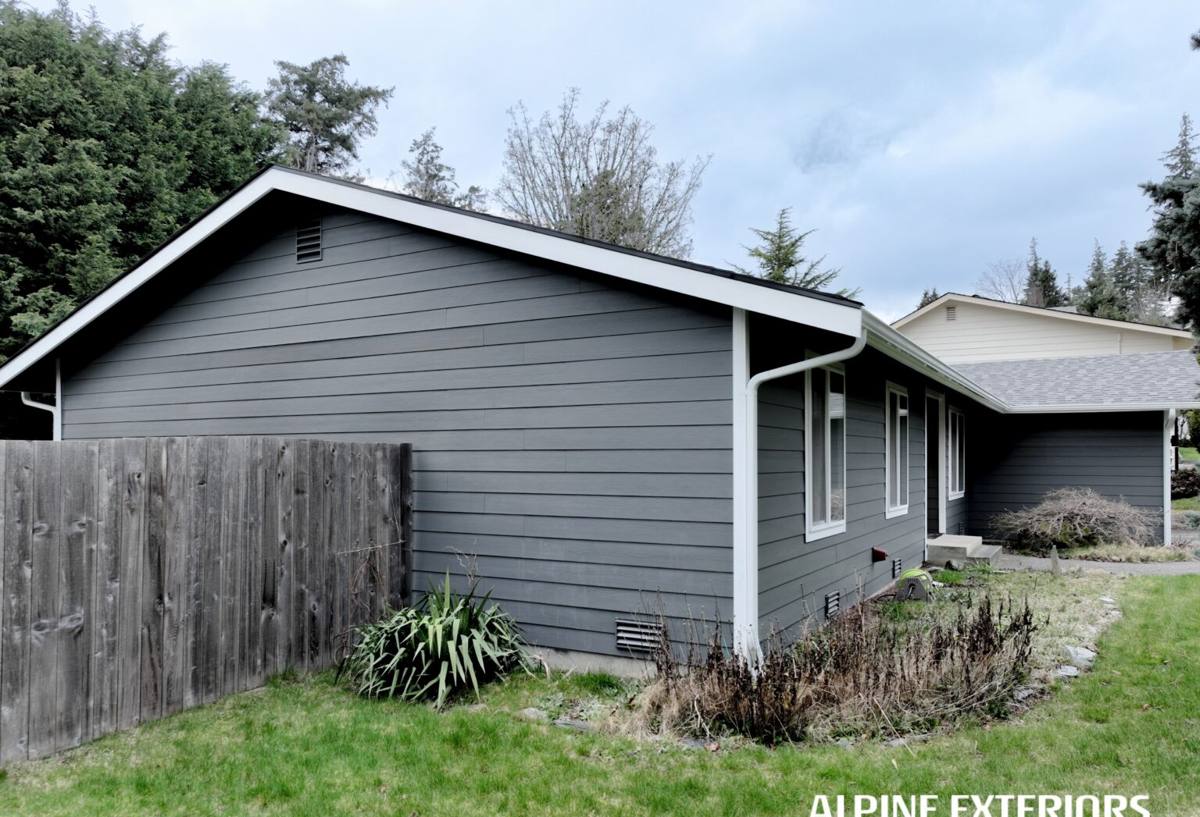
What Salt Air, Driving Rain, and Moss Actually Do to Siding
Salt Air
Airborne salt is hygroscopic — it pulls moisture out of the air and holds it against whatever surface it lands on. On siding, that means the surface stays damp longer after a storm passes, fasteners and metal flashing corrode faster, and any paint or factory finish gets asked to do more work resisting breakdown than it would a few miles inland.
Driving Rain
Wind off the water doesn't let rain fall straight down — it pushes it sideways into walls, under laps, and into any gap in the siding or trim that wouldn't normally see water in a calmer climate. This is why lap spacing, caulking practices, and the water-resistive barrier behind the siding matter so much more here than in a sheltered inland lot.
Moss and Sustained Dampness
Whatcom County's moss season already runs long compared to most of the state. Add the extra humidity that comes with proximity to the water, and north- and west-facing walls in Fairhaven can stay damp for weeks at a stretch. Moss and algae growth on siding isn't just cosmetic — it holds moisture against the surface and, on the wrong substrate, accelerates rot and finish failure underneath.
How Cladding Materials Actually Hold Up in This Climate
We get asked a lot why we don't offer more options. The honest answer is that once you've spent enough years replacing siding in coastal Whatcom County conditions, you start to see the same failure patterns on the same products, and you stop wanting to install something you know is going to give a homeowner a maintenance headache in year eight instead of year twenty-five.
| Material | Behavior in salt air / driving rain | Moss and moisture resistance | Typical maintenance burden here |
|---|---|---|---|
| James Hardie fiber cement | Non-combustible, dimensionally stable, holds factory finish well in salt-influenced air | Doesn't rot; correct installation sheds water at laps and penetrations | Occasional wash; ColorPlus finish is engineered for long recoat intervals |
| Vinyl | Can warp or become brittle with temperature swings; seams and J-channel are common entry points for wind-driven rain | Traps moisture behind panels if house wrap and flashing aren't perfect | Low, but failures are hidden until rot shows behind it |
| Cedar / primed spruce | Natural wood absorbs moisture; salt air accelerates finish breakdown | Prone to moss growth and rot in shaded, damp exposures | Frequent repainting/staining and moisture monitoring |
| LP SmartSide (engineered wood) | Wood-based substrate; edges and cut ends are moisture-sensitive if not fully sealed | Can swell or delaminate if water gets past the finish | Ongoing caulk and finish upkeep, especially at seams |
That table is exactly why we standardized on one product line: James Hardie fiber cement siding. It's non-combustible, it doesn't rot, it holds a factory finish far longer than field-applied paint on wood, and it's engineered in HZ product lines specifically for higher-moisture climates like ours. We're not the cheapest bid you'll get, and we're upfront about that — but we'd rather turn down a job than install something we know is going to disappoint a Fairhaven homeowner in a wet-year test the product wasn't built for.
What a Correct Siding Replacement Involves
The siding itself is the part everyone sees. The part that actually determines whether the job lasts is underneath it.
Tear-Off and Sheathing Inspection
Full removal of the old siding lets us actually look at the sheathing, framing, and any trouble spots — especially around windows, doors, and any wall that's taken the brunt of driving rain for years. Patching over hidden rot is how a siding job looks fine for two years and then fails.
Water-Resistive Barrier and Flashing
A weather-resistive barrier goes on correctly lapped, shingle-style, so water is directed out and down instead of into seams. Flashing at windows, doors, roof-wall intersections, and penetrations gets integrated with that barrier — not caulked over it as an afterthought. In a driving-rain climate, flashing details are where most siding failures actually start.
Correct Fastening and Clearances
James Hardie has specific fastening patterns, lap requirements, and minimum clearances from grade, roofing, and decks that are engineered around moisture management. Skipping these to save labor time is the single most common reason fiber cement siding underperforms — it's rarely the product's fault, it's the installation.
Trim, Caulking, and Factory Finish Integrity
ColorPlus factory-finished siding is designed to minimize field caulking and touch-up painting, but the trim and transition details still have to be handled correctly to keep water out and the finish warranty intact.
Our Process for a Fairhaven Job
- On-site assessment — we look at exposure direction, existing moisture damage, and which walls are taking the most weather.
- Tear-off and substrate check — old siding comes off, sheathing gets inspected, and any rot is documented and addressed before anything new goes on.
- Water management install — house wrap, flashing, and integrated drainage details go in first, correctly lapped and sealed.
- Hardie installation to spec — correct fastener spacing, lap dimensions, and clearances, following manufacturer installation requirements for our climate zone.
- Trim, caulk, and finish detail — transitions, corners, and penetrations finished so the ColorPlus warranty stands behind the whole assembly.
- Final walkthrough — we go over the finished job with the homeowner before we consider it done.
Signs a Fairhaven Home May Need Siding Replacement Now
- Persistent moss or algae staining that comes back within weeks of cleaning
- Soft spots, bubbling, or visible warping, especially on the walls facing prevailing wind and rain
- Peeling or chalking paint on wood or engineered wood siding
- Visible gaps at seams, corners, or trim where wind-driven rain can get behind the siding
- Rising energy bills that suggest the wall assembly behind the siding is compromised
- Siding that's outlived its expected service life for this climate, regardless of how it looks from the street
Why Hiring a Crew That Already Works This Area Matters
A crew that only occasionally works near the water tends to install siding the same way they would inland — same flashing habits, same lap spacing judgment calls, same assumptions about how much rain a wall will actually see. In Fairhaven, those assumptions are wrong often enough to matter. A crew that works this stretch of Whatcom County regularly knows which walls need extra attention at flashing and penetrations, understands how long moss season actually runs here, and doesn't have to relearn coastal-climate installation details on your house.
That local familiarity also shows up in scheduling and sequencing. Tear-off exposes bare sheathing to weather, so timing the work around Fairhaven's wetter stretches — and moving fast once the old siding is off — is something a crew with local experience plans for instead of finding out the hard way.
Warranty and Long-Term Care
James Hardie's product warranty is transferable and backs the fiber cement substrate; the ColorPlus finish carries its own separate finish warranty covering fade and peel resistance. Both depend on installation to manufacturer specification — which is exactly why the installation details above aren't optional extras, they're what keeps the warranty valid if something ever needs to be addressed down the road. After installation, Hardie siding in a climate like this needs very little: an occasional gentle wash to keep moss and salt residue from building up, and a visual check of caulking and trim every year or two.
If you're weighing a siding replacement on a Fairhaven-area home, we're happy to take a look, walk the exterior with you, and give you a straight assessment of what's going on and what it would take to fix it right. There's no pressure and no obligation — just fill out the form below for a free estimate.