 Ferndale
 Sudden Valley's Siding Problem Isn't Cosmetic — It's Moisture Management
Homes in Sudden Valley take a steady beating from the same forces that shape exterior work across Whatcom County: salt-tinged air moving in off the water, driving rain that comes sideways more often than straight down, and a moss season that can stretch from October clear through April. None of that is unusual for this part of Washington. What it means for your siding is that the material on your walls needs to shed water fast, resist the constant damp that feeds moss and algae, and hold its finish through months of gray, wet weather without cracking, swelling, or delaminating.
A lot of siding failures we get called out to inspect aren't dramatic. They're slow. Caulk lines open up a hair. Moisture gets behind a butt joint. A north-facing wall stays damp for weeks at a time and starts growing a green film that never fully dries out. By the time a homeowner notices soft spots or peeling paint, the damage has usually been building for a couple of seasons already. The fix isn't a better caulk gun — it's a siding system engineered for this exact climate, installed by a crew that treats water management as the whole job, not an afterthought.
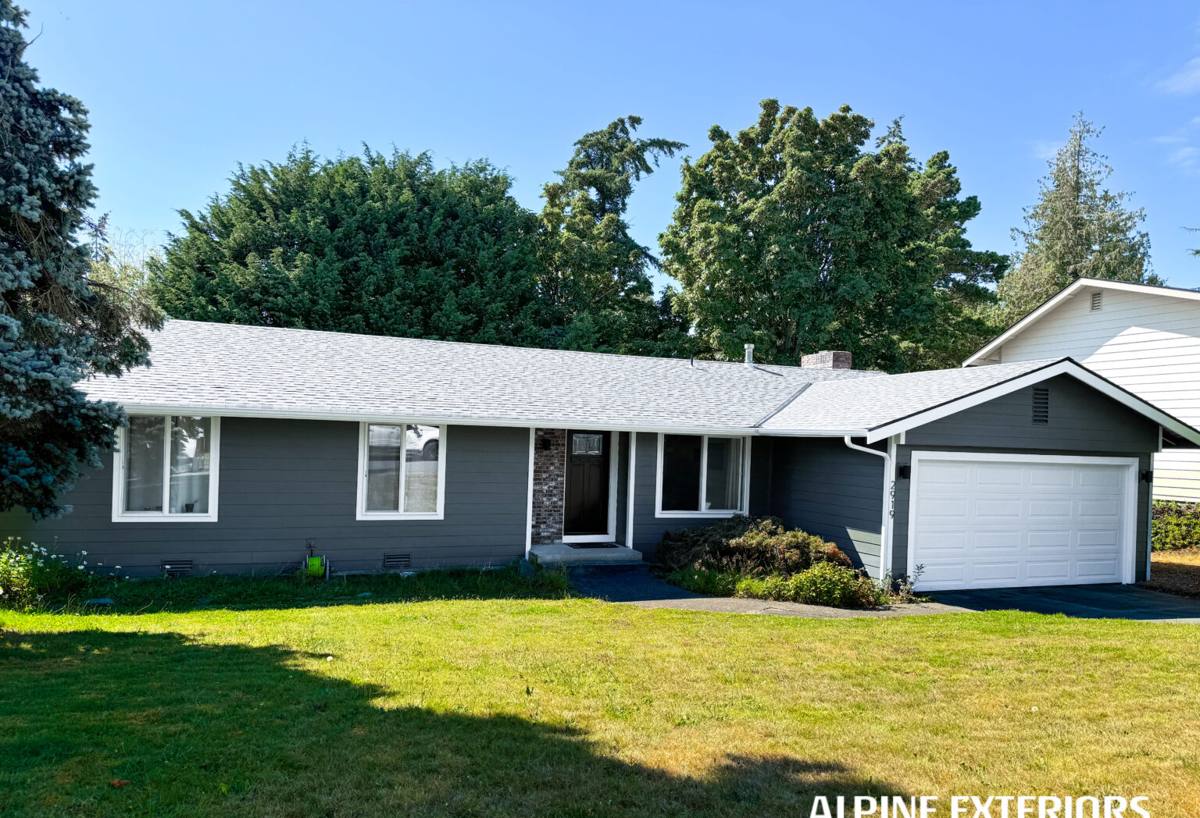
Why We Install Only James Hardie Fiber Cement
We made a decision a while back to stop installing anything other than James Hardie siding, and Sudden Valley is a good example of why. Fiber cement is inert — it's made from cement, sand, and cellulose fibers, so it doesn't absorb water the way wood-based products can, and it doesn't rot. It's also non-combustible, which matters in a region where wildfire smoke and dry-season fire risk have become part of the conversation even in historically wet counties.
James Hardie's ColorPlus finish is baked on at the factory under controlled conditions, which gives it better fade and chip resistance than field-applied paint. That matters here specifically because repainting a house that sits under tree cover, gets rained on nine months a year, and never quite dries out between storms is a miserable, short-lived job. A factory finish buys you years before you're thinking about repainting at all.
What Homeowners Actually Notice
- Straighter, flatter wall lines that don't show waviness after a few wet-dry cycles
- Color that stays consistent instead of chalking or streaking near roof lines and gutters
- No swelling at butt joints or panel edges after a wet winter
- Less moss and algae staining on shaded, north- and west-facing walls
- A material that holds paint and caulk adhesion better over time than wood-based sidings
The Right Hardie Product Line for This Elevation
James Hardie engineers its siding by climate zone, and the Pacific Northwest — including the Sudden Valley area — falls into their HZ5 category, built around resistance to moisture and freeze-thaw cycling rather than extreme heat. That's a meaningful distinction. A product engineered for a hot, dry climate handles differently than one engineered for a place that's wet nine months of the year and drops below freezing on cold, clear nights in the shoulder seasons.
For most Sudden Valley homes we're specifying HardiePlank lap siding for the main field, HardieTrim for corners and window/door casing, and in some cases HardiePanel with battens for a board-and-batten look on gables or accent walls. The specific profile and reveal depend on the home's style and what's original to the structure, but the underlying product engineering — the HZ5 formulation — stays the same across the neighborhood.
What a Correct Installation Actually Involves
Hardie siding performs the way it's supposed to only when the installation follows the manufacturer's published requirements. This is where a lot of the "siding failed early" complaints actually trace back to — not the product, but shortcuts taken during install. On a climate like this one, a few details matter more than usual.
Water Management Details We Don't Skip
- Correct rain-screen or drainage plane behind the siding so any moisture that gets past the surface can drain and dry instead of sitting against the sheathing
- Proper flashing at every window, door, and roof-to-wall intersection — the majority of hidden rot we find starts at a missed or undersized flashing detail
- Minimum clearance between the bottom edge of the siding and the ground, deck, or roof line, so splash-back and standing moisture don't wick into the material
- Correct fastener type, spacing, and depth per Hardie's install guide — over-driven or under-driven nails are a common cause of premature cracking
- Factory-cut or properly sealed field cuts, since an unsealed cut edge is the one part of fiber cement that can take on water if left exposed
- Caulking only where Hardie's instructions call for it — over-caulking traps moisture just as often as under-caulking lets it in
None of this is exotic. It's just detail work that takes longer to do right, which is exactly why it gets skipped by crews trying to move fast.
Our Process for a Sudden Valley Project
The steps don't change much from house to house, but the sequence matters:
- Walkthrough and moisture check. We look at the existing siding, trim, and any spots where past water intrusion left a mark — soft siding, stained sheathing, visible moss buildup — before we ever talk product.
- Tear-off and sheathing inspection. Once the old siding is off, we can actually see the wall assembly. Any soft or water-damaged sheathing gets replaced before new siding goes on — covering damaged sheathing with new siding just hides the problem.
- Weather-resistive barrier and drainage plane. This is the layer that does the real work of keeping incidental moisture off your framing, and it's the layer most invisible from the street once the job is done.
- Flashing at every penetration. Windows, doors, hose bibs, vents, light fixtures — anything that punctures the wall gets flashed before siding covers it.
- Hardie installation to spec. Correct fastening, correct clearances, correct joint treatment, per James Hardie's published installation guide for this climate zone.
- Trim, caulk, and touch-up paint at cut edges. Factory finish stays intact everywhere it can; field touch-up is limited to cuts and fastener heads.
- Final walkthrough. We go over the finished work with you before we consider the job done.
What This Runs — And What Actually Drives the Number
Every Sudden Valley home is a little different — story count, roofline complexity, how much of the old siding and trim needs to come off, whether sheathing repair is needed — so we won't quote a number without seeing the house. What we can tell you is which factors move the price the most:
| Cost Factor | Why It Matters |
|---|---|
| Wall complexity (gables, dormers, cutouts) | More corners, angles, and trim transitions mean more labor and more cut edges to seal correctly |
| Condition of existing sheathing | Rot or moisture damage found during tear-off has to be repaired before new siding goes on |
| Siding profile and accessories | Lap siding, panel with battens, and specialty trim all price differently |
| Color and finish | Factory ColorPlus finishes vs. primed-for-paint product carry different upfront costs but different long-term repaint timelines |
| Access and site conditions | Slopes, tree cover, and tight lot lines common in this area can add setup time |
As a rule, budgeting for correct water management and sheathing repair up front costs less than discovering rot behind cheap siding five years from now.
Maintenance and What to Expect Over Time
One of the honest selling points of fiber cement is how little it asks of you afterward. It doesn't need repainting on the schedule wood or engineered wood products do, it won't blister from trapped moisture the way some paint systems can, and it holds up to pressure washing far better than vinyl. That said, "low maintenance" isn't "no maintenance" — especially in a moss-prone area like this one.
- Rinse siding annually to clear pollen, moss spores, and organic buildup before it takes hold
- Keep gutters clear so overflow doesn't run down the siding face repeatedly
- Trim back vegetation that keeps a wall section shaded and damp longer than the rest of the house
- Recaulk joints if you notice separation — small gaps are easier to address early than after a wet winter
- Watch for any spot where paint is wearing thin at a cut edge, and get it touched up before moisture can find its way in
Why the Local Track Record Matters
Installation manuals are the same everywhere, but the judgment calls on a given house — how much clearance to leave near a slope, where extra flashing is worth the time even though the manual's minimum would pass inspection, which walls need extra attention because they never really dry out — that comes from having worked on enough homes in this specific area to know where the trouble spots usually are. A crew that's done siding work across Whatcom County, in weather like Sudden Valley gets, isn't guessing at those calls. That's less risk for you and fewer surprises once the tear-off starts.
If you're weighing a full re-side, a partial repair, or just want a straight answer on whether your current siding is holding up the way it should, we're happy to come take a look. The estimate is free, there's no pressure, and you'll get a plain-English answer either way.