 Ferndale
 Board & Batten Siding on the Lummi Peninsula
Homes on and around Lummi Nation sit closer to the water than almost anywhere else we work in Whatcom County. That waterfront position is part of what makes board and batten such a good-looking choice here — the vertical lines read as clean and modern against open water and big sky — but it's also why this style gets punished harder here than it does a few miles inland in Ferndale. Salt air off the bay, wind-driven rain that comes in sideways during winter storms, and a moss season that can run most of the year on shaded, north-facing walls all work against siding that isn't built and installed for the exposure.
This page is about that one job — board and batten siding, done right, for homes in this specific part of the county. Not a generic rundown of the style, and not a sales pitch. What follows is what we've learned installing it on exposed, moisture-heavy sites like this one.
What Board & Batten Actually Is
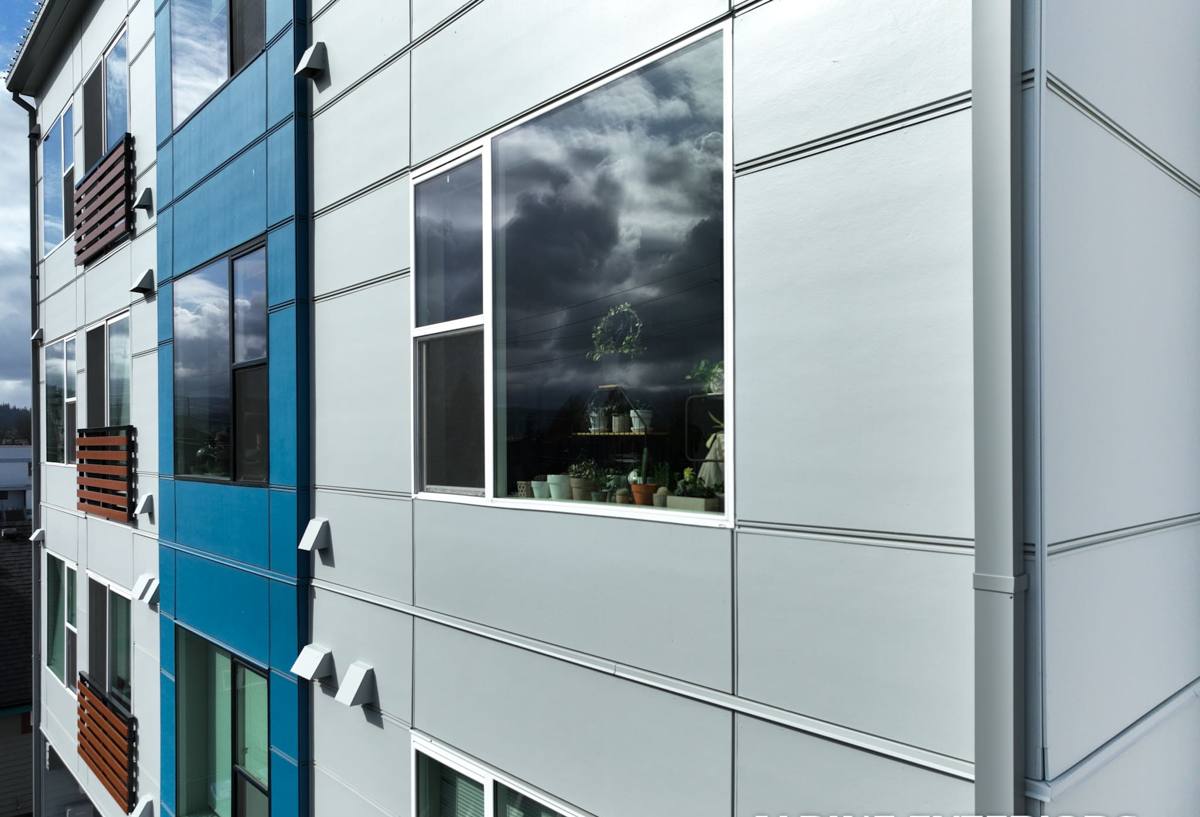
Board and batten isn't a single product — it's a siding system. Wide vertical panels are installed first, then narrower strips (the "battens") are fastened over the seams between panels, both to cover the joint and to create the signature rhythm of wide-narrow-wide-narrow lines up the wall. Done correctly, the batten does real work: it protects the panel seam from direct water intrusion and gives the wall a shadow line that lap siding can't match.
Done poorly, the batten is just a decorative strip nailed flat to the panel with no drainage path behind it. On a dry, sheltered inland lot that shortcut might go unnoticed for years. On a Lummi Nation waterfront wall taking direct salt spray and driving rain off the water, it's the difference between siding that lasts decades and siding that starts failing at the seams within a handful of winters.
Where It Works Best
- Waterfront and open-exposure elevations where a strong vertical line reads well against the horizon
- Gable ends and accent walls paired with horizontal lap on the rest of the home
- Full-home applications on modern, farmhouse, or coastal-style builds
- Mixing with trim and soffit details to break up large, flat wall planes
What Salt Air, Driving Rain, and Moss Actually Do to This Siding
Three things define siding performance on Lummi Nation lots, and they compound each other:
Salt Air and Corrosion
Airborne salt off Bellingham Bay and the surrounding waterways settles on siding, fasteners, and flashing year-round, not just during storms. Over time it accelerates corrosion in anything that isn't rated for coastal exposure — cheap fasteners, unprotected metal flashing, and lower-grade trim hardware all show it first. It also degrades some paint and coating systems faster than they're rated to handle inland.
Driving Rain
Board and batten has more vertical seams per square foot of wall than lap siding, and vertical seams are exactly where wind-driven rain wants to get in. On open, wind-exposed sites — which describes a lot of Lummi Nation properties — rain doesn't just run down the wall, it gets pushed sideways and upward under laps and behind battens that don't have a real drainage gap. Without that gap, water that gets behind the panel has nowhere to go and no way to dry out.
Moss Season
Whatcom County's wet, mild winters mean moss and algae have a long growing window, and shaded north- and east-facing walls near mature trees or close neighboring structures are the first to show it. Moss itself doesn't destroy fiber cement the way it can damage wood, but it does hold moisture against the surface longer, and if it's left to build up at the base of battens or along trim, it keeps that section of wall wetter for longer stretches than the rest of the house.
Why We Only Install This in James Hardie Fiber Cement
We don't offer board and batten in vinyl, LP SmartSide, or primed wood, and that's a deliberate call, not an oversight. Vinyl board and batten profiles are thin, expand and contract with temperature swings in ways that open up gaps at the battens, and on an exposed waterfront wall that movement shows. Wood-based products — whether primed spruce, cedar, or engineered wood panels — depend on an intact paint film and consistent maintenance to keep moisture out; miss a season of caulk and paint touch-up in a climate like this one and the substrate starts absorbing water at the seams and edges, which is exactly where board and batten has the most seams.
James Hardie fiber cement doesn't have that vulnerability. It's cement, sand, and cellulose fiber — it doesn't rot, it isn't food for the organic growth that thrives in this climate, and it holds its shape and finish through repeated wet-dry cycles far better than wood-based or vinyl alternatives. For this specific application, we use:
- HardiePanel vertical siding (Cedarmill or Smooth texture) as the field panel
- HardieTrim boards as the battens, matched in thickness and profile for a clean, consistent shadow line
- ColorPlus factory finish, baked on and warranted separately from the substrate, so the color isn't relying on a field-applied paint job to survive salt air and UV
- Hardie's HZ5 climate-engineered formulation, built for the Pacific Northwest's wet-side conditions specifically
Hardie backs the panels with a long, transferable limited warranty, and ColorPlus finishes carry their own separate finish warranty. That's a materially different position than a product where the manufacturer's warranty assumes you're repainting on a schedule.
What a Correct Installation Involves
The material is only half of what determines how this siding performs on an exposed Lummi Nation wall. Installation detail matters at least as much, and it's where a lot of board and batten jobs — regardless of brand — go wrong.
The Non-Negotiables
- A drainage plane behind the panel. A weather-resistive barrier goes on the sheathing first, and on high-exposure walls we install vertical furring strips to create a true air gap and drainage path behind the siding — not just a barrier with siding nailed flat against it.
- Correct fastening. Fasteners rated for fiber cement and coastal exposure, at the spacing and edge distance Hardie specifies — not "close enough."
- Batten placement that actually protects the seam. Battens centered precisely over panel joints, fastened into structural framing or furring, not just into the panel face.
- Flashing at every horizontal transition. Window heads, roof lines, and any horizontal trim need proper flashing so water is directed out and down, never behind the panel.
- Sealed, not caulked-and-hoped. Manufacturer-approved sealant at the joints that need it, applied to a clean, primed surface — and just as important, knowing which joints should not be sealed so the assembly can still drain and dry.
Skip the furring and drainage gap on a sheltered inland wall and you might get away with it. Skip it on an open Lummi Nation waterfront elevation taking direct wind and rain, and you're building in a moisture problem from day one.
Our Process for Lummi Nation Projects
Every board and batten job here starts with a walk of the property, not a generic quote. We look at which elevations take the worst of the wind and rain, which walls are shaded enough to be moss-prone, and what the current siding or sheathing tells us about how the house has handled moisture so far. That assessment drives the actual plan — where we add extra attention to flashing and drainage detail, and where standard practice is enough.
One thing worth knowing if you're on Lummi Nation land specifically: depending on the parcel, permitting and jurisdiction can work differently than a typical Whatcom County or Ferndale address. We'll help sort out what applies to your property before any work starts rather than assuming a standard county process — it's a conversation worth having early, not something to discover mid-project.
From there, the sequence is straightforward: confirm scope and product selections, schedule around a realistic weather window (winter storm season is not when you want panels and battens sitting exposed mid-install), tear off and inspect the sheathing, install the drainage plane and furring, hang panels, set battens, flash and seal, and do a final walkthrough before we call it done.
Cost Factors for Board & Batten in This Area
| Factor | Why It Affects the Price |
|---|---|
| Wall area and home shape | More corners, gables, and cutouts mean more batten runs and more labor per square foot |
| Wind and water exposure | Open waterfront elevations get extra furring, flashing, and sealant detail that sheltered walls don't need |
| Existing wall condition | Rot or sheathing damage found during tear-off adds repair scope before new siding goes on |
| Batten spacing and reveal | Tighter batten spacing looks a certain way but uses more trim material and installation time |
| Color selection | ColorPlus factory colors carry a different cost structure than a field-painted job, but remove ongoing repaint cost |
| Trim and corner detailing | Custom corner treatments and transitions to other siding styles add labor beyond flat panel runs |
Maintenance Checklist for This Climate
Fiber cement board and batten needs far less upkeep than wood or vinyl, but "low-maintenance" isn't "no-maintenance" — especially this close to the water. A short annual check covers most of it:
- Rinse accumulated salt spray off the siding, especially on the elevation facing open water
- Check caulking at trim joints and penetrations for cracking or gaps once a year
- Watch shaded, north-facing walls for early moss or algae buildup and clean it before it spreads
- Keep shrubs and trees trimmed back from the wall so air can move and walls can dry
- Inspect flashing above windows and where rooflines meet siding after major storms
- If any section was field-painted rather than ColorPlus factory finished, plan on repainting on a normal exterior paint cycle
Why Local Experience on Lummi Nation Projects Matters
Board and batten installed to spec on a sheltered inland lot and board and batten installed to spec on an exposed Lummi Nation waterfront wall are not the same job, even though the material list looks identical on paper. A crew that hasn't worked this specific stretch of coastline doesn't always know to add furring on the windward side, flash more aggressively around waterfront-facing windows, or plan the install schedule around this area's storm patterns. That's the kind of judgment that only comes from having done the work here before, not from a spec sheet.
We've installed and repaired siding across Ferndale and the surrounding Whatcom County waterfront, and we bring that same attention to every board and batten project on Lummi Nation — matching the install detail to what the site and the climate actually demand, not a one-size-fits-all approach.
If you're considering board and batten siding for a home on Lummi Nation, we're happy to walk the property, look at your specific exposure, and put together a straightforward, no-pressure estimate using the form below.