 Ferndale
 Decks Built for Lummi Nation's Coastal Conditions
A deck in Lummi Nation lives a harder life than a deck built twenty miles inland. This stretch of Whatcom County sits right up against saltwater, which means every outdoor structure here deals with a combination most builders never have to think seriously about: airborne salt, near-constant winter rain, and long stretches of gray, damp weather that keep wood and hardware wet far longer than they'd like to be. Add in moss season, which can run from fall through spring in this part of Washington, and you've got a set of conditions that will find every weak point in a deck's design within a few years if it wasn't built to handle them.
We build custom decks for homeowners in and around Lummi Nation with those specifics in mind from the first conversation — not as an afterthought once something starts to fail. That means different fastener choices, different attention to drainage and airflow, and different maintenance guidance than we'd give someone building a deck on the dry side of the county.
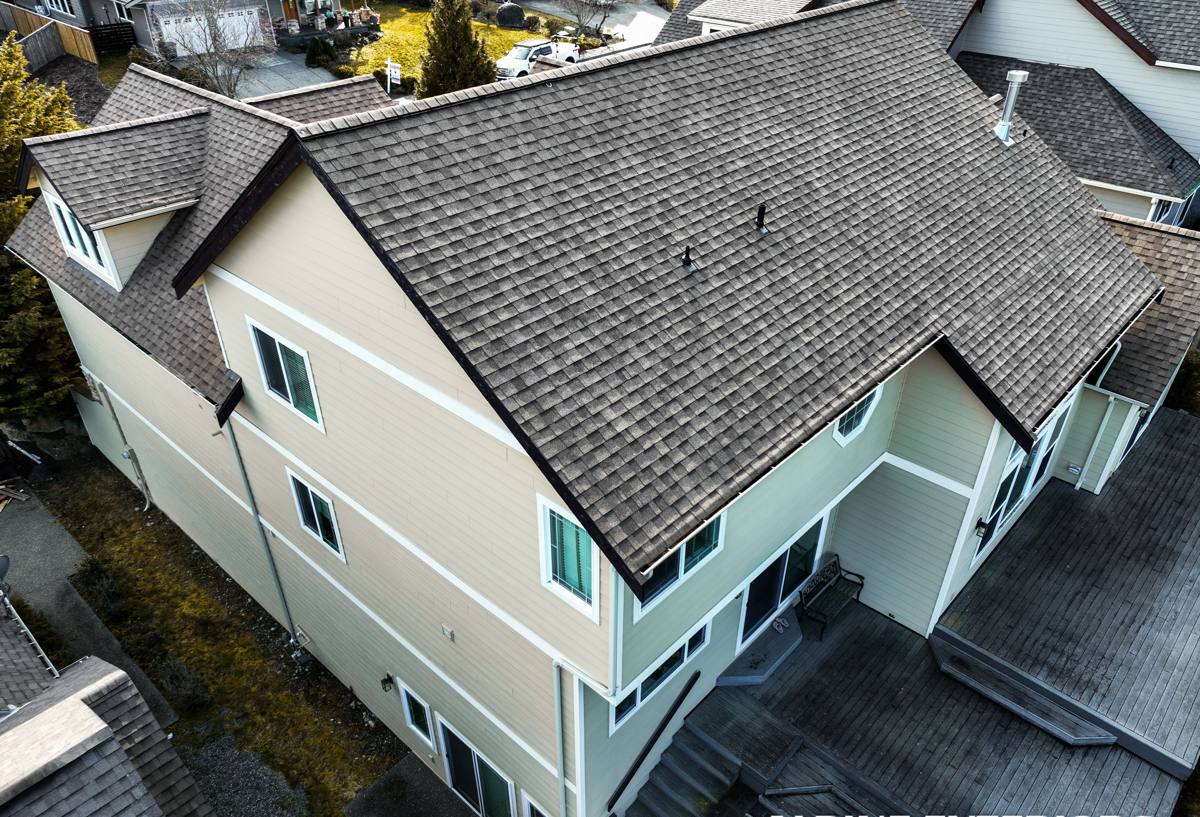
What Salt Air and Coastal Rain Actually Do to a Deck
It helps to understand the specific failure patterns before talking about how to prevent them.
Corrosion
Salt-laden air accelerates corrosion on any exposed metal — screws, joist hangers, bolts, post bases. Standard construction-grade fasteners that would last decades inland can start rusting and staining within a few years this close to the water. Once a fastener corrodes, it loses holding strength long before it looks obviously bad, which is part of what makes this dangerous rather than just cosmetic.
Moisture Cycling
Driving rain off the water, combined with our long wet season, keeps decking and framing damp for extended periods. Wood that never fully dries out swells, checks, and eventually rots — especially at joints, fastener holes, and anywhere water can pool instead of shed.
Moss and Algae
Shade, moisture, and mild temperatures are exactly what moss wants. Left unaddressed, moss holds moisture against decking boards, degrades the surface, and turns a deck slick and unsafe underfoot — not just an eyesore.
Choosing Decking Material for This Climate
There's no single "best" decking material — every option is a trade-off between upfront cost, maintenance, and how it holds up to salt air and moisture. Here's how the common choices stack up for a coastal property like yours:
| Material | Moisture & Salt Resistance | Maintenance | Relative Cost |
|---|---|---|---|
| Pressure-treated wood | Good if properly sealed and re-sealed | Annual cleaning and re-sealing recommended | Lowest upfront |
| Cedar | Naturally moisture-resistant, but surface still needs care near saltwater | Periodic oiling or staining | Mid-range |
| Composite decking | Excellent — doesn't rot or absorb moisture like wood | Occasional washing, no sealing | Higher upfront, lower long-term |
| PVC decking | Very strong resistance to moisture and salt | Low — mostly rinsing | Highest upfront |
For a lot of Lummi Nation homeowners, composite or PVC decking earns its higher upfront cost back in reduced maintenance over the life of the deck, since this environment is unusually hard on wood surfaces. That said, plenty of homeowners still prefer the look and feel of real wood, and a well-built, well-sealed wood deck can absolutely hold up here — it just asks more of you in upkeep. We'll walk through the honest trade-offs for your specific property rather than push one material across the board.
Framing, Fasteners, and the Details That Get Skipped
Most deck failures we get called out to inspect don't start with the decking boards — they start underneath, where nobody's looking. In a coastal climate, a few details matter more than they would elsewhere:
- Corrosion-resistant hardware — hot-dip galvanized or stainless fasteners and connectors rated for coastal or ground-contact exposure, not standard-grade hardware.
- Ledger board flashing — proper flashing where the deck attaches to the house keeps driving rain from working its way behind the ledger, which is one of the most common rot points on any deck.
- Joist protection — flashing tape or a protective coating on top of joists so standing water doesn't sit directly against exposed wood.
- Airflow underneath — enough clearance and ventilation below the deck so moisture doesn't get trapped, especially important with our long damp season.
- Proper drainage slope — decking pitched slightly away from the house so water sheds instead of pooling against the structure.
None of this is visible once the deck is finished, which is exactly why it's worth asking a contractor how they handle it before work starts, not after.
Design Considerations Specific to Lummi Nation Properties
Many properties in this area sit close to the water or open to it, which brings wind exposure into the design conversation alongside moisture. A few things we factor in:
Wind and Exposure
Open, waterfront-adjacent lots can see stronger, more consistent wind than sheltered inland yards. That affects railing design, how furniture and structures on the deck are anchored, and sometimes the layout itself — windbreak considerations can shape where you'd actually want to sit.
Railings and Code
Railing height and baluster spacing follow Washington building code regardless of location, but on elevated or waterfront lots, railings also take more wind load and more weather exposure than a low deck tucked against a house. We spec hardware and materials accordingly.
Orientation
Where the deck sits relative to prevailing wind and rain direction off the water affects both comfort and long-term wear. A little thought at the design stage — covered sections, screening, board orientation — can meaningfully cut down on how much weather the deck absorbs over its life.
Our Deck-Building Process
The process is straightforward, but we don't skip steps to move faster:
- On-site consultation — we look at your specific lot, sun and wind exposure, existing structure, and how you actually plan to use the space.
- Material and design walkthrough — honest trade-offs between materials, layout options, and budget, without pressure toward the most expensive choice.
- Permitting — we handle the permitting process for your project. Because Lummi Nation is tribal land, permitting and jurisdiction can work differently than in unincorporated Whatcom County or the City of Ferndale — we'll confirm what applies to your specific property before work begins rather than assume.
- Site prep and framing — footings, posts, and framing built to handle both structural load and this area's moisture exposure.
- Decking and finishing — installation of your chosen material, railings, stairs, and any built-in features.
- Final walkthrough — we go over the finished deck with you, including what maintenance it'll need and when.
Maintenance That Actually Matters Here
A well-built deck in this climate still needs regular attention — the difference between a deck that lasts and one that doesn't is often just whether basic maintenance happens on schedule.
- Sweep or rinse off debris regularly, especially in fall when leaves and organic matter trap moisture against the surface.
- Treat moss and algae growth early — once it establishes, it's harder to remove and holds more moisture against the boards.
- Inspect fasteners and hardware annually for rust or corrosion, particularly on older or standard-grade connectors.
- Re-seal or re-stain wood decking on the schedule appropriate to the product — don't wait until it visibly needs it.
- Check that drainage paths under and around the deck haven't been blocked by plantings, debris, or grading changes.
- Look at railing posts and connections for movement, which can indicate moisture getting into a joint.
Why It Matters to Hire a Crew That Already Works in This Area
A deck built with inland assumptions — standard hardware, no thought given to salt exposure, minimal drainage detailing — can look fine for a couple of years and then start failing all at once as corrosion and moisture damage catch up at the same time. We build decks throughout Whatcom County, including regularly in and around Lummi Nation, so the coastal-specific details above aren't an upsell — they're just how we build here by default. That familiarity also means fewer surprises during permitting and site prep, since we know what tends to come up on properties in this area.
Get a Straight Answer About Your Deck Project
If you're planning a new deck, replacing an aging one, or just want an honest read on whether your current deck is holding up the way it should, we're glad to take a look. We offer free, no-pressure estimates — you'll get a clear picture of your options and what we'd actually recommend for your property, with no obligation to move forward. Use the form below to get started.