 Ferndale
 What Ferndale's Waterfront Climate Does to a Roof
Homes in and around Lummi Nation sit close to open water, and that changes what a roof has to survive year after year. Salt-laden air off the bay works on exposed metal fasteners, flashing, and vent stacks in ways that inland Whatcom County roofs never deal with. Add wind-driven rain that comes in sideways off the Strait during fall and winter storms, and a roof here needs details — not just materials — that actually hold water out instead of just shedding it in calm weather.
Then there's moss. Long, wet, mild winters combined with heavy tree cover on a lot of Lummi Nation properties create a moss season that can run eight or nine months out of the year. Moss isn't just cosmetic — it holds moisture against the roof surface, works its way under shingle tabs, and slowly lifts material that's supposed to stay flat and sealed. A roof that isn't installed with moss and moisture in mind will show problems years before it should.
Ferndale and the rest of Whatcom County see this same weather pattern, but homes closest to the water — including those on Lummi Nation land near the mouth of the Nooksack River — feel it more intensely. Wind has a longer, unobstructed run across open water before it reaches a roof, and salt spray carries further inland on stormy days than most people expect.
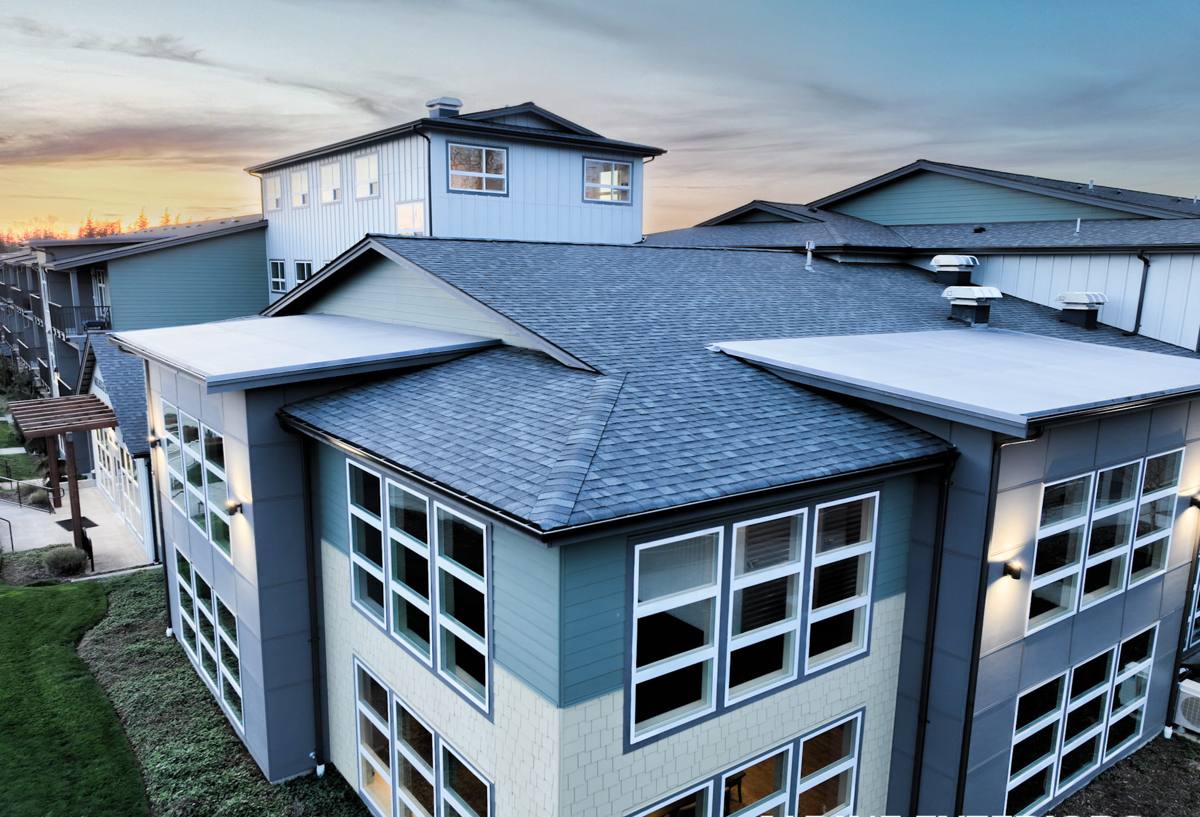
Signs It's Time for a New Roof, Not Another Repair
Not every roof problem calls for a full replacement, but in a climate like this, patch jobs on an aging roof often buy less time than homeowners expect. Some signs point clearly toward a new roof rather than another round of repairs:
- Granule loss heavy enough that you can see bare, shiny patches on shingles from the ground
- Moss or algae established across large sections rather than just the shaded north slope
- Soft spots or sagging in the roof deck when walked on
- Daylight visible through the attic or staining on the underside of the roof deck
- Multiple past repairs in different areas rather than one isolated leak
- Shingles curling, cracking, or losing their tabs, especially on south- and west-facing slopes
If a roof is showing two or more of these at once, the underlying decking and underlayment are usually past the point where a repair holds up through another wet season.
What a Correct New Roof Installation Actually Involves
Tear-Off and Deck Inspection
A proper new roof starts with a full tear-off down to the deck, not a layover on top of old shingles. That's the only way to actually see the plywood or plank decking underneath, catch any soft or rotted sections from long-term moisture intrusion, and replace them before new material goes down. Covering over a compromised deck just hides the problem for a few more years.
Underlayment and Water Protection
In a climate with this much driving rain, underlayment choice matters more than most homeowners realize. We use synthetic underlayment across the full roof and self-adhering ice-and-water barrier at the eaves, valleys, and around every penetration — chimneys, vent stacks, skylights — where wind-driven rain is most likely to find a way in.
Flashing and Penetrations
Flashing is where most leaks actually start, not out in the open field of shingles. Step flashing at walls, counter-flashing at chimneys, and properly sealed boots at every pipe penetration are what keep salt air and rain from working their way into the places a roof is hardest to inspect from the ground.
Ventilation Built In, Not Added On
A balanced intake-and-exhaust ventilation system — soffit vents pulling air in, ridge vents letting it out — keeps the attic dry and temperature-stable. That matters for shingle lifespan, ice damming in a cold snap, and keeping moisture from condensing on the underside of the deck during our long damp winters.
Fasteners and Hardware: A Small Detail That Decides Roof Life
Two roofs installed with the same shingle can age very differently based on what's actually holding them down. Standard galvanized nails and screws corrode faster in salt-heavy air, and once a fastener starts to rust it loosens and can telegraph a rust stain straight through the shingle above it within a few years. On every new roof we install in this area, we use stainless steel or coastal-rated hot-dip galvanized fasteners, along with corrosion-resistant flashing and vent components, instead of the standard hardware that's fine for an inland install but shortens roof life out here.
Choosing a Roofing Material for Salt Air and Moss
There's no single "best" roofing material for every home — the right choice depends on the home's exposure, roof pitch, budget, and how long the homeowner plans to stay in the house. Here's how the common options compare for a property exposed to salt air and heavy moss pressure:
| Material | Salt-Air / Corrosion Resistance | Moss & Moisture Resistance | Typical Lifespan | Relative Cost |
|---|---|---|---|---|
| Architectural asphalt shingle | Good, with zinc or copper strips to slow moss | Moderate — needs periodic cleaning | 25-30 years | Lowest upfront |
| Standing-seam metal | Very good with proper coating and fastener choice | Excellent — sheds moisture, little to grip onto | 40-50+ years | Highest upfront |
| Synthetic/composite shake | Good — doesn't corrode or absorb moisture | Good, resists rot better than wood | 30-40 years | Mid to high |
For most Lummi Nation homes we work on, a quality architectural shingle with corrosion-resistant fasteners and zinc strip protection at the ridge is a solid, budget-conscious choice. Homes right on the water, or homeowners planning to stay long-term, often get more value out of standing-seam metal despite the higher upfront cost, since it shrugs off salt air and moss pressure with almost no maintenance.
Ventilation and Moisture: The Part Homeowners Don't See
A new roof can look perfect from the driveway and still fail early if the ventilation underneath it isn't right. Trapped attic moisture from cooking, showers, and laundry has to go somewhere — without a working intake-and-exhaust system, it condenses on the underside of the deck, which rots wood and shortens the life of shingles from below, not above. This is especially common on homes with additions or past re-roofs where venting wasn't updated to match the new roof area.
We check and correct attic ventilation on every new roof installation, not just add vents where it's easy. That includes making sure soffit vents aren't blocked by insulation and that ridge or box vents are sized correctly for the attic's square footage.
Roof Warranties: What's Actually Covered
A new roof typically comes with two separate warranties, and it's worth understanding the difference before signing anything. The manufacturer's warranty covers defects in the shingle or metal material itself, and it's usually prorated after the first several years — it doesn't cover a leak caused by bad flashing or a rushed tear-off. The workmanship warranty, which comes from the installing contractor, covers the installation itself: flashing, fastening, underlayment placement, and ventilation. In a climate this hard on flashing and penetrations, the workmanship warranty is often the one that actually gets used, so ask any contractor exactly what it covers and for how long before comparing quotes on price alone.
Our Process, Start to Finish
- On-site estimate. We walk the roof, check the attic, and measure to give you an accurate, itemized quote — not a rough guess from the ground.
- Material selection. We go over the tradeoffs between shingle, metal, and composite options based on your home's exposure and budget.
- Scheduling around the weather. Whatcom County's wet season narrows the good installation window, so we plan for dry stretches and protect the deck if weather turns mid-job.
- Tear-off and deck repair. Old material comes off, the deck gets inspected, and any damaged sections are replaced before anything new goes down.
- Underlayment, flashing, and material installation. Ice-and-water barrier, synthetic underlayment, new flashing, and the roofing material go on in that order, with ventilation corrected along the way.
- Cleanup and magnetic sweep. We haul away all old material and debris and run a magnetic sweep for stray nails and fasteners across the yard and driveway.
- Final walkthrough. We go over the finished roof with you, including the ventilation and warranty paperwork, before calling the job done.
Why a Crew That Already Works Lummi Nation Makes a Difference
Roofing work on Lummi Nation properties often means dealing with waterfront exposure, wooded lots with limited staging space, and access roads that aren't laid out like a typical subdivision. A crew that's already done roofs in this area knows how to plan material delivery and dumpster placement around narrow driveways and tree cover, and how to sequence the job around wind patterns off the water rather than finding out mid-project.
Local experience also means knowing which details actually matter for this specific stretch of coastline versus a generic checklist. That's the difference between a roof that's technically installed to code and one that's built to hold up against the particular combination of salt, rain, and moss this area sees every year. We also keep an eye on the properties we've worked on through the winter storm season and can respond quickly with emergency tarping if a windstorm off the water causes damage before a full repair can be scheduled.
Keeping a New Roof Performing After Installation
A correctly installed roof still benefits from basic upkeep, especially in a climate this wet and shaded. A little attention once or twice a year goes a long way toward getting full value out of the investment:
- Have gutters cleared at least twice a year — clogged gutters back water up under the eaves
- Keep overhanging tree limbs trimmed back to cut down on shade, debris, and moss growth
- Have moss treated or gently removed before it establishes rather than after it's thick
- Walk the attic once a year to check for any staining, daylight, or musty odor
- Have flashing and sealant around penetrations checked every few years, since these fail before the field of the roof does
If you're weighing repair versus replacement, or just want an honest look at what your roof needs, we're happy to come out and take a look. The estimate is free, there's no pressure, and you'll get a straight answer about what your roof actually needs — just fill out the form below.