 Ferndale
 Why Metal Roofing Makes Sense for Everson
Everson sits inland from the coastline, tucked into the Nooksack River valley in Whatcom County, but it still gets the full range of what Pacific Northwest weather can throw at a roof. Winters bring long stretches of steady, driving rain. Tree cover and river-valley humidity keep moisture sitting on north-facing slopes long after the rest of the county has dried out. And the same weather systems that push salt-laden air off Bellingham Bay and the Strait of Georgia carry moisture and humidity well inland, which matters for anything metal on your roof or exposed to the elements.
Asphalt shingles handle all of that reasonably well for 15 to 20 years, then they start to fail — granule loss, curling edges, moss lifting the tabs. Metal roofing is a different proposition. Done correctly, it sheds that same rain and moss pressure for 40 to 60 years with minimal upkeep. The catch is "done correctly." Metal roofing punishes a sloppy installation faster and more visibly than shingles do — a bad fastener pattern or a missed flashing detail shows up as a leak or a rust streak, not a slow decline you can put off.
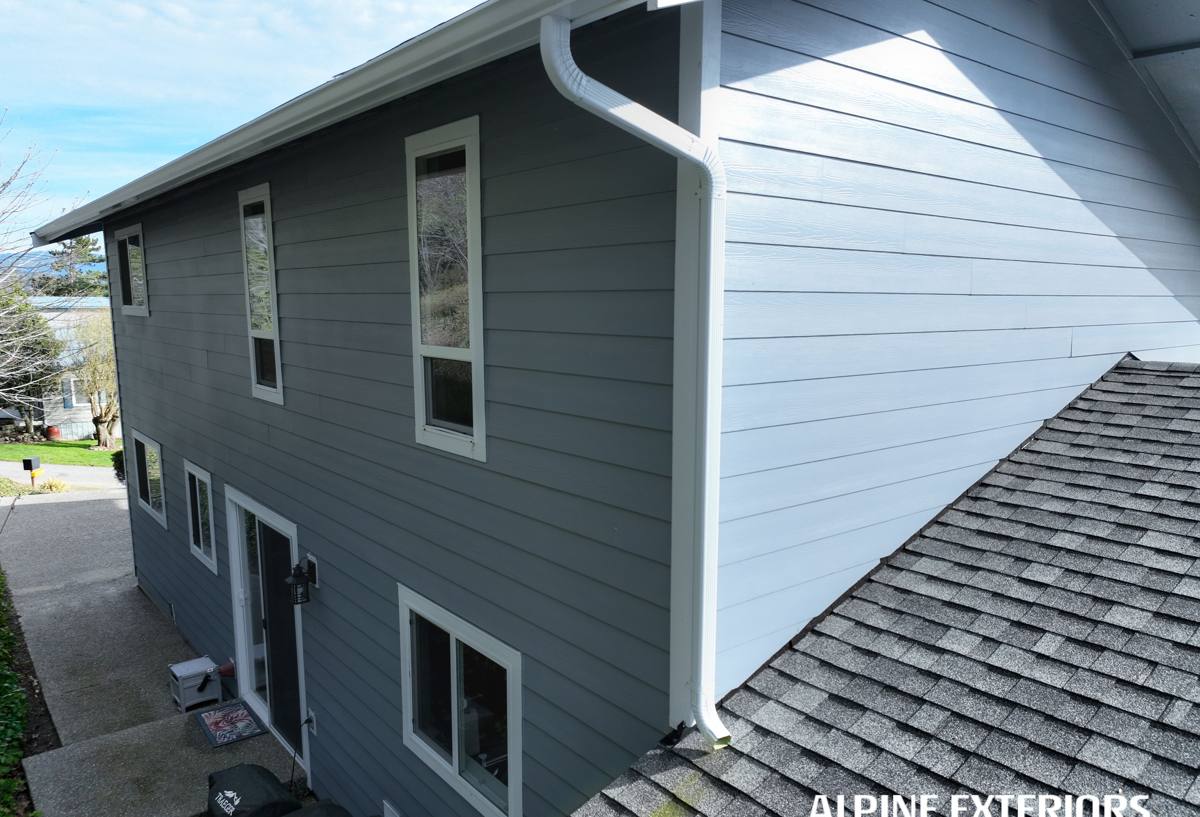
What Everson's Weather Actually Does to a Roof
Driving Rain and Wind-Driven Moisture
Rain in this part of Whatcom County rarely falls straight down. Wind pushes it sideways, up under laps, and into any gap that a fastener or seam leaves open. A roofing system built for drier climates doesn't get tested the same way ours does — every seam, every penetration around a vent pipe or chimney, and every valley has to be detailed for water that's actively trying to find a way in, not just water running downhill.
Moss and Algae in the Shade
Many Everson properties back up to trees, pasture, or river-bottom vegetation, and shaded roof sections stay damp for days after a storm passes. That's exactly the environment moss and algae need. On an asphalt roof, moss works its way under shingle edges and lifts them. On metal, moss doesn't get the same foothold on a smooth, sloped panel — but debris still needs to be kept off valleys and low-slope transitions, or organic buildup can hold moisture against the surface and shorten the life of the coating.
Regional Humidity and Corrosion
Bare or poorly coated steel doesn't hold up in a damp, humid climate over the long run — it's just a matter of time before rust starts at cut edges, fastener heads, or scratches from installation. This is a big part of why panel material and finish selection matter more here than they would in a dry climate, and it's covered in more detail below.
Choosing the Right Metal Roofing System
"Metal roofing" covers a range of products, and the right choice for an Everson home depends on the roof's slope, how visible it is, and your budget. The two main categories are standing seam and exposed-fastener (screw-down) panels.
| Feature | Standing Seam | Exposed Fastener |
|---|---|---|
| How panels attach | Concealed clips under raised seams — no exposed screws | Screws driven through the panel face into the deck |
| Long-term weather performance | Excellent — no exposed penetrations for water to work into | Good, but screw gaskets compress and need occasional attention |
| Typical lifespan | 40-60+ years | 25-40 years, depending on maintenance |
| Upfront cost | Higher | Lower |
| Best suited for | Primary roofs, steep-slope homes, long-term owners | Outbuildings, shops, budget-conscious re-roofs |
For a primary residence in a climate that gets this much sustained rain, we generally steer homeowners toward standing seam when the budget allows it. The lack of exposed fasteners removes the single most common point of failure on a screw-down roof — a compressed or backed-out gasket letting water in over time. That said, exposed-fastener panels are a legitimate, lower-cost option for shops, garages, and outbuildings, and we install both depending on what the structure and budget call for.
What a Correct Installation Actually Involves
The panels themselves get most of the attention, but the parts of a metal roof that determine whether it leaks are mostly things you never see once the job is done.
- Underlayment — a synthetic, high-temperature underlayment rated for metal roofing, not a leftover roll meant for shingles.
- Ice and water shield at vulnerable points — valleys, eaves, and around every penetration, since these are where wind-driven rain concentrates.
- Proper fastener pattern and spacing — installed per the panel manufacturer's spec, not "close enough."
- Flashing custom-formed for the actual roof — pipe boots, chimney flashing, and wall transitions bent to fit, not generic pieces caulked into place.
- Ventilation that still works after the new roof goes on — ridge and soffit venting sized correctly so moisture from inside the attic isn't trapped under the panels.
- Compatible fasteners and flashing metal — mixing incompatible metals (like plain steel screws on an aluminum panel) sets up galvanic corrosion that shows up as staining and pitting within a few years.
- Correct panel overlap and seam sealant where called for — especially on lower-slope sections where water moves more slowly across the surface.
Any one of these done wrong won't necessarily show up on day one. It shows up two, five, or ten winters later, usually as a stain on a ceiling or rot in the decking underneath — which is a far more expensive fix than getting it right the first time.
Our Process, From Estimate to Finished Roof
We start with an on-site look at the existing roof — deck condition, current ventilation, slope, and any trouble spots like valleys or chimney flashing that have leaked before. That inspection drives the plan, not a generic package.
- Assessment and measurement — we check the decking for soft spots or rot before quoting anything, since deck repair changes the scope.
- Tear-off or overlay decision — most Everson re-roofs call for a full tear-off so we can inspect and repair the deck and underlayment properly; overlay is occasionally an option on sound, single-layer roofs, but we'll tell you honestly if it's not a good idea for your situation.
- Underlayment and flashing installation — the unglamorous work that determines whether the roof performs in a driving rain.
- Panel installation — fastened or seamed per manufacturer spec, with attention to consistent spacing and clean, straight lines.
- Ventilation check — confirming intake and exhaust venting are balanced for the finished roof.
- Final walkthrough — we go over the finished roof with you, including what to expect for maintenance.
Cost Factors for Everson Homeowners
Metal roofing costs more upfront than asphalt shingles, but the math changes when you account for lifespan. Several factors specific to a given property move the price up or down.
| Factor | Why It Matters |
|---|---|
| Roof complexity | More valleys, dormers, and penetrations mean more custom flashing and labor time |
| Panel type | Standing seam costs more per square than exposed-fastener panels, largely due to labor |
| Deck condition | Rotted or undersized decking found during tear-off adds material and time to fix properly |
| Roof pitch and access | Steep or hard-to-access roofs take longer and require more safety setup |
| Existing layers | Removing old shingle layers adds disposal cost but is usually necessary for a proper metal install |
As a broad range, homeowners in this area typically see metal roofing priced somewhere between two and four times the cost of a comparable asphalt shingle job, with exposed-fastener systems at the lower end and standing seam at the higher end. We'll give you an exact number after seeing the roof — we don't quote sight unseen.
Maintenance: Keeping a Metal Roof Performing for Decades
One of the real advantages of metal roofing in a wet climate is how little maintenance it needs compared to shingles. It's not zero, though.
- Clear leaves, needles, and debris out of valleys and off low-slope sections once or twice a year, especially after fall leaf-drop.
- Keep gutters clear so water isn't backing up under eave flashing during heavy rain.
- Trim back overhanging branches that keep sections of the roof shaded and damp.
- Have fastener and flashing points checked periodically if the roof is an exposed-fastener system, since gaskets do compress over time.
- Address any scratches to the panel coating promptly — exposed steel in a humid climate will start to rust if it's left bare.
Why a Crew That Already Works in Everson Matters
A lot of what separates a good metal roof from a leaky one has nothing to do with the panels — it's judgment calls made on site: how much ice and water shield a particular valley needs, how a chimney flashing detail should be built for a roof that sits in a shaded, damp spot most of the year, how to sequence a tear-off around a week of driving rain instead of chasing dry windows that don't come. A crew that regularly works roofs in and around Everson and greater Whatcom County has already made those calls dozens of times on homes with the same climate exposure yours has. That's not something a crew based somewhere drier picks up on their first job here.
There's also a practical side: familiarity with Whatcom County permitting, realistic scheduling around our wet season, and knowing which suppliers stock the panel profiles and colors that hold up here. None of that shows up on a spec sheet, but it shows up in how smoothly the project goes and how the roof performs ten winters from now.
If you're weighing metal roofing for a home in Everson, we're happy to take a look and give you a straight answer — including telling you if a repair or a different roofing approach makes more sense than a full metal roof. Reach out for a free, no-pressure estimate using the form below.