 Ferndale
 Roof Repair in Lynden: Built for Whatcom County Weather
Lynden homes deal with a specific combination of conditions: long stretches of driving rain in fall and winter, humid marine air that never fully dries out a roof surface, and a moss season that can run eight months or more. None of that is exotic — it's just what a roof in this part of Washington has to survive every year. The problem is that most roof damage here doesn't start as a dramatic leak. It starts small, hidden under moss or behind a piece of flashing, and by the time it shows up as a stain on a ceiling, the underlying deck has usually been wet for a while.
We repair roofs in Lynden and the surrounding Ferndale area because the failure patterns are consistent enough that we can usually tell what's wrong before we're even on the ladder — and that matters, because a repair that treats the symptom instead of the cause just means we're back on the same roof in a year or two.
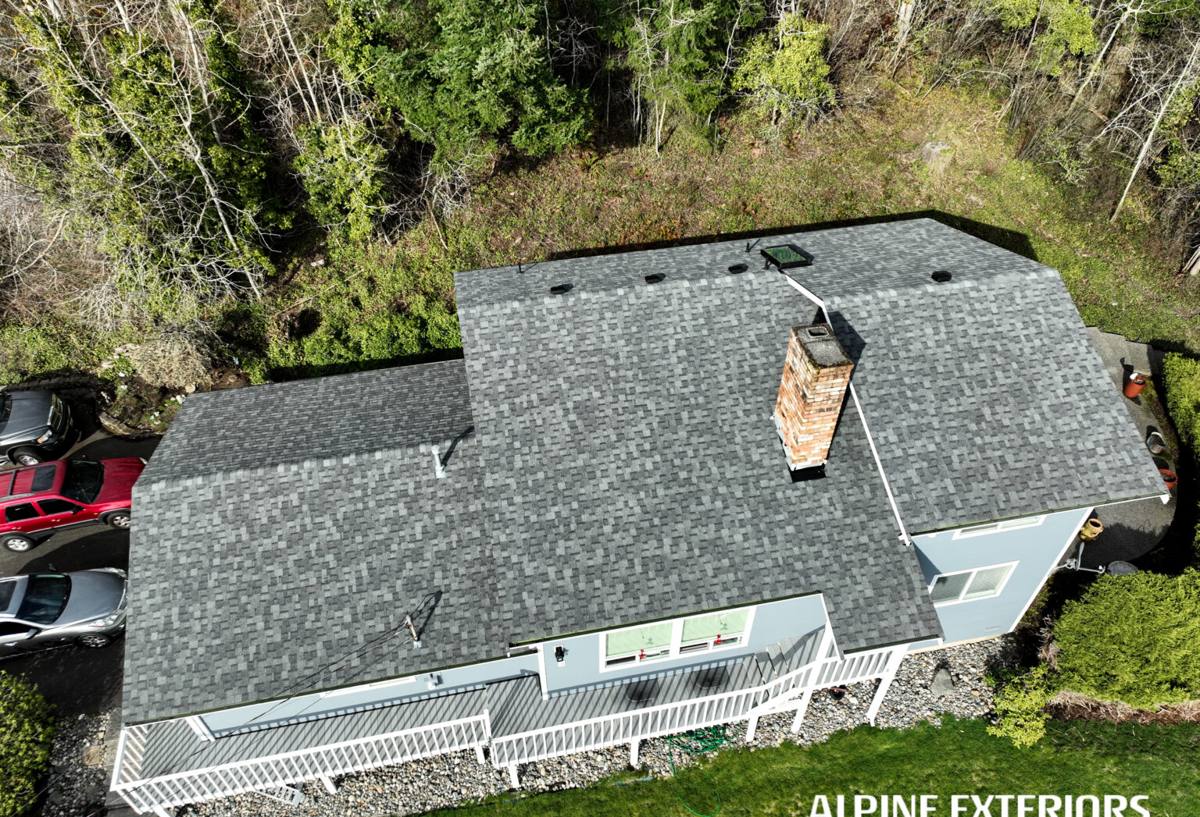
What Whatcom County Conditions Do to a Roof Over Time
Moss and Organic Growth
Shaded roof slopes, north-facing valleys, and anywhere debris collects give moss a foothold fast in this climate. Moss doesn't just sit on top of shingles — it holds moisture against the roofing material, lifts shingle edges as it grows, and works its way under laps and around fasteners. A roof that looks mossy but "fine" from the ground is often already losing granule protection underneath.
Driving Rain and Wind-Driven Water
Storms coming off the water push rain sideways, not just down. That matters at every penetration point — vents, chimneys, skylights, and wall-to-roof transitions — because standard flashing details that work in a drier climate can still let wind-driven rain find a gap. Most of the leaks we trace back start at a flashing seam, not in the open field of the roof.
Freeze-Thaw and Seasonal Temperature Swings
Whatcom County doesn't get extreme cold often, but it gets enough freeze-thaw cycling in winter to stress caulking, sealants, and any repair that was done with the wrong material for the temperature it was installed in. A patch that goes in on a cold, damp morning without proper prep tends to fail faster here than the same patch done right.
Signs a Lynden Roof Needs Repair, Not Just a Look
- Dark streaking or thick moss growth concentrated on shaded or north-facing slopes
- Granules collecting in gutters or at downspout outlets
- Shingles that are cupping, curling at the edges, or visibly lifted
- Soft or spongy feel when walking a low-slope section
- Water stains on interior ceilings, especially near chimneys, skylights, or where an addition meets the main roofline
- Daylight visible through the attic roof deck
- Rust streaks or gaps at flashing around vents and chimneys
- Missing or damaged shingles after a windstorm
Any one of these on its own might be minor. Several together usually mean water has already found a way in, even if there's no visible interior stain yet.
What a Correct Roof Repair Actually Involves
Finding the Real Source
Water almost never shows up on the ceiling directly below where it entered the roof — it travels along the deck or rafters first. A repair that just patches the spot above the stain often misses the actual entry point. We trace the path from the interior evidence back to the roof exterior, checking flashing, underlayment laps, and fastener patterns along the way, before deciding what actually needs to be opened up and fixed.
Matching Materials and Technique to the Existing Roof
A repair only holds if the materials and installation method match how the rest of the roof was built. That means using compatible underlayment, the right fastener pattern for the slope and exposure, and flashing details sized for wind-driven rain rather than just vertical drainage. On older roofs, it also means being honest about whether replacement shingles or materials are still available in a matching profile, or whether a slightly visible patch is the realistic trade-off of extending the roof's life instead of replacing it.
Sealing Without Trapping Moisture
It's tempting to over-seal a repair with caulk or roofing cement, especially on a rushed job. In a climate this wet, over-sealing can trap moisture against the deck instead of letting it shed and dry, which causes rot underneath a repair that looks fine from the outside. Correct flashing and lap technique should do most of the work; sealant is a backup, not the primary defense.
Common Roof Repairs We Handle Around Lynden
| Repair Type | Typical Cause | What's Involved |
|---|---|---|
| Flashing repair or replacement | Wind-driven rain finding gaps at chimneys, vents, skylights | Remove and reset flashing with proper laps and underlayment integration |
| Moss-related shingle damage | Extended moss growth lifting or degrading shingles | Moss removal, damaged shingle replacement, treatment to slow regrowth |
| Wind or storm damage | Missing, torn, or lifted shingles after a windstorm | Shingle replacement matched to existing exposure and pattern |
| Deck rot repair | Long-term hidden leak saturating the roof deck | Open the roof, replace rotted decking, rebuild the repair area to code |
| Valley and transition leaks | Water concentration at valleys or roof-to-wall junctions | Rework valley metal or step flashing and re-lap surrounding material |
Repair or Replace? How We Help You Decide
Not every roof problem in Lynden needs a full replacement, but not every roof is a good candidate for another round of patching either. We look at the age of the roof, how much of the roofing material is still in good shape, and whether the damage is isolated or spread across multiple areas.
| Factor | Leans Toward Repair | Leans Toward Replacement |
|---|---|---|
| Roof age | Well within expected lifespan | At or past typical service life for the material |
| Damage extent | Isolated to one area or penetration | Multiple slopes, widespread granule loss |
| Deck condition | Solid, dry decking under the damaged area | Soft or rotted decking found during inspection |
| Moss history | First significant occurrence, caught early | Repeated heavy moss growth over several seasons |
| Material availability | Matching shingles or materials still on the market | Discontinued profile, patch would be visibly mismatched |
We'll give you a straight answer either way, including telling you when a repair is the honest, cost-effective choice rather than pushing a bigger job.
Our Process for a Lynden Roof Repair Call
- Inspection. We get on the roof and in the attic if needed, not just a look from the ground, and check flashing, penetrations, and the deck itself where accessible.
- Explanation. We walk you through what we found, what's causing it, and what your realistic options are — repair, larger repair, or replacement — with reasoning, not pressure.
- Written estimate. You get a clear scope of work and price range before anything is scheduled.
- The repair. We open up only what needs to be opened, replace what's damaged, and rebuild the area to shed water the way it was designed to.
- Cleanup and check. Debris and old material hauled off, and a final look to confirm the fix holds up under the next rain, not just on a dry day.
Why a Crew That Already Works Lynden Matters
Roof repair is one of the easiest trades to do badly and have it look fine for a season. A crew that's worked roofs across Ferndale and Lynden already knows which flashing details tend to fail first in this climate, which slopes collect moss fastest, and how local building patterns — additions tied into older rooflines, for example — tend to create their own leak points. That local pattern recognition is often the difference between a repair that gets the actual cause and one that just chases the symptom for another year.
It also means we're not guessing at material availability or code requirements for the county — we're working within them regularly.
Keeping a Lynden Roof in Good Shape Between Repairs
- Keep gutters and valleys clear of debris so water and moss-forming organic matter don't sit and hold moisture
- Trim back overhanging branches to reduce shade and debris drop on moss-prone slopes
- Have moss treated or removed before it spreads across a full slope, not after
- Check attic ventilation — poor airflow adds to the moisture load a roof deck has to handle in a wet climate
- Schedule a look after major windstorms, even if nothing seems obviously wrong from the ground
A little attention between repairs goes a long way in a climate that gives a roof almost no real dry season to recover in.
If you're dealing with a leak, heavy moss, or storm damage on a Lynden or Ferndale-area roof, we're happy to take a look and give you a straight, no-pressure estimate — just fill out the form below.