 Ferndale
 Lynden Decks Face a Specific Kind of Wear
Lynden sits inland from the coast but still gets the full package of Whatcom County weather: long stretches of driving rain from fall through spring, humid air that never quite dries out the shaded side of a house, and a moss season that can run six months or longer on north-facing structures. Add in the salt-tinged air that drifts up from the Strait of Georgia and Bellingham Bay on windy days, and you've got conditions that are hard on any exterior wood or composite structure — decks included.
A deck built for a drier climate, or built without the right fasteners and flashing details for this one, starts showing problems years before it should. That's not a knock on the homeowner or even necessarily the original builder — it's just what happens when a structure sits outside in the Pacific Northwest for a decade or two without the right maintenance and repair attention.
Why This Matters More for Decks Than Siding
A deck takes on water differently than a wall. It's horizontal, so rain sits on it instead of running off. Snow and debris pile up on it. People, furniture, and grills put direct load and wear on the surface. And because it's usually lower to the ground and closer to landscaping, it gets more splash-back moisture and more shade from nearby trees and fences — both of which feed moss and slow drying time. In Lynden specifically, decks tucked against houses with mature landscaping or facing north tend to hold moisture the longest and show the earliest wear.
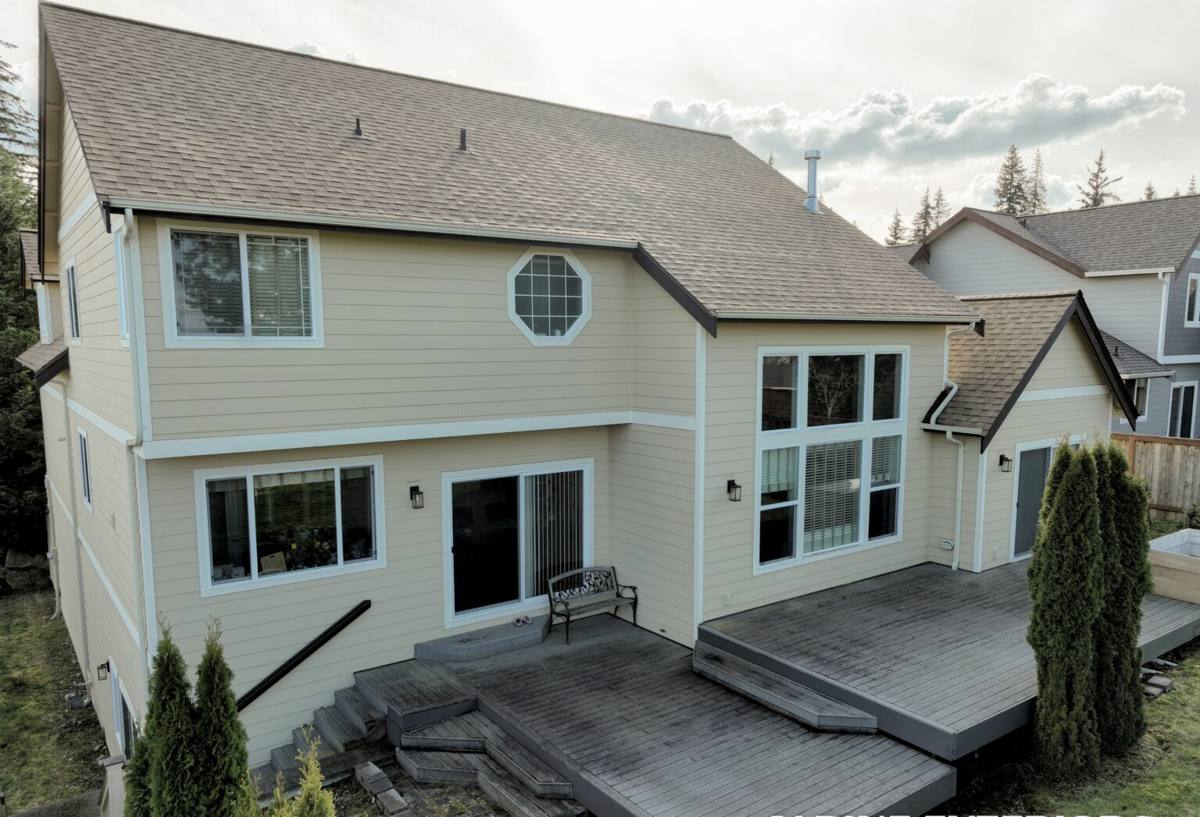
Signs a Lynden Deck Needs Repair, Not Just Cleaning
Moss and surface graying can often be power-washed and treated. But some signs point to something a pressure washer can't fix. Before booking any repair, walk your deck and check for the following:
- Boards that feel spongy or flex noticeably underfoot
- Soft, dark, or crumbling wood around post bases, stair stringers, or ledger boards
- Gaps opening up between boards that weren't there before, or boards cupping
- Rust streaks running from fasteners, or fastener heads popping above the board surface
- Railings that wiggle or feel less solid than they used to
- Persistent black or green staining that returns within weeks of cleaning
- Visible daylight or gaps where the deck ledger meets the house
- Standing water that takes more than a day to dry after rain
Any one of these on its own might be minor. Several together, especially involving the ledger board (where the deck attaches to the house) or the support posts, usually mean it's time for a real inspection rather than another round of cleaning.
What a Correct Deck Repair Actually Involves
A repair that just replaces the boards you can see, without checking what's underneath, is a cosmetic fix on a structural problem. Done right, deck repair in this climate starts from the framing out, not the surface in.
Structural Check First
This means inspecting the ledger board attachment, the posts and footings, the joists, and the flashing at every point where wood meets the house or meets the ground. Whatcom County's wet-dry cycles are hardest on connection points — anywhere two pieces of material meet is where water gets trapped and rot starts, long before it shows on the surface.
Then the Surface
Once the frame is sound, decking boards, railings, and stairs get addressed — replacing what's damaged, refastening what's loose, and matching new material to existing where it's a partial repair rather than a full resurface.
Flashing and Drainage Details
A lot of deck failures we see in this area trace back to missing or degraded ledger flashing — the metal or membrane detail that keeps water from wicking into the house-side connection. It's not visible once the deck is built, which is exactly why it gets skipped by builders in a hurry and exactly why it matters most in a climate like ours.
Common Deck Materials in This Area and How They Age
Most decks we work on in Lynden and the surrounding area are pressure-treated lumber, cedar, or composite. Each ages differently under Whatcom County conditions, and each calls for a different repair approach.
| Material | Typical Weak Point Here | Repair Approach |
|---|---|---|
| Pressure-treated lumber | Fastener corrosion, checking/splitting, moss in shaded areas | Board-by-board replacement, upgraded corrosion-resistant fasteners |
| Cedar | Surface graying, softening where it stays wet, UV breakdown | Selective board replacement, re-oiling or sealing, spot rot repair |
| Composite | Moisture intrusion at cut ends and fastener points, substructure rot underneath | Board replacement plus framing inspection — composite hides substructure problems longer |
| Older mixed/unknown material | Inconsistent past repairs, unknown fastener quality | Full assessment before quoting — patchwork history means more unknowns |
Composite decking deserves a specific note: it resists surface rot well, which is exactly why hidden problems in the framing underneath can go unnoticed longer. We don't treat composite as maintenance-free — we still check the structure below it on the same schedule as any wood deck.
Repair vs. Replace: What Actually Drives the Decision
Homeowners often assume any deck showing damage needs full replacement. Often it doesn't. The honest answer depends on a few factors:
| Factor | Leans Toward Repair | Leans Toward Replacement |
|---|---|---|
| Framing condition | Solid, dry, sound joists and posts | Rot at ledger, posts, or multiple joists |
| Age of deck | Under 15-20 years, one material generation | Older than its expected service life, multiple past repairs |
| Extent of damage | Isolated boards, railings, or stairs | Widespread across the whole surface |
| Code/attachment issues | Meets current attachment standards | Ledger attachment doesn't meet current code |
| Budget goal | Extend usable life a number of years | Want a longer-term reset, or a material or layout change |
We'll give you a straight answer either way. If a repair genuinely gets you several more good years, we'll say so — there's no reason to sell a full rebuild when the framing is sound.
How We Approach a Lynden Deck Repair
1. On-Site Inspection
We walk the whole deck, check the framing from underneath where accessible, probe suspect boards and posts, and look at the ledger connection and flashing.
2. Written Scope, No Guesswork
You get a clear breakdown of what's structural, what's cosmetic, and what our recommendation is — repair, partial rebuild, or full replacement — with reasoning, not just a number.
3. The Work Itself
Framing and structural repairs happen first. Surface work, railings, and stairs follow. Fastener choice and flashing details are matched to this climate, not a generic spec.
4. Cleanup and a Straight Explanation
We walk you through what was found, what was fixed, and what to watch going forward — especially anything that will need attention again given normal wear in this area.
Why a Local Crew Matters for This Kind of Work
Deck repair is one of those jobs where local experience actually changes the outcome, not just the sales pitch. A crew that works Ferndale, Lynden, and the rest of Whatcom County regularly has already seen how the ledger flashing on a particular era of construction tends to fail, which shaded yards grow moss fastest, and which fastener types hold up versus rust out after a few wet winters. That's not something you get from a general handyman passing through, or a crew based an hour away that sees a given neighborhood once.
It also matters for follow-up. If something needs a second look after the first hard rain of the season, a local crew is a short drive away, not a scheduling headache.
After the Repair: Keeping Moss and Moisture From Coming Back
A repaired deck still lives in the same climate that caused the original damage. A few habits go a long way in this area:
- Sweep debris and organic buildup off the deck surface regularly through fall and winter
- Trim back landscaping that keeps a section of deck shaded and slow to dry
- Check and clear gaps between boards where debris traps moisture
- Re-seal or re-oil wood decking on the schedule your material calls for, not just when it looks dry
- Have the ledger connection and posts checked every couple of years, even if the surface looks fine
None of this is complicated, but it's the difference between a repair that lasts and one you're redoing in a few years.
Get a Straight Look at Your Deck
If your Lynden-area deck is showing moss, soft spots, loose railings, or you just haven't had it checked in a while, we're happy to come take a look. The estimate is free, there's no pressure, and if the honest answer is "this just needs a few boards," that's what we'll tell you. Use the form below to get started.