 Ferndale
 Roof Replacement for Lynden, Washington Homes
Lynden sits inland from the coast, but it doesn't escape the weather that defines Whatcom County: long stretches of steady, driving rain, cool damp air that lingers under tree cover and eaves, and a moss season that can run most of the year on a shaded roof. Add in the salt-tinged air that moves through the region off the Salish Sea and settles into metal fasteners and flashing over time, and you have a climate that is genuinely hard on roofing — even when the roof looks fine from the driveway. A roof replacement done right here isn't just about swatting on new shingles. It's about building a roof system that sheds water fast, breathes properly, and resists the moss and moisture that cause most of the premature roof failures we see in this area.
This page covers what a correct roof replacement looks like specifically for Lynden homes, what our process involves, and why working with a crew that already knows this area's rain patterns and building requirements makes a real difference.
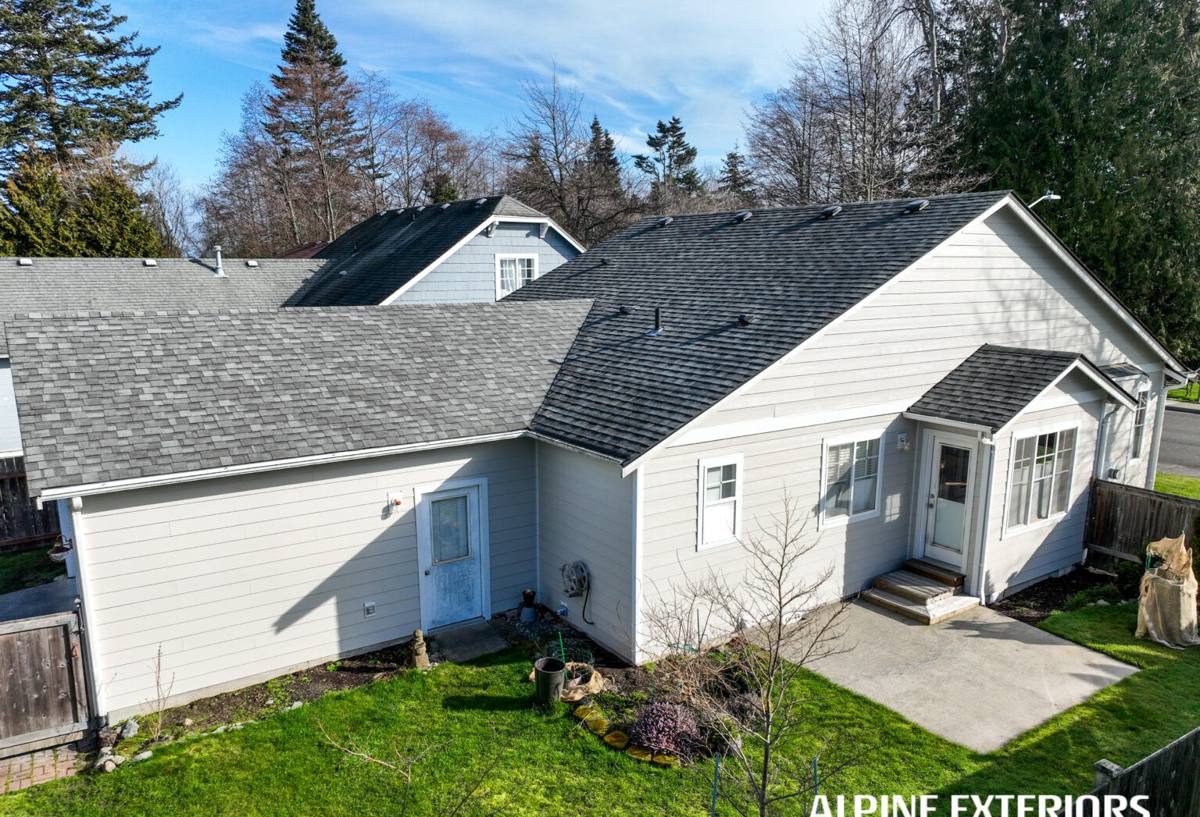
What Driving Rain and Moss Mean for a Lynden Roof
Whatcom County doesn't get flash flooding rain — it gets patient, all-day, all-week rain that finds every weak point in a roof over time. That has a few practical consequences for how a roof needs to be built and maintained here:
Water finds the gaps, slowly
Steady rain doesn't overwhelm a roof the way a downpour might; it works into small gaps at flashing, nail penetrations, and valleys over months and years. A roof that would hold up fine in a drier climate can fail early here simply because it wasn't detailed for sustained moisture exposure.
Moss is a structural issue, not just a cosmetic one
Shaded roof sections, north-facing slopes, and areas near mature trees stay damp longer after every rain, which is exactly what moss needs to establish. Once moss takes hold, it lifts shingle edges, holds water against the roof deck, and accelerates granule loss. On an older roof, moss is often the first visible sign that the roofing material underneath is already breaking down.
Salt air and moisture speed up metal fatigue
Flashing, fasteners, and any exposed metal roofing components are exposed to a slow combination of moisture and airborne salt that travels inland with regional weather patterns. Over years, this accelerates corrosion on lower-grade materials — one more reason material choice matters more here than in a dry inland climate.
Signs a Lynden Roof Needs Replacement, Not Just Repair
Not every roof problem calls for a full replacement, and we won't sell one when a repair is the honest answer. But there are signs that point to the roofing system itself being past the point where patching makes sense:
- Moss or algae covering large sections of the roof, especially if it returns quickly after cleaning
- Granules collecting in gutters in noticeable amounts, indicating shingle wear
- Shingles that are curling, cracking, or lifting at the edges across multiple areas
- Soft spots or sagging in the roof deck when walked or inspected
- Daylight visible through the roof boards from inside the attic
- Repeated leaks in different spots after previous repairs
- A roof approaching or past the manufacturer's expected service life for this climate
If you're only seeing one or two of these and the roof is otherwise sound, a targeted repair may be the right call — we'll tell you that during the assessment.
Choosing the Right Roofing System for This Area
There's no single "best" roofing material — the right choice depends on your home's slope, shade exposure, budget, and how long you want the roof to last before the next one. Here's how the common options perform under Lynden's rain-and-moss conditions:
| Material | Moisture & Moss Resistance | Typical Lifespan Here | Trade-offs |
|---|---|---|---|
| Asphalt composition shingle | Good with proper ventilation and algae-resistant granules | 20–30 years | Most affordable; moss resistance varies by product line |
| Architectural/dimensional shingle | Better than standard 3-tab; thicker profile sheds water more effectively | 25–35 years | Higher upfront cost, stronger warranty structure |
| Standing seam metal | Excellent — minimal seams for water or moss to catch on | 40–50+ years | Higher initial investment; requires correct fastener and underlayment detailing |
| Cedar shake | Requires diligent maintenance in this climate to resist rot and moss | Varies widely with upkeep | We're upfront that this is a higher-maintenance option here — not a knock on the product, just an honest fit assessment for our rainfall |
For most Lynden homes, a well-ventilated architectural shingle or a standing seam metal roof gives the best balance of moisture performance and long-term value. We'll walk through your specific roof — slope, shade, and exposure — and give you a straight recommendation rather than pushing one product line.
What a Correct Roof Replacement Actually Involves
A roof replacement is only as good as what happens underneath the new shingles. Here's what we check and address on every job:
Full tear-off and deck inspection
We remove the old roofing down to the deck rather than layering over it. This lets us find and repair any water-damaged or rotted sheathing before it's covered up — a step that gets skipped on cut-rate jobs and causes problems years later.
Ventilation
Proper intake and exhaust ventilation keeps the attic space dry and temperature-balanced, which reduces condensation buildup on the underside of the deck — a major contributor to premature rot in a climate this damp.
Underlayment
We use synthetic or ice-and-water shield underlayment rated for sustained moisture exposure, with extra protection at eaves, valleys, and any low-slope transitions where standing water risk is higher.
Flashing detail
Chimneys, skylights, vent pipes, and roof-to-wall transitions are the most common leak points on any roof. We install new flashing at every penetration rather than reusing old pieces, and detail valleys so water sheds cleanly instead of pooling.
Moss-resistant material and edge protection
Where it fits your material choice and budget, we use algae-resistant shingle products and install drip edge and gutter aprons that keep water moving off the roof instead of wicking back under the edge.
Our Roof Replacement Process
- On-site assessment — we inspect the current roof, deck condition, ventilation, and any problem areas, and give you a straight answer on repair versus replacement.
- Material and system recommendation — based on your roof's slope, shade exposure, and budget, with honest trade-offs explained, not just upsold.
- Written estimate — a clear scope of work and price before anything is scheduled.
- Tear-off and deck repair — full removal of old roofing, with any damaged decking replaced and documented.
- Underlayment, flashing, and ventilation installation — the system that actually determines how long the roof lasts.
- New roofing installation — installed to manufacturer specification so your warranty stays valid.
- Final walkthrough — we review the completed roof with you and answer any questions before we consider the job done.
Why a Crew That Already Works Lynden Matters
Roofing crews who mostly work in drier climates tend to under-detail for moisture — fewer ventilation channels, standard underlayment instead of enhanced protection at vulnerable points, and shingle products chosen for cost rather than algae resistance. That approach can look fine at installation and then underperform within a few rainy seasons.
Working regularly in Whatcom County means we already know which roof details matter most for this specific combination of driving rain, shade-driven moss growth, and seasonal humidity swings. We also know the local permitting expectations and can schedule around the weather windows that actually allow for a clean, dry installation — trying to install a roof mid-downpour is how corners get cut, and we don't do that.
Roof Replacement Cost Factors
Every roof is different, so we don't quote prices sight unseen — but these are the main factors that move the number up or down:
- Roof size and number of slopes/valleys (more cuts and seams mean more labor)
- Current roof condition, including whether deck repair is needed
- Material choice — asphalt shingle, architectural shingle, or metal
- Roof accessibility and steepness
- Number of penetrations (chimneys, skylights, vents) requiring new flashing
- Ventilation upgrades needed to bring the attic system up to standard
- Tear-off complexity if multiple old layers are present
We'll break all of this down clearly in your written estimate so you know exactly what you're paying for and why.
Get a Straight Answer on Your Roof
If your Lynden home's roof is showing moss, wear, or age, the first step is an honest, no-pressure assessment — not a sales pitch. We'll tell you plainly whether you need a repair or a full replacement, walk you through material options suited to this climate, and give you a clear written estimate before any work begins. Use the form below to request your free estimate.