 Ferndale
 Windows Take a Different Kind of Beating in Lynden
Lynden sits inland in the Nooksack Valley, far enough from Bellingham Bay that homes here dodge the worst of the direct salt spray that coastal Whatcom County properties deal with. That doesn't mean windows get an easy ride. What Lynden trades in salt exposure, it makes up for in long, wet winters, heavy morning fog off the river valley, and a rain season that can stretch from October well into spring. Add the region's mild but persistent humidity and you get the same core enemy every Pacific Northwest window eventually faces: moisture that finds its way in slowly, over years, through gaps most homeowners never see.
A window that was installed correctly ten or fifteen years ago is usually still doing fine. A window that was installed with shortcuts — missing flashing, poor sealant, no drainage path — starts showing it in this climate faster than almost anywhere else in the state. That's the real story behind most of the "bad window" calls we get in Lynden: it's rarely the window itself, it's how it went in.
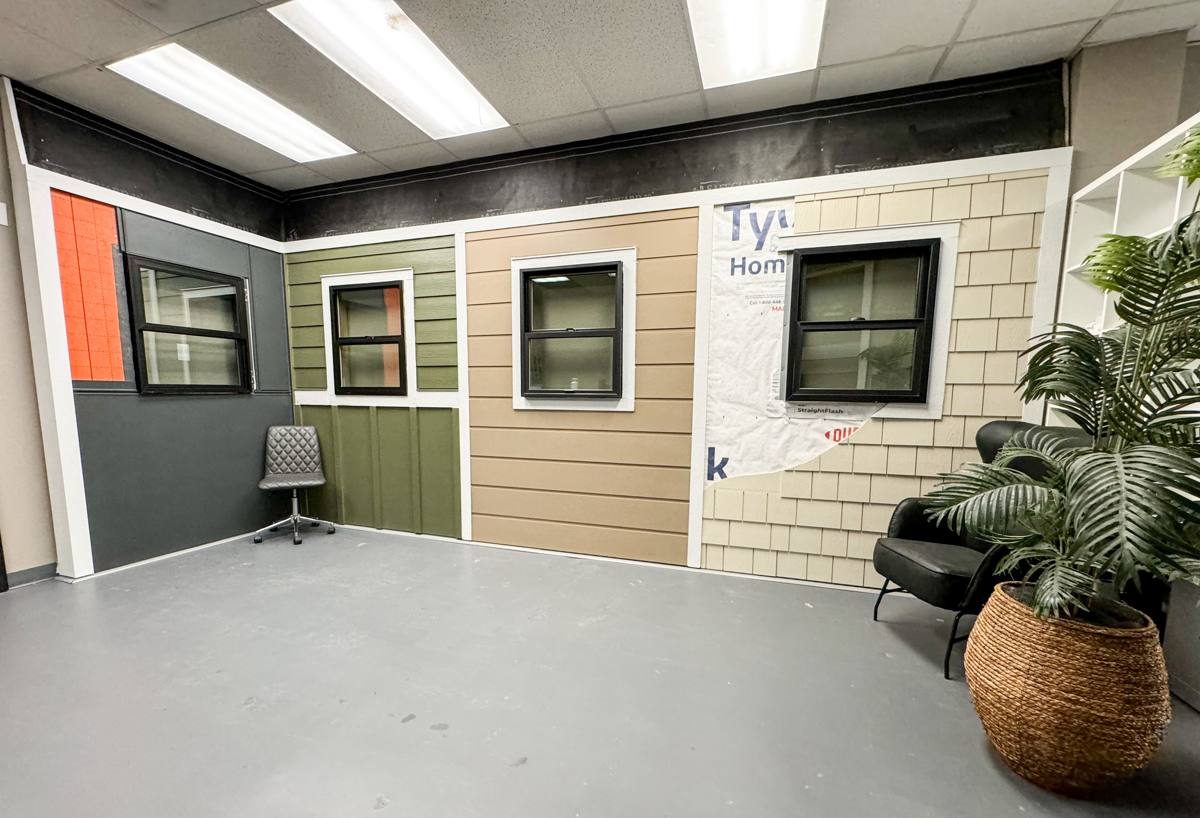
What Driving Rain and Moss Season Do to a Window Opening
Every window in a wall is a hole in your building envelope. How that hole is managed determines whether water sheds away from your home or works its way into the framing. In a climate with steady, wind-driven rain, a few specific failure points show up again and again on older or poorly installed windows:
- Sealant that has shrunk, cracked, or pulled away from the frame, letting wind-driven rain track behind the trim
- Missing or improperly lapped flashing at the head of the window, which is the single most common cause of hidden rot
- Moss and organic buildup on sills and trim holding moisture against wood longer than it would otherwise sit
- Condensation between panes, a sign the seal on the glass unit itself has failed
- Soft or discolored trim and sheetrock near the window, usually the first visible sign of a leak that's been going on for a while
None of these show up overnight. That's what makes window failure sneaky — by the time you see a stain on the drywall, water has often been getting into the wall cavity for a season or two already.
What a Correct Window Installation Actually Involves
Full-Frame Replacement vs. Insert Replacement
There are two basic approaches to replacing a window. An insert replacement fits a new window into the existing frame, which is faster and less invasive, and works well when the existing frame is square, solid, and free of rot. A full-frame replacement removes the window down to the rough opening, which is the only way to actually inspect and fix the flashing, sheathing, and framing behind it. In an older Lynden home, especially one that's had a leak in the past, we won't recommend an insert over a problem we can't see. If there's any doubt about what's happening behind that trim, it's worth taking the wall apart and looking.
Flashing and Water Management
This is the part of a window job nobody sees once the trim goes back on, and it's the part that matters most. Done right, a window opening is flashed so that any water that does get past the exterior surface is directed back out, not into the wall. That means self-adhered flashing tape at the sill and jambs, a drip cap or head flashing that laps over the housewrap above it (never tucked under it), and a sill pan that gives bulk water somewhere to go besides your framing. Skipping or rushing this step is invisible on install day and expensive five years later.
Choosing the Right Window Material for This Climate
There's no single "best" window material — the right choice depends on your home's age, your budget, and how much upkeep you want to take on. Here's an honest comparison of the main options we see specified for homes in this area:
| Material | How It Handles Our Climate | Maintenance | Typical Fit |
|---|---|---|---|
| Vinyl | Good moisture resistance, won't rot; performance varies a lot by manufacturer quality | Low — no painting or sealing needed | Most standard replacements, best value |
| Fiberglass | Excellent dimensional stability in temperature and moisture swings; holds paint well if you want a color change later | Low | Higher-end replacements, larger openings |
| Wood-clad | Warm interior look, but the exterior cladding still has seams that need to be detailed carefully in a wet climate | Moderate — exterior clad surfaces need periodic inspection | Homes prioritizing a traditional wood interior look |
| Aluminum | Durable but conducts cold and can condense heavily in our damp winters unless thermally broken | Low | Less common in residential retrofits here |
Whatever material you choose, the glass package matters as much as the frame. In Whatcom County's climate, a good low-E, double-pane unit is the practical baseline; triple-pane adds cost and weight but pays off more in comfort near large window walls or north-facing rooms than it does in dramatic energy bill changes.
Our Window Installation Process
- On-site assessment — we look at the existing window, the condition of the trim and sheathing where visible, and talk through what you actually want out of the new windows (comfort, appearance, easier operation, less maintenance)
- Recommendation, not a script — we'll tell you honestly whether an insert replacement is appropriate or whether the opening needs to be opened up for a full-frame job
- Removal — old window and, if needed, surrounding trim comes out; we check the rough opening for rot or moisture damage before anything new goes in
- Repair framing and flashing as needed — any soft wood gets addressed and the opening is properly flashed and sealed before the new window is set
- Set, shim, and seal the new window — leveled and squared, insulated around the frame (not just caulked at the edges), and sealed with materials rated for our climate
- Exterior trim and finish work — flashing integrated with your siding, trim reinstalled or replaced, and the whole opening weathertight before we consider the job done
- Walkthrough — we check operation, look, and seal with you before we leave
What Window Installation Typically Costs in Lynden
Pricing depends heavily on window size, material, glass package, and whether it's an insert or full-frame job. Rather than quote a number that won't reflect your actual house, here's what tends to move the price up or down:
| Factor | Effect on Cost |
|---|---|
| Insert vs. full-frame replacement | Full-frame costs more due to labor and trim/siding work, but is often the right call on older openings |
| Window material (vinyl vs. fiberglass vs. wood-clad) | Vinyl is typically the most budget-friendly; fiberglass and wood-clad run higher |
| Number and size of openings | Larger units and picture windows cost more per opening than standard double-hungs |
| Hidden rot or damage found during removal | Can add cost, but skipping this repair just relocates the problem to a future leak |
| Glass package (double vs. triple-pane, coatings) | Upgraded glass adds cost with a comfort payoff, less so a dramatic bill payoff |
We'd rather walk your home and give you real numbers than throw out a range that doesn't mean anything for your specific project.
Why a Crew That Already Works in Lynden Makes a Difference
Window installation isn't just a product swap — it's an integration job between the window, the wall assembly, and whatever siding is around it. A crew that regularly works Whatcom County homes has already seen how local building stock in this area tends to be built, what kind of moisture problems show up in older Lynden homes versus newer construction, and how to detail flashing so it actually holds up through a wet Pacific Northwest winter rather than just looking finished on install day. That local pattern recognition is the difference between a window that's still tight in ten years and one that starts leaking the first hard rain.
It also matters for something more practical: permitting and code requirements can vary by jurisdiction, and a crew that's pulled permits in Whatcom County before isn't guessing at what's required for your project.
Signs It's Time to Have Your Windows Looked At
- Visible fog or moisture trapped between panes of glass
- Windows that are difficult to open, close, or lock properly
- Cold drafts near the window frame even when it's closed
- Soft, discolored, or peeling trim or sill wood
- Visible gaps between the window frame and siding or trim
- A noticeable jump in heating costs with no other explanation
- Moss or dark staining building up on sills or lower trim year after year
Any one of these on its own isn't necessarily an emergency, but they're worth having a professional look at before the next rainy season adds to the problem.
If you're noticing any of these signs, or you're just planning ahead for a Lynden home that could use better windows, we're happy to come take a look and give you a straightforward, no-pressure estimate — use the form below to get started.