 Ferndale
 Windows Built for How Lynden Actually Weathers
Lynden sits inland from the coast, but it doesn't escape what the rest of Whatcom County deals with every winter: long stretches of driving rain, marine-driven wind, and moisture that never really lets up between October and April. That combination is hard on windows in ways that don't show up right away. A window can look fine from the curb for years while air and water are quietly working their way in around the frame, and by the time you see a stain on the drywall or a bead of moss on the sill, the damage is usually already inside the wall.
We install and replace windows for homeowners throughout the Ferndale and Lynden area, and the failures we get called out for follow a pattern: it's rarely the glass that fails first. It's the seal between the window and the house — the flashing, the caulking, the way the unit was shimmed and fastened — that gives out under years of wind-driven rain. An energy-efficient window is only as good as the installation around it, which is why this page is about both the product and the process.
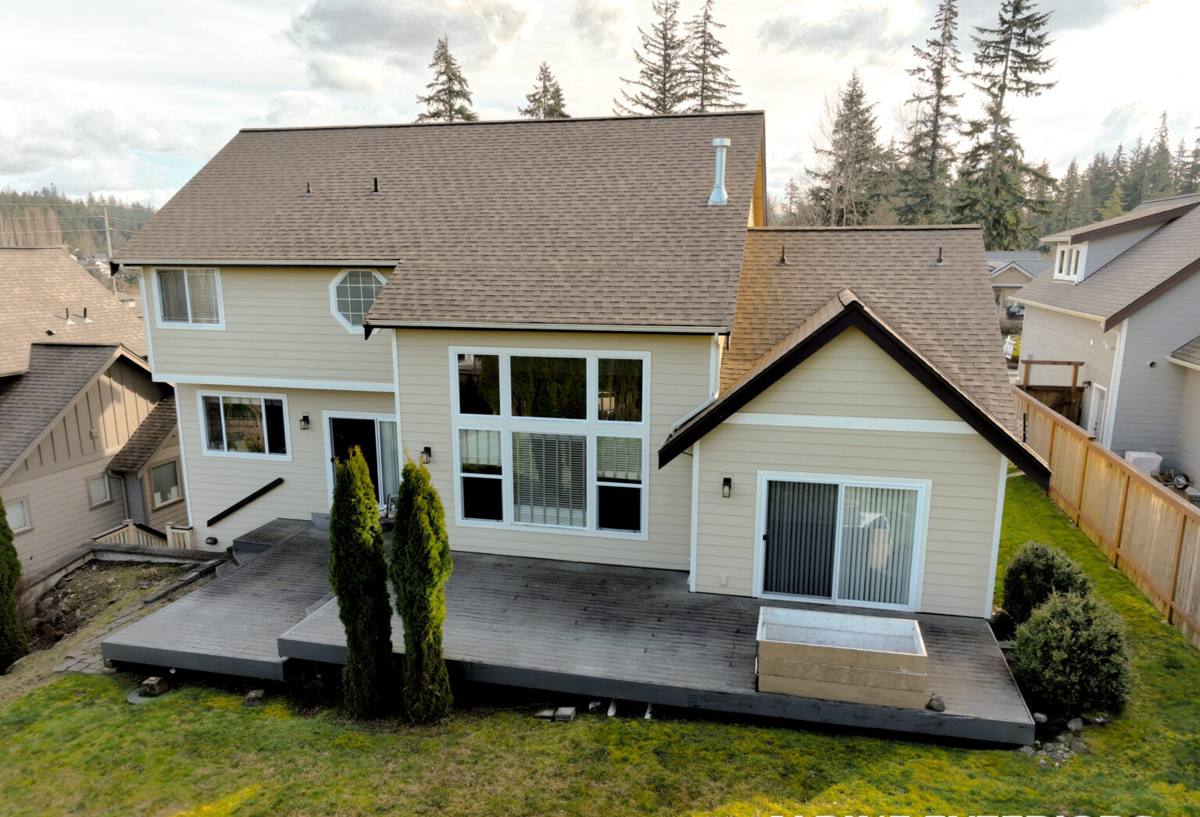
What "Energy-Efficient" Actually Means
Energy efficiency in a window isn't a marketing label — it's a set of measurable properties. When you're comparing options, three numbers matter more than anything on the sales sheet:
U-Factor
This measures how much heat escapes through the window — lower is better. In a climate like ours, where homes run heat (or heat pumps) for a good chunk of the year, a low U-factor is the single biggest driver of long-term energy savings. Washington's energy code sets minimum performance requirements for replacement windows, and any legitimate installer should be able to tell you the U-factor of what they're proposing without hesitating.
Low-E Coatings and Gas Fill
A low-emissivity (low-E) coating is a microscopically thin layer that reflects heat back into the room in winter and blocks solar heat gain in summer, without noticeably changing how clear the glass looks. Pairing that with an argon or krypton gas fill between the panes adds insulation value beyond what plain double-pane glass offers. These aren't upgrades you can eyeball — they're built into the sealed unit at manufacture.
Air Infiltration and NFRC Ratings
The National Fenestration Rating Council (NFRC) label on a window tells you its tested U-factor, solar heat gain coefficient, and air leakage rate. Any window worth installing on a Whatcom County home should carry this label — it's the one place where the performance claims are independently verified rather than self-reported.
Why the Installation Matters More Than the Brand
You can put a high-performance window in a house and still end up with drafts, fogging, or rot if the installation is off. This is the part of the job that separates a window that performs for twenty-plus years from one that starts failing in five.
Flashing and Water Management
Every window opening needs to shed water the way a shingled roof does — layered so that water moving down the wall is directed out and away from the framing, never trapped behind the siding. That means sill pan flashing at the bottom of the opening, properly lapped house wrap or building paper at the sides and top, and sealant used in the right places (and left out of others — sealing the wrong spot can trap moisture instead of releasing it). In a wet climate like ours, this detail is not optional.
Air-Sealing and Insulation
The gap between the window frame and the rough opening needs to be filled with a low-expansion foam or backer rod and sealant — not stuffed with fiberglass batting, which does little to stop air movement. A window that's air-sealed correctly at the frame will feel warmer at the glass on a cold, windy night than the same window installed with gaps.
Level, Plumb, and Square
A window that's out of square binds, doesn't lock tightly, and puts uneven stress on the seals over time. It's a basic install standard, but it's also the first thing that gets rushed on a job that's moving too fast.
Comparing Frame Materials
There's no single "best" frame material — it depends on your budget, your home's style, and how much upkeep you want to take on. Here's how the common options stack up for a Whatcom County home:
| Frame Material | Energy Performance | Maintenance | Typical Lifespan | Relative Cost |
|---|---|---|---|---|
| Vinyl | Very good; consistent U-factor across the line | Low — no painting, occasional cleaning | 20–30+ years | Lowest |
| Fiberglass | Excellent; frame expands/contracts closer to glass, tighter long-term seal | Low | 30–40+ years | Mid to higher |
| Wood-Clad (aluminum or vinyl exterior, wood interior) | Very good; wood interior adds insulation value | Moderate — exterior cladding low-maintenance, interior wood may need occasional finish work | 25–35 years with proper care | Higher |
| Aluminum (uncladded) | Weakest without a thermal break; conducts heat and cold | Low | Varies widely | Lowest to mid |
For most Lynden homes, we steer people toward vinyl or fiberglass. Both hold up well against sustained rain and humidity without the maintenance burden of exposed wood, and both come standard with the low-E, gas-filled glass packages that do the real energy work. Where a home's style calls for a wood-look interior, clad options give you that without exposing raw wood to our wet exterior conditions.
Signs Your Current Windows Are Costing You Money
Not every window needs replacing, but certain signs mean the unit is no longer doing its job — either the seal has failed, the frame has taken on moisture, or the glass itself has lost its insulating gas fill.
- Noticeable draft near the frame on a windy day, even with the window fully latched
- Fogging or a permanent haze between the panes (a sign the seal on the insulated glass unit has failed)
- Condensation forming on the inside of the glass regularly through fall and winter
- Soft or discolored wood at the sill, jamb, or the siding immediately around the frame
- Windows that are difficult to open, close, or lock — often a sign the frame has shifted or swollen
- Visible moss or dark streaking building up on or below the sill
- Single-pane glass, common in homes built before the 1980s, with no storm window
How We Approach a Window Project in Lynden
- On-site assessment. We look at each opening individually — older homes especially can have different rough opening sizes window to window, and we check for existing moisture damage before quoting anything.
- Full-frame vs. insert decision. If the existing frame and flashing are sound, an insert replacement (new window fit into the old frame) can be appropriate. If there's any sign of water intrusion or rot, we recommend a full-frame replacement so we can inspect and rebuild the flashing correctly — patching new glass into a compromised opening just hides the problem.
- Accurate measurement and ordering. Windows are built to the opening, not the other way around, so this step gets double-checked before anything is ordered.
- Removal and inspection. Once the old unit is out, we check the sheathing and framing for hidden moisture damage — this is often the first real look anyone's had at that part of the wall in decades.
- Installation with proper flashing sequence, air-sealing, and fastening — the steps covered above, done in order, every time.
- Exterior trim and sealant finish work so the new window integrates cleanly with your siding, with no gaps left for water to find.
- Walkthrough and cleanup before we consider the job done.
Permits, Energy Code, and Rebates
Window replacement in Whatcom County generally requires a permit when you're changing the size of the opening or doing a full-frame replacement that affects the structural opening; straightforward like-for-like insert replacements are sometimes exempt, but the rules can vary by jurisdiction, so we confirm what applies to your specific project before work starts. Washington's state energy code sets minimum U-factor requirements for replacement windows, which is one more reason to make sure whatever you're buying is NFRC-labeled and code-compliant, not just "efficient" by name.
Utility rebate programs for efficient window upgrades come and go and vary by provider, so we'd rather point you to what's currently available when we're on-site than quote a number here that may be out of date by the time you read this.
Why It Matters to Hire a Crew That Already Works in Lynden
Homes in this part of Whatcom County — from older farmhouses to newer builds — tend to share the same exposure: sustained wet winters, wind-driven rain off the marine air, and a moss season that runs longer here than it does in drier parts of the state. A crew that installs windows across this region day in and day out isn't guessing at flashing details or frame tolerances — they've seen how these specific conditions play out on real houses, year after year. That matters more than which brand name is on the glass. It also means when we're doing window work alongside siding — which we often are, since the two trades meet at every opening — the flashing and water management get handled as one continuous system instead of two separate jobs that don't quite line up.
If you're dealing with drafty, foggy, or aging windows, or you're planning ahead for a remodel, we're glad to come take a look. The estimate is free, there's no pressure, and you'll get a straight answer about what your home actually needs — just fill out the form below to get started.