 Ferndale
 Lynden's Climate Is Hard on a Roof
Lynden sits inland from the coast, but the weather that moves through Whatcom County doesn't stop at the water. Moist, marine-influenced air off the Strait of Georgia and Bellingham Bay pushes east across the county for most of the year, and by the time it reaches Lynden it's still carrying the same driving rain, long grey stretches, and salt-tinged moisture that hit the coastline. Add in the tree cover and farmland shade that surround a lot of Lynden properties, and you get a climate that keeps roofs wet longer than they'd like to be — which is exactly the condition moss, algae, and slow shingle breakdown need to take hold.
An asphalt shingle roof can handle this climate well, but only if it's specified and installed with these conditions in mind. A roof built to a generic spec — the kind that works fine in a dry inland climate — tends to underperform here. This page covers what a shingle roof actually needs to hold up in Lynden, what a correct installation looks like, and how we approach the job.
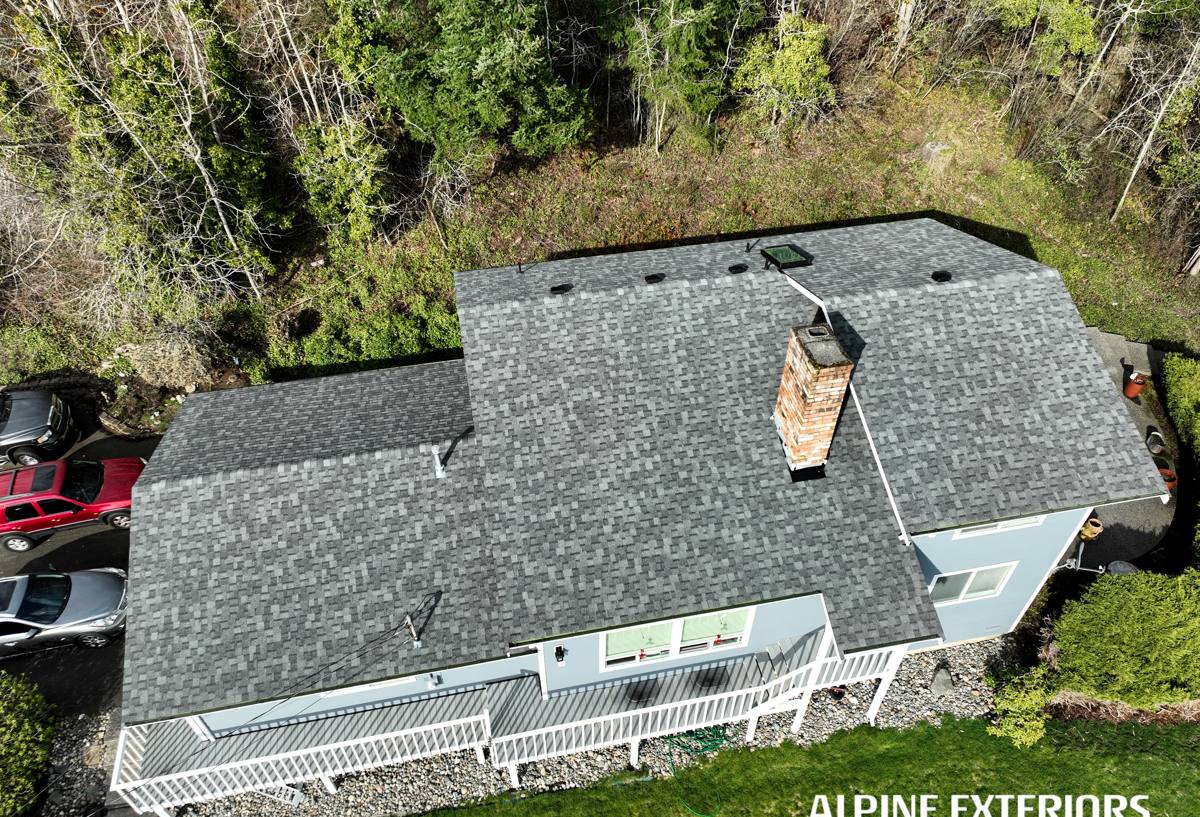
What a Shingle Roof Has to Handle Here
Moss and Algae
Whatcom County's long wet season and shaded lots are close to ideal conditions for moss and blue-green algae growth on roofing. Moss isn't just cosmetic — its root structure holds moisture against the shingle surface and can work its way under shingle tabs over time, and algae staining (the dark streaking you see on older roofs) is a sign that granules and moisture are interacting in ways that shorten shingle life. Roofs that sit under mature trees or on north-facing slopes with less sun exposure are the most exposed to this.
Wind-Driven Rain
Rain here doesn't always fall straight down. Storm systems moving through the county regularly bring wind-driven rain that pushes moisture up and under shingle edges, into valleys, and around any flashing point that isn't sealed correctly. This is where most roof leaks in this region actually originate — not from a full shingle failure, but from a small gap at a valley, chimney, or vent that wind-driven rain eventually finds.
Wind and Storm Exposure
Lynden gets its share of winter windstorms. Shingles that were nailed high, under-nailed, or installed outside the manufacturer's wind-rating instructions are the ones that lift and tear off first. Proper nailing pattern and fastener placement matter more here than in a calmer climate, because the roof gets tested by real wind events on a regular basis.
Choosing the Right Shingle for a Lynden Home
Not every asphalt shingle product is a good fit for this climate. The table below covers the tradeoffs we walk homeowners through.
| Shingle Type | Best For | Tradeoffs in This Climate |
|---|---|---|
| 3-tab (standard) | Budget re-roofs, rental properties | Lower wind rating, less algae resistance, shorter realistic lifespan under heavy moss pressure |
| Architectural / dimensional | Most Lynden homes | Thicker, higher wind rating, better water-shedding profile; the standard we recommend for this climate |
| Algae-resistant (AR) shingles | Shaded lots, north-facing roofs, homes near trees | Copper-infused granules resist algae staining and moss establishment; worth the modest upcharge here |
| Impact-rated / heavier-duty lines | Homes wanting maximum durability | Higher upfront cost; makes the most sense on steep, hard-to-access roofs where re-roofing again soon isn't practical |
For most Lynden homes, we recommend an algae-resistant architectural shingle. It costs more than 3-tab up front, but given how much moss and algae pressure this climate puts on a roof, it's the choice that actually holds up rather than needing moss treatment and premature replacement a few years in.
What Correct Installation Actually Involves
The shingle itself is only part of the system. A roof fails or holds up based on everything underneath and around it. Done right, a Lynden re-roof includes:
- Ice-and-water shield membrane at eaves, valleys, and around penetrations — the areas where wind-driven rain and moss-holding moisture concentrate
- Synthetic underlayment across the full deck, not just felt paper, for a more consistent water barrier
- Proper starter strip and drip edge at all eaves and rakes so wind can't get under the first course
- Correct nailing pattern and fastener count per the manufacturer's wind-rating specification, not just "enough to hold it down"
- New flashing at chimneys, skylights, and wall intersections — reused flashing is one of the most common causes of a leak showing up within a year or two
- Balanced intake and exhaust ventilation so the attic isn't trapping moisture against the underside of the deck
- A full deck inspection with any soft, delaminated, or moisture-damaged sheathing replaced before shingles go down, not covered over
Skipping any one of these doesn't show up as a problem on install day. It shows up two, three, or five years later as a leak, premature granule loss, or moss taking hold faster than it should — usually well after the crew that cut the corner is gone.
Ventilation: The Part Homeowners Never See
Attic ventilation doesn't get talked about as much as shingle brand, but in this climate it matters just as much. An attic that's under-vented traps warm, moist air against the roof deck from the inside. In winter that moisture can condense on cold sheathing; over the year it keeps the deck and the underside of the shingles damp longer than they should be, which is exactly the environment moss and algae favor from below as well as above. Balanced intake (soffit) and exhaust (ridge or box vents) keeps air moving so the deck dries out between rain events instead of staying wet. We check and correct ventilation as part of every re-roof — it's not an upsell, it's part of making the shingle warranty and the shingle itself actually perform the way it's rated to.
Our Process
- Inspection: We get on the roof (or use a lift/drone where the pitch or access calls for it) and check the deck, flashing, ventilation, and current shingle condition — not just a drive-by look.
- Written estimate: A clear scope covering tear-off, deck repair allowance, underlayment, shingle line, flashing, and ventilation — so there's no ambiguity about what's included.
- Tear-off and deck check: Old roofing comes off down to the deck. Any damaged sheathing is identified and replaced before anything goes back on.
- Installation: Underlayment, ice-and-water shield, flashing, shingles, and ventilation installed to spec and to the manufacturer's wind-rating instructions.
- Cleanup and walkthrough: Full site cleanup, magnetic sweep for nails, and a walkthrough so you know exactly what was done and what to watch for going forward.
Repair, Re-Roof, or Replace?
Not every roof problem in Lynden means a full replacement. The right call depends on the roof's age, how widespread the issue is, and what's actually failing.
| Situation | Usual Fit | Why |
|---|---|---|
| Isolated leak, roof under 10-12 years old | Targeted repair | Flashing or a small area of shingle damage can often be fixed without disturbing the rest of the roof |
| Heavy moss coverage, shingles otherwise sound | Moss removal + treatment, monitor | Addressing moss early can extend roof life without replacement, if the shingles underneath haven't degraded |
| Granule loss, curling, or multiple leak points | Full re-roof | These are signs of shingles reaching the end of their service life across the whole roof, not just one spot |
| Roof over 20 years old | Full re-roof | Even well-maintained asphalt shingle roofs in this climate are typically at or past their realistic service life by this point |
Signs Your Lynden Roof Needs Attention
- Moss visible on north-facing slopes or shaded sections, especially where it's thick enough to hold water
- Dark streaking across the shingle field (algae staining)
- Granules collecting in gutters or downspouts
- Shingle edges curling or cupping
- Daylight visible through the roof deck from inside the attic
- Soft or spongy spots when walking the roof
- Any staining on interior ceilings after a heavy storm
Why a Local Lynden Crew Matters
Roofing crews who work Whatcom County regularly know which slopes and lot types in Lynden tend to hold moss, which older subdivisions commonly have underventilated attics, and what wind-driven rain actually does to a valley or chimney flashing over a full wet season here — not in theory, but from having gone back and fixed roofs that were built without that knowledge. That's the difference between a shingle install that's technically correct on paper and one that's actually built for how this specific climate behaves. We work throughout Ferndale and the surrounding Whatcom County communities, including Lynden, and price and schedule accordingly rather than treating it as an add-on trip.
If you're dealing with moss buildup, an aging shingle roof, or just want an honest read on how many years you've got left before replacement makes sense, we're happy to take a look. Fill out the form below for a free, no-pressure estimate on your Lynden roof.