 Ferndale
 Why Lummi Island Roofs Age Differently Than Roofs Just a Few Miles Inland
A roof on Lummi Island isn't fighting the same battle as a roof in downtown Ferndale or out along the Guide Meridian. Being surrounded by the Salish Sea changes everything about how a roof ages. Salt-laden air corrodes exposed metal faster, constant marine moisture keeps organic growth active nearly year-round, and wind-driven rain off the water finds every weak seam, nail pop, and undersized flashing detail a roof has. None of this means island roofs need exotic materials — it means the installation details that get skipped on an easy inland job can't be skipped here.
We work on both sides of the water in this part of Whatcom County, and the pattern is consistent: roofs on or near the island that were installed to a "good enough for the mainland" standard tend to show granule loss, moss colonization, and flashing corrosion years ahead of schedule. Roofs installed with island conditions in mind hold up the way they're supposed to.
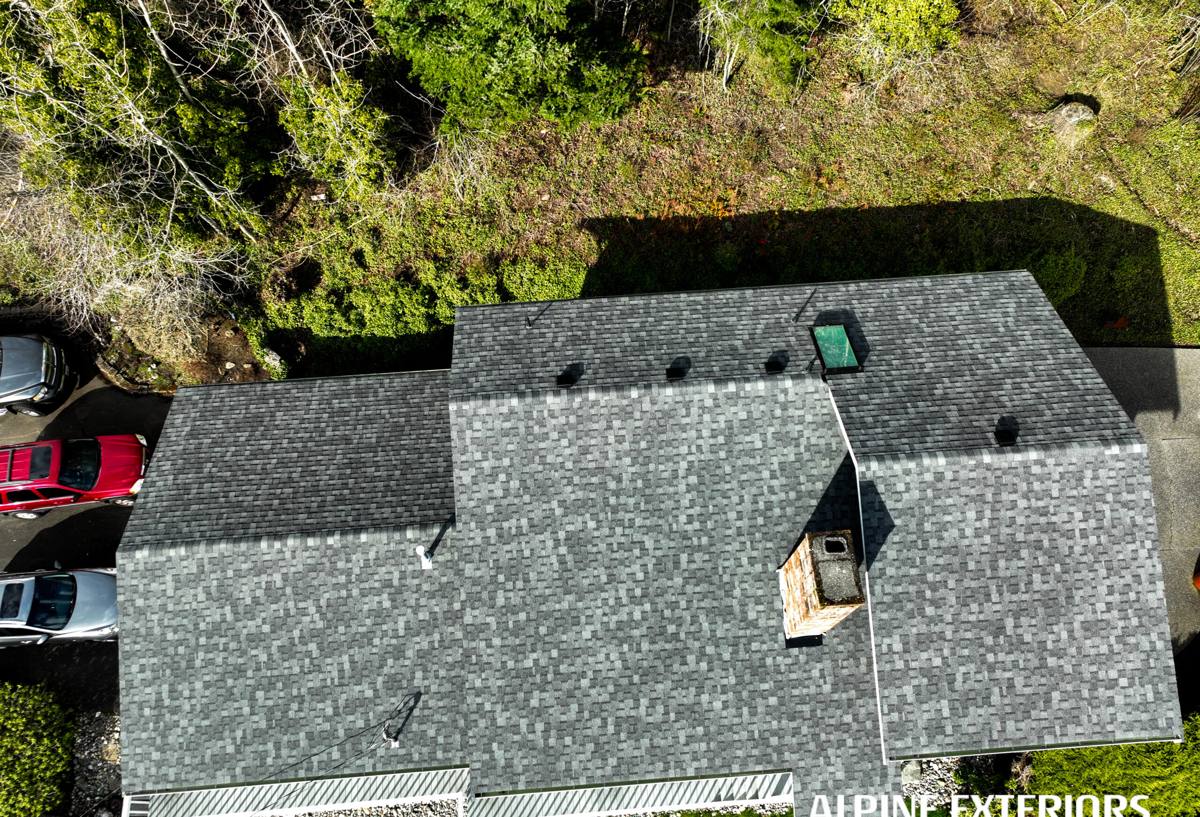
What Salt Air, Driving Rain, and Moss Actually Do to a Roof
Salt air
Airborne salt is corrosive to unprotected steel and can accelerate the breakdown of cheaper fasteners, flashing, and vent components over time. It's not that metal can't be used near the water — it's that the grade of metal, the fastener coating, and the flashing material all need to be chosen for a marine environment instead of a standard inland spec.
Driving rain
Wind off open water doesn't just fall on a roof, it drives sideways and up under laps, ridge caps, and poorly sealed penetrations. A roof that would be fine in a calm inland rain can leak on the island simply because the wind is pushing water somewhere it was never meant to go. This is why underlayment choice and flashing overlap direction matter more here than almost anywhere else we work.
A long moss season
Cool, damp, shaded conditions for much of the year give moss and algae a long runway to establish on north-facing slopes and anywhere debris collects. Once moss gets a foothold under shingle tabs, it holds moisture against the roof deck and lifts shingles as it grows, which is one of the most common causes of premature leaks we find on older Whatcom County roofs.
What a Correct Roof Replacement Involves Here
A roof replacement done right on Lummi Island isn't just "new shingles over the old deck." It's a sequence of decisions, each one aimed at one of the three stresses above.
- Full tear-off, not overlay: Roofing over an existing layer traps moisture and hides deck damage — not worth it in a climate this wet.
- Deck inspection and repair: Any soft, delaminated, or moss-stained sheathing gets replaced before anything new goes down. Skipping this is the single biggest cause of early failure.
- Ice-and-water shield at vulnerable zones: Eaves, valleys, and penetrations get a self-adhering waterproof membrane, not just felt, because wind-driven rain and ice dams both target these spots.
- Synthetic underlayment across the field: Holds up to job-site moisture better than old-style felt and gives a second line of defense if wind ever gets under a shingle tab.
- Marine-appropriate metal: Flashing, valley metal, and drip edge specified in a material and gauge that resists salt-air corrosion, not the cheapest stock option.
- Balanced ventilation: Intake at the eaves and exhaust at the ridge, sized to the attic, so moisture from inside the house doesn't add to what the climate is already throwing at the roof from outside.
- Algae-resistant shingle selection: Where asphalt shingles are the right fit, we favor lines with algae-resistant granules to slow the staining and buildup that come from this area's damp, shaded conditions.
Comparing Roofing Material Options for a Marine Climate
There's no single "best" material for every Lummi Island home — roof pitch, budget, HOA or design guidelines, and how exposed the home is to wind off the water all factor in. Here's how the common options stack up against the specific stresses this area produces.
| Material | Typical Lifespan | Salt-Air Resistance | Moss Resistance | Relative Cost |
|---|---|---|---|---|
| Architectural asphalt shingle (algae-resistant) | 25–30 years | Good with proper metal flashing | Good with AR granules and clean install | $ |
| Standard 3-tab asphalt shingle | 15–20 years | Fair | Fair — no algae resistance built in | $ |
| Standing seam metal (coastal-rated finish) | 40–50+ years | Very good with correct alloy/coating | Very good — sheds moisture, little for moss to grip | $$$ |
| Cedar shake | 20–30 years with upkeep | Fair — needs regular treatment | Poor without diligent maintenance | $$ |
| Composite/synthetic shake or slate | 40–50 years | Good | Good | $$–$$$ |
For most Lummi Island homes we work on, an algae-resistant architectural shingle or a coastal-rated standing seam metal roof gives the best balance of durability and upfront cost. Cedar shake can still look right on a home built for that style, but it's an honest maintenance commitment in a climate this damp — worth discussing openly before you commit to it rather than discovering the upkeep after the fact.
Island Logistics: The Part Mainland Contractors Often Get Wrong
Lummi Island is only reachable by ferry, and that single fact changes how a roofing job needs to be planned. Dumpster and material deliveries, crew arrival, and tear-off disposal all have to work around ferry schedules and capacity rather than a truck simply showing up whenever it's convenient. A crew that hasn't planned for this can end up with a partially torn-off roof sitting exposed longer than it should, which is the last thing you want in an area that gets driving rain off the water.
Working the island regularly means we plan material drops, staging, and disposal hauls around the ferry in advance, and we sequence tear-off so no more roof is opened up than can be dried in and protected before the crew has to leave for the day. That's a scheduling discipline, not a special material — but it matters just as much to the outcome.
Signs Your Lummi Island Roof May Need Replacing, Not Just Repair
- Granule loss heavy enough that you can see bare, shiny patches on the shingle surface
- Moss established under shingle tabs rather than just sitting on the surface
- Shingles curling, cupping, or cracking, especially on wind-exposed slopes
- Rust staining or visible corrosion at flashing, valleys, or vent boots
- Daylight visible through the roof deck from inside the attic
- Recurring leaks in the same spot despite prior patch repairs
- Soft or spongy decking felt underfoot during an inspection
- The roof is at or past the manufacturer's expected service life for its material and this climate
If you're only seeing one or two of these and the roof is otherwise young, a targeted repair may be the honest answer — we'll tell you that if it's true. Replacement makes sense when the damage is spread across the roof or the underlying deck is compromised.
Our Process for a Lummi Island Roof Replacement
- On-site inspection: We walk the roof and attic, check the deck, flashing, ventilation, and current material condition, and photograph anything relevant to the estimate.
- Written estimate and material discussion: You get options in plain language — shingle vs. metal, algae-resistant lines, cost differences — with no pressure toward the most expensive choice.
- Scheduling around ferry logistics: We plan delivery, crew, and disposal timing so the job runs efficiently instead of stalling on transportation.
- Tear-off and deck inspection: Old roofing comes off, the deck is inspected board by board, and any damaged sheathing is flagged and replaced.
- Underlayment, flashing, and ventilation install: Waterproof membrane at vulnerable zones, synthetic underlayment across the field, marine-grade metal, and balanced intake/exhaust ventilation.
- New roofing material installed to manufacturer spec: Correct nailing pattern, exposure, and overlap for wind-driven rain conditions — not just "close enough."
- Final walkthrough and cleanup: We review the finished roof with you, confirm ventilation and flashing details, and haul away debris — coordinated with the ferry schedule.
Protecting the Investment After the Roof Is On
A well-installed roof still benefits from basic upkeep in this climate. Keeping gutters and valleys clear of needles and debris prevents the standing moisture that feeds moss growth. A periodic soft wash or moss treatment on shaded, north-facing slopes extends the life of an algae-resistant shingle well past what it would achieve untouched. And because salt air is a slow, ongoing process rather than a one-time event, having flashing and fasteners checked every few years — especially after a hard windstorm off the water — catches small corrosion issues before they become leaks.
Why a Crew That Already Works Lummi Island Is Worth Choosing
Roofing here isn't just about picking durable materials — it's about a crew that already understands how ferry access affects scheduling, how exposed a given slope is to wind off the water, and where moss tends to establish first on homes in this specific setting. A contractor learning those lessons for the first time on your job is learning them at your expense, whether that shows up as a delayed timeline, a roof left exposed too long during tear-off, or flashing details that weren't built for a marine environment. We'd rather bring that experience with us than have you pay for the learning curve.
Whatcom County building requirements and standard roofing best practices still apply here the same as anywhere else in the area — the island setting doesn't change the code, it changes the execution.
If your Lummi Island roof is showing its age or you're planning ahead for a replacement, we're glad to come out, look at what's actually going on, and give you a straight, no-pressure estimate. Use the form below to get started.