 Ferndale
 Why Birch Bay Roofs Wear Differently Than Roofs Inland
Birch Bay sits right on the water, and that changes what a roof has to deal with year after year. Salt-laden air drifts in off the bay and settles on shingles, flashing, and fasteners, slowly accelerating corrosion on anything metal and breaking down the surface granules on asphalt shingles faster than you'd see on a roof a few miles inland. Add driving rain that comes in sideways during winter storms, and you've got water finding its way into gaps and laps that would stay dry in calmer weather. Then there's moss — Whatcom County's damp, mild climate gives it a long growing season, and a north-facing slope or a roof shaded by trees can stay wet enough to support moss growth for much of the year.
None of this means a Birch Bay roof is doomed to fail early. It means the maintenance and repair work has to account for these conditions specifically, rather than treating the roof like it's in a dry inland neighborhood. A repair that holds up in Ferndale's more sheltered areas can fail faster right on the bay if it wasn't done with the local exposure in mind.
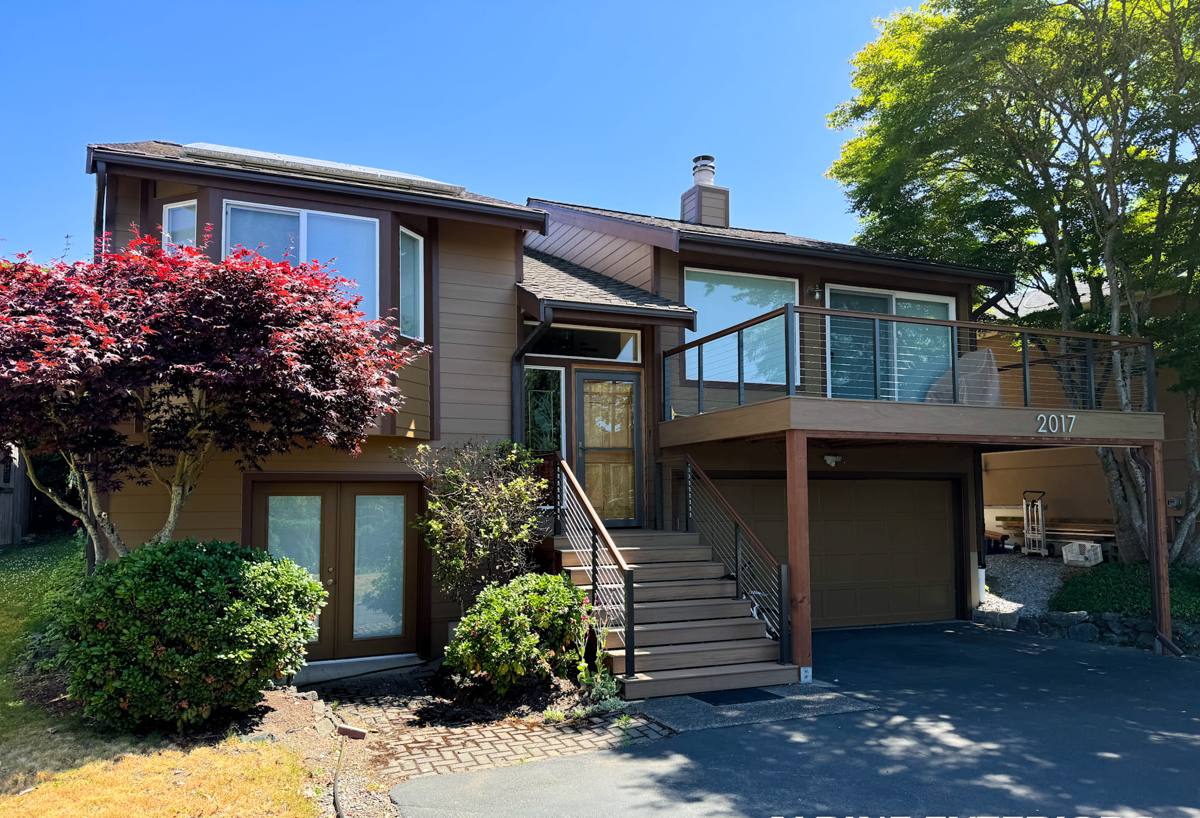
Signs a Birch Bay Roof Needs Repair
What Homeowners Usually Notice First
Most roof problems don't announce themselves with a dramatic leak. They show up as small, easy-to-dismiss signs first:
- A water stain on a ceiling or ceiling corner, even a faint one that dries and reappears after the next storm
- Shingles that look curled, cupped, or lifted at the edges, especially on slopes that face the prevailing wind and rain
- Granules collecting in gutters or at the base of downspouts
- Dark streaking or thick moss growth concentrated on shaded or north-facing sections
- Soft or spongy spots when walking a roof for inspection
- Rust staining below metal flashing, vents, or valleys
What Often Goes Unnoticed Until It's Bigger
Flashing failures around chimneys, skylights, and roof-to-wall transitions are some of the most common sources of leaks we find, and they're rarely visible from the ground. Salt air speeds up corrosion on flashing fasteners and sealant, so a flashing detail that would last 15-20 years elsewhere may need attention sooner in a bay-exposed location. Nail pops, cracked pipe boots, and worn ridge caps are the same story — small failures that let water in gradually, long before a homeowner sees a stain inside.
What a Correct Roof Repair Actually Involves
Diagnosis Before Any Patching
A repair is only as good as the diagnosis behind it. Water doesn't always show up on the ceiling directly below where it entered — it can travel along rafters or sheathing before dripping somewhere else entirely. A proper repair starts with tracing the actual entry point, not just patching the spot where the stain appeared. That usually means checking flashing, valleys, penetrations (vents, pipes, skylights), and the surrounding shingle field, not just the immediate area of visible damage.
Matching Materials, Not Just Covering the Hole
On an older roof, exactly matching the existing shingle color and profile isn't always possible, but a competent repair gets as close as reasonably available and integrates the patch properly into the surrounding courses rather than just sealing a piece on top. Underlayment matters too — if the original underlayment is compromised in the repair area, replacing it as part of the fix protects against the next storm, not just the current leak.
Flashing and Fasteners Built for Coastal Exposure
Given the salt air around Birch Bay, we pay particular attention to the metal used in flashing and fastener repairs. Using corrosion-resistant materials in these spots is a small added cost during a repair that prevents a repeat call in a few years when standard-grade metal starts rusting through.
Common Roof Repair Situations We Handle in Birch Bay
| Issue | Typical Cause | What the Repair Involves |
|---|---|---|
| Ceiling stain or active leak | Compromised flashing, cracked pipe boot, or worn shingles upslope | Trace source, replace flashing/boot, reseal or replace affected shingles |
| Curling or cracked shingles | Age, sun and wind exposure, granule loss | Remove and replace affected shingles, check underlayment condition |
| Moss buildup and staining | Shade, moisture retention, long damp season | Careful removal, treatment, and addressing the drainage or shade issue where possible |
| Rusted or lifted flashing | Salt air corrosion, age, poor original installation | Replace with corrosion-resistant flashing, reseal transitions |
| Wind-lifted or missing shingles | Storm exposure, aging adhesive seal strips | Reseat or replace shingles, reinforce seal along exposed edges |
Our Repair Process
- Inspection. We walk the roof (or use a ladder/scope where a full walk isn't safe or advisable) and check attic space where accessible, looking for both the obvious damage and the less visible contributing issues nearby.
- Honest assessment. We tell you what's actually needed — sometimes that's a targeted repair, sometimes a small area has deteriorated enough that patching it wouldn't be a good use of your money and a larger section replacement makes more sense. We'll explain why either way.
- Written scope and price. Before any work starts, you know what's being done, with what materials, and what it costs.
- The repair itself. Proper tear-out of the damaged area, correct underlayment and flashing detail, matched shingles installed to manufacturer spec, and cleanup when finished.
- Follow-up. If the repair was tied to a leak, we want to know it's held through the next real rain, not just look fine on a dry day.
Moss, Algae, and Salt: The Maintenance Side of Roof Life
Repair and maintenance aren't the same thing, but they're connected. A roof that's kept clear of moss and debris puts less strain on shingles and flashing, which means fewer repairs over its life. In a climate like Whatcom County's, with a long wet season and plenty of shaded, moisture-holding roof sections near the water, a little regular attention goes a long way.
- Keep gutters and valleys clear so water isn't sitting against shingle edges
- Address moss before it thickens — early growth is far easier and less risky to remove than an established mat that's been lifting shingle edges
- Have flashing and sealant checked periodically, especially around chimneys, skylights, and vents, since these fail before the shingle field usually does
- Trim back branches that keep a section of roof shaded and slow to dry
- After a bad windstorm, a quick visual check (from the ground, or have it looked at) can catch lifted or missing shingles before the next rain gets under them
What Roof Repair Typically Costs, and What Drives the Price
| Cost Factor | Why It Matters |
|---|---|
| Size and location of the damaged area | A small, accessible patch costs far less than a large section or a hard-to-reach valley or dormer |
| Roof pitch and access | Steeper roofs and higher stories require more safety setup and time |
| Underlying damage found once opened up | Rotted sheathing or extensive water damage found during the repair adds scope beyond the surface issue |
| Material match availability | Older or discontinued shingle styles can take longer to source or match closely |
| Flashing complexity | Chimneys, skylights, and multiple roof planes meeting at one point take more time to detail correctly than a flat shingle field |
Most straightforward shingle and flashing repairs land in a modest range that's a fraction of a full roof replacement — but until a roof is actually inspected, any number is a guess. We'd rather look at it and give you a real figure than quote blind over the phone.
Why Local Experience in Birch Bay Matters
A crew that regularly works this stretch of coastline already knows which fastener and flashing grades hold up against the salt air, which slopes tend to hold moss longest given the sun angle and tree cover here, and how driving rain off the bay tends to find its way into roofs that would stay dry a few miles inland. That's the difference between a repair that's technically done correctly on paper and one that's actually built for the conditions your roof faces every winter. It also means faster response — we're not driving in cold from outside the area to figure out the local quirks on your dime.
We work throughout Ferndale and the surrounding Whatcom County communities, including Birch Bay, and we bring that same standard to every repair: diagnose it right, fix the actual cause, and use materials suited to a coastal Pacific Northwest climate rather than a generic spec.
If you've got a stain on the ceiling, a section of roof that looks worse for wear, or you just want a second opinion before a small problem becomes a big one, we're happy to take a look. Fill out the form below for a free, no-pressure estimate — we'll tell you honestly what we find.