 Ferndale
 Windows Take a Different Kind of Beating Here
Bellingham and Ferndale sit right up against Bellingham Bay and the Salish Sea, which means windows here deal with a combination most manufacturers don't design for on a national average: salt-laden air, wind-driven rain that hits glass and trim sideways instead of straight down, and a wet season that stretches long enough to grow moss on anything that holds moisture. None of that is a reason to panic about your windows — it's just the reason a window installed correctly in Whatcom County needs to be installed differently than the same window in a dry inland climate.
Most window failures we see in this area aren't glass failures. They're water management failures — flashing that was skipped, sealant used as a substitute for flashing, or a frame that was never properly tied into the wall's drainage plane. Get that part right and a decent window will outlast its warranty. Get it wrong and even an expensive window will let water into the wall cavity within a few wet seasons.
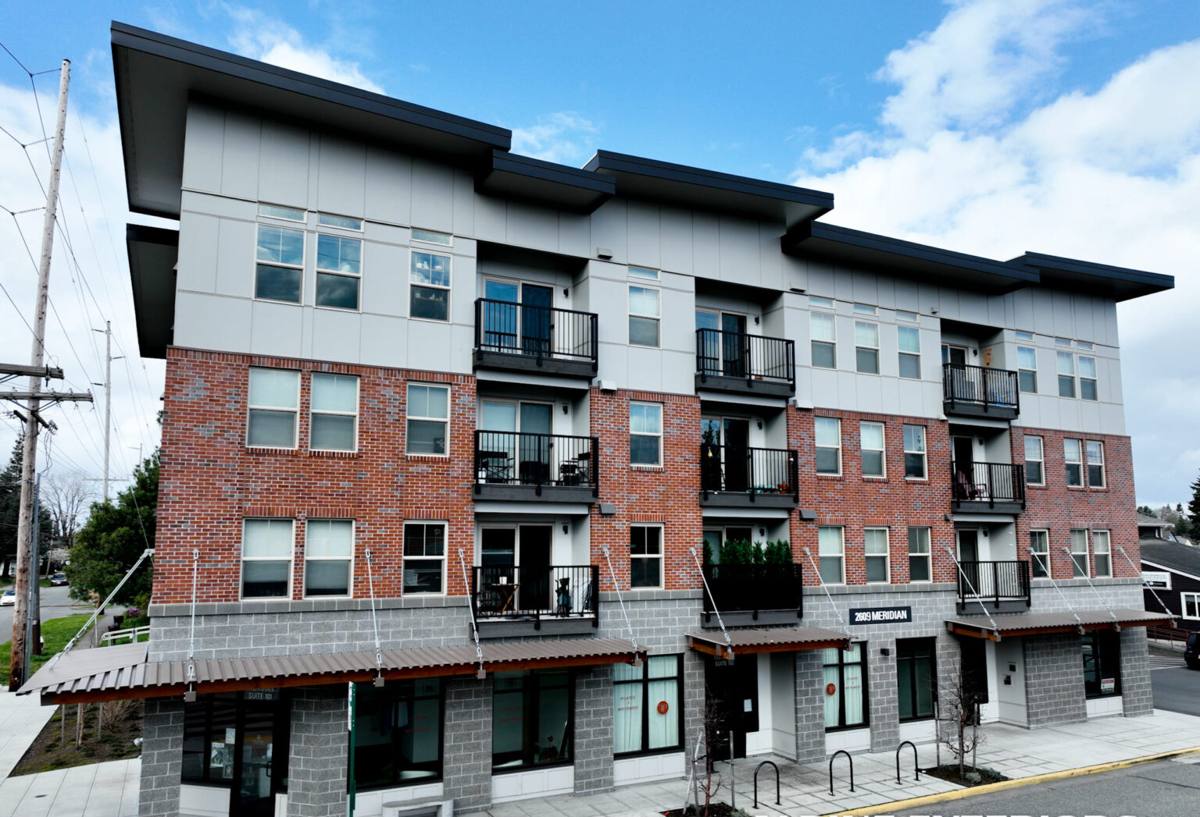
What a Correct Window Installation Actually Involves
"Installing a window" sounds simple, but the parts that actually determine whether it leaks in year three happen before the window ever goes in the opening, and they're mostly invisible once the trim is back on.
Flashing and Water Management
Every opening needs a sloped sill pan so any water that gets past the glass or the frame drains back outward instead of pooling on bare wood. The window's flanges need to be integrated into the weather-resistive barrier (the house wrap or building paper) in the correct shingle-lap order — sides first, then the top, so water always sheds downward and outward, never behind a layer that's supposed to stop it. Sealant has a role, but it's a backup to good flashing, not a replacement for it. A bead of caulk around a window with no sill pan underneath is exactly the kind of shortcut that looks fine at handoff and fails quietly for two or three years before anyone notices staining on an interior wall.
Insulation and Air Sealing
The gap between the window frame and the rough opening needs to be filled with a low-expansion foam or backer rod and sealant — never packed tight with fiberglass insulation alone, which does little for air sealing and nothing for water control. Overfilled gaps can bow the frame and cause the sash to bind; underfilled gaps leak air and let condensation form on the interior trim in cold weather, which is a common complaint in older homes around here.
Fastening and Structural Fit
The window has to be shimmed level, plumb, and square before it's fastened — not just tipped into the opening and screwed home. An out-of-square frame puts stress on the sash and the seals, which shows up later as a window that's hard to operate or that develops a draft along one edge years before it should.
Choosing the Right Window Material for This Climate
There's no single "best" window material — there's a best fit for your house, your budget, and how much upkeep you want to take on. In a marine climate with salt air and heavy annual rainfall, the trade-offs matter more than they would somewhere drier.
| Frame Material | How It Handles This Climate | Trade-Offs to Know |
|---|---|---|
| Vinyl | Won't rot or corrode from salt air; handles moisture well | Frames can expand/contract with temperature swings; color and hardware quality vary widely by manufacturer |
| Fiberglass | Very stable in wet, salty conditions; holds paint and finish well | Higher upfront cost than vinyl |
| Wood (unclad) | Classic look, good insulator | Requires ongoing exterior maintenance; most vulnerable to the rot that comes with this area's rain |
| Wood with vinyl or aluminum cladding | Combines interior wood warmth with a weather-resistant exterior shell | Cladding must be properly sealed at joints or moisture gets trapped between the wood and the cladding |
We also pay attention to U-factor (how much heat the window lets through) and, in some cases, condensation resistance ratings — both matter more here than in a drier climate because of the combination of cool temperatures and high humidity for much of the year. Washington's state energy code sets minimum performance requirements for replacement windows, and we make sure whatever goes in meets or beats that baseline rather than just squeaking by.
What We Commonly Find in Bellingham and Ferndale Homes
A lot of the housing stock in this part of Whatcom County is older — original single-pane wood windows, aluminum-frame windows from a later remodel, or a first round of vinyl replacements installed decades ago without much attention to flashing. When we open up an opening for a window replacement, the most common issues we run into are soft or rotted framing at the sill from years of slow water intrusion, sealant that was applied as the only line of defense against water, and window flanges that were never actually tied into the house wrap — meaning water has had a direct path behind the siding for as long as the window's been there. None of this is unusual for the climate; it's just what happens over enough wet seasons without a proper drainage plane behind the window.
Windows and Siding: Why the Order of Operations Matters
If your siding is also getting replaced or is already showing its age, that's actually the best time to handle windows, because the wall is open and the flashing details can be done right without cutting into finished siding later. There are two general approaches:
Full-Frame Replacement
The old window and its frame come out entirely, exposing the rough opening down to the framing. This lets us inspect and repair any hidden rot, install a proper sill pan and flashing sequence, and tie the new window cleanly into the weather-resistive barrier. It's more labor, but it's the only way to fully correct a window that's been leaking for years.
Insert (Pocket) Replacement
The new window is fit into the existing frame, which stays in place. It's faster and less disruptive to surrounding trim and siding, but it only works well when the existing frame is still sound and was flashed correctly to begin with — otherwise you're sealing a new window into an old problem.
We'll tell you honestly which approach your house needs after we've actually looked at the opening, not before.
How We Handle a Window Installation, Start to Finish
1. Assessment and Measurement
We look at the existing window, the surrounding siding and trim, and take precise measurements. This is also when we flag anything that suggests hidden water damage — soft trim, staining, or a musty smell near the opening.
2. Removal and Inspection
Once the old window is out, we can actually see the condition of the rough opening. If there's rotted framing, this is when it gets repaired — replacing it now, while the wall is open, is far cheaper than discovering it later.
3. Sill Pan and Flashing
A sloped sill pan goes in first, followed by the flashing sequence integrated with the house wrap in the correct shingle-lap order so water always drains outward.
4. Setting, Shimming, and Fastening
The window is set into the opening, shimmed level and plumb, checked for square, and fastened according to the manufacturer's specifications — which matter for keeping the warranty valid.
5. Insulating and Air Sealing
The perimeter gap is filled with low-expansion foam or backer rod and sealant, sized to insulate without bowing the frame.
6. Trim, Siding Tie-In, and Exterior Sealing
Interior and exterior trim goes back on, and where the window meets the siding, we make sure the final sealant joints are backed by flashing rather than standing alone as the only barrier.
7. Cleanup and Walkthrough
We walk the finished window with you, check that it operates smoothly, and clean up the work area before we leave.
What Affects the Cost
Every home is different, so we don't quote window installation off a flat per-window price — but these are the factors that actually move the number, and it's worth understanding them before you start comparing bids.
| Factor | Why It Matters |
|---|---|
| Full-frame vs. insert replacement | Full-frame involves more labor and possible framing repair; insert is faster when the old frame is sound |
| Frame material | Vinyl, fiberglass, and clad-wood windows carry different material costs |
| Hidden rot or framing damage | Not visible until the old window is out; adds repair time but prevents a repeat failure |
| Window size and glazing options | Larger units, tempered glass (required near doors and low sills), and upgraded Low-E coatings all affect price |
| Number of windows done at once | Doing several windows in one visit is generally more efficient per window than one at a time |
Signs Your Windows Need Replacing, Not Just Recaulking
Some window problems are a quick fix. Others are a sign the window has already let water into the wall. Here's what tells us which is which:
- Sash is difficult to open, close, or lock — often a sign the frame has shifted or swollen
- Visible fogging or moisture between panes of a double-pane window — the seal has failed
- Soft, discolored, or bubbling trim or drywall around the window
- A musty smell near the window that wasn't there before
- Visible daylight or a noticeable draft along the frame edge
- Moss or dark staining building up on the exterior sill or trim below the window
- Paint or caulk that's cracking and separating from the frame every season, no matter how often it's touched up
If you're only seeing the first item or two on that list, a repair or reseal may be enough. If you're seeing soft framing or moisture between panes, that's usually a replacement conversation.
Why Hiring a Crew That Already Works in Bellingham and Ferndale Matters
Window installation done by the book looks the same on paper anywhere in the country. What's different here is knowing, without having to relearn it on your house, that a north-facing wall near the bay takes more direct wind-driven rain than the same wall would ten miles inland, that older Whatcom County homes often hide a layer of past repairs behind the trim, and that moss and algae growth on sills and casings is a maintenance issue to plan for, not a sign something was installed wrong. A crew that works this area regularly also knows the local permitting expectations and won't be guessing at flashing details that matter more here than they would in a drier climate. That local familiarity doesn't show up as a line item on a quote, but it's the difference between a window that's still tight in ten years and one that needs attention again in three.
Get a Straight Answer About Your Windows
If you're not sure whether your windows need a full replacement, a repair, or nothing at all right now, the fastest way to find out is to have someone look at them in person. We offer free, no-pressure estimates for homeowners in Bellingham, Ferndale, and the surrounding Whatcom County area — fill out the form below and we'll get back to you.