 Ferndale
 Fiber Cement Siding Built for a Sudden Valley Property
Sudden Valley homes sit under heavy tree canopy on the south shore of Lake Whatcom, in a stretch of Whatcom County that gets a lot of wet, gray weather and not much direct sun on a lot of exterior walls. We install James Hardie fiber cement siding on homes throughout this community, and this page is specifically about that one job — what fiber cement siding needs to do here, what a correctly installed system actually involves, and how we approach the work on a Sudden Valley property specifically, rather than siding in general.
Across Whatcom County, exterior materials deal with a mix of pressures — salt air for homes closer to the coast, driving rain off the Sound and off Lake Whatcom, and a moss season that runs long into a typical year. Sudden Valley's version of that mix leans heavily on shade and lake humidity: dense trees keep walls damp longer after every storm, and that combination is hard on any siding material that isn't built to shed and resist moisture on its own.
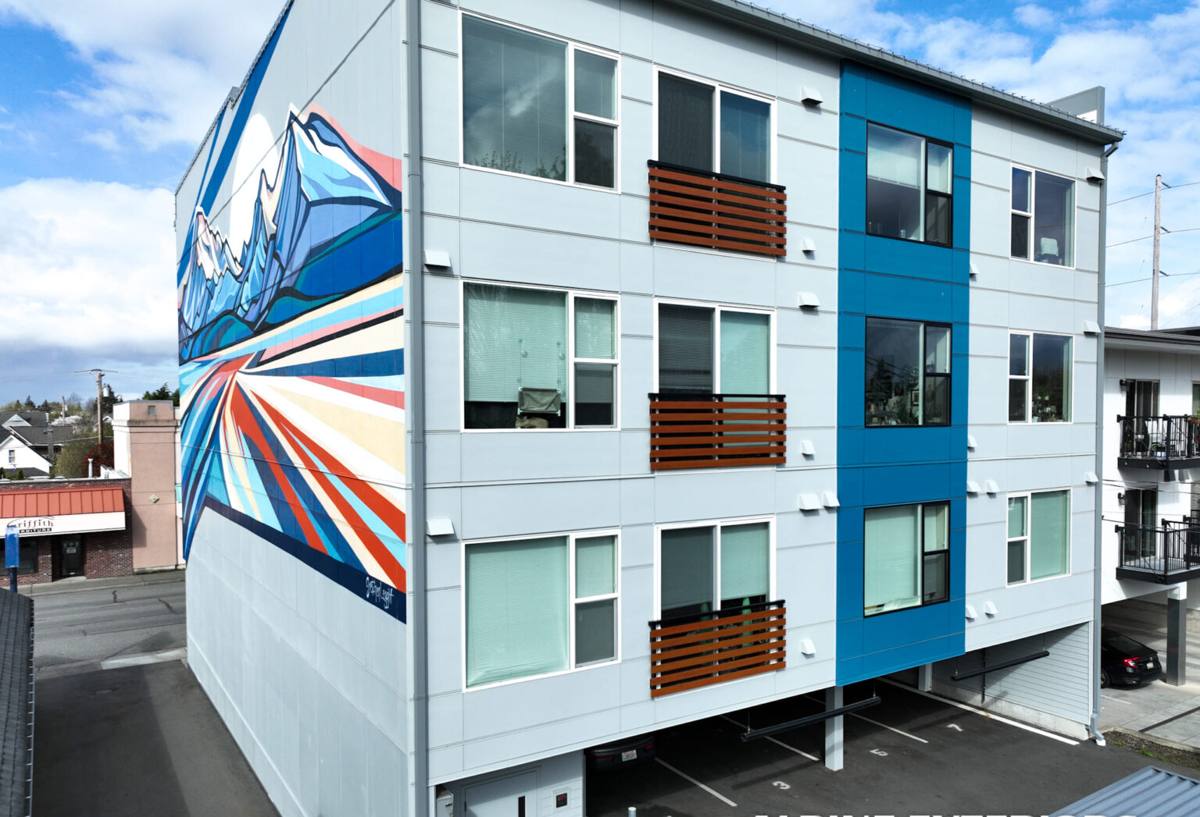
What Driving Rain, Shade, and a Long Moss Season Do to Siding Here
Wind-Driven Rain on a Hilly, Wooded Lot
Sudden Valley's terrain isn't flat — homes sit at different elevations and orientations relative to the lake and the surrounding ridgelines, so wind-driven rain doesn't hit every wall of a house the same way. One elevation can take a real beating in a storm while another stays relatively sheltered. Siding and the flashing behind it need to account for that wall-by-wall variability instead of assuming uniform exposure, which is a detail that's easy to skip if a crew treats every wall the same.
Shade That Slows Everything Down
A lot of Sudden Valley lots keep at least one or two wall faces under tree cover for most of the day, year-round. That shade means those walls stay wet longer after rain than a wall on an open, sunny lot would. Siding that depends on sun exposure to dry out between storms simply doesn't get that chance here, and it's exactly the kind of condition where a moisture-sensitive material starts showing problems well before it should.
A Moss Season That Doesn't Really End
Shade, humidity, and mild temperatures are the recipe for sustained moss and mildew growth, and that recipe stays active in Sudden Valley most of the year. Roofs usually show it first, but siding that holds moisture at seams, cut edges, or a porous surface picks it up too, especially on north-facing walls that get the least sun of any part of the house.
Why Fiber Cement Handles This Better Than the Alternatives
Fiber cement is cement, sand, and cellulose fiber pressed and cured into a dense, stable panel or plank. It doesn't have a wood core to swell, cup, or rot when it stays wet longer than it should, and it doesn't rely on a field-applied paint job to keep water out. That combination is a large part of why it holds up on a shaded, moisture-heavy lot better than materials with a wood or vinyl base.
- Dimensionally stable: Fiber cement doesn't expand and contract with moisture the way wood-based products do, so it stays flat and tight at the joints through repeated wet-dry cycles.
- Factory-cured, not field-finished: The board itself is fully cured before it ever reaches a job site, so it isn't depending on paint alone to hold its shape and resist water.
- Non-combustible core: Fiber cement doesn't feed a fire the way wood-based siding can, which matters for a wooded community surrounded by forest.
- Rot-resistant by composition: There's no organic wood fiber core for moisture to break down over time, which matters most on the shaded walls that never fully dry out.
We install James Hardie exclusively — not LP SmartSide, not vinyl, not Cemplank or Allura, not primed spruce or cedar. Each of those has a place in the broader market, but on a lot like a typical Sudden Valley property, we've made a professional call to stand behind one system fully rather than offer a cheaper option that quietly shifts long-term maintenance risk onto the homeowner.
The Hardie Product Line We Install
HardiePlank Lap Siding
This is the most common choice for Sudden Valley homes — horizontal lap siding in a range of exposures and textures, from smooth to a cedar-mill woodgrain look. It reads as a traditional or craftsman-style exterior, which fits the wooded, cabin-adjacent character of a lot of homes in this neighborhood.
HardieShingle and HardiePanel with Battens
For homes going for a different look, HardieShingle gives a staggered or straight-edge shingle profile, and HardiePanel with vertical battens gives a board-and-batten look that works well on gables, accent walls, or a more modern-leaning exterior. Both come in the same durable fiber cement composition as the lap siding — the choice is aesthetic, not a durability trade-off.
ColorPlus Factory Finish
Hardie's ColorPlus finish is baked on at the factory under controlled conditions, not brushed on in the field. It resists fading, chalking, and moisture intrusion at the surface far longer than site-applied paint — a real advantage on shaded walls that stay damp longer between dry spells and would otherwise put more strain on a field finish.
HZ5 Climate Engineering
Hardie makes different formulations for different climates, and the HZ5 line is engineered for regions with heavy moisture exposure and freeze-thaw cycling rather than hot, dry conditions. That's the right fit for a lakeside, shaded property like a typical Sudden Valley home, and it's the formulation we specify for this area.
What a Correctly Installed Job Actually Involves
Fiber cement only performs the way it's engineered to when it goes on correctly. The material itself isn't the whole story — installation quality is what determines whether it lasts three decades or develops problems in five years. On a shaded, damp lot like Sudden Valley, these details matter more than they would on a sunnier property, because any gap in the moisture management gets exploited by walls that don't get much chance to dry out.
- Correct fastener type and spacing, driven to Hardie's specified depth — not overdriven, which crushes the material and opens a path for water
- Proper clearance from grade, roof lines, decks, and patios so siding never sits in standing water or constant splash-back
- Drainage or rain-screen detailing behind the panels on walls that need it, so any moisture that gets past the surface has somewhere to go
- Properly sized joints with the correct sealant, not caulked tight against manufacturer spec
- Flashing integrated correctly at windows, doors, and every roof-to-wall transition, since that's where most siding leaks actually start
- Field-cut edges sealed per Hardie's instructions before installation, not left exposed
Skipping any one of those on a sunny, open lot might not show up for years. On a shaded Sudden Valley wall that stays wet longer after every rain, the same shortcut tends to show up much sooner.
What a Fiber Cement Siding Project Typically Involves
| Cost Factor | What It Depends On |
|---|---|
| Tear-off and disposal | Whether existing siding comes off clean or hides rot, water damage, or failed sheathing underneath |
| Siding profile | Lap siding, shingle, or board-and-batten with vertical battens — labor time varies by profile |
| Wall complexity | Number of stories, gables, dormers, and trim details around windows and doors |
| Drainage detailing | Whether the wall assembly needs added rain-screen or drainage plane work, more common on consistently shaded elevations |
| Access and terrain | Sudden Valley's hilly lots and tree cover can affect staging, scaffolding, and equipment access |
| Finish selection | Standard ColorPlus color range versus a custom or premium color |
We don't quote a job over the phone. Every one of those factors changes with the specific house, and a proper estimate starts with actually looking at the walls, the existing siding condition, and how much sun or shade each elevation gets.
Our Process for a Sudden Valley Siding Project
We start with an on-site walk of the home, checking each elevation separately since shade and moisture exposure often vary more from wall to wall here than on a typical open lot. We look at what's under the existing siding where we can, note any water damage or soft sheathing, and talk through profile and color options that fit the home and, where relevant, the surrounding community's look. From there we put together a clear, written scope and price before any work begins — no verbal estimates, no surprises mid-project.
During installation, we treat correct fastening, clearances, flashing, and drainage detailing as standard practice on every Sudden Valley job, not as an upgrade. Once the siding is up, we walk the property with the homeowner, cover basic care, and make sure every detail matches what was in the written scope.
Why a Crew That Already Works in Sudden Valley Matters
Sudden Valley is a private community with its own internal road network and homeowners association, and a crew that already works here knows the practical side of that before the first appointment — how to schedule around community access, and how much the exposure changes from lot to lot even within the same few blocks. That familiarity shows up in decisions that actually affect how the siding performs: which walls get extra drainage detailing because they rarely see direct sun, how joints and flashing get handled on a steep, shaded gable, and which fastener spacing holds up best in a damp, tree-covered microclimate. A crew seeing a Sudden Valley property for the first time is more likely to apply generic assumptions that don't hold up on a lot like this.
What to Check Before Hiring for Fiber Cement Siding Here
- Ask specifically whether they install James Hardie fiber cement and to what HZ specification for this area
- Confirm current Washington contractor licensing and active liability insurance
- Ask how they handle drainage detailing on shaded walls, not just sunny ones
- Ask about experience working within Sudden Valley's HOA or private-road access, including scheduling
- Get a written scope of work, including fastener spec and clearance details, before signing anything
Caring for Fiber Cement Siding on a Shaded, Wooded Lot
Correctly installed Hardie siding is low-maintenance, but "low-maintenance" doesn't mean "no maintenance" on a lot like this. Walls under heavy canopy benefit from an occasional gentle rinse to clear debris and slow moss or mildew buildup before it takes hold, and it's worth a periodic look at caulked joints and trim intersections, since those are the first places wear would show. None of that is a large task, but skipping it on a shaded wall lets moisture sit longer than it would on a wall that gets more sun.
If you're weighing siding options for a Sudden Valley home, we're glad to walk the property with you and give an honest read on what the walls actually need. Reach out below for a free, no-pressure estimate.