 Ferndale
 Storm Damage Roof Repair for Kendall Homes
Kendall sits inland from Ferndale, in the part of Whatcom County where the tree canopy is heavier and the lots tend to be larger and less exposed than homes closer to the water. That doesn't mean the roofs out here get an easier ride. Storms that roll in off the Strait push wind and rain well inland, and by the time they reach Kendall they're moving through stands of fir and cedar that shed limbs and needles onto roofs all winter long. We get calls after nearly every major windstorm from homeowners who found shingles in the yard, a leak in a back bedroom, or a branch through the garage roof.
This page is specifically about storm damage repair for that Kendall setting — rural, tree-heavy, longer driveways, and weather that behaves a little differently than it does on a Ferndale lot two miles from the bay. If you're looking for general roofing information, our main roofing pages cover that. This one is about what happens after a storm hits a Kendall roof, and how to get it fixed right the first time.
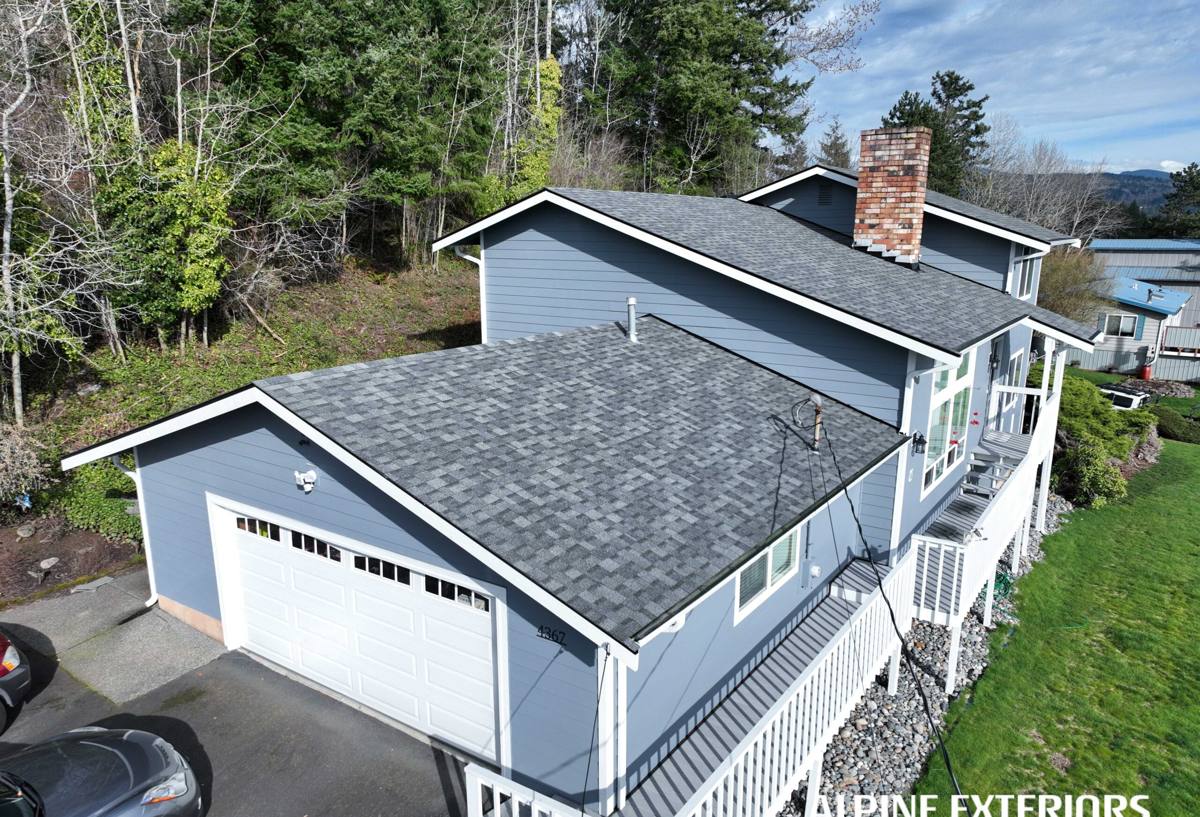
What Whatcom County Storms Do to a Kendall Roof
Three things drive most of the storm repair calls we get out this way:
Wind and Tree Debris
Kendall's tree cover is a mixed blessing. It breaks up some wind, but it also means falling limbs, whole branches, and occasionally a full tree are part of the storm damage picture in a way they aren't on more open Ferndale lots. Wind gusts during a front can also get up under a shingle edge that's already lifted from age or a prior storm, and that's usually where the real leak starts — not at the point of impact, but at the seam it opened up.
Driving Rain
Whatcom County storms often bring rain sideways, not straight down. Driving rain finds every weak point in flashing, ridge caps, and any spot where a shingle tab has cracked or lifted. A roof that would shed a normal rain without issue can leak during a wind-driven storm simply because the water is hitting it at an angle the roofing wasn't sealed against.
Moss and Needle Buildup
The long moss season in this part of Washington isn't just cosmetic. Moss and accumulated needles in valleys and behind chimneys hold water against the roof deck and shingles for weeks at a time. That constant moisture weakens shingles, corrodes fasteners, and softens the decking underneath — so when a storm hits, a roof with existing moss buildup is far more likely to actually fail than one that's been kept clear.
Signs Your Kendall Home Has Storm Damage
Not all storm damage is obvious from the ground. Some of it only shows up as a slow leak weeks later. After any significant wind event, it's worth checking for:
- Shingles, tabs, or granules in the yard, gutters, or downspouts
- Visible gaps, lifted edges, or curling on the roof slopes
- New or worsening moss buildup in valleys, especially where a branch has knocked debris loose
- Bent, lifted, or missing flashing around chimneys, vents, and skylights
- Water stains on interior ceilings, especially near exterior walls or in upstairs rooms
- Sagging or soft spots on the roof deck when viewed from the attic
- Debris caught in gutters that's holding water against the fascia or roof edge
- Any limb, branch, or debris still resting on the roof surface
If you see any of these, the roof should be looked at even if there's no active leak yet. A lifted shingle or damaged flashing detail doesn't always leak right away — it leaks the next time wind drives rain at it from the wrong angle.
What a Correct Storm Damage Repair Actually Involves
A lot of storm repair work we get called to fix is actually a redo of a rushed patch job. Doing it right means more than just replacing what's visibly broken.
Full Slope Inspection, Not Just the Damaged Spot
Wind damage rarely stays contained to one shingle. We check the entire slope the wind hit, plus adjacent slopes, because lifted or cracked shingles near the obvious damage often get missed if a repair only targets the spot where the leak showed up inside.
Decking Assessment
If water has been getting into the roof system for any length of time — which happens often with moss-related leaks that go unnoticed — the plywood or OSB decking underneath may be soft or delaminating. Replacing shingles over damaged decking doesn't solve the problem; the decking has to be sound before new roofing goes down.
Underlayment and Flashing
Storm damage often shows up as a shingle problem but is actually a flashing or underlayment problem. Step flashing around chimneys and walls, valley metal, and vent boots all take a beating in wind-driven rain, and a proper repair checks and replaces these details rather than just laying new shingles over old flashing.
Matching the Existing Roof
A storm repair on one section of an otherwise intact roof needs to blend in — matching shingle profile, color, and exposure as closely as possible. We'll talk honestly with you about what's achievable here, since shingle color fades over time and an exact match on an older roof isn't always possible.
Our Process: From Emergency Tarp to Finished Repair
- Emergency mitigation — if there's active water intrusion, the first priority is a tarp or temporary cover to stop further damage, especially given how far out some Kendall properties are from town.
- Full inspection and documentation — we photograph and document the damage in the level of detail insurance adjusters expect, including the specific storm event where relevant.
- Written scope and estimate — you get a clear breakdown of what's damaged, what needs to be repaired versus replaced, and why.
- Repair work — decking, underlayment, flashing, and shingles addressed in the right order, not just a surface patch.
- Final walkthrough — we go over the completed repair with you before we consider the job done.
Insurance and Storm Repair: What Kendall Homeowners Should Know
Most storm damage claims come down to documentation. Insurance adjusters want to see clear evidence connecting the damage to a specific weather event, not just general wear. We provide detailed photos and a written scope of work that homeowners can hand directly to their adjuster or claims process. We're not a public adjuster and we don't negotiate your claim for you, but we make sure the roofing side of the paperwork is thorough and accurate.
One thing worth knowing: insurance typically covers storm damage, not the underlying maintenance issue that made the damage worse. If moss buildup or aging flashing contributed to a leak, that distinction sometimes matters for coverage. We'll be straightforward with you about which parts of a repair are storm-related and which are pre-existing conditions, since it affects both the claim and the long-term fix.
Storm Repair Cost Factors
Every storm repair is different, but the same handful of factors drive most of the cost variation we see on Kendall jobs:
| Factor | Why It Matters |
|---|---|
| Extent of damage | A handful of displaced shingles is a different job than decking replacement after weeks of hidden leaking |
| Roof pitch and access | Steeper roofs and longer, tree-lined driveways take more time and equipment to work safely |
| Decking condition | Soft or delaminated plywood found under the damaged area adds material and labor that isn't visible until we open the roof up |
| Shingle matching | Older or discontinued shingle lines can require a larger repair area to keep the appearance consistent |
| Flashing and detail work | Chimneys, skylights, and multiple roof valleys each add labor beyond the shingle replacement itself |
| Debris removal | Fallen limbs or trees resting on the roof need to be removed carefully before repair work can even start |
We give a firm, written estimate after the inspection — not a ballpark over the phone — because storm damage that looks minor from the ground sometimes isn't, and vice versa.
Why a Ferndale-Based Crew That Already Works Kendall Matters
Storm response is partly about speed and partly about knowing the area. A crew that regularly works Kendall knows what the access is usually like on rural properties out here — longer gravel driveways, septic and well setups to work around, and properties where a quick look from the road doesn't tell you much about the roof itself. That familiarity means less time figuring out logistics and more time actually assessing and fixing the damage.
It also means we've seen how this specific mix of tree cover, moss, and wind-driven rain plays out on real roofs in this area over multiple storm seasons — not just in a single visit. That's useful when you're trying to decide whether a repair now will hold, or whether a section of the roof is close enough to the end of its service life that a repair is just delaying a larger job. We'll tell you which situation you're in rather than defaulting to the more expensive answer.
Get a Free Storm Damage Estimate
If your Kendall home has visible storm damage, or you're not sure whether that lifted shingle or bit of debris in the gutter is worth worrying about, we're happy to take a look. The estimate is free, there's no pressure to move forward, and you'll get a straight answer about what's actually going on with your roof. Use the form below to get in touch.