 Ferndale
 Blaine's Coastal Exposure Is Its Own Challenge
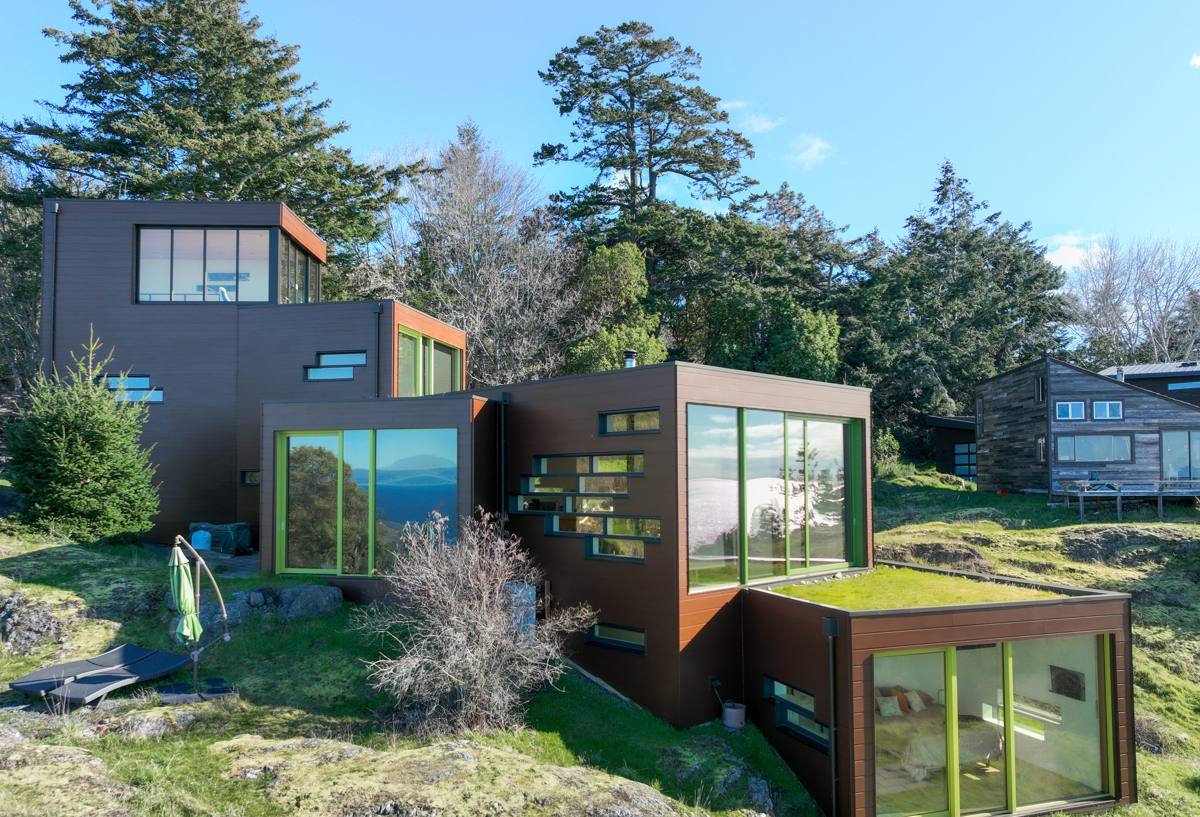
Blaine sits right on the water, at the northern edge of Whatcom County, close enough to the Strait of Georgia and Semiahmoo Bay that salt-laden air is simply part of daily life. That's a different exposure than homes a few miles inland. Salt air accelerates the breakdown of fasteners, caulk, and paint film. Combine that with the wind-driven rain that comes off open water and the long stretches of damp, overcast weather that keep north and shaded walls perpetually moist, and you get a climate that is genuinely hard on exterior cladding.
Add in moss. Whatcom County's mild, wet winters and short summer drying window give moss and algae months at a time to establish themselves on siding that stays damp, particularly on north-facing walls, under eaves, and anywhere airflow is limited by landscaping or fencing. None of this is unique to any one house in Blaine — it's the baseline condition every exterior surface on the water side of Ferndale has to deal with, year after year.
Siding that isn't built or installed for this combination of salt, driving rain, and moss pressure tends to show it early: swollen edges, peeling paint, soft spots at the base course, streaking and discoloration that won't wash off. Fiber cement, installed correctly, is one of the few claddings that holds up to all three at once.
What a Correct Fiber Cement Installation Actually Involves
Fiber cement siding is only as good as the details behind it. In a climate like Blaine's, the difference between a siding job that lasts thirty years and one that fails at year eight almost always comes down to water management, not the board itself.
Flashing and Drainage
Every horizontal joint, every window and door head, and every penetration — hose bibs, vents, light fixtures — needs proper flashing, not just a bead of caulk. Behind the siding, a weather-resistive barrier and, on most Blaine installs, a drainage gap (rainscreen) give any moisture that does get past the cladding a way out instead of a place to sit against the sheathing.
Fastening and Clearances
Fiber cement has a manufacturer-specified nailing pattern — fastener type, spacing, and embedment depth all matter, and over-driven or under-driven nails are a common source of early failure. Clearance matters just as much: siding needs a gap from grade, roof lines, decks, and patios so it never sits in standing water or wicks moisture from below.
Cut Edges and Joints
Factory edges of Hardie board come pre-primed. Field cuts don't — they need to be primed and sealed before installation, every time, or that raw edge becomes the first place moisture gets in. Butt joints get flashed or fitted to a documented detail, not just caulked and hoped for.
None of this is exotic work, but it's easy to shortcut when a crew is moving fast, and shortcuts here don't show up as a problem for a few years — by which point they're expensive to fix.
Why We Install Only James Hardie Fiber Cement
We don't install LP SmartSide, vinyl, Cemplank, Allura, primed spruce, or cedar. That's a deliberate standard, not an accident of what we happen to stock. James Hardie's fiber cement is non-combustible, engineered in climate-specific HZ product lines that account for exactly the kind of wet, marine-influenced exposure Blaine sees, and finished at the factory with ColorPlus technology rather than relying entirely on field-applied paint. That factory finish matters more here than in a drier inland climate — it holds color and resists the chalking and fading that salt air and UV speed up, and it comes with a stronger, transferable warranty structure than most alternatives offer.
Other products have real strengths — vinyl is inexpensive and low-maintenance in mild climates, engineered wood has a warmer look for less money, cedar has genuine curb appeal. Our decision to install only Hardie comes down to what we've seen hold up over decades on homes exposed to salt air, driving rain, and heavy moss pressure: a non-combustible, dimensionally stable board with a factory finish built for wet marine climates outperforms the alternatives on this specific coastline, even if it costs more up front.
Choosing the Right Product Line and Color for a Blaine Home
HardiePlank lap siding is the most common choice for full-wall coverage and comes in several profiles — Select Cedarmill for a subtle wood-grain texture, Smooth for a cleaner modern look, and Beaded for a classic reveal line. HardiePanel and HardieShingle work well as accent material on gables, dormers, or feature walls without changing the underlying performance.
Color deserves real thought in a moss-prone, salt-air environment. A baked-on ColorPlus finish resists fading and chalking far better than a field-applied coat over its lifespan, which matters more here than inland since UV and salt exposure both accelerate finish breakdown. Lighter, muted coastal tones tend to hide dust and salt film reasonably well, but the more practical consideration is how a color reads against your roofline and gutter runoff — dark roof runoff staining shows differently depending on siding color, and north-facing walls that stay shaded will show moss growth regardless of color choice, so gutter maintenance and airflow around those walls matter more than the paint color itself.
Our Installation Process
- Assessment — we look at your current siding and sheathing condition, note any existing moisture damage or moss patterns, and check how the existing flashing details are (or aren't) working.
- Tear-off and inspection — old siding comes off and we inspect the sheathing and framing underneath before anything gets covered back up. Hidden rot or damage gets addressed at this stage, not papered over.
- Water management layer — weather-resistive barrier goes on, with a drainage gap where the wall assembly calls for one.
- Installation — Hardie siding goes up to manufacturer fastening and clearance specs, with flashing detailed at every joint, window, door, and penetration.
- Finish work — cut edges are sealed, caulk joints are finished, and we walk the job with you before calling it done.
What Fiber Cement Siding Costs in Blaine
Every home is different, but the factors that move the price are consistent. This isn't a quote — it's what to expect a contractor to walk you through before giving you one.
| Cost Factor | Why It Matters |
|---|---|
| Home size and number of stories | More wall area and taller walls mean more material and more time on staging or lifts |
| Tear-off and disposal | Removing and hauling away old siding adds labor and disposal costs before new material goes up |
| Sheathing repair | Rot or moisture damage found during tear-off has to be fixed before new siding goes on — this is discovered, not predictable in advance |
| Product profile and trim detail | Beaded or shingle-style profiles and detailed trim take more labor than a straightforward smooth lap installation |
| Site access | Tight lots, steep grades, or limited equipment access near the water can add setup time |
Why Hiring a Crew That Already Works in Blaine Matters
A crew that mostly works drier, inland jobs can install fiber cement competently and still miss the details that matter on a shoreline-adjacent home. Rainscreen gaps get skipped because they "aren't usually needed." Flashing gets simplified because the crew isn't used to accounting for wind-driven rain angles off open water. North walls get treated the same as south walls, when in Blaine's climate they're the ones that stay damp longest and need the most attention to airflow and moss prevention.
A crew that regularly works Whatcom County's coastal communities makes those calls correctly by default, because they've seen what happens on the jobs where those details got skipped. That familiarity — with local permitting, with how older homes in this area were originally built and flashed, with how exposure changes block to block near the water — is worth as much as the product itself.
Living With Fiber Cement Siding in Blaine's Climate
Correctly installed Hardie siding is low-maintenance, not zero-maintenance. A short annual routine keeps it performing the way it's designed to in a salt-air, moss-heavy environment:
- Rinse the siding annually, paying extra attention to north-facing and shaded walls where salt film and organic buildup collect
- Keep gutters and downspouts clear so roof runoff doesn't concentrate moisture against any one section of wall
- Trim back vegetation near the house to keep airflow moving and slow moss regrowth
- Check caulk joints at trim, windows, and butt joints once a year for cracking or separation
- Watch the base course near grade, decks, and patios for soft spots or discoloration, which can signal a clearance or flashing issue
Catching a small caulk failure or a clogged gutter early is a five-minute fix. Left alone through a few wet Whatcom County winters, the same issue can turn into a sheathing repair.
Get a Straight Answer for Your Blaine Home
If you're weighing a siding replacement or just want an honest read on how your current siding is holding up against Blaine's salt air and rain, we're happy to take a look. Reach out for a free, no-pressure estimate using the form below.