 Ferndale
 Siding Installation Built for Semiahmoo's Coastal Exposure
Homes in and around Semiahmoo sit in one of the more demanding microclimates we work in across Whatcom County. Proximity to open water means more wind-driven rain hitting wall surfaces directly, more salt-laden air moving across siding and fasteners year-round, and a moss and algae season that runs longer than it does just a few miles inland. A siding installation here isn't just a cosmetic upgrade — it's the difference between a wall system that sheds water and salt for decades and one that starts showing stress within a few years.
We install James Hardie fiber cement siding exclusively, and on properties near Semiahmoo that decision matters more than usual. This page walks through what the coastal exposure actually does to a home's exterior, what a correctly done installation involves out here, and how our process is built around the realities of this specific stretch of Whatcom County.
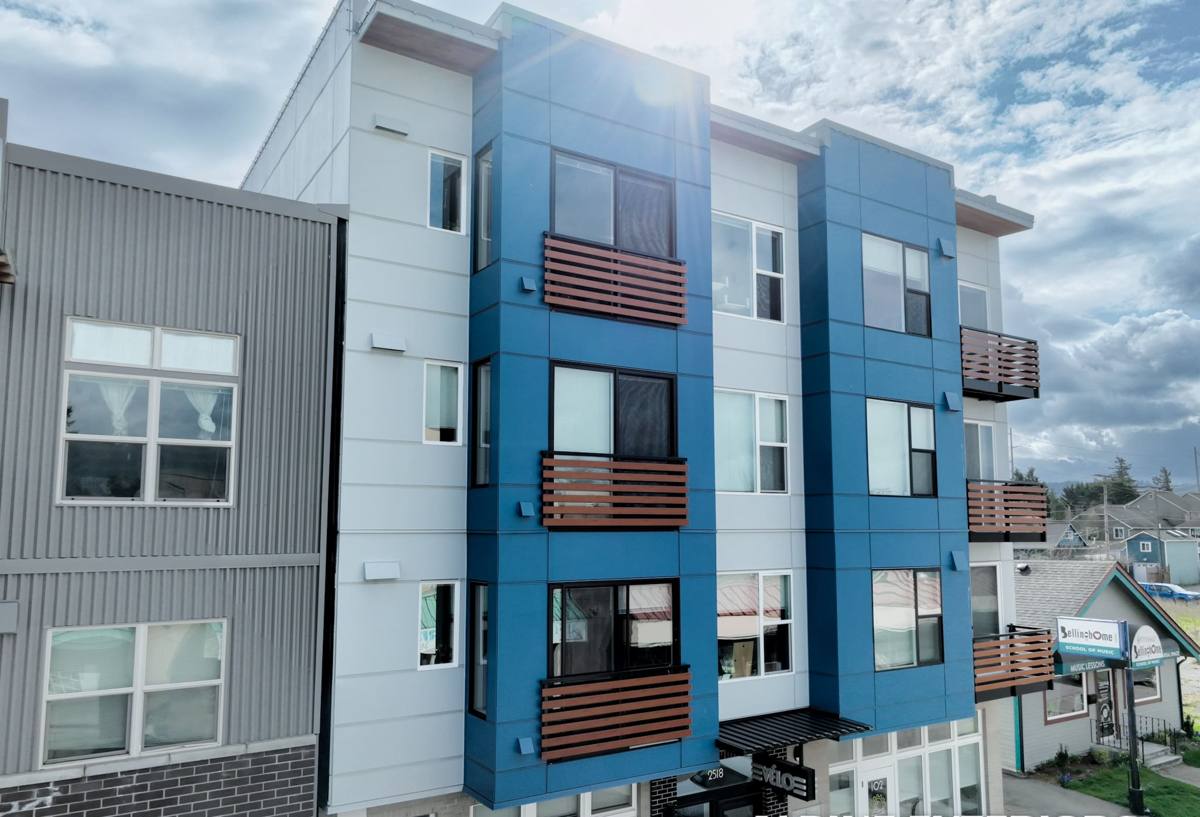
What Salt Air, Driving Rain, and Moss Season Actually Do
Salt Air and Metal Fatigue
Airborne salt doesn't just sit on the surface of a wall — it works into every metal component of an exterior: fasteners, flashing, trim screws, and hardware. Over time, standard-grade fasteners and untreated metal flashing corrode faster near open water than they do further inland. Corroding fasteners lose holding power, and corroding flashing eventually stops shedding water the way it's supposed to. Neither failure is visible from the ground until the damage is already underneath the siding.
Wind-Driven Rain
Whatcom County gets plenty of rain generally, but exposure to open water changes the angle and force at which that rain hits a wall. Rain that would run harmlessly down a sheltered wall can be driven sideways into laps, joints, and penetrations on a more exposed elevation. That means water management details — flashing, caulking, drainage planes — carry more of the load here than they would on a home tucked into a wooded, inland lot.
Moss and Algae Growth
Cool, damp, and shaded conditions are what moss and algae need to establish themselves, and this part of the county holds onto that moisture longer into the year than drier regions do. Moss doesn't just sit on top of siding — its root structure holds moisture against the surface, and on the wrong substrate that trapped moisture leads to rot, delamination, or paint failure well before it would otherwise.
Why the Product Choice Matters Here
We don't install LP SmartSide, vinyl, Cemplank, Allura, primed spruce, or cedar, and coastal exposure is one of the clearest reasons why. Each of those products has a real place in the market, but each also has a specific weakness that gets amplified by salt air, driving rain, or sustained moisture — vinyl can warp and doesn't manage wind-driven water at seams the way a properly lapped fiber cement system does; wood-based and engineered wood products depend heavily on paint film integrity to keep moisture out, and that film is under constant attack from salt, UV, and algae growth; primed wood siding needs a maintained top coat that coastal conditions wear down faster than average.
James Hardie fiber cement is non-combustible, dimensionally stable, and doesn't rely on an intact paint film to resist moisture the way wood-based sidings do. Its ColorPlus factory finish is baked on under controlled conditions and holds up to fading and moisture exposure better than field-applied paint. For a climate like this one, that combination — inert material plus a factory finish built to take UV and moisture punishment — is why it's the only product we put on homes.
Hardie's Climate-Engineered Product Lines
James Hardie engineers its HZ5 product line specifically for climates with sustained moisture and moderate freeze exposure, which is the category the Pacific Northwest falls into. That means the substrate itself, not just the finish, is formulated for the moisture load this region sees. On a property this close to open water, that engineering isn't a marketing detail — it's the baseline we start from.
What a Correct Installation Involves Near Semiahmoo
A siding job done right here has to account for the exposure, not just cover the wall. The core elements we hold to on every coastal-adjacent install:
- Weather-resistive barrier (WRB): A continuous, properly lapped barrier behind the siding, with all penetrations sealed before a single piece of siding goes up.
- Drainage gap / rainscreen: A gap between the WRB and the siding so any water that does get past the surface has somewhere to drain and dry, rather than sitting against the back of the panel.
- Corrosion-resistant fasteners: Fastener selection matched to the corrosion risk of the site, not just whatever is cheapest or fastest to run through a nail gun.
- Correct flashing at every penetration: Windows, doors, hose bibs, light fixtures, and vents all need flashing detailed to shed water outward, not trap it against the sheathing.
- Manufacturer-spec fastener placement: Hardie publishes exact nailing patterns and clearances for a reason — deviating from them is one of the most common causes of premature siding failure we see on re-inspections.
- Proper joint and caulk treatment: Butt joints, trim intersections, and inside/outside corners sealed with the right product, applied correctly, not just caulked over as an afterthought.
Skip any one of these and the siding itself can be flawless while the wall behind it still fails. Most siding problems we get called out to inspect trace back to a water-management detail that was rushed or skipped during the original install, not a defect in the siding material itself.
Ground Clearance and Moss Prevention
Where practical, we hold siding to proper clearance above grade, decking, and roof lines. Tight clearances trap moisture and debris against the bottom edge of siding, which is exactly where moss gets its first foothold and where rot starts if the substrate isn't equipped to handle it. It's a small detail on a plan set and a significant one over ten or twenty years of coastal humidity.
Our Process for a Semiahmoo-Area Siding Installation
- On-site assessment: We look at wind exposure, prevailing weather direction, existing moisture damage, and the condition of the sheathing before quoting anything.
- Tear-off and substrate check: Old siding comes off and we inspect the sheathing underneath for rot or hidden moisture damage before anything new goes up — this step gets skipped by crews trying to move fast, and it's the one that protects you longest.
- WRB and flashing installation: A continuous weather-resistive barrier goes on first, followed by properly detailed flashing at every window, door, and penetration.
- Drainage gap installation: We build in a rainscreen gap so the wall assembly can dry rather than trap moisture.
- James Hardie siding installation to manufacturer spec: Panels, planks, or shingles installed with the fastener type, spacing, and clearances Hardie specifies for this climate zone.
- Trim, joint, and caulk detailing: Every joint sealed with the correct product and technique, not just caulked to look finished.
- Final walkthrough: We go over the finished exterior with you and explain what maintenance, if any, the specific product and color will need going forward.
Cost Factors for a Semiahmoo-Area Siding Project
Every property is different, but the variables that move the price on a coastal-adjacent siding job are consistent. This isn't a quote — it's a guide to what actually drives cost so you know what to ask about.
| Factor | Why It Matters Here |
|---|---|
| Existing sheathing condition | Hidden moisture damage from wind-driven rain often isn't visible until the old siding is off; repair adds cost but is not optional if found |
| Wall exposure and elevation count | Elevations facing open water or prevailing wind need the same care as more sheltered walls but often more flashing and joint detail work |
| Fastener and flashing spec | Corrosion-resistant hardware costs more than standard-grade but is not an area to cut on a coastal property |
| Trim and detail complexity | Homes with more corners, windows, and roof intersections require more precise (and more time-consuming) flashing and caulk work |
| Product line and color | ColorPlus factory finishes vary by line; darker colors and certain textures carry different material costs |
Why a Crew That Already Works This Area Matters
Siding installation isn't a one-size-fits-all trade, and coastal exposure changes real decisions on the job — how tight to run a fastener schedule, which flashing details to prioritize on a wind-exposed wall, how much clearance to build in given the moss and moisture patterns typical to this stretch of Whatcom County. A crew that's done this work near Semiahmoo before has already seen what tends to fail here and builds around it from the first day of the project, rather than treating every coastal job as a one-off experiment.
That familiarity also shows up in smaller ways: knowing which elevations on a typical lot in this area take the brunt of the weather, understanding how long moss season actually runs here versus more inland parts of the county, and having a track record of installations that have already been through several wet seasons without callbacks.
Signs Your Current Siding Is Struggling With the Coastal Climate
- Persistent green or black staining that returns shortly after cleaning
- Soft spots or visible sag near the bottom courses of siding
- Rust streaking around fasteners or trim hardware
- Paint or finish that's chalking, peeling, or fading unevenly across different walls
- Gaps opening up at butt joints, corners, or trim intersections
- A musty smell near exterior walls on the inside of the home
Any one of these is worth a professional look before it becomes a larger repair. Caught early, most of these issues are manageable; left alone through another wet season, they tend to compound.
Maintenance Expectations After Installation
James Hardie siding, installed correctly, is not maintenance-free but it is low-maintenance relative to the alternatives we don't install. In a climate like this one, that generally means an occasional gentle wash to keep salt residue and organic growth from building up, periodic visual checks of caulked joints and flashing, and prompt attention if you notice any of the warning signs above. It does not mean repainting on a recurring cycle the way field-finished wood siding does.
If you own a property near Semiahmoo and want a straight answer on what your exterior actually needs given this stretch of coastline, we're glad to take a look. Reach out for a free, no-pressure estimate — we'll walk the property with you and tell you honestly what we see.