 Ferndale
 Semiahmoo's Waterfront Climate Is Hard on Decks
Semiahmoo sits right on the water, and that exposure shapes everything about how a deck ages here. Homes along the spit and the surrounding shoreline take a steady dose of salt-laden air, wind off the bay, and rain that doesn't just fall straight down — it drives sideways into ledger boards, railing posts, and any joint that isn't properly flashed. Add in the long, wet, low-sun stretch of a Whatcom County fall and winter, and you get months where decking surfaces barely dry out between storms. A deck built to a generic spec sheet, without accounting for that combination, tends to show problems years before it should.
Salt Air and Corrosion
Airborne salt doesn't need direct spray to do damage — it settles on metal hardware, gets into joints, and speeds up corrosion of fasteners, joist hangers, and railing connectors. Once a fastener starts rusting, it weakens, streaks the wood around it, and creates a path for moisture to follow deeper into the structure. This is the single biggest reason waterfront decks in this area fail at the connections before the wood itself gives out.
Rain, Moisture, and Rot
Driving rain finds gaps that vertical rain never would. The most common failure point on any deck attached to a house is the ledger board — where the deck framing bolts into the rim joist of the home. If that connection isn't flashed correctly, water works its way behind the ledger and rots both the deck framing and the wall structure behind it, often silently, for years.
Moss, Algae, and Slip Hazards
Western Washington's shaded, damp winters grow moss on almost any horizontal wood surface that doesn't get airflow and sun. On a deck, moss and algae aren't just cosmetic — they hold moisture against the board surface, accelerate decay, and turn stairs and walking surfaces slick and genuinely dangerous by late fall. Board spacing, orientation, and material choice all affect how bad this gets.
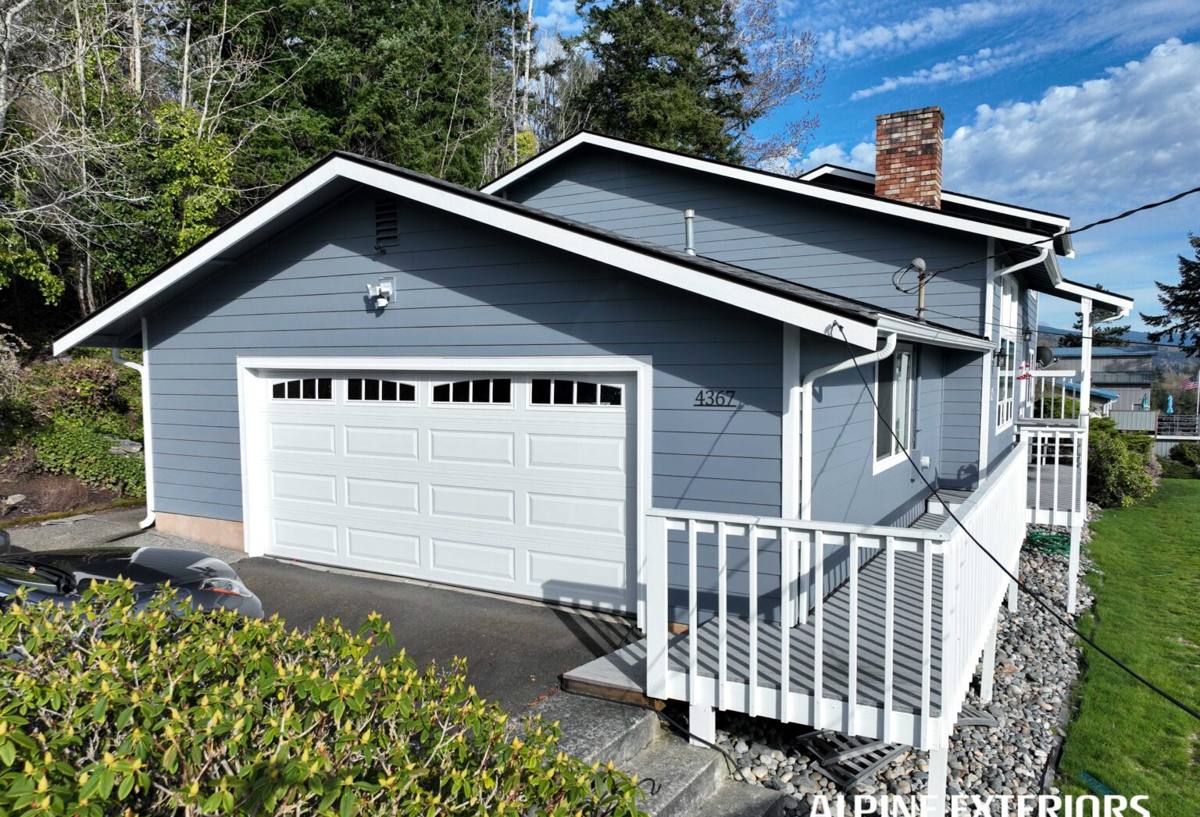
Signs Your Semiahmoo Deck Needs Replacing, Not Just Repair
Not every deck problem calls for a full tear-out. But in this environment, certain signs mean the structure has crossed a line where patching individual boards is just delaying the inevitable — and spending money without fixing the real problem.
- Boards that feel soft, spongy, or spring back when you walk on them
- Rust streaks or crumbling wood around joist hangers, bolts, or screws
- Any movement or gap where the ledger board meets the house
- Railings or posts that wobble under moderate pressure
- Persistent moss or dark staining that comes back within weeks of cleaning
- Cupped, split, or badly checked boards across a large portion of the deck
- A deck older than 15–20 years that has never had the framing inspected
- You've replaced individual boards two or three times in the last few years
If you're seeing two or more of these, it's worth having the framing looked at before deciding between repair and replacement.
What a Correct Deck Replacement Involves in This Environment
A deck replacement done right here isn't just swapping old boards for new ones. The details that don't show up in a quick estimate are usually the ones that determine whether the deck lasts 10 years or 25.
Ledger Flashing and Attachment
The ledger connection gets rebuilt with proper flashing — typically a self-adhering waterproof membrane behind the ledger and metal flashing over the top — plus through-bolts or structural lag screws sized to the load. Standoff hardware that holds the ledger slightly off the house wall is worth using where it fits the design, since it lets air circulate behind the board instead of trapping moisture against the siding.
Corrosion-Resistant Fasteners and Hardware
Modern pressure-treated lumber is corrosive to standard fasteners on its own, and salt air makes that worse. We use hot-dip galvanized or stainless steel fasteners and connectors rated for treated-lumber contact — not the coated screws that work fine inland but rust out within a few seasons this close to the water.
Framing and Footings
Every replacement starts with the framing exposed and checked — joists, beams, posts, and footings — because a deck is only as good as what's underneath the decking. Undersized or rotted framing gets replaced, not patched, and footings that have shifted or lack proper drainage around them get corrected before new decking ever goes down.
Decking Board Selection and Spacing
Board gap width and orientation affect drainage, airflow, and how quickly moss takes hold. We set spacing to let water and debris pass through rather than pool, and we consider board direction relative to the house and prevailing wind and sun exposure on your specific lot.
Railings and Code Compliance
Washington's residential building code, based on the IRC, requires guardrails at least 36 inches high with balusters spaced so a 4-inch sphere can't pass through them, and stair handrails have their own separate requirements. Beyond meeting code, railing posts need to be through-bolted into the framing — not just screwed to the rim joist — since that connection takes real lateral load, especially with wind coming off open water.
Choosing Decking Material for a Semiahmoo Property
There's no single right material for every project — it comes down to how much maintenance you want to do, your budget, and how much salt exposure the deck actually sees. Here's how the common options compare in this climate.
| Material | Upfront Cost | Maintenance | Salt/Moisture Resistance | Typical Lifespan Here |
|---|---|---|---|---|
| Pressure-treated wood | Lowest | Annual cleaning and periodic sealing | Fair — depends heavily on fastener and sealing quality | 10–15 years |
| Cedar | Moderate | Regular sealing/staining to prevent graying and checking | Fair — naturally rot-resistant but softer, needs upkeep | 12–18 years |
| Composite (capped) | Higher | Occasional washing, no sealing or staining | Good — resists rot, but check manufacturer coastal warranty terms | 20–25+ years |
| PVC decking | Highest | Lowest — soap and water | Very good — fully synthetic, doesn't absorb moisture | 25+ years |
Composite and PVC cost more upfront but make sense for owners who want to spend less time maintaining a deck that sits in near-constant damp air. Wood costs less to install but only performs as well as the maintenance schedule behind it — skip a year of sealing on a waterfront deck and you'll feel it.
Permits, Inspections, and Local Code
Most deck replacements that involve structural work — new framing, a rebuilt ledger connection, or a deck attached at a different height or footprint than the original — require a building permit, whether the property is inside Ferndale city limits or in unincorporated Whatcom County. Requirements and inspection steps vary by jurisdiction and by the scope of the work, so it's worth confirming before demolition starts rather than after. If your property is part of a community with its own design or exterior guidelines, it's also worth checking those before finalizing material and railing choices.
Our Deck Replacement Process
- On-site assessment — we inspect the existing deck, ledger, framing, and footings, and check for the corrosion and moisture issues common to waterfront properties
- Scope and design — we go over material options, layout, and railing choices based on your budget and how the deck gets used
- Permitting — we handle the permit application and coordinate required inspections
- Demolition — the old deck comes down, and we confirm the condition of the ledger and rim joist once it's exposed
- Structural repair and framing — any rotted or undersized framing gets corrected before new lumber goes up
- Ledger flashing and reattachment — proper membrane, flashing, and fastening at the house connection
- Decking, railings, and stairs — installed with corrosion-resistant hardware and code-compliant spacing
- Final inspection and walkthrough — we confirm the work passes inspection and walk the finished deck with you
Why Hire a Crew That Already Works in Semiahmoo
A deck built to a spec that works fine twenty miles inland can still fail early on a waterfront lot. Crews who regularly work along this stretch of coastline already know which fasteners hold up, which flashing details actually stop water at the ledger, and how much airflow a deck needs to keep moss from taking over by the second winter. That local experience also means fewer surprises during permitting — we know the general expectations for structural deck work in this area and plan the job around them from the start, rather than discovering a problem partway through.
Maintaining Your New Deck in a Salt-Air, High-Moss Climate
Even the right materials and construction need some ongoing attention here. A few habits go a long way toward getting the full lifespan out of a new deck:
- Rinse the deck surface periodically to clear salt residue, especially after storms with wind off the water
- Keep gutters and downspouts near the deck clear so runoff doesn't dump directly onto the structure
- Sweep debris out of board gaps before it holds moisture and feeds moss growth
- Trim back vegetation that shades the deck and blocks airflow
- Check railing posts and visible fasteners once a year for early rust or looseness
- Reseal wood decking on the manufacturer's recommended schedule — don't stretch it out
If your deck in Semiahmoo is showing its age, or you just want an honest opinion on whether it needs repair or full replacement, we're happy to take a look. The estimate is free, there's no pressure, and you'll get a straight answer about what your deck actually needs — fill out the form below to get started.