 Ferndale
 Sandy Point Sits Right at the Edge of the Weather
Sandy Point is one of the more exposed pockets of Whatcom County. Homes here sit close to open water, which means they take direct salt-laden wind, driving rain off the Strait, and long stretches of damp, shaded conditions that never fully dry out between storms. That combination is harder on exterior siding than almost anything else we see on inland jobs closer to Ferndale proper. A siding installation here isn't just a cosmetic upgrade — it's the first line of defense against a specific, fairly aggressive set of coastal conditions.
We've installed siding on enough waterfront and near-waterfront properties in this area to know that what works fine in a sheltered inland neighborhood can fail early at Sandy Point. The material, the fasteners, the flashing details, and even the sequencing of the job all need to account for salt exposure and near-constant moisture.
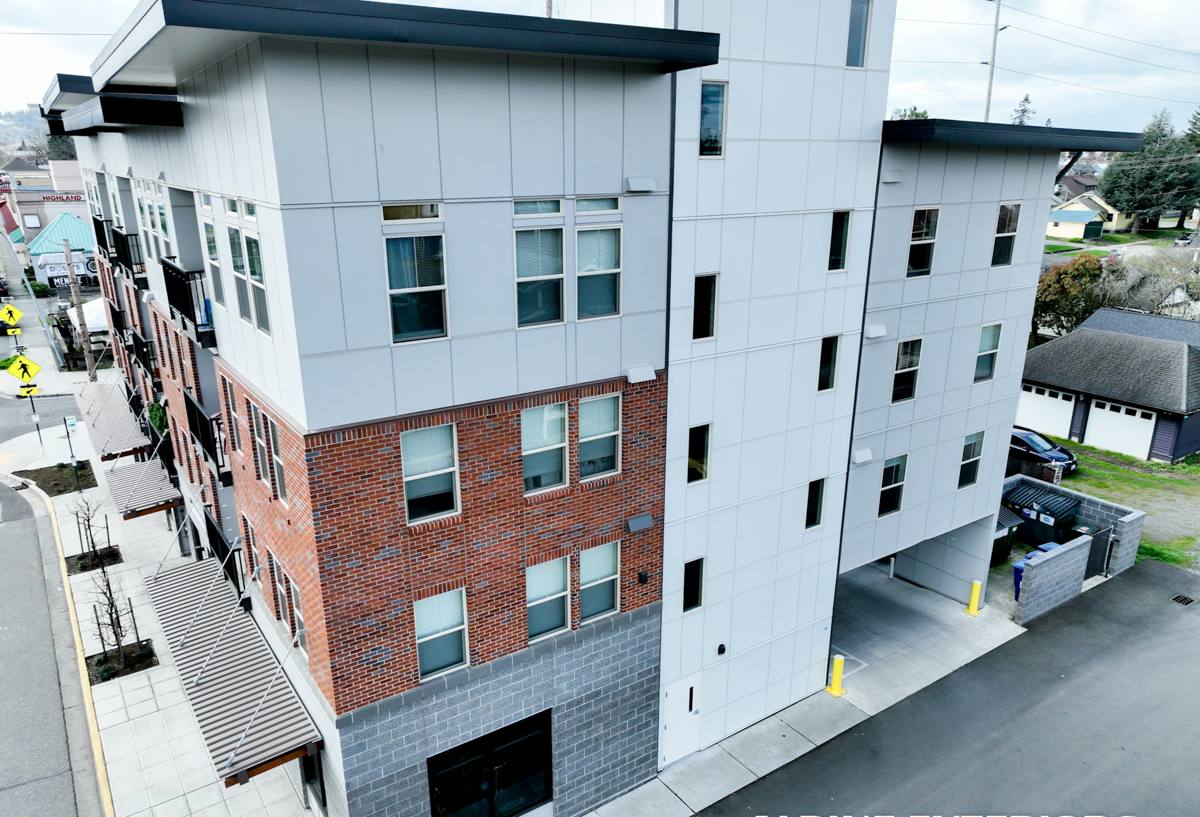
What Salt Air, Driving Rain, and Moss Actually Do to a House
Salt Air
Airborne salt doesn't just sit on the surface — it works into fasteners, caulk joints, and any exposed raw edge of a building material. Over years, that accelerates corrosion in metal components (nails, flashing, trim fasteners) and speeds up the breakdown of finishes that aren't formulated to resist it. Paint applied on-site is especially vulnerable, because a standard field-applied coating wasn't engineered with salt exposure in mind.
Driving Rain
Wind off the water doesn't let rain fall straight down — it drives it sideways, into laps, seams, and any gap in the water-resistive barrier. A siding system that relies on caulk and paint alone to keep water out, rather than proper shingle-lap physics and drainage behind the cladding, will eventually let moisture in. Once water gets behind siding in a home this exposed, it doesn't dry out quickly, because the same wind and humidity that pushed it in keep the wall assembly damp.
Moss and Algae
Whatcom County's moss season runs long, and Sandy Point's tree cover, shade, and humidity make it worse than in more open, sun-exposed parts of Ferndale. Moss and algae hold moisture against the siding surface for extended periods, which is exactly the condition that causes wood-based and poorly-sealed products to swell, delaminate, or rot from the face inward.
Why We Install Only James Hardie Fiber Cement Here
We don't offer vinyl, LP SmartSide, Cemplank, Allura, primed spruce, or raw cedar as options — not because those products don't have a place somewhere, but because we've made a standard for what goes on the homes we work on, and that standard is James Hardie fiber cement, installed to spec. In an environment like Sandy Point, the reasoning is pretty concrete:
- Non-combustible core — fiber cement doesn't feed a fire, which matters anywhere with dry summer stretches and tree cover.
- Dimensionally stable in moisture swings — it doesn't swell and shrink with humidity the way wood-based and engineered-wood products can, which matters when a wall assembly is damp more often than it's dry.
- ColorPlus factory finish — baked-on in a controlled facility rather than applied on a ladder in variable weather, and backed by its own finish warranty against fading and peeling — a real advantage in a spot where UV, salt, and rain all attack a field-applied paint job at once.
- HZ5 climate engineering — Hardie's HZ5 product line is formulated for wetter, harsher climate zones, which is the right specification for a coastal Whatcom property rather than a standard inland HZ10 spec.
- Strong transferable warranty — meaningful if the home changes hands, which matters for a community like Sandy Point where waterfront property turns over.
We're not going to tell you cedar looks bad or that vinyl is junk — cedar has real character and vinyl is inexpensive and low-maintenance in a lot of climates. But cedar needs ongoing sealing and refinishing to survive salt air without rotting, and vinyl can warp, crack, and fade faster under sustained coastal UV and wind-driven moisture than it would sit thirty miles inland. Those are the honest trade-offs, and they're why we standardized on Hardie instead of carrying five different product lines.
How the Common Options Actually Hold Up on a Coastal Wall
| Material | Salt Air / Moisture Behavior | Maintenance Burden | Fire Resistance |
|---|---|---|---|
| Vinyl | Can warp, fade, and become brittle faster under sustained coastal UV and wind | Low, but panels aren't repairable in place — full sections get replaced | Melts/deforms in heat, not a fire-resistant product |
| Cedar / primed wood | Absorbs moisture; prone to rot and swelling where moss and shade keep it damp | High — regular sealing, staining, or repainting | Combustible |
| Engineered wood (LP-type) | Vulnerable at cut edges and seams if moisture gets in | Moderate — depends heavily on correct field sealing at every edge | Combustible |
| James Hardie fiber cement | Dimensionally stable, doesn't rot or swell from moisture exposure | Low — factory finish holds up without repainting for years | Non-combustible |
What a Correct Installation Actually Involves
The product is only half the equation. A lot of the coastal-specific protection comes from installation details that are easy to skip and hard to see once the job is buttoned up.
Moisture Management Behind the Siding
A properly installed weather-resistive barrier, correctly lapped and taped, is what actually keeps wind-driven rain out of the wall cavity — the siding itself is the outer shell, not the only barrier. Where a rain-screen gap is appropriate, it gives any moisture that does get past the cladding a path to drain and dry instead of sitting against the sheathing.
Flashing at Every Penetration
Windows, doors, vents, hose bibs, light fixtures — every penetration through the siding is a potential entry point. Correct step flashing, head flashing, and kick-out flashing at rooflines matter more here than in a sheltered inland yard, because driving rain finds the gaps that vertical rain never would.
Fasteners and Trim
In a salt-air environment, fastener choice matters. Corrosion-resistant fasteners rated for the exposure, installed per Hardie's fastening schedule, prevent the streaking and structural loosening that come from standard fasteners breaking down early.
Clearances
Manufacturer-specified clearance from grade, roof lines, and decks keeps siding from sitting in standing water or constant splash-back — a detail that's frequently shortchanged on quick jobs and that causes a disproportionate share of early siding failures near water.
Our Process for a Sandy Point Home
- On-site inspection — we look at existing siding, sheathing condition, moisture staining, moss/algae patterns, and the home's specific wind exposure before recommending anything.
- Product and line selection — HZ5 panels and the ColorPlus color/texture that fits the home, sized to the actual exposure the walls see.
- Tear-off and sheathing check — we don't cover up existing rot or a compromised barrier; if we find it, we address it before new siding goes on.
- Weather barrier and flashing installation — done to manufacturer spec, not shortcut, since this is the layer that does the real water-stopping work.
- Siding installation to Hardie's fastening and clearance specifications — including correct nail patterns, gaps, and caulking at the points Hardie specifies (and no more caulk than that — over-caulking traps moisture rather than shedding it).
- Final walk-through — checking trim, flashing, and finish before we call the job done.
Questions Worth Asking Before Work Starts
- Is the crew installing to the manufacturer's published fastening and clearance specs, or their own shortcuts?
- Will they inspect and address sheathing or framing issues found during tear-off, not just cover them?
- Are they using flashing details suited to wind-driven rain, not just standard vertical-rain assumptions?
- What warranty applies to materials, and separately, what warranty applies to their labor?
- Do they have experience with homes in this specific exposure, not just siding in general?
Cost Factors Specific to a Coastal Installation
| Factor | Why It Affects Sandy Point Jobs |
|---|---|
| Sheathing/moisture repair | Coastal homes more often need sheathing replaced where past moisture intrusion went unnoticed |
| Flashing detail work | More linear feet of careful flashing at penetrations and rooflines than a sheltered inland home |
| Access and staging | Waterfront lots can have tighter access, slopes, or setback considerations that affect scaffolding and material staging |
| Product line (HZ5 vs. standard) | Climate-engineered panels for high-moisture exposure are the right spec here, not the cost-cutting option |
| Site conditions/scheduling | Long moss season and wetter weather windows can affect scheduling around dry work periods |
Why a Crew That Already Works Sandy Point Matters
Whatcom County's coastal communities have their own rhythm — some have their own community association standards for exterior work worth checking before a project starts, and the practical realities of the site (wind exposure, access, moisture patterns) are different from a standard Ferndale in-town lot. A crew that's already worked in and around Sandy Point isn't guessing at how the wind and rain behave on a given exposure or improvising flashing details on the fly. That familiarity shows up in fewer surprises during tear-off and a finished job that's actually built for the conditions it has to survive, not just for the conditions on the spec sheet.
If you're weighing a siding project on a Sandy Point home, we're glad to come take a look, walk the exterior with you, and talk through what your specific exposure calls for. Reach out for a free, no-pressure estimate — there's a form right below to get started.