 Ferndale
 Roof Replacement in Sumas: Built for Whatcom County Weather
Sumas sits in a part of Whatcom County where the roof over your head works harder than most homeowners realize. Long stretches of driving rain, heavy tree cover that feeds moss growth almost year-round, and the general dampness that defines the Pacific Northwest all shorten the usable life of a roof faster than manufacturer estimates suggest. A roof that might coast for 25-30 years in a dry climate often needs real attention here well before that mark, especially if it was installed without local conditions in mind.
When we replace a roof in Sumas, we're not just swapping old shingles for new ones. We're building an assembly — decking, underlayment, ventilation, flashing, and the finish material — that's matched to a climate where water and moisture pressure never really let up. That's a different job than a roof replacement in a dry inland state, and it should be treated that way.
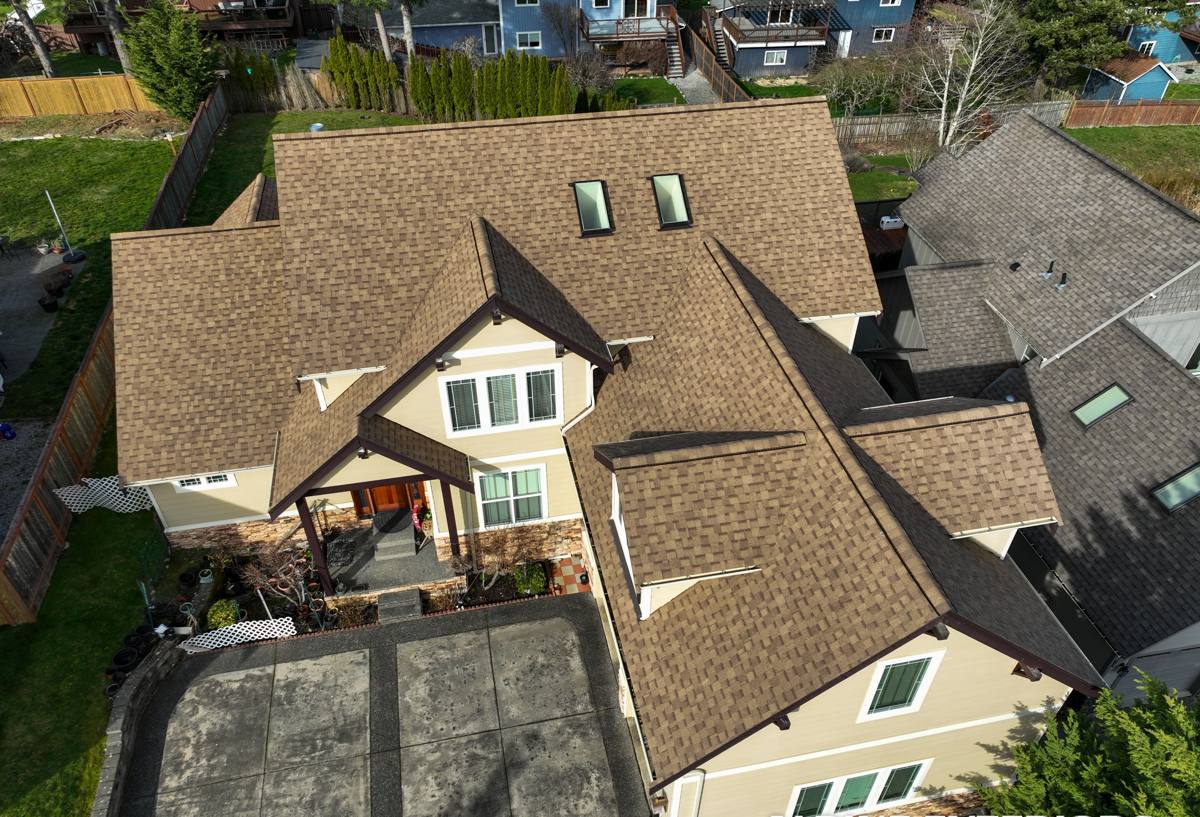
Why Sumas Roofs Wear Differently
Moss and Moisture
Shaded roof sections, north-facing slopes, and areas near mature trees hold moisture longest. Moss doesn't just look bad — its root structure lifts shingle edges and holds water against the roofing material, which accelerates granule loss and speeds up decking rot underneath. In our experience, moss coverage is one of the clearest visible signs that a roof's protective layer is breaking down, not just a cosmetic nuisance to pressure-wash away.
Driving Rain and Wind-Driven Water
Storms in this region rarely fall straight down. Wind pushes rain sideways and up under shingle edges, valleys, and flashing points that were never designed to handle water moving in that direction. A roof replacement that only accounts for vertical rainfall — standard shingle overlap with minimal attention to flashing details — tends to develop leaks at valleys, chimneys, and skylights within a few seasons.
Salt Air and Regional Humidity
Whatcom County's proximity to Puget Sound and the broader marine climate means many homes in the area deal with salt-laden air alongside constant humidity. That combination accelerates corrosion on exposed metal fasteners, flashing, and vents. Even homes further inland get enough of this marine influence that using corrosion-resistant hardware is a reasonable baseline, not an upsell.
What a Correct Roof Replacement Involves
A roof replacement done right in this climate isn't just about the shingles you see. Here's what we consider non-negotiable on every job:
- Full tear-off to bare decking — never installing new roofing over old layers, which traps moisture and hides existing damage
- Decking inspection and replacement of any soft, delaminated, or water-stained plywood or OSB
- Ice-and-water shield membrane at eaves, valleys, and around all roof penetrations, not just where code minimums require it
- Synthetic underlayment rated for extended exposure, since Whatcom County jobs sometimes see delays between tear-off and dry-in
- New flashing at every chimney, skylight, sidewall, and valley — reused flashing is a common source of "mystery" leaks a few years later
- Balanced attic ventilation (intake at the soffits, exhaust at the ridge) sized correctly for the attic volume
- Corrosion-resistant fasteners and metal components suited to a marine-influenced climate
- Proper starter strip and hip/ridge cap installation, which matter more for wind resistance than most homeowners expect
Skipping any one of these doesn't always show up immediately. It shows up two, five, or ten years later as a leak, a soft spot, or premature granule loss — usually after the workmanship warranty has expired.
Choosing the Right Roofing Material for Sumas Conditions
There's no single "best" roofing material for every home — it depends on the roof's pitch, the home's structure, your budget, and how much long-term maintenance you're willing to take on. Here's how the common options compare for this specific climate:
| Material | Moss/Moisture Resistance | Wind Performance | Maintenance | Typical Lifespan Here |
|---|---|---|---|---|
| Architectural asphalt shingles | Good with proper ventilation and periodic moss treatment | Strong when installed with correct nailing pattern | Low to moderate; benefits from occasional moss removal | 20-25 years |
| 3-tab asphalt shingles | Fair; more prone to moss lift at edges | Adequate, less margin in gusty conditions | Moderate | 15-20 years |
| Metal roofing (standing seam) | Excellent; moss struggles to hold on smooth metal | Excellent | Low | 40-50+ years |
| Wood shake | Poor without diligent upkeep; naturally holds moisture | Fair | High | Highly variable; often shortened by moss and rot |
We install architectural asphalt shingles and metal roofing most often in this area because both handle moisture pressure well when the underlying assembly is done correctly. Wood shake can look great, but its natural material structure holds moisture against itself in exactly the conditions Sumas sees most — which means it demands a maintenance commitment many homeowners underestimate when they choose it. We'll walk you through the honest trade-offs for your specific roof rather than pushing one product across the board.
Signs a Sumas Roof Needs Replacing, Not Just Repairing
Not every roof problem calls for a full replacement. Isolated flashing leaks, a handful of storm-damaged shingles, or clogged gutters causing backup can often be repaired. But certain signs point toward replacement being the more honest recommendation:
- Widespread granule loss visible in gutters or downspouts
- Shingles curling, cupping, or cracking across large sections of the roof, not just one spot
- Moss coverage that returns quickly after cleaning, especially combined with soft-feeling roof sections
- Multiple active leaks in different areas rather than one isolated point
- Visible sagging along the roofline, which can indicate decking or structural issues
- A roof already past or near the end of its material's expected lifespan for this climate
We'll always tell you if a repair is the more sensible near-term option — a full replacement isn't the right call just because a roof is old if it's still performing.
Our Roof Replacement Process
1. On-Site Inspection and Honest Assessment
We walk the roof (weather permitting) and check the attic from the inside, looking at ventilation, insulation contact with decking, and any signs of moisture intrusion. We'll tell you plainly whether replacement makes sense or if a repair will hold for now.
2. Written Estimate
You get a clear, itemized estimate covering materials, tear-off, decking allowance, and labor — no vague lump-sum numbers you can't break down.
3. Scheduling Around Weather
In Whatcom County, timing a tear-off against the forecast matters. We plan around dry windows where possible and use appropriate temporary protection if weather shifts mid-project, so your home is never left exposed overnight.
4. Tear-Off and Decking Repair
Old roofing comes off down to the deck. Any compromised sheathing gets replaced before anything new goes down — this is the step that gets skipped by crews trying to move fast, and it's the one that causes the most trouble later.
5. Underlayment, Flashing, and Ventilation
This is where the moisture-management work happens — the membrane, underlayment, flashing details, and ventilation balance described above.
6. Final Roofing Installation
Shingles or metal panels go on per manufacturer specification, including proper nailing patterns, exposure, and cap details — the parts that determine wind performance and warranty validity.
7. Cleanup and Walkthrough
We do a magnetic sweep for stray fasteners, clear debris, and walk the finished roof with you before calling the job done.
Cost Factors for a Sumas Roof Replacement
Every roof is different, so exact numbers depend on your specific project, but the main variables that move the price are consistent:
| Factor | Why It Matters |
|---|---|
| Roof size and number of stories | More square footage and steeper access mean more material and labor time |
| Roof pitch and complexity | Multiple valleys, dormers, and hips take longer to flash correctly than a simple gable |
| Decking condition | Rotted or delaminated sheathing found during tear-off adds material and labor |
| Material choice | Asphalt, architectural shingle, and metal roofing carry different material costs and install labor |
| Ventilation upgrades needed | Adding soffit vents or a ridge vent system where none exists is an added scope item |
| Layers of existing roofing | Removing multiple old layers takes more labor than a single-layer tear-off |
We'd rather give you a real number after seeing your roof than a rough range that doesn't reflect your actual project — but we're always upfront about what's driving the cost once we've looked at it.
Why Local Experience in Sumas Matters
A roofing crew that regularly works Whatcom County knows which details actually matter here versus which ones are just written into a generic install manual. We know which roof orientations in this area tend to hold moss longest, which valley and flashing details get tested hardest by wind-driven rain, and how to schedule tear-offs around a weather pattern that doesn't always cooperate. That local pattern recognition is the difference between a roof that's technically installed to code and one that's actually built for how this area's weather behaves year after year.
It also means we're not disappearing after the invoice clears. If a question comes up two years down the road, we're still working in the same area and can come back out.
Get a Free, No-Pressure Estimate
If your Sumas home's roof is showing moss buildup, curling shingles, or you're just planning ahead before the next wet season, we're glad to come take a look. There's no obligation and no pressure — just a straightforward assessment and, if replacement makes sense, a clear written estimate. Fill out the form below to get started.