 Ferndale
 Roofing in Nooksack: A Different Kind of Wet
Nooksack sits inland along the Nooksack River valley, closer to the foothills than to Bellingham Bay, so it doesn't take the same direct salt air that hits homes right on the water in Ferndale. What it does share with the rest of Whatcom County is a long, wet season, heavy tree cover, and a valley setting that holds moisture close to the ground longer than open, breezier spots do. Roofs here don't usually fail from one dramatic storm. They fail slowly, from months of standing dampness, shaded north-facing slopes that never fully dry out, and moss that works its way under shingle tabs a little more every year.
That's the backdrop for any roof replacement decision in this area. A roof that would hold up fine in a drier inland climate can wear out faster here if it wasn't built with Whatcom County's rain volume and moss pressure in mind from the start.
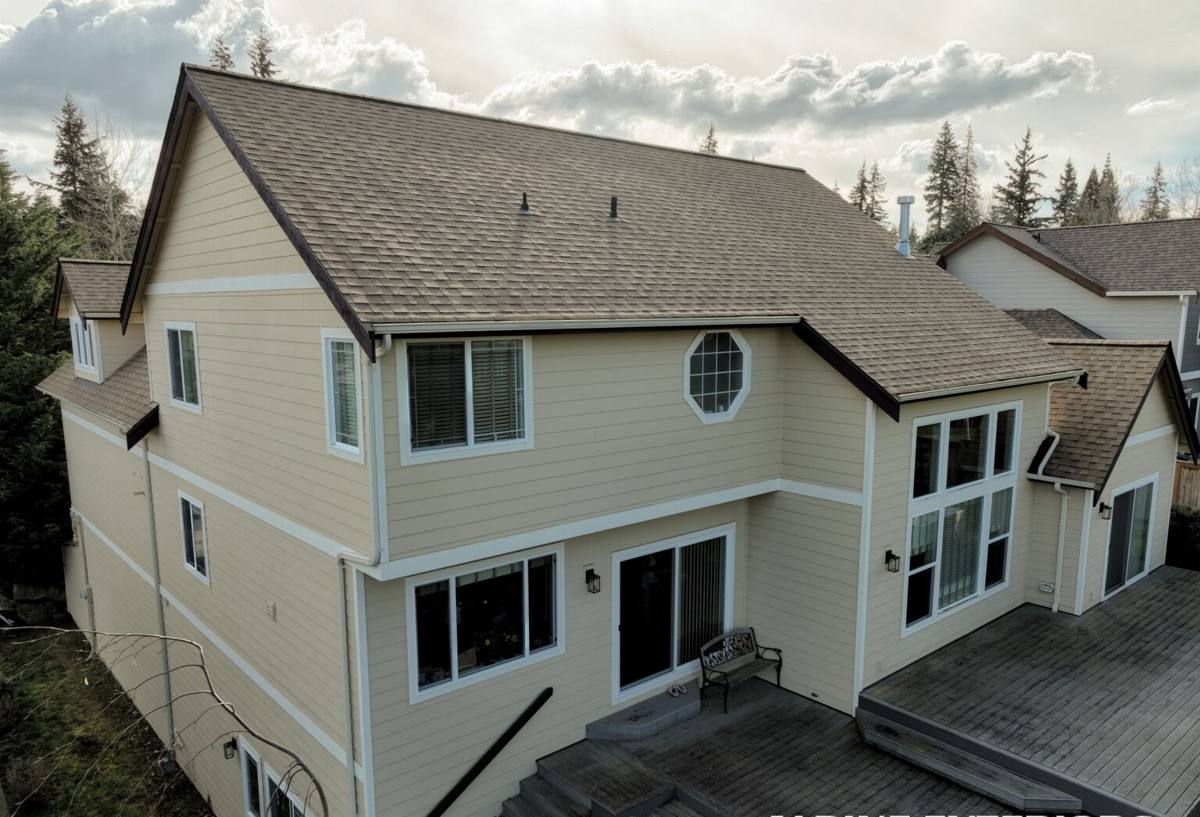
Signs It's Time for a Replacement, Not Another Repair
Most homeowners call us after noticing one obvious problem, but the real decision usually comes down to what's happening underneath the surface. Repairs make sense when the issue is isolated — a cracked pipe boot, a few lifted shingles from wind, a flashing leak at a chimney. Replacement is the honest answer when the damage is spread across the whole roof or the decking underneath has been compromised.
- Granule loss heavy enough that you can see bare, shiny patches on multiple slopes, not just one spot
- Moss or moss stains on more than a small section, especially on north-facing or shaded slopes
- Shingles that are curling, cupping, or cracking across the field of the roof rather than in one isolated area
- Soft or spongy decking felt when walking the roof, or daylight visible through the attic sheathing
- A roof that's 20+ years old (or older for lower-grade shingles) with recurring leaks in different spots each year
- Multiple past repairs that haven't stopped the leaking, which usually means the underlayment has failed, not just the shingles
If you're only seeing one of these and the roof is otherwise young, a repair is the right call and we'll tell you that. We don't sell replacements to homeowners who don't need one yet.
What Whatcom County Weather Demands From a Roof System
A roof in this part of Washington earns its keep by managing water volume and moss, not by surviving extreme heat or hail like roofs in other regions have to. Three things matter more here than almost anywhere else:
Sustained Rain, Not Just Rain Totals
It's not just how much rain falls — it's how many days in a row water sits on the roof surface. That extended wet time is what breaks down cheap underlayments and lets water find its way through nail penetrations and poorly sealed flashing over the years.
Moss and Shade
Tree cover common around Nooksack keeps roofs shaded and slow-drying, which is exactly what moss needs to establish. Moss isn't just cosmetic — as it grows under shingle edges, it lifts them, holds moisture against the roof deck, and accelerates rot.
Wind-Driven Rain and Flashing Stress
Storms coming through the valley can push rain sideways against roof-to-wall transitions, chimneys, and skylights. A roof that's watertight when water falls straight down can still leak under wind-driven rain if the flashing details weren't done correctly.
What a Correct Roof Replacement Actually Involves
A roof replacement isn't just stripping old shingles and nailing down new ones. The parts you can't see after the job is done are usually what determines whether it lasts 15 years or 30.
Tear-Off and Deck Inspection
We remove the old roofing down to the deck rather than layering over it, because layering traps moisture and hides rot. Once the deck is exposed, we check every sheet of plywood or OSB for soft spots, delamination, and water staining, and replace anything compromised before a single new shingle goes down.
Underlayment and Ice-and-Water Protection
Given how long roofs here stay wet, we don't cut corners on underlayment. Vulnerable areas — eaves, valleys, and low-slope transitions — get a self-adhering water-and-ice barrier underneath the standard underlayment, so if wind-driven rain or ice does get past the shingles, it still can't reach the deck.
Flashing Details
Chimneys, skylights, dormers, and any place the roof meets a wall are where most leaks actually originate, not the open shingle field. Correct flashing means new metal, properly stepped and integrated with the underlayment — not old flashing reused or gaps caulked over as a shortcut.
Ventilation
A roof deck that can't breathe traps moisture from inside the house, which rots sheathing from below even if the roof surface is doing its job from above. We check intake and exhaust ventilation as part of every replacement, because a great shingle job on a poorly ventilated attic still fails early.
Choosing Materials for a Nooksack Roof
There's no single "best" roofing material — the right choice depends on your budget, your roof's slope and shading, and how much long-term maintenance you're willing to do. Here's how the common options actually compare for this climate:
| Material | Moss/Moisture Behavior | Typical Lifespan Here | Maintenance |
|---|---|---|---|
| Standard 3-tab asphalt shingle | Lower moss resistance; can trap moisture at tabs | 15-20 years | Periodic moss treatment recommended |
| Architectural (laminate) asphalt shingle | Better water shedding, some lines have algae-resistant granules | 25-30 years | Occasional moss/debris cleaning |
| Metal roofing (standing seam) | Sheds water fast, very moss-resistant on clean slopes | 40-50+ years | Low; keep gutters and valleys clear |
| Cedar shake | Absorbs moisture, higher moss/rot risk in shade | Varies widely with upkeep | High; regular treatment needed |
For most Nooksack homes, we lean toward architectural asphalt shingles with algae-resistant granules as the practical middle ground — solid moss resistance, a manageable price point, and a warranty structure that holds up. Metal is worth the higher upfront cost on heavily shaded roofs where moss keeps coming back no matter what. We're honest about cedar shake: it can look great, but in a shaded, wet valley setting it demands more upkeep than most homeowners want to keep up with, and we'll walk you through that trade-off rather than talk you into it.
Our Roof Replacement Process
- On-site inspection. We walk the roof and the attic, not just look from the ground, and check the deck condition, ventilation, and flashing points before quoting anything.
- Written estimate. You get a clear scope — materials, tear-off, deck repair allowance, flashing work, and cleanup — so there are no surprise add-ons mid-project.
- Scheduling around weather. Given how often Whatcom County throws a wet week in, we plan install windows with enough buffer that a rain delay doesn't leave your roof exposed.
- Tear-off and deck repair. Old roofing comes off, the deck gets inspected and repaired as needed, and we keep the work area protected the whole time.
- Installation. Underlayment, ice-and-water barrier at vulnerable areas, new flashing, shingles or metal panels, and ridge ventilation go in to spec.
- Cleanup and walkthrough. We clear debris and nails from the yard and driveway, then walk the finished roof with you before calling the job done.
Why a Crew That Already Works Nooksack Matters
Roofing crews that mostly work in drier climates or dense urban areas don't always plan for the realities out here — the extended wet season, the moss pressure from tree cover, and the logistics of a more rural, spread-out area like Nooksack compared to in-town Ferndale. A crew that regularly works Whatcom County roofs knows which slopes on a given lot are going to hold moss longest, doesn't get caught off guard by the local building department's permitting process, and has already worked out reliable scheduling around this region's rain patterns rather than treating it as an afterthought. That local familiarity shows up in fewer callbacks, not just faster scheduling.
Roofing and Siding Work Together
As a siding contractor, we look at roof replacements as part of the whole exterior envelope, not an isolated job. Where your roofline meets your siding, fascia, and trim is a common leak point if it's flashed or caulked incorrectly — and it's exactly the kind of detail that gets missed when roofing and siding are treated as two unrelated trades. When we replace a roof, we check that transition and flag anything on the siding or trim side that's letting water in, rather than leaving you to discover it separately down the road.
Roof Replacement Checklist for Nooksack Homeowners
- Get on the roof (or have someone qualified do it) rather than judging condition from the ground or a photo
- Ask any contractor whether they're quoting a repair or a full replacement, and why
- Confirm the estimate includes deck inspection and repair, not just shingles
- Ask what underlayment and ice-and-water protection is included at eaves and valleys
- Check that attic ventilation is part of the scope, not an afterthought
- Get the warranty terms in writing — both the manufacturer's material warranty and the contractor's workmanship warranty
- Ask how moss and debris removal will be handled going forward, since prevention is cheaper than another early replacement
If your roof is showing its age or you just want an honest read on whether it's a repair or a replacement situation, we're happy to take a look. Fill out the form below for a free, no-pressure estimate on your Nooksack home.