 Ferndale
 Marietta's Siding Problem Is Different From Inland Ferndale
Marietta sits right on Bellingham Bay, and that location changes what siding has to survive. Homes a few miles inland in Ferndale deal with plenty of rain, but they aren't getting the steady dose of salt-laden air that comes off the water here. Add in Whatcom County's long, gray moss season and the driving, wind-pushed rain that comes with winter storms off the Strait, and you've got three separate stresses hitting the same wall assembly at once: salt corrosion, sustained moisture, and organic growth. A siding job that would hold up fine in a drier, more sheltered part of the county can fail faster in Marietta if it isn't built for this exposure specifically.
This page is about one job in one place: installing siding correctly on a Marietta home, given what this stretch of shoreline actually does to a building envelope year after year.
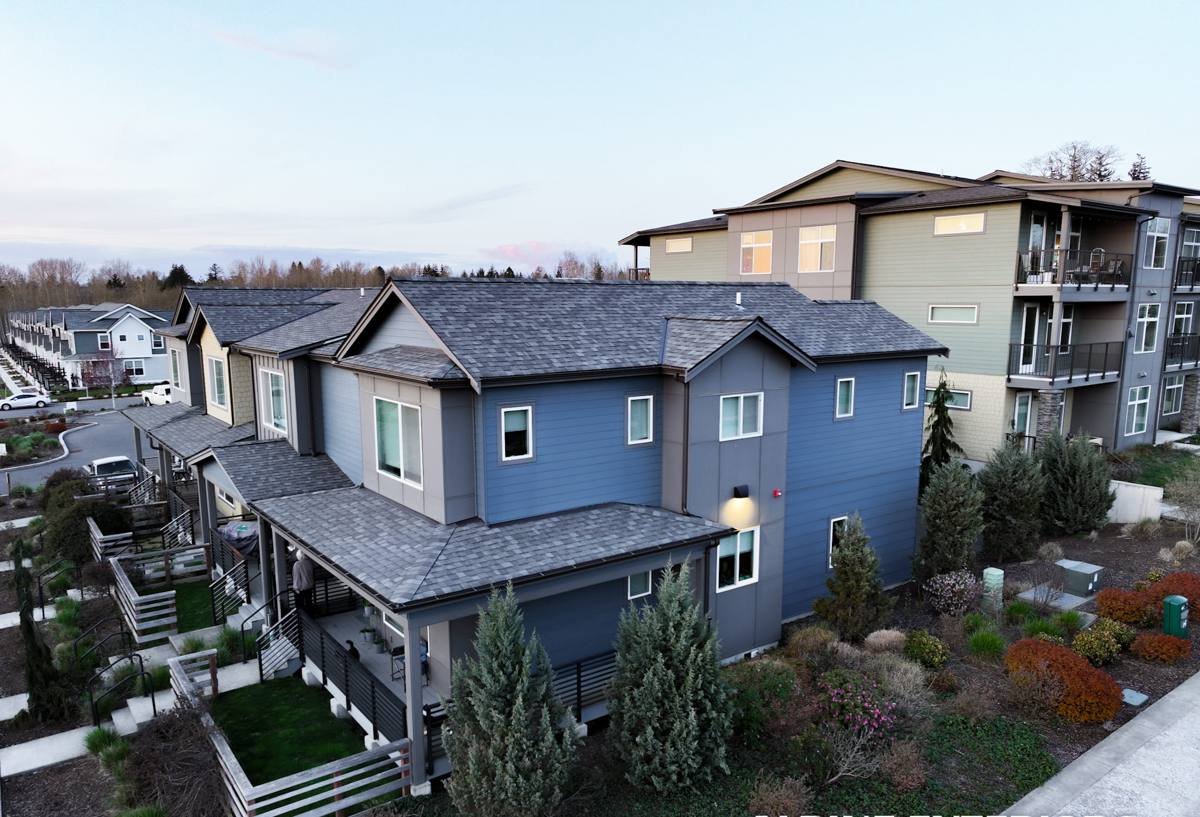
What Salt Air, Rain, and Moss Actually Do Over Time
Salt Air
Airborne salt doesn't just sit on the surface — it works into fasteners, trim joints, and any exposed cut edge. Over years, that means accelerated corrosion of the wrong hardware and premature breakdown of finishes that weren't built to shrug off salt exposure. It's a slow process, which is exactly why it gets ignored until a home is 12-15 years old and the siding looks tired well before it should.
Driving Rain
Wind off the bay doesn't let rain fall straight down — it pushes it sideways, into laps, seams, and any gap in the weather barrier. Siding installed with generous, well-thought-out laps and proper flashing sheds that water. Siding installed to a "close enough" standard lets water track behind it, where it soaks sheathing and framing that nobody sees until there's a soft spot or a stain on an interior wall.
Moss and Algae
Whatcom County's damp, shaded stretches — and Marietta has its share of tree cover and moisture that never fully dries between rain events — are ideal for moss and mildew growth on any porous or absorbent surface. Once organic growth gets a foothold on siding, it holds moisture against the material even longer, which speeds up whatever damage the moisture was already causing. Products that absorb water are especially vulnerable to this cycle.
Why This Adds Up to More Than the Sum of Its Parts
Individually, salt, rain, and moss are all manageable. Together, on a bay-facing wall, they compound. A material or installation detail that's marginal in one of these conditions can fail outright when all three are working on it at once, which is the real story of why some Marietta homes need re-siding well ahead of schedule while others down the street are still holding up fine after two decades.
What Correct Siding Installation Looks Like Here
The siding material matters, but installation quality is what actually determines whether a home handles this exposure well. Every one of the following details gets more important, not less, the closer a home sits to the water.
- A continuous, properly lapped weather-resistive barrier behind the siding — not just stapled on, but installed so water is directed out and down, never trapped
- Correct flashing at every window, door, deck ledger, and roof-to-wall transition, since these are the spots where driving rain finds its way in first
- Proper fastener type, spacing, and depth — fasteners that corrode or back out under wind and moisture cycling become the weak point in an otherwise sound wall
- Adequate clearance between the bottom of the siding and grade, decks, and roof lines, so splashback and standing water don't sit against the material
- Correctly caulked and sealed joints where required, and deliberately open joints where the system calls for them to drain and dry
- Rainscreen or drainage gap detailing where the assembly benefits from an air space behind the siding, letting moisture that does get in dry back out instead of being trapped against the sheathing
None of this is exotic. It's standard fiber cement installation practice done without shortcuts — but on a bay-side lot, skipping even one of these steps shows up as a problem years sooner than it would inland.
Why We Install Only James Hardie Fiber Cement
We don't install vinyl, LP SmartSide, primed spruce, cedar, or other fiber cement brands. That's a deliberate standard, not a sales pitch, and it matters most in an environment like Marietta's.
James Hardie's fiber cement is non-combustible and dimensionally stable — it doesn't absorb and release moisture the way wood-based products do, which is the exact failure mode that salt air and driving rain exploit. The HZ5 product line is engineered for the kind of wet, freeze-thaw-adjacent, moisture-heavy climate the Pacific Northwest coast produces, including conditions like Whatcom County's. The factory-applied ColorPlus finish is baked on under controlled conditions and backed by its own finish warranty, which means the surface holding up against salt exposure and moss growth wasn't hand-painted on a job site and left to weather unevenly.
We're not going to claim other products fall apart on contact with salt air — plenty of homes around here have other siding types and get by fine with regular maintenance. What we will say is that after years of doing this work along this shoreline, we standardized on the one product system that consistently needs the least babying in this specific climate, and that's what we put our name behind.
Our Process for a Marietta Siding Installation
- On-site assessment. We look at sun and wind exposure, existing moisture damage, current siding condition, and any problem areas specific to the lot — proximity to the water, tree cover, drainage patterns.
- Tear-off and sheathing inspection. Old siding comes off and we inspect the sheathing underneath for rot, soft spots, or prior water intrusion before anything new goes on. This step gets skipped by crews in a hurry, and it's the single most important step for a bay-side home.
- Repairs before cover-up. Any damaged sheathing or framing gets repaired or replaced. Covering a known problem with new siding just delays and hides it.
- Weather barrier and flashing. A continuous drainage plane goes on first, followed by properly integrated flashing at every penetration and transition.
- Hardie installation to spec. Panels or lap siding go on following James Hardie's published fastening, clearance, and joint-treatment requirements — not generalized "siding install" habits carried over from other products.
- Trim, caulking, and finish detail. Corners, trim boards, and any field-applied elements are finished to match the durability standard of the ColorPlus-finished siding itself.
- Final walkthrough. We go over the finished work with the homeowner and point out anything they should know about maintenance going forward.
Cost Factors for Siding Installation in Marietta
Every home is different, but the same handful of factors drive cost on most jobs in this area. This isn't a quote — it's a guide to what actually moves the number.
| Factor | Why It Matters Here |
|---|---|
| Sheathing condition | Bay-side moisture exposure makes hidden rot more common; repairs found during tear-off add cost but prevent bigger problems |
| Home size and wall complexity | More corners, dormers, and transitions mean more flashing and cut work, which takes more labor time |
| Siding profile chosen | Lap siding, panel systems, and trim details vary in material and labor cost within the Hardie product line |
| Existing siding removal | Tear-off of old material adds labor versus a bare-wall new build |
| Trim and detail work | Corner boards, window trim, and fascia detailing affect both material and installation time |
| Site access | Waterfront and hillside lots in this area can affect staging, scaffolding, and material handling |
What to Check Before Hiring a Siding Crew in Marietta
- Have they actually worked in Marietta or comparable bay-facing areas of Whatcom County, not just inland Ferndale?
- Do they inspect and address sheathing condition before installing new siding, or just cover what's there?
- Are they installing to the manufacturer's published specifications for flashing, fastening, and clearances?
- Can they explain why they chose the specific siding line and finish for this lot's exposure?
- Do they carry proper licensing and insurance for exterior work in Washington?
- Will they put the scope of work, materials, and warranty terms in writing before starting?
Why a Crew That Already Works Marietta Matters
A contractor who's put siding on other homes in this same stretch of shoreline already knows which walls take the worst of the wind-driven rain, where moss builds up fastest, and which installation details actually earn their keep against salt air over the long run. That's not something you get from a general spec sheet — it comes from doing the work here repeatedly and seeing which jobs are still holding up years later. It also means fewer surprises during the project itself: familiarity with the area's typical construction, common sheathing conditions, and the realities of working close to the water translates into a smoother job and fewer change orders once the old siding comes off.
If you're weighing a siding replacement or new installation on a Marietta home, we're glad to take a look and walk you through what your specific home needs — no pressure, no obligation. Reach out for a free estimate using the form below.