 Ferndale
 Building Decks in Marietta the Way the Climate Demands
Marietta sits low and close to the water, right where Whatcom County's marine weather hits hardest. Decks here don't fail the way decks fail inland. They fail from the underside, from the fasteners out, and from moss and standing moisture doing slow damage nobody notices until a board flexes underfoot or a post starts to soften. A deck built for a dry-climate spec sheet is not a deck built for Marietta. We build for what actually happens to wood, composite, and metal hardware when they sit in salt-tinged, wet air for years at a stretch.
This page covers what a custom deck built for Marietta conditions actually requires — materials, structure, fasteners, and process — so you know what a correct job looks like before you hire anyone, us included.
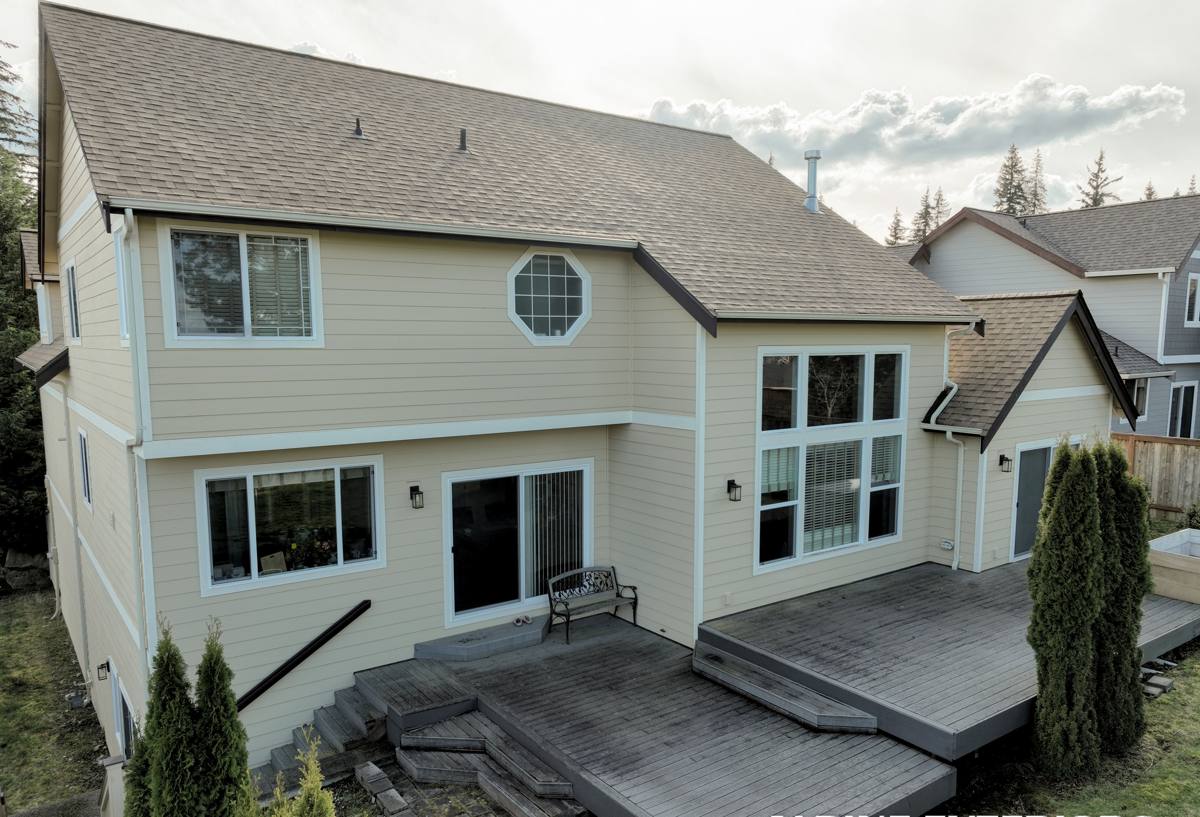
What Marietta's Setting Does to a Deck
Three things define deck performance in this part of Ferndale:
- Salt-influenced air. Proximity to Bellingham Bay means metal hardware, fasteners, and railing systems corrode faster here than they would ten or fifteen miles inland. Cheap or mismatched fasteners are usually the first thing to fail.
- Driving rain. Whatcom County storms don't just fall straight down — wind pushes rain sideways into ledger boards, rim joists, and the gap between decking and house siding. Flashing details that would be "good enough" elsewhere aren't good enough here.
- A long moss season. Shade, moisture, and mild temperatures mean moss and algae get a running start each fall and don't fully quit until late spring. On decking, that's a slip hazard and a moisture trap. On framing underneath, it's a sign that airflow is poor and water isn't shedding the way it should.
None of this means a deck in Marietta has to be high-maintenance or short-lived. It means the build has to account for these conditions from the framing up, not just at the surface.
Where We See the Most Damage on Older Decks
When we're called out to inspect or replace an aging deck in this area, the damage almost always shows up in the same three places: the ledger board connection to the house, the joist ends near the outer rim, and any post base that sits in a low spot where water collects instead of draining. Surface boards can look fine for years while the structure underneath is already compromised — which is exactly why we inspect the substructure before quoting any resurfacing job, rather than just measuring for new boards.
Choosing Decking Material for Local Conditions
There's no single "best" decking material — there's a best material for your budget, your exposure, and how much maintenance you're willing to do. Here's how the common options actually perform in Marietta's climate:
| Material | Moss/Moisture Behavior | Maintenance | Typical Lifespan Here |
|---|---|---|---|
| Pressure-treated wood | Absorbs moisture; needs airflow underneath to avoid rot; moss gets a foothold in shaded, damp spots | Annual cleaning, periodic sealing/staining | 10–15 years with upkeep |
| Cedar | Naturally rot-resistant but still needs sealing; greys and can host moss if untreated | Sealing every 1–2 years to hold color and resist moisture | 15–20 years with upkeep |
| Composite decking | Doesn't rot, but can host surface algae/moss film that needs washing | Occasional washing; no staining or sealing | 25–30+ years, manufacturer-dependent |
| PVC/capped polymer | Fully moisture-resistant surface; least hospitable to moss growth | Lowest — occasional rinse | 25–30+ years |
Composite and PVC cost more up front but remove most of the moisture-related maintenance burden that wood carries in this climate. Wood costs less initially and can look excellent, but only if the owner is realistic about the sealing and cleaning schedule it needs here — skip a year or two and moss and graying set in fast. We'll walk you through the honest trade-offs for your specific deck rather than push whatever has the best margin.
Framing and Substructure: The Part That Actually Determines Lifespan
The decking surface is what you see. The framing underneath is what determines whether the deck is safe and dry in ten years. For Marietta builds, we pay particular attention to:
Ledger Board Flashing
Where the deck attaches to the house is the single most common failure point on decks in wet climates. Proper flashing — installed in the correct layered order with the house's water-resistive barrier — keeps driving rain from working its way behind the ledger and into the rim joist or wall framing. This detail is invisible once the deck is finished, which is exactly why it's worth asking a contractor how they handle it.
Joist Spacing and Airflow
Tighter joist spacing than code minimum adds stiffness and reduces board deflection, but it also matters for drainage — properly spaced and sloped framing lets water run off instead of pooling against joists. We also leave enough clearance underneath the deck for airflow, which is one of the simplest ways to slow moss and mildew growth on the underside.
Post Bases and Footings
Posts that sit directly on grade or in a low spot will wick moisture and rot from the base up, regardless of the wood species. Elevated post bases and footings set below frost depth and graded to shed water are standard on our builds, not an upgrade.
Fasteners and Hardware for Salt-Influenced Air
This is where a lot of decks in this area lose years of life for a small up-front savings. Standard galvanized fasteners can start showing corrosion within a few years this close to the water. We use stainless steel or high-grade coated fasteners rated for coastal exposure, along with corrosion-resistant structural connectors at every load-bearing point. It costs more per box of screws. It's not optional if you want the deck to still be sound in fifteen years instead of showing rust streaks and loosening boards in five.
Railings and Guards
Railing systems face the same exposure issues as fasteners, plus they take direct weather from every angle. Whether you want wood, metal, cable, or composite railing, we match the hardware and finish to the same coastal-durability standard as the rest of the build — and we build to current Whatcom County code for height, baluster spacing, and load requirements, since railings are a life-safety component, not just a design choice.
Our Custom Deck Process
- On-site walkthrough. We look at drainage, sun/shade exposure, existing structure (if this is a rebuild), and how the deck will actually be used.
- Design and material selection. We talk through decking material, railing style, and layout, with honest pros and cons for your budget and exposure.
- Permitting. We handle the permit application and coordinate required inspections with Whatcom County or the City of Ferndale, depending on your property.
- Framing and structural work. Footings, posts, ledger flashing, and joists — built to the details above, not just to code minimums.
- Decking, railing, and finish work. Surface installation, railing, stairs, and any trim or lighting.
- Final walkthrough. We go over the finished deck with you, including what maintenance it actually needs going forward.
Permits and Code in Ferndale and Whatcom County
Most new decks and many deck replacements require a building permit, particularly once you're attaching a structure to your house or building above a certain height. Permit requirements and inspection points can vary depending on whether your property falls under City of Ferndale or unincorporated Whatcom County jurisdiction. We handle this as part of the job — pulling permits, scheduling inspections, and making sure the structure passes — so you're not the one tracking down paperwork.
Maintaining a Deck Through Whatcom County's Moss Season
Even a well-built deck needs some seasonal attention in this climate. A simple, realistic maintenance routine goes a long way:
- Sweep leaves and debris off the surface regularly in fall — trapped organic matter is what feeds moss growth
- Wash the deck surface at least once a year with a deck-safe cleaner to remove algae and moss film before it gets established
- Check and clear gaps between boards so water and debris aren't trapped against the framing
- Inspect railings and stair connections annually for loose fasteners or early corrosion
- Re-seal or re-stain wood decking on the schedule appropriate to the product — don't wait until it's visibly graying
- Confirm the area underneath the deck still has clear airflow and isn't blocked by stored items or overgrown landscaping
Composite and PVC decking cut most of this list down to occasional washing, which is a real factor to weigh against the higher material cost.
Why a Local Crew Matters for a Marietta Deck
A deck built by a crew that hasn't worked this specific stretch of Whatcom County waterfront will often use generic specs — standard galvanized fasteners, minimal ledger flashing, no particular attention to drainage or airflow — because those specs work fine in drier climates. On a Marietta property, those shortcuts show up early: rust streaks within a couple of years, moss taking hold under the rail line, soft spots near the ledger. We work in this area regularly, which means we're not guessing about how salt air and driving rain treat a deck over time — we're building to what we've actually seen hold up and what we've seen fail.
What a Correct Custom Deck Costs in This Area
Cost depends heavily on size, decking material, railing choice, and site conditions (grade, existing structure to remove, permit complexity). As a broad range, homeowners in this area typically see pressure-treated builds land at the lower end of the market, cedar in the middle, and composite or PVC systems at the higher end — with the gap mostly explained by material cost and reduced long-term maintenance rather than labor. We'll give you a specific, itemized number for your project rather than a generic estimate, since site conditions here vary more than people expect over a short distance.
If you're planning a new deck or need to replace one that's showing its age, we're happy to come take a look and give you a straightforward, no-pressure estimate — just fill out the form below.