 Ferndale
 Roofing on Lummi Island Is Its Own Kind of Job
Lummi Island sits out in the salt water off the Whatcom County mainland, reached only by a short ferry crossing, and that setting shapes everything about how a roof ages here. Homes on the island take on salt-laden air off the water, driving rain that comes in sideways during winter systems, and heavy tree cover that keeps large sections of every roof shaded and damp for much of the year. A roof that would hold up fine twenty minutes inland can wear out early here if it wasn't built with those three things in mind.
Because the island is ferry-access only, a roofing job here also isn't something you want to redo in five years because the wrong material or the wrong details were used the first time. Getting the installation right the first time matters more on Lummi Island than almost anywhere else in our service area.
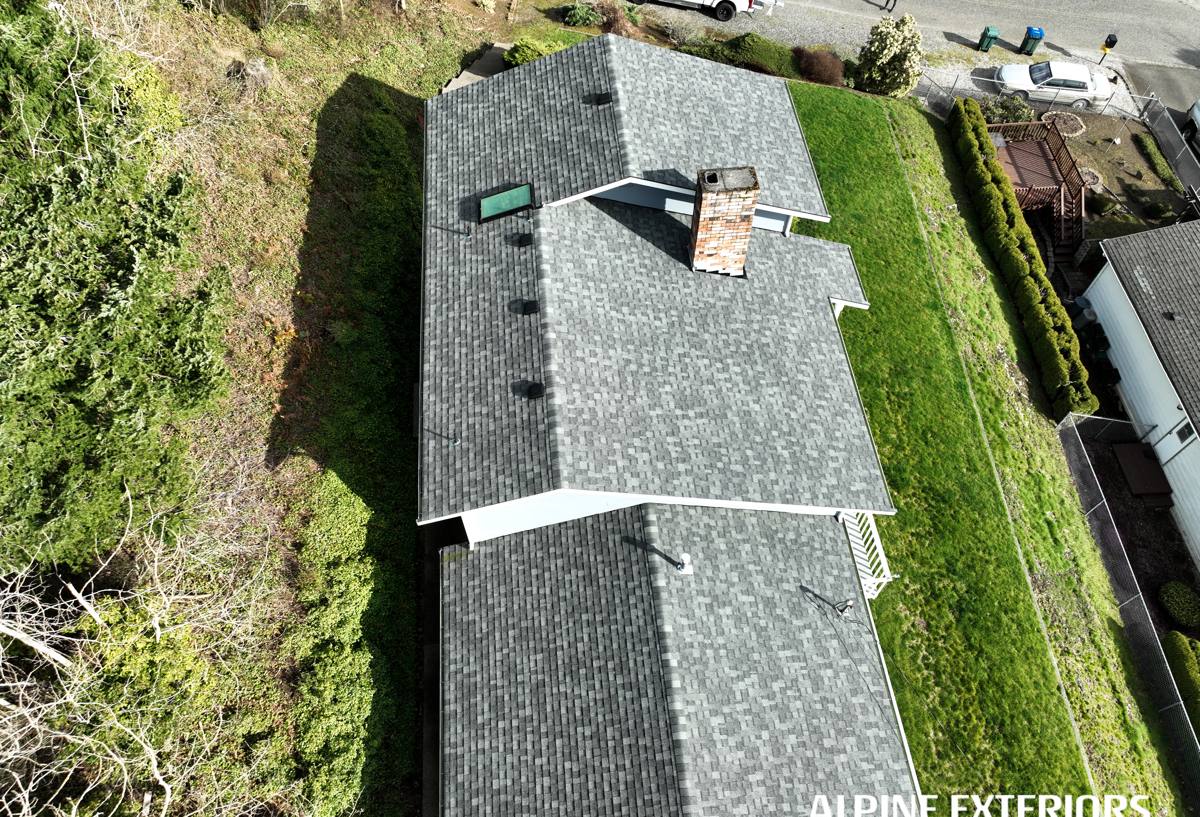
What the Local Climate Actually Does to a Roof
Salt Air and Metal Fatigue
Airborne salt accelerates corrosion on any exposed metal — flashing, fasteners, vents, and gutter hardware included. Standard galvanized fasteners and unprotected steel components can start showing rust streaks and pitting years before they would on a comparable inland roof. This doesn't mean metal roofing is off the table on Lummi Island; it means the specific alloys, coatings, and fastener grades used matter a lot more here than the brand name on the shingle wrapper.
Driving Rain and Wind-Driven Wet
Storms off the water often push rain sideways rather than straight down, which puts real stress on details that a calmer climate might let slide — the laps in underlayment, the seal on every fastener, and the flashing around chimneys, skylights, and wall intersections. A roof built for a mild rain climate and a roof built for wind-driven rain look almost identical from the ground, but the underlayment coverage, fastener pattern, and flashing detail underneath are not the same job.
Moss and Shade Cover
Heavy tree cover is part of what makes the island beautiful, but shaded, north-facing, and low-slope roof sections stay damp long after the rest of the roof has dried out, and that's exactly where moss and algae take hold. Left alone, moss holds moisture against the roofing material, lifts shingle edges, and works its way under flashing over a long enough moss season. A new roof installed without accounting for shade patterns on that specific lot is starting the moss clock over again from day one.
Signs Your Lummi Island Roof Needs Replacing, Not Just Patching
Patching has its place, but there's a point where repeated repairs cost more over time than one correct replacement. Common signs it's time to talk replacement rather than another patch:
- Granule loss heavy enough that you're finding grit in gutters or at downspout outlets every season
- Moss or dark streaking that returns within months of cleaning, especially on shaded slopes
- Curling, cupping, or cracked shingles, particularly on south- and west-facing slopes that take the most weather
- Soft spots in the decking you can feel underfoot, or daylight visible through the attic sheathing
- Flashing that's rusted, lifted, or was caulked over instead of properly integrated
- Interior water staining on ceilings or in the attic after wind-driven rain events
- A roof that's near or past the manufacturer's expected service life for its material and exposure
Choosing the Right Roofing Material for an Island Home
There's no single "best" roofing material for Lummi Island — the right choice depends on how much tree cover and salt exposure a given roof actually deals with, along with the homeowner's maintenance appetite and budget. Here's how the common options stack up under this area's conditions:
| Material | Salt-Air Durability | Moss Resistance | Wind-Driven Rain Performance | Typical Maintenance |
|---|---|---|---|---|
| Architectural asphalt shingle | Good with coated/stainless fasteners | Moderate; benefits from moss-resistant granules | Very good when properly underlaid and sealed | Periodic moss treatment on shaded slopes |
| Standing seam metal | Excellent with marine-grade fasteners and coatings | Excellent; sheds moisture, little for moss to grip | Excellent; interlocking seams shed wind-driven rain | Low; occasional fastener/seam check |
| Cedar shake | Fair; needs consistent maintenance in salt air | Poor without active upkeep; retains moisture | Fair; gaps can admit wind-driven rain if not maintained | High; regular treatment and inspection |
| Composite/synthetic shake | Very good; engineered materials resist corrosion | Good; less porous than natural wood | Very good when installed with proper underlayment | Low to moderate |
For heavily shaded, moss-prone lots close to the water, we most often steer homeowners toward architectural asphalt with upgraded fasteners or standing seam metal. Cedar shake can still look right on an island property, but we're upfront that it asks for more ongoing attention in this climate than the other options — that's a maintenance trade-off, not a defect in the material itself.
What a Correct New Roof Installation Actually Involves
Tear-Off and Deck Inspection
We remove the old roofing down to the deck rather than layering over it, because covering up problems is exactly how hidden rot and soft spots turn into a bigger repair later. Every section of decking gets inspected, and any rotted or delaminated sheathing is replaced before anything new goes down.
Underlayment and Ice/Water Barrier
Given how much wind-driven rain this stretch of Whatcom County sees, we use full synthetic underlayment coverage and self-adhering ice-and-water barrier at eaves, valleys, and any low-slope transitions — the areas most likely to see water pushed backward under normal shingles.
Flashing and Fasteners
All flashing — step flashing at walls, chimney flashing, valley metal, vent boots — is installed new, not reused, and matched to a corrosion-resistant spec appropriate for salt air. Fasteners are upgraded from standard galvanized to coated or stainless where the exposure calls for it, which is a small cost difference upfront that avoids early rust staining and loosened nails down the road.
Ventilation
Balanced intake and exhaust ventilation keeps the attic temperature and humidity closer to outside conditions, which reduces condensation on the underside of the deck and helps shingles cure and perform the way they're designed to. On a shaded, damp lot, ventilation is doing real work, not just satisfying a code checkbox.
Ventilation and Moss Prevention Built Into the Install
Moss prevention starts at installation, not with a chemical treatment after the fact. On Lummi Island jobs we routinely include zinc or copper strips near the ridge on shaded slopes, since the metal ions that wash down with rain inhibit moss and algae growth over the life of the roof. We also make sure ridge and soffit vents are actually clear and functioning, since blocked ventilation traps moisture right where moss wants to grow. Where overhanging limbs are keeping a section of roof from ever fully drying out, we'll flag it — trimming that back is outside a roofing scope, but it's often the single biggest thing a homeowner can do to extend the life of a new roof here.
Our Process for Lummi Island Projects
Working on an island adds logistics that a mainland job doesn't have, and we've built our process around that rather than treating it as an inconvenience:
- On-site assessment — we walk the roof and attic in person, checking deck condition, ventilation, shade exposure, and any problem areas before quoting anything.
- Written estimate — a clear scope covering material choice, tear-off, decking allowance, and any upgraded flashing or fastener spec, with no surprise line items added later.
- Material staging — materials, tools, and disposal containers are planned around ferry schedules and loaded in advance so the crew isn't waiting on a return trip mid-job.
- Installation — a dedicated crew stays on the job through completion rather than splitting attention across multiple sites, since travel time to and from the island makes that the more efficient way to work.
- Cleanup and haul-off — all tear-off debris, packaging, and old materials are hauled off the island with us; nothing is left for the homeowner to deal with.
What Drives the Cost of a Lummi Island Re-Roof
We're not going to throw out a number that doesn't mean anything without seeing the roof, but the main factors that move the price on an island job are worth knowing going in:
- Roof size and pitch — steeper roofs take longer and require more safety setup than a simple low-slope roof of the same square footage.
- Number of existing layers — a roof with one layer of old shingles costs less to tear off than one with two or three layers stacked up.
- Decking condition — rot or soft sheathing found during tear-off adds material and labor that can't always be predicted from the ground.
- Material choice — architectural asphalt, metal, and shake sit at different price points, as shown in the comparison above.
- Access and logistics — ferry scheduling and site access (long driveways, limited staging space, waterfront setbacks) factor into labor time more on an island than on a typical mainland lot.
An honest quote accounts for these up front rather than adding an "island surcharge" as a surprise later — that logistics cost is baked into the estimate from the start.
Why Hiring a Crew That Already Works This Island Matters
A contractor unfamiliar with Lummi Island has to solve ferry logistics, tool and material staging, and Whatcom County permitting for the first time on your job. A crew that already works out here has that figured out, which shows up as fewer delays and a more accurate timeline. Just as important, familiarity with how salt air and shade actually affect roofs on this specific island — versus roofs twenty minutes inland — means the material and fastener choices in your quote reflect real local conditions, not a generic spec sheet.
If your roof is showing its age, or you're planning ahead rather than waiting for a leak to force the issue, we're happy to come out, walk the roof, and give you a straight assessment along with a free, no-pressure estimate — no obligation, just an honest look at what your home actually needs.