 Ferndale
 Why Lummi Island Roofs Wear Differently Than Roofs Inland
Lummi Island sits out in the salt water off the Whatcom County mainland, and that location shapes everything about how a roof ages there. Homes get a steady dose of salt-laden air off the water, long stretches of driving rain blowing in off the Sound, and a shoulder-season climate that stays damp and shaded just long enough for moss and lichen to take hold on north-facing slopes. None of those things are dramatic on their own, but stacked together year after year, they shorten the working life of a roofing system that wasn't built for them.
An asphalt shingle roof installed the same way you'd install one in a dry inland subdivision will usually underperform on the island. The metal fasteners corrode faster in salt air, the underlayment has to work harder because wind-driven rain gets pushed sideways and up under shingle tabs, and any moisture that gets trapped in the attic or under the shingles has nowhere to dry out quickly in our marine climate. The fix isn't exotic materials — it's getting the fundamentals right for the environment the roof actually lives in.
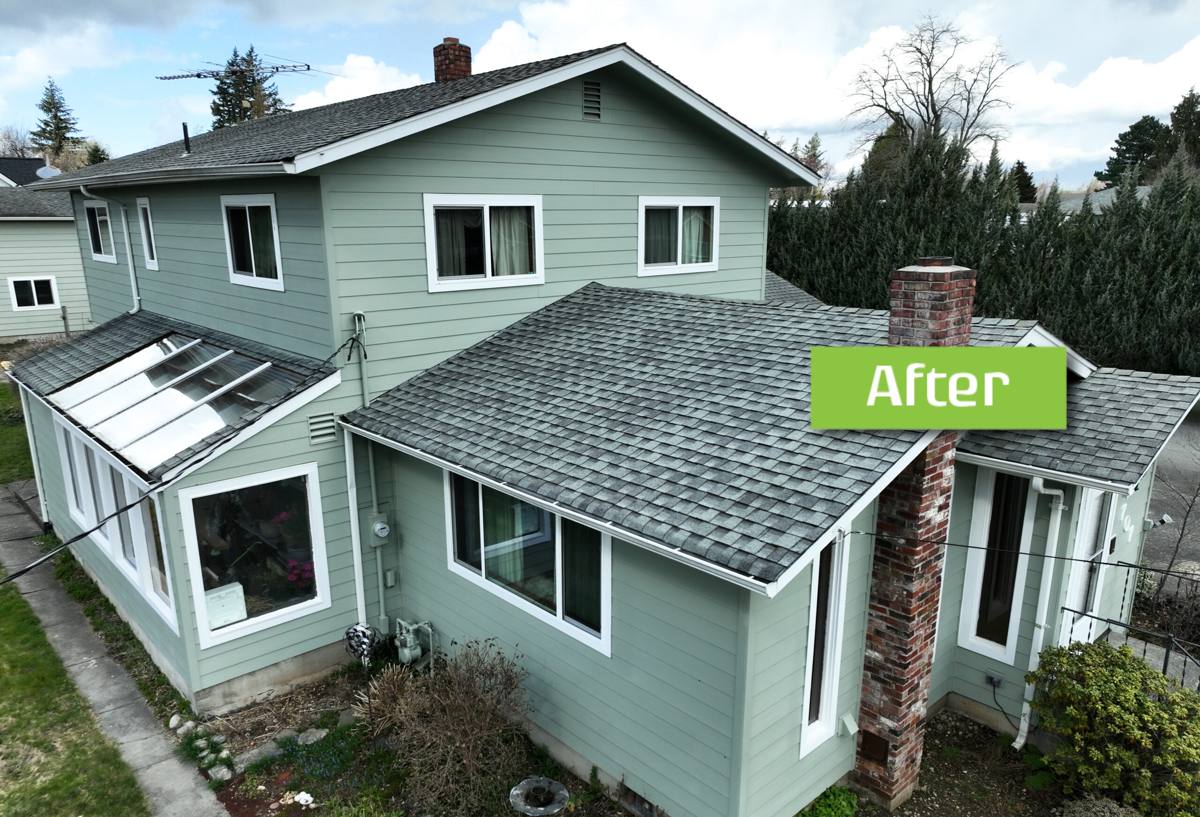
What a Correctly Built Shingle Roof Needs Here
Underlayment and Water Protection
On any Whatcom County coastal property, we treat underlayment as a real second layer of defense, not a formality under the shingles. That means synthetic underlayment sized for the roof's exposure, plus self-adhering ice-and-water membrane at the eaves, valleys, and around every penetration — the places wind-driven rain actually finds its way in during a Lummi Island storm.
Ventilation That Matches the Climate
Balanced intake and exhaust ventilation matters more here than almost anywhere else in the region. A roof deck that can't breathe traps humid air underneath it, and that trapped moisture is exactly what feeds moss growth from below and accelerates shingle aging from the underside. We check soffit intake, ridge or box venting, and attic insulation together as one system rather than treating the shingles as a standalone project.
Flashing and Fastening for Wind and Salt
Step flashing, counter-flashing, and valley metal all need to be correctly lapped and, on this island, ideally corrosion-resistant given the salt exposure. Fastener choice matters too — the wrong nail in a salt-air environment starts rusting years before it should, which eventually shows up as streaking or a loosened shingle tab.
Choosing Shingles for a Salt Air, High-Moss Environment
Not every asphalt shingle product performs the same way in this climate, and the differences aren't just cosmetic.
- Algae-resistant (AR) shingles use copper- or zinc-infused granules to slow the black streaking and moss/lichen colonization that's common on shaded, damp coastal roofs.
- Architectural (laminated) shingles carry a heavier mat and higher wind ratings than basic three-tab shingles, which matters when a roof is exposed to open water on multiple sides.
- Manufacturer wind warranties vary by product line and by how the shingle was installed — proper nailing pattern and sealant strip activation affect whether that warranty is actually valid.
- Color and granule density can affect how visible moss and staining become over time, which is worth discussing before you pick a shade for a north-facing roof plane.
We don't push a single brand as the answer for every home. Instead we match the shingle line to the roof's exposure, pitch, and shading, and we're upfront about the trade-offs — a heavier architectural shingle costs more up front but generally holds up better to the wind and moisture load this island sees.
Our Installation Process
Inspection and Deck Assessment
Every job starts with a look at the roof deck itself, not just the shingles on top of it. On older island homes, we're checking for soft or delaminated sheathing, especially near eaves and valleys where moisture tends to linger longest. Replacing shingles over a compromised deck just hides the real problem.
Tear-Off and Prep
We remove old roofing down to the deck rather than layering over it. That lets us actually inspect the sheathing, address any rot, and start the new system with a clean, flat surface — layering over old shingles traps moisture and voids most manufacturer warranties anyway.
Underlayment, Flashing, and Shingle Installation
Ice-and-water membrane goes down first at vulnerable areas, then synthetic underlayment across the field, then new flashing at every valley, wall intersection, and penetration. Shingles go on with the manufacturer's specified nailing pattern and exposure — shortcuts here are exactly what cause premature blow-offs in island wind events.
Ventilation Check and Final Walkthrough
Before we call a job finished, we confirm intake and exhaust venting are balanced, check that all flashing is sealed correctly, and walk the site to clean up debris and stray fasteners. You get a straightforward explanation of what was done and why, not just a finished roof.
What Drives the Cost of a Shingle Roof on Lummi Island
Every roof is priced on its own specifics, but a few factors consistently move the number up or down for island homes.
| Cost Factor | Why It Matters |
|---|---|
| Roof size and pitch | Steeper, larger roofs take more material, more time, and more safety setup |
| Number of existing layers | Tear-off of multiple old layers adds labor and disposal cost |
| Deck condition | Rotted or soft sheathing found during tear-off requires repair before shingles go on |
| Shingle tier chosen | Basic three-tab, standard architectural, and premium algae-resistant lines all price differently |
| Ventilation upgrades | Adding or correcting soffit and ridge venting is often worth doing at the same time as re-roofing |
| Roof complexity | Valleys, dormers, skylights, and chimneys all add flashing detail and labor time |
| Site access and logistics | Getting crews, dump trailers, and material deliveries to and from the island adds coordination compared to mainland jobs |
That last line is specific to Lummi Island: getting a crew, equipment, and a full load of shingles, underlayment, and disposal trailers to and from the island takes planning that a mainland-only contractor may not be set up for. We build that logistics piece into our scheduling instead of treating it as a surprise mid-project.
Living With a Shingle Roof in This Climate
A well-built roof still needs some upkeep in a moss-prone, salt-air environment. A little attention twice a year goes a long way toward getting the full service life out of the system.
- Keep gutters and valleys clear of needles and debris so water can't pond against shingle edges
- Trim back overhanging branches on shaded sides to cut down on moss and lichen growth
- Have moss gently removed rather than power-washed — aggressive pressure washing strips protective granules
- Check attic ventilation isn't blocked by insulation or debris
- Look for lifted, cracked, or missing shingle tabs after major windstorms
- Watch for granule buildup in gutters, which signals a shingle surface that's aging faster than expected
Why a Crew That Already Works Lummi Island Matters
Roofing on an island isn't the same logistical exercise as roofing on the mainland. Material deliveries, tear-off disposal, and crew scheduling all have to account for ferry access, and a contractor who hasn't planned around that reality can turn a straightforward re-roof into a drawn-out one. We already build island jobs into our routine scheduling, so material shows up when it's supposed to and the crew isn't burning daylight working out logistics on-site.
There's also a local-knowledge piece that matters more than people expect. A crew that's worked multiple Lummi Island roofs has already seen how the salt air and moss season play out on real homes here — which slopes moss first, where wind-driven rain tends to find weak flashing, which shingle lines have held up. That's the kind of judgment that comes from doing the work in this specific place, not from a general roofing checklist.
Signs Your Roof Needs a Closer Look
Some warning signs are easy to miss from the ground, especially on a roof partly shaded by trees.
- Dark streaking or thick moss growth, particularly on north-facing slopes
- Granules collecting in gutters or at downspout outlets
- Curling, cupping, or cracked shingle tabs
- Soft spots or sagging visible from inside the attic
- Water stains on interior ceilings near exterior walls or valleys
- Visible rust streaking from flashing or fasteners
Any one of these on its own isn't necessarily an emergency, but a few together usually mean it's time for a real inspection rather than a wait-and-see approach.
Get an Honest Look at Your Roof
If you're not sure whether your Lummi Island home needs a repair, a full replacement, or just some overdue maintenance, we're happy to take a look and give you a straight answer — no pressure, no upsell. Fill out the form below to schedule a free estimate and get a clear picture of what your roof actually needs.