 Ferndale
 Deck Replacement for Kendall Homes Near Ferndale
Kendall sits far enough inland from the water that people sometimes assume the marine climate that batters Ferndale's coastal edges doesn't reach them. It does. Salt-laden air still moves up the Nooksack valley and settles into the tree line, driving rain still comes off the Strait in long fall and winter systems, and the low winter sun angle here means shaded decks under fir and cedar canopy stay damp for days at a time. If your deck is more than 15-20 years old, or it was built with lumber that was never rated for this kind of sustained moisture exposure, replacement is usually the more honest answer than another round of patching.
This page covers what a deck replacement actually involves for a Kendall property, what's different about building for this specific stretch of Whatcom County, and how we run the job from first look to final walk-through.
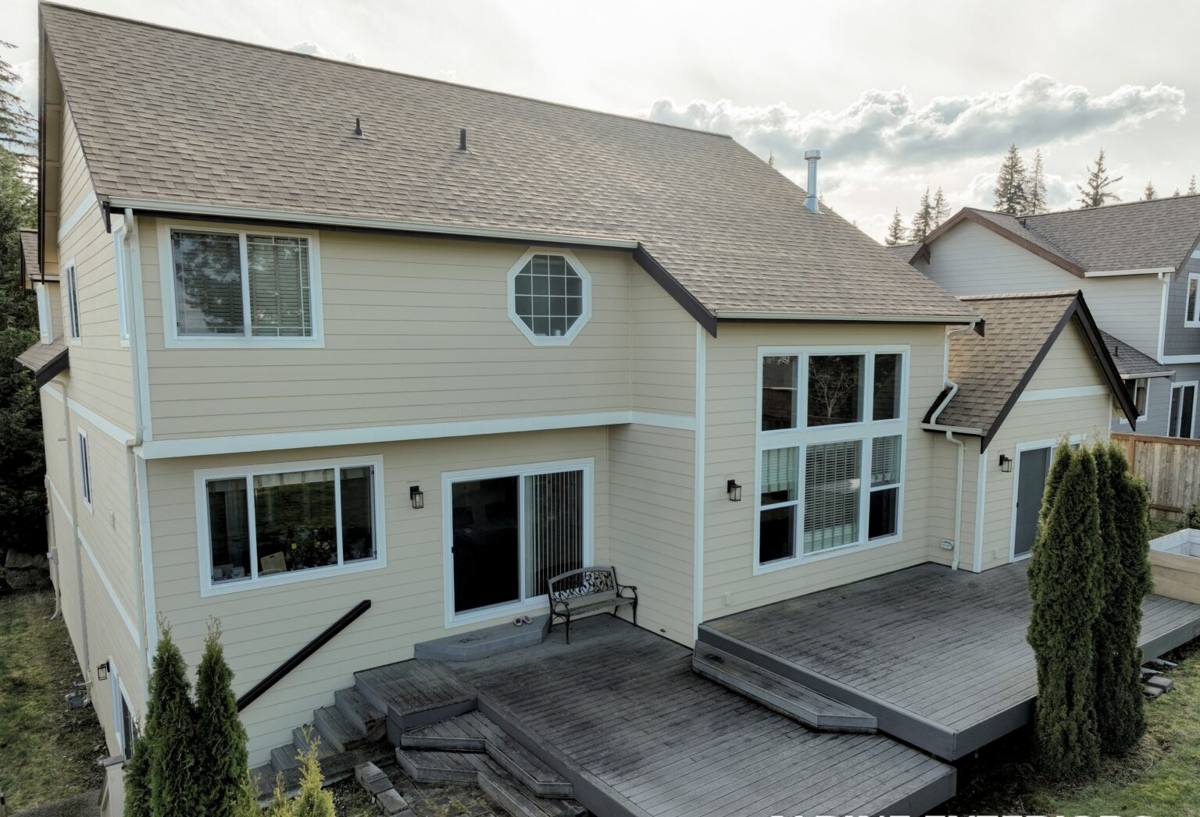
Why Whatcom County Decks Fail Early
Decks in this area don't usually fail because of one dramatic event. They fail slowly, from the same three conditions repeating year after year:
- Moss and organic buildup: Kendall's tree cover and long wet season mean moss, algae, and needle debris collect on deck boards and in the gaps between them. That organic matter holds moisture against the wood far longer than open sun exposure would.
- Driving rain at the ledger and rim joist: Wind-driven rain off the Strait doesn't just fall straight down — it pushes sideways into the house-to-deck connection, which is the single most common place we find hidden rot.
- Freeze-thaw cycling: Whatcom County gets enough cold snaps each winter that water trapped in checked or split boards freezes, expands, and widens the cracks. Repeat that for a few winters and boards that looked fine in October are compromised by spring.
None of this is unique to Kendall, but the combination of tree canopy, elevation, and proximity to the water makes it a persistent, year-round condition rather than an occasional problem.
The Ledger Board Is the Real Risk Point
Most deck failures we're called out for start at the ledger board — the piece bolted to the house that the deck framing hangs from. If flashing was skipped, undersized, or installed before current code required continuous, properly lapped flashing, water works its way behind the ledger and into the rim joist and band board of the house itself. This is a structural and moisture-intrusion issue, not just a deck cosmetics issue, which is exactly why we inspect this area closely on every job rather than assuming the old flashing is fine.
What a Correct Deck Replacement Includes
A proper deck replacement is more than pulling old boards and screwing down new ones. Here's what we check and address on every job:
- Full removal of decking, and inspection of the framing underneath — joists, beams, posts, and footings — for rot, undersizing, or code deficiencies
- Ledger board removal and reinstallation with correct through-bolting and continuous flashing integrated with the house's water-resistive barrier
- Footing and post inspection — replacing any post base sitting in standing water or showing rot at grade contact
- Joist spacing and beam sizing checked against current span tables, since older decks were often built with spacing that doesn't meet today's load requirements
- Proper joist tape or flashing on top of joists before decking goes down, to keep fastener penetrations from becoming rot points
- Ventilation underneath the deck so damp ground air can actually dry out between rain events
- Stair and guardrail rebuild to current code, including baluster spacing and rail height — a common gap on older decks that were never permitted or inspected
Decking Material Options for This Climate
The decking material matters less than getting the structure right underneath it, but it does affect maintenance and how the deck handles the Kendall moss season. Here's how the common options compare for this specific climate:
| Material | Moss/Algae Resistance | Maintenance | Typical Lifespan Here |
|---|---|---|---|
| Pressure-treated lumber | Fair — needs regular cleaning and sealing | Annual wash and re-seal recommended | 10-15 years with upkeep |
| Cedar | Good natural resistance, but softens with age | Periodic cleaning and oil/stain | 15-20 years with care |
| Composite (capped) | Very good — surface sheds moisture, resists organic staining | Occasional wash, no sealing | 25+ years, manufacturer-warrantied |
| PVC decking | Excellent — fully synthetic, no organic material to feed moss | Lowest — soap and water | 25+ years, manufacturer-warrantied |
We'll walk through these trade-offs with you honestly. Composite and PVC cost more up front but remove most of the moss and rot maintenance burden that wood decking carries in this climate. Cedar and pressure-treated lumber cost less and can look great, but they require an owner who's willing to actually keep up with cleaning and sealing on a schedule — skip a year or two here and moss gets a real foothold.
What We Watch For With Composite and PVC Installs
Composite and PVC decking are installation-sensitive products. Gapping, fastening pattern, and substructure ventilation all have to follow the manufacturer's specs closely, or you can end up with boards that buckle, discolor at the fastener line, or trap moisture underneath — the exact problem you bought the product to avoid. We follow manufacturer installation guidelines on every board, which is also what keeps the material warranty intact if you ever need to use it.
Signs Your Kendall Deck Needs Replacing, Not Repair
Not every deck problem means starting over. Here's a practical way to tell which category yours is in:
- Soft or spongy spots when you walk across the decking — usually rot in the boards or joists below
- Rust streaks or dark staining around fasteners — often a sign of moisture cycling at the connection points
- Visible gap, staining, or soft wood at the ledger-to-house connection — flag this immediately, it's a moisture entry point into the house
- Wobble or movement in the railing or stair stringers
- Persistent moss or algae that returns within weeks of cleaning, even after sealing
- Deck was built without a permit or before current guardrail and baluster codes existed
If it's one or two boards and the framing underneath is sound, targeted repair can make sense. If the framing, ledger, or footings are compromised, repair is usually a short-term patch on a long-term problem — and on a deck used regularly by family or guests, that's not a risk worth carrying.
Our Process for a Kendall Deck Replacement
- On-site assessment: We inspect the existing deck from the ground up — decking, framing, ledger, footings — and tell you honestly whether you need replacement or if repair is a reasonable option.
- Design and material selection: We talk through decking material, railing style, and layout based on how you actually use the space and your budget, not just what's trendy.
- Permitting: Deck replacements involving structural changes typically require a permit through Whatcom County. We handle that process so it's not on your plate.
- Demo and structural rebuild: Old decking and any compromised framing come out, ledger flashing and structural connections go in correctly, and everything gets built to current code.
- Decking, railing, and finish work: New decking is installed to manufacturer spec, railings and stairs are built and secured, and the site is cleaned up.
- Final walk-through: We go over the finished deck with you, explain any maintenance the material requires, and make sure you're satisfied before we call it done.
Why a Crew That Already Works Kendall Matters
A deck rebuild in Kendall isn't identical to one in a drier, more open part of the county. A crew that already works this specific area knows to expect tree canopy shading that slows drying time, understands how the local permit process runs through Whatcom County for structural work, and has already seen what 15-20 years of this climate does to different framing and decking choices. That's the kind of judgment that shows up in decisions you won't see on a quote sheet — how much ventilation clearance to leave under low decks, which fastener coatings actually hold up here, and where the ledger flashing needs extra attention based on the home's siding and orientation.
We're a Ferndale-based crew, and Kendall is part of the area we work regularly — not a stretch assignment. That local familiarity is worth something when you're making a decision that should hold up for the next 20-25 years.
Get a Straightforward Estimate
If your deck is showing its age, or you're not sure whether you're looking at a repair or a full replacement, we're happy to take a look and give you an honest read — no pressure, no upsell. Fill out the form below to schedule a free estimate for your Kendall property.