 Ferndale
 Roofing in Everson Has to Answer to Whatcom County Weather
Everson sits inland along the Nooksack River valley, but it doesn't escape what the rest of Whatcom County deals with every year. Moisture-laden marine air moves in off the Sound and settles over the whole region, driving rain comes through sideways more often than straight down, and the tree cover and damp shade that make this area beautiful are the same conditions that grow moss on a roof twelve months a year. A roof that was installed correctly for a drier climate, or installed a little too fast for this one, shows it here first — soft spots at the eaves, streaked and thickening moss on the north-facing slopes, and shingles that granulate and curl years before they should.
Roof replacement in Everson isn't a different trade than roof replacement anywhere else. But the details that separate a roof that lasts twenty-five years from one that leaks in year eight are almost all climate details: how the underlayment is lapped, how much intake and exhaust ventilation the attic actually gets, how the valleys and penetrations are flashed, and whether moss prevention was built in at installation instead of left for the homeowner to fight with a hose and a scrub brush every spring.
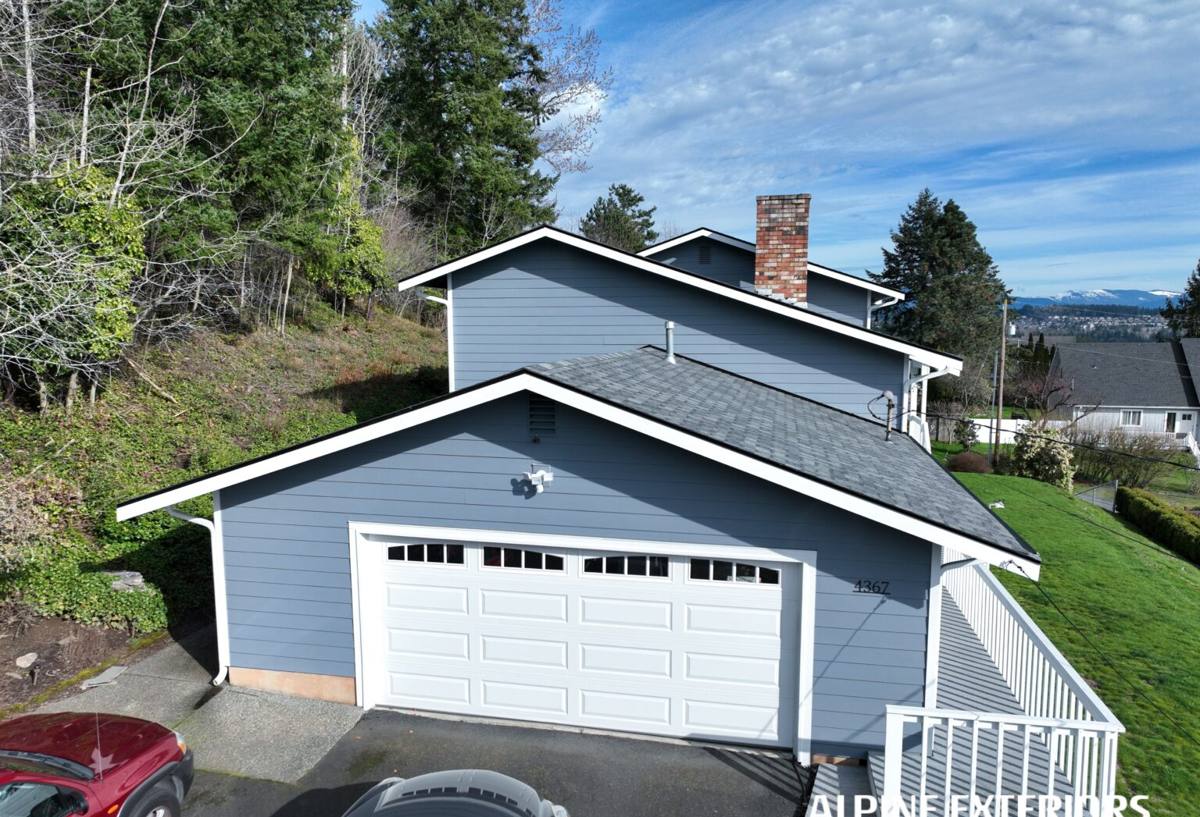
What a Correct Roof Replacement Actually Involves
"Roof replacement" gets used loosely. A correct one, especially in a climate this wet, is a sequence of decisions, not just a material swap. Here's what should happen on every tear-off and re-roof, regardless of what material goes on top.
Deck Inspection, Not Just Deck Cover-Up
Once the old roofing is off, the sheathing underneath gets inspected board by board. In a region with this much annual rainfall, it's common to find soft or delaminated plywood around old vent boots, chimney flashing, or wherever a prior roof was patched instead of properly flashed. Covering rotten decking with new shingles is one of the most common shortcuts in the trade, and it's also one of the most expensive mistakes to inherit — any soft sheathing should be cut out and replaced before anything new goes down.
Underlayment That's Built for Standing Water, Not Just Rain
A synthetic or self-adhered underlayment matters more here than in drier parts of the country. Ice and snow aren't the main concern in Whatcom County — wind-driven rain and prolonged saturation are. That means extra attention at eaves, valleys, and any low-slope transition where water can sit before it drains, using self-adhered membrane in those zones rather than relying on felt or a single layer of synthetic underlayment alone.
Ventilation That Matches the Attic, Not a Generic Rule
Attic ventilation is where a lot of otherwise good roofs fail early in wet climates. Without balanced intake at the eaves and exhaust at the ridge, moisture from the living space condenses on the underside of the deck, and that trapped moisture rots sheathing from the inside, invisibly, while the roof surface looks fine. Every replacement should include a real ventilation calculation for that specific attic, not a stock vent count.
Flashing at Every Transition
Chimneys, skylights, dormers, and roof-to-wall intersections are where the overwhelming majority of leaks start — not out in the open field of the roof. Step flashing, counterflashing, and properly sealed penetrations take more time than shingles alone, and they're the part of the job that's easiest to shortcut and hardest for a homeowner to inspect afterward.
Comparing Roofing Materials for a Wet, Mossy Climate
There's no single "best" roofing material — there's the right material for the roof's pitch, the home's style, the budget, and how much maintenance the homeowner actually wants to do. Here's how the common options stack up specifically against Everson's conditions.
| Material | Moss & Moisture Resistance | Typical Lifespan Here | Maintenance Burden |
|---|---|---|---|
| Architectural asphalt shingle | Good with copper/zinc strips or granule treatment; needs periodic moss removal | 20–30 years | Low to moderate |
| Standing seam metal | Excellent — sheds water fast, little surface for moss to grip | 40–60 years | Low |
| Cedar shake | Requires consistent upkeep; moss and moisture are its main long-term risks in this climate | 20–30 years with upkeep | High |
| Synthetic composite shake/slate | Very good — engineered to resist moisture absorption | 40–50 years | Low |
Cedar shake still has a place on the right home, but we're honest with Everson homeowners about the trade-off: it looks great and it's a traditional Pacific Northwest material, but in a climate this consistently damp, it demands more upkeep than most people plan for once they're a few years in. That's not a knock on cedar — it's a maintenance-schedule conversation we'd rather have before the tear-off than after.
Our Roof Replacement Process
1. On-Site Inspection and Honest Estimate
We walk the roof, check the attic from the inside, and look at flashing, ventilation, and any soft spots before quoting anything. If the roof can be repaired instead of fully replaced, we'll say so — a full tear-off isn't the right answer for every problem.
2. Tear-Off and Deck Repair
Old roofing comes off down to the deck, debris is hauled off the property the same day where possible, and any compromised sheathing is replaced before anything new goes down.
3. Underlayment, Flashing, and Ventilation Installed to Spec
This is the stage that determines how the roof performs in year ten, not just how it looks in week one. Self-adhered membrane at vulnerable zones, correct flashing at every penetration, and a ventilation layout matched to that specific attic.
4. Material Installation
Whichever material was chosen goes on to manufacturer spec — correct nailing pattern, correct exposure, correct starter and ridge details. These specifics are also what keep a manufacturer's warranty valid if it's ever needed.
5. Cleanup and Walkthrough
Magnetic sweep for nails, full site cleanup, and a walkthrough where we point out what was done and what to watch for going forward — including moss and gutter maintenance specific to this climate.
Moss and the Long Wet Season
Moss isn't just cosmetic. Left alone, it holds moisture against the roofing surface, lifts shingle edges, and accelerates granule loss. In a climate where roofs can stay damp for days at a time between dry stretches, moss has a long runway to do damage every single year.
What We Build In at Installation
- Zinc or copper control strips near the ridge, which release trace metal ions that inhibit moss growth as rain washes over the roof
- Proper slope transitions and clean valleys so water doesn't pool where moss and debris tend to collect
- Adequate roof-to-tree clearance recommendations where overhanging branches are keeping a section of roof shaded and damp
What Homeowners Can Do Between Seasons
- Clear gutters and valleys of needles and debris at least twice a year — clogged gutters back water up under shingles
- Have visible moss gently treated or removed before it thickens, rather than waiting until it's matted
- Trim back branches that keep a section of roof in constant shade
Why a Crew That Already Works in Everson Matters
A roofing crew that regularly works this part of Whatcom County already knows which details matter most for local homes — which roof styles and ages are common, what the weather windows for tear-offs actually look like this time of year, and how to sequence a job so a home isn't left exposed when rain moves in. That local familiarity shows up in small but real ways: realistic scheduling around actual weather patterns instead of a generic forecast, straightforward answers about permitting, and a crew that isn't learning the region's quirks on your roof for the first time.
It also means we're not a name you found from three states away. We're reachable after the job is done if a question comes up, and our reputation in this area depends on the roof still performing correctly five and ten years from now, not just on the day we finish.
Signs an Everson Home Needs a Roof Replacement Soon
Not every roof problem means a full replacement, but these are the signs worth having looked at before they turn into interior damage:
- Shingles that are curling, cracking, or losing granules in large patches
- Moss that keeps returning heavier each year despite cleaning
- Daylight visible through the attic roof deck, or damp insulation after storms
- Sagging areas anywhere on the roofline, especially near valleys or chimneys
- A roof approaching or past 20–25 years old with no major work done
- Granules collecting in gutters and downspouts after normal rain
What Affects the Cost of a Roof Replacement
Every roof and budget is different, and we'll never quote a number without seeing the roof, but the factors that move the price are consistent:
| Factor | Why It Matters |
|---|---|
| Roof size and number of facets | More cuts, valleys, and hips mean more labor and material waste |
| Deck condition underneath | Rotten sheathing found at tear-off adds material and labor to replace it |
| Material chosen | Asphalt, metal, and synthetic composites carry different material and install costs |
| Roof pitch and access | Steep or hard-to-access roofs take longer and require more safety setup |
| Ventilation and flashing needs | Older homes often need added vents or reworked flashing to meet current standards |
If you'd like to know where your home falls, the most reliable way is a free, no-pressure estimate — we'll look at the actual roof and give you real numbers instead of a range pulled from a website.