 Ferndale
 Building a Deck That Actually Holds Up in Semiahmoo
Semiahmoo sits close enough to saltwater that it plays by different rules than an inland deck project. Between the salt-laden air blowing off the water, the driving rain that comes through Whatcom County for months at a stretch, and the long stretch of the year when moss and algae have every excuse to take hold, a deck out here either gets built for those conditions or it starts showing problems within a few seasons. We've built and repaired enough decks along this stretch of coastline to know which shortcuts cause the most trouble, and which details are worth the extra time and cost up front.
This page covers what a custom deck project for a Semiahmoo home should actually involve — not a generic "we build decks" pitch, but the specific material, hardware, and design choices that matter for a waterfront or near-waterfront property in this part of Ferndale's service area.
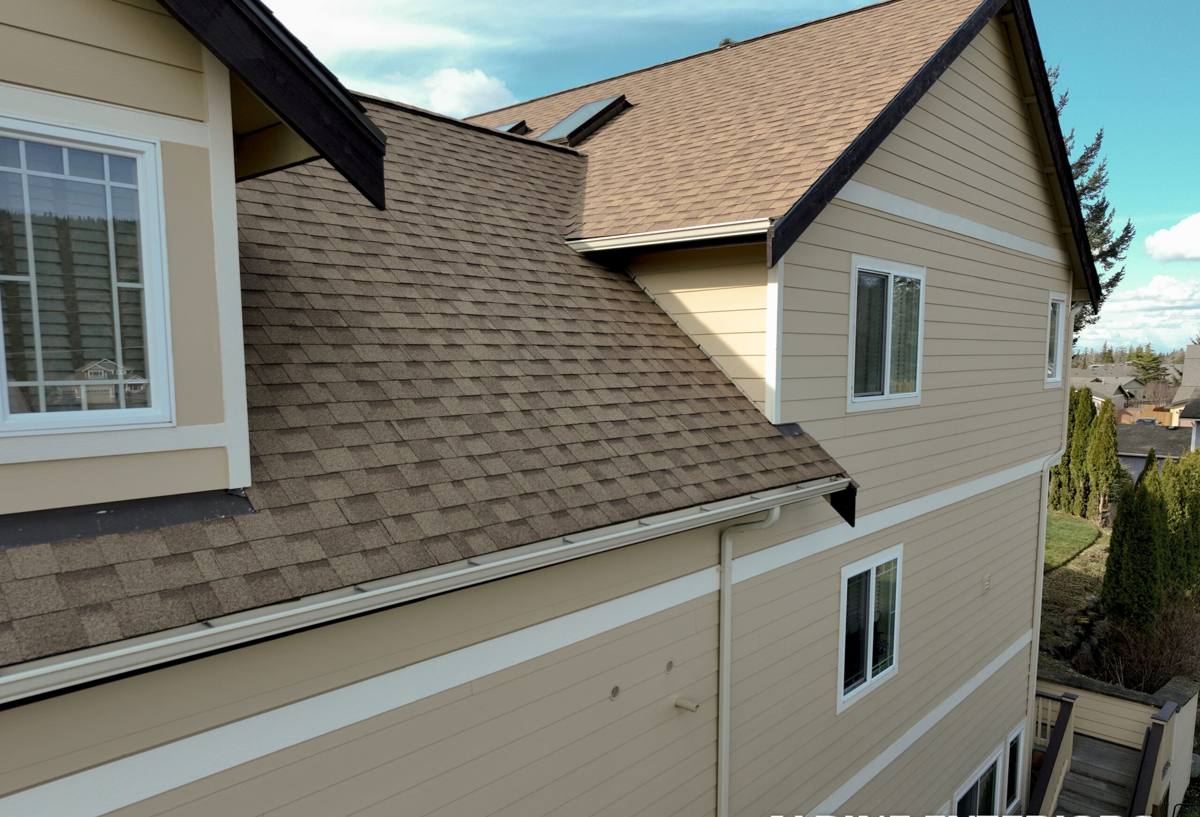
What the Marine Climate Does to an Ordinary Deck
Salt Air and Metal Fatigue
Airborne salt doesn't need direct ocean spray to do damage — it travels on the wind and settles on every exposed surface, including fasteners, brackets, and railing hardware. Standard zinc-coated screws and joist hangers that would last decades in a drier, inland yard can start rusting and staining the wood around them in a fraction of that time this close to the water. Once a fastener starts corroding, it weakens at exactly the point where the deck's structure depends on it most.
Driving Rain and Water Intrusion
Rain in this part of Washington doesn't always fall straight down. Wind-driven rain pushes water sideways into ledger connections, under railing posts, and into any gap where flashing was skipped or installed loosely. A deck that would be fine with a straightforward drainage plan somewhere sheltered needs more deliberate water management here, especially where the house ledger board meets the siding.
Moss, Algae, and the Long Wet Season
Whatcom County's wet season runs long, and shaded or low-airflow sections of a deck can stay damp for weeks at a time. That's exactly the environment moss and algae need. Beyond being slippery underfoot, moss holds moisture against the decking surface, which accelerates rot in wood and can dull or discolor composite and PVC boards if it's left to build up season after season.
Choosing the Right Decking Material for This Location
There's no single "best" decking material for every budget, but some materials are a noticeably better fit for salt air and constant moisture than others. Here's how the common options actually compare for a Semiahmoo property, not just in a showroom.
| Material | Upfront Cost | Maintenance Here | Salt/Moisture Behavior | Realistic Lifespan |
|---|---|---|---|---|
| Pressure-treated wood | Lowest | Annual cleaning and periodic sealing | Prone to graying, splintering, and fastener staining without upkeep | 10–15 years with regular maintenance |
| Cedar | Moderate | Regular sealing to hold color and resist moisture | Naturally rot-resistant but still needs protection from constant damp and moss | 15–20 years with upkeep |
| Capped composite | Higher | Occasional washing, no sealing or staining | Doesn't absorb water or rot; resists moss staining better than wood | 25+ years |
| PVC decking | Highest | Lowest — periodic rinsing | Fully non-organic surface, best resistance to salt and standing moisture | 25–30+ years |
We're honest with clients about the trade-off: wood costs less to install but asks for more of your time every year, while composite and PVC cost more upfront but largely remove moisture and moss from the maintenance conversation. For a deck that gets steady salt exposure and limited sun to dry it out between rains, that upkeep gap tends to matter more here than it would on a sheltered, inland lot.
Framing and Substructure Materials
Whatever decking surface you choose, the framing underneath deserves just as much thought. We favor treated framing lumber rated for ground contact even on elevated structures near the water, paired with joist tape over the tops of joists and beams to keep fasteners from sitting in trapped moisture. On some coastal projects, composite or steel-reinforced framing systems make sense where budget allows — worth discussing during your estimate rather than assuming wood framing is the only option.
Structural and Hardware Details That Matter More Here
A deck near saltwater fails at its connection points long before the decking boards themselves wear out. These are the details we don't skip on Semiahmoo projects:
- Stainless steel or hot-dip galvanized fasteners and structural hardware instead of standard coated screws and hangers
- Properly flashed ledger boards where the deck attaches to the house, sealed against wind-driven rain
- Post bases and brackets rated for exterior, corrosive-environment use rather than general-purpose hardware
- Adequate board spacing and joist tape to let air move underneath and limit trapped moisture
- Footings sized and set to local frost and soil conditions, not a generic minimum
- Railing systems with hardware that won't streak or stain the surrounding decking as it ages
None of these add dramatic cost to a project, but skipping any one of them is usually where a "few years in" callback starts.
Design Considerations for Waterfront and Near-Waterfront Lots
Wind Exposure
Open, waterfront lots in and around Semiahmoo see more consistent wind than sheltered inland yards. Railing systems, pergolas, and any attached structures need to be engineered with that exposure in mind, not just built to the minimum code requirement for a calm site.
Sun, Shade, and Airflow
Where a deck sits relative to the house and any tree cover affects how quickly it dries out after rain. During design, we look at which sections will stay shaded and damp longest — those are the areas where material choice and board spacing matter most, and sometimes where a pergola or partial cover is worth adding rather than fighting moss year after year in full shade.
Working with Existing Grade and Views
Many Semiahmoo properties have sloped or irregular lots leading down toward the water. Elevated decks and multi-level designs are common here, which raises the stakes on proper footing depth and railing height compliance — both are things a local crew who's already navigated Whatcom County's permitting and inspection process can move through without guesswork.
Our Process for a Custom Deck Project
- Site visit and consultation — We walk the lot, note sun/shade patterns, existing drainage, and how exposed the site is to wind and salt air.
- Design and material selection — We go over decking, framing, and hardware options against your budget and how much upkeep you actually want to do.
- Permitting — We handle the permit application and coordinate inspections required for the project.
- Site prep and footings — Footings are dug and set to proper depth for the soil and structure before any framing begins.
- Framing and structural work — Ledger flashing, joist layout, and hardware selection happen at this stage, matched to the climate details above.
- Decking, railing, and finish work — Surface material and railings are installed, checked for level, spacing, and fastener finish.
- Final walkthrough — We go over the finished deck with you, including what maintenance (if any) the material you chose will need going forward.
Maintenance Checklist for a Semiahmoo Deck
Even a well-built deck needs some seasonal attention in this climate. This is the baseline we recommend to homeowners regardless of decking material:
- Sweep debris and standing leaves off the deck regularly through fall and winter
- Rinse or scrub moss and algae buildup before it stains the surface, especially in shaded corners
- Check railing posts and fastener heads once a year for early rust staining
- Inspect ledger board flashing and caulking annually for gaps that could let wind-driven rain in
- Reseal wood decking on the manufacturer's recommended schedule — don't wait until it's visibly gray
- Keep gutters and downspouts near the deck clear so runoff isn't dumping extra water onto or under it
Why Hire a Crew That Already Works in Semiahmoo
A deck built to a generic spec sheet can look fine on installation day and still struggle two winters later if it wasn't built for salt air, driving rain, and a long moss season. Working regularly in this part of Ferndale's service area means we already know which hardware grades hold up, which framing details matter on exposed or waterfront lots, and how Whatcom County's permitting process runs for coastal properties. That local familiarity shows up less in what a deck looks like on day one and more in how it holds up five and ten years down the road.
If you're planning a new deck or replacing one that hasn't held up to the weather out here, we're happy to walk your property and talk through honest options for your budget. Fill out the form below for a free, no-pressure estimate.