 Ferndale
 Why Blaine's Waterfront Position Is Hard on Windows
Blaine sits right at the edge of Whatcom County, exposed to open water and the weather that comes with it. That location is a selling point for the view, but it's a liability for building materials. Wind-driven rain off the water finds every gap in a window installation that a calmer inland site would never expose. Salt-laden air corrodes hardware, fasteners, and unprotected metal components faster than manufacturers' warranties usually account for. And the long stretch of wet months that defines this part of the Pacific Northwest means window seals, sills, and frame joints spend a huge share of the year damp.
Add in the moss and algae that thrive in that same dampness — you'll see it on roofs, on north-facing siding, and eventually in window tracks and weep holes if they're not detailed correctly — and you have a climate that punishes shortcuts. A window that would perform fine for twenty years in a dry inland climate can fail in half that time here if it wasn't installed with this specific exposure in mind.
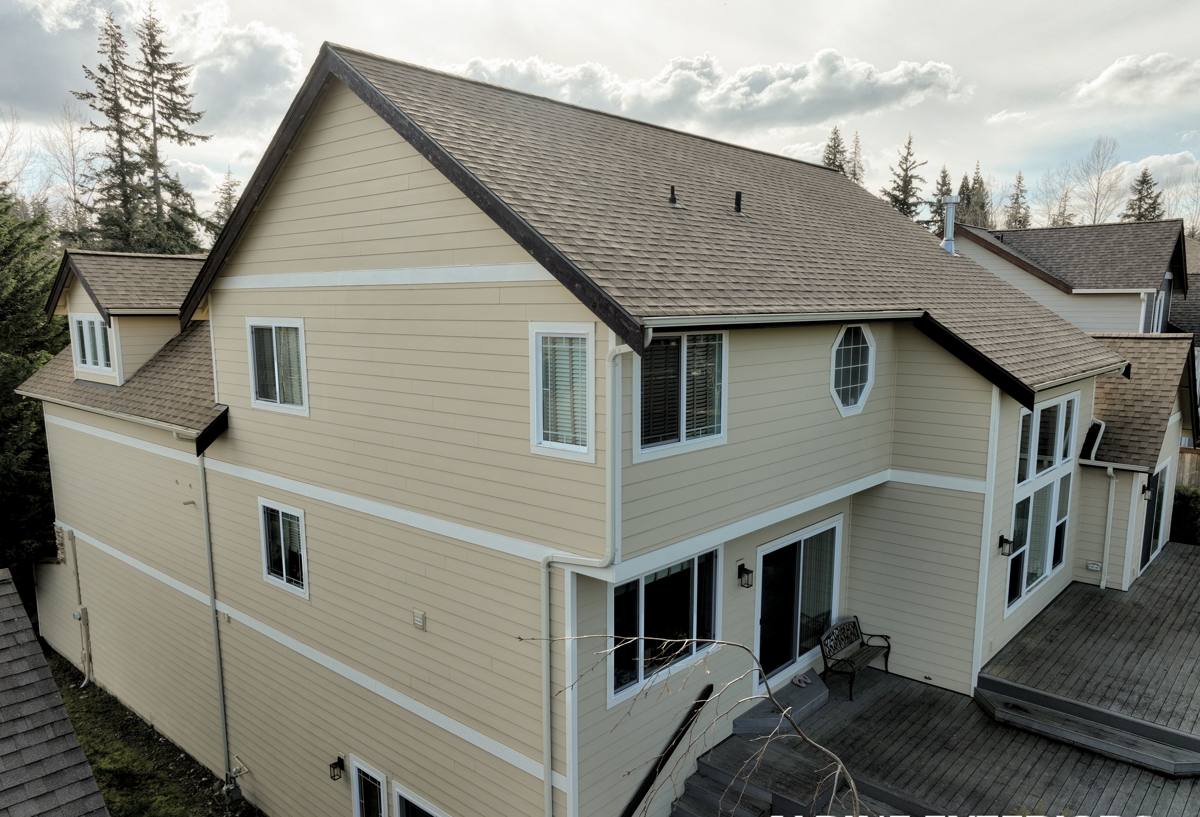
Signs a Blaine Home's Windows Need Replacing
Homeowners near the water tend to notice window problems later than they should, because a little drafting or fogging can feel normal in an older coastal house. It usually isn't. Here's what we look for during an assessment:
- Fogging or a visible haze between panes — the seal on the insulated glass unit has failed and moist air has gotten inside
- Soft or discolored wood at the sill or lower frame corners, a sign that driving rain has been getting past the exterior seal
- Hardware (locks, hinges, cranks) that's stiff, corroded, or pitted from salt exposure
- Visible daylight or a noticeable draft at the frame edges when the window is closed and locked
- Paint or finish that's bubbling or peeling specifically around the window opening, rather than the wall generally
- Moss or dark staining building up in the sill track or weep holes
- Windows that are noticeably harder to open, close, or lock than they used to be
Any one of these on its own might just need a repair. Several together, especially on the sides of the house that catch the prevailing wind and rain, usually mean the windows have reached the end of their useful life.
Why Fogged Glass Isn't Just Cosmetic
A failed insulated glass seal doesn't just look bad — it means the argon or air gap that gives the window its insulating value is gone. From that point on, the window performs closer to a single pane. In a marine climate with cool, damp winters, that shows up as higher heating bills and cold spots near the window, not just a cloudy view.
What a Correct Window Replacement Job Actually Involves
Swapping in a new window is the easy part. The work that determines whether it lasts happens around the window, not in it. In a coastal environment like Blaine's, we treat these steps as non-negotiable:
- Full inspection of the rough opening once the old window is out — checking framing, sheathing, and any existing water damage before anything new goes in
- Correct flashing sequence at the sill, jambs, and head, lapped so water is directed out and down rather than trapped behind the new unit
- Sill pan installation to catch and drain any water that does get past the primary seal — this matters far more here than in a drier climate
- Proper integration with the house wrap or building paper so the window becomes part of the wall's drainage plane instead of a break in it
- Low-expansion foam or backer rod and sealant at the frame, sized and placed to allow the window to move seasonally without cracking the seal
- Corrosion-resistant fasteners and hardware appropriate for salt air exposure, not just whatever ships in the box
- Exterior trim and caulking finished to shed water rather than collect it
Skip any one of these and the window itself can be top quality and still fail early — usually with water damage hidden inside the wall long before it shows up as a stain on the interior.
Choosing a Window Material for Salt Air and Driving Rain
Every window material on the market can work in a coastal climate, but they don't all age the same way once salt air and moisture become part of the daily environment. Here's how the common options compare for a home like the ones we see in Blaine:
| Material | Moisture & Salt Air Behavior | Maintenance | Typical Lifespan Here |
|---|---|---|---|
| Vinyl | Doesn't rot or corrode; welded frames resist water intrusion well | Low — occasional cleaning | 20-30 years |
| Fiberglass | Very stable dimensionally; handles wet/dry cycling and salt exposure well | Low | 25-35+ years |
| Wood / wood-clad | Excellent insulator, but exposed wood needs consistent upkeep near the coast | High — refinishing and joint inspection | Varies widely with maintenance |
| Aluminum | Prone to corrosion and pitting in salt air unless heavily coated; conducts cold | Moderate to high | Shorter unless specified for coastal use |
Our standard recommendation for most Blaine homes is vinyl or fiberglass, specifically because both shrug off the moisture and salt exposure without ongoing upkeep. Wood-clad windows can still be the right call where the look matters — a period home or a specific architectural style — but we'll be upfront that they come with a maintenance commitment that vinyl and fiberglass don't. We steer clients away from bare aluminum for street-facing or water-facing exposures because the corrosion and heat-loss trade-offs aren't worth it in this climate, not because it's a bad product everywhere.
Energy Performance in a Marine Climate
Whatcom County winters aren't brutally cold compared to inland climates, but they are damp, windy, and long. That combination rewards windows with a solid U-factor and good air-sealing more than it rewards a very low solar heat gain coefficient, which matters more in sunnier climates. We'll walk through glass packages and frame options based on which side of the house a window faces — a window catching wind off the water needs a different priority than one on a sheltered wall.
Double-pane, low-E glass is the baseline we install on nearly every replacement now; it's the point where performance, cost, and long-term reliability line up best for this area. Triple-pane can make sense for particularly exposed elevations or for homeowners prioritizing comfort and noise reduction, and we'll say plainly when we think it's worth the added cost versus when it isn't.
Our Process, Start to Finish
- On-site assessment — we look at each window individually, not just the house as a whole, since exposure varies by side of the home
- Product and glass package recommendation based on that window's exposure, the home's style, and your budget
- Written estimate with material, labor, and any structural or water-damage repair called out separately
- Careful removal of the old unit and inspection of the opening before anything new is installed
- Repair of any hidden water damage found in the framing or sheathing — this gets flagged and priced before we proceed, never buried into the job silently
- Installation following the flashing, sealing, and drainage sequence described above
- Interior and exterior finish work — trim, caulking, and cleanup
- Final walkthrough so you can operate every window and ask questions before we consider the job done
What Drives the Cost
Window replacement pricing is genuinely project-specific, but the factors that move the number are consistent. This isn't a quote — it's a guide to what you're actually paying for:
| Factor | Why It Matters |
|---|---|
| Number of windows | Per-unit cost usually drops as the total job size increases |
| Frame material | Vinyl is typically the most economical; fiberglass and wood-clad cost more upfront |
| Glass package | Double vs. triple pane, low-E coatings, and gas fill all add cost and performance |
| Installation type | Full-frame replacement (opening exposed and rebuilt) costs more than a pocket/insert replacement into a sound existing frame |
| Hidden damage | Rot or moisture damage found in the opening adds repair cost — common in older coastal homes |
| Access and site conditions | Second-story, tight clearances, or difficult removal add labor time |
Full-Frame vs. Insert Replacement
A pocket, or insert, replacement fits a new window into the existing frame and is faster and less expensive — a reasonable option when the existing frame is dry and sound. Full-frame replacement removes everything down to the rough opening, which costs more but is the right call whenever there's evidence of water damage, or when we're changing the window size or improving the flashing detail on an older installation that wasn't done well the first time. We'll recommend based on what we actually find, not default to the more expensive option.
A Practical Checklist Before You Hire
- Ask whether the crew will inspect and, if needed, repair the rough opening — not just swap the window
- Confirm what flashing and sill pan detail they use, and why
- Get the warranty terms in writing for both the product and the installation labor separately
- Ask how they handle hidden water damage if it's discovered mid-job
- Confirm cleanup and disposal of old windows is included
- Ask for a written, itemized estimate rather than a single lump-sum number
Why a Crew That Already Works Blaine Matters
We're based in Ferndale, a short drive from Blaine, and we work this stretch of Whatcom County regularly — not as an occasional out-of-town job. That matters for a few practical reasons. We already know which elevations on a typical Blaine property take the worst of the wind and rain, so we're not guessing at exposure when we recommend a product or a glass package. We're familiar with the permitting expectations for the City of Blaine, so that step doesn't stall your project. And because we see the same climate conditions on every job in this area, we've settled on hardware and sealant choices that hold up to salt air instead of relying on generic manufacturer defaults.
A crew unfamiliar with this coastal exposure can still install a window correctly by the book and have it underperform here simply because the book was written for a different climate. Local, repeated experience in Blaine and the surrounding Whatcom County coastline is what closes that gap.
If your windows are drafty, fogged, or just older than you'd like to think about, we're happy to take a look and give you a straight answer — including telling you if repair makes more sense than replacement. Fill out the form below for a free, no-pressure estimate.