 Ferndale
 Bellingham's Marine Climate Is Hard on Roofs
Homes in and around Bellingham sit close enough to the water that salt air is a real, ongoing factor in how a roof ages — not just a coastal-town cliché. Add in Whatcom County's long, wet fall-through-spring stretch of driving rain and the shaded, damp conditions that let moss take hold for months at a time, and you have a climate that is genuinely tougher on roofing than most of the country deals with. A roof that would last decades in a dry inland climate can show real wear here in half that time if it wasn't installed with this environment in mind.
That's the lens we use on every Bellingham roof replacement: not "what's the cheapest thing that will pass inspection," but "what will actually hold up to another twenty winters of Pacific Northwest weather." The materials, the flashing details, and the ventilation choices all change once you're honest about what the climate is doing to the roof year-round.
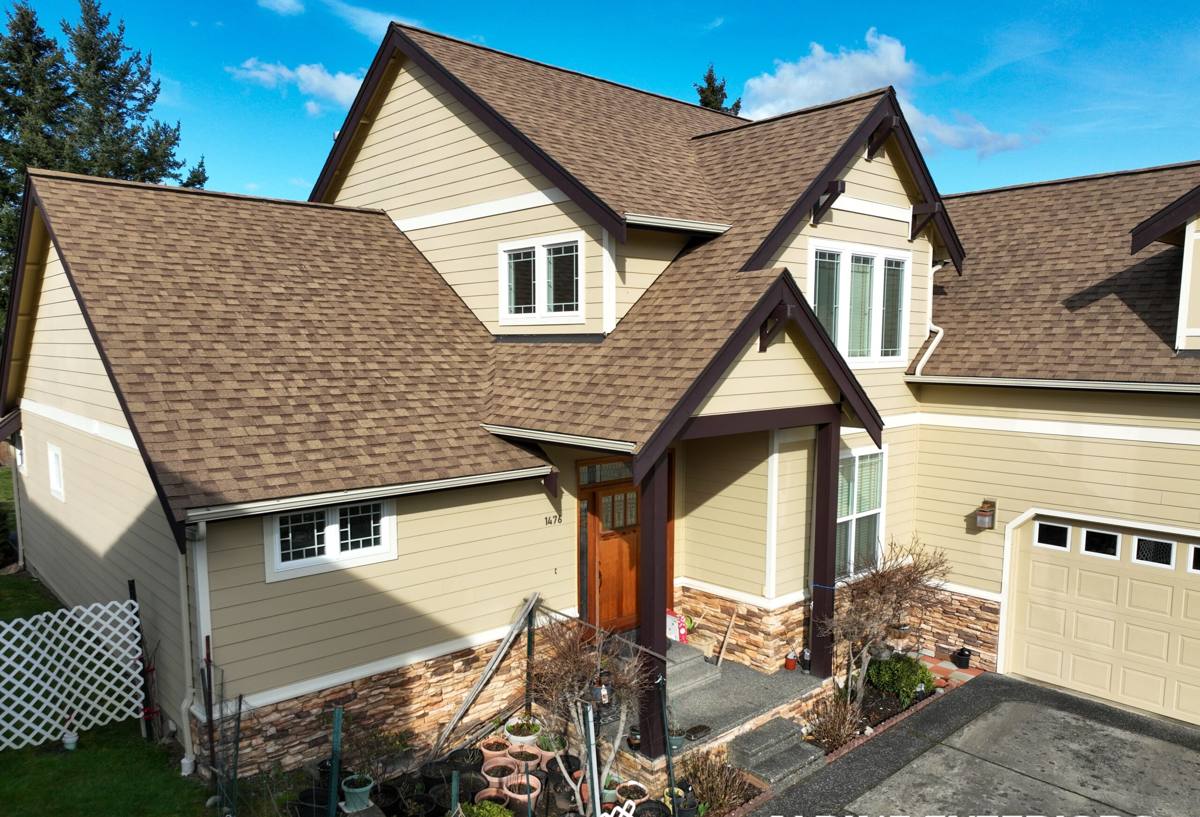
Repair or Replace? Reading the Signs on a Bellingham Roof
Not every roof problem means a full replacement, but in a marine climate, small issues left alone tend to compound fast because there's rarely a long dry stretch to let anything fully dry out between storms. Here's what typically tips a roof from "repair" into "replace" territory:
- Shingles that are cupping, curling, or losing granules in patches rather than just at the edges
- Moss or algae that keeps coming back within a season or two of cleaning, especially on north-facing slopes
- Soft or spongy spots underfoot, which usually mean the decking underneath has taken on moisture
- Daylight visible through the roof deck from the attic, or water stains on attic sheathing
- A roof that's 20+ years old and has never had the underlayment or flashing updated
- Granules collecting in gutters in noticeable amounts after normal rain, not just after a windstorm
- Multiple past repairs in different spots rather than one contained problem area
If you're only seeing one or two of these, a repair may genuinely be the right call — we'll tell you that plainly during an inspection rather than pushing a full replacement you don't need yet.
What a Correct Roof Replacement Actually Involves
A roof is a system, not a single layer of shingles. In a climate like Bellingham's, skipping or shortcutting any one layer is usually where problems start.
Tear-Off and Deck Inspection
We remove the existing roofing down to the deck rather than layering over old shingles. That's the only way to actually see the plywood or plank decking underneath and catch soft, rotted, or delaminated sections before they get sealed under new material. Any bad decking gets replaced before anything else goes down.
Underlayment and Ice-and-Water Shield
Given how much sustained rain this area gets, we use a synthetic underlayment across the full roof rather than older felt paper, which absorbs moisture and breaks down faster under repeated wet-dry cycles. Self-adhering ice-and-water shield goes in at vulnerable spots — eaves, valleys, around chimneys and skylights — as a second line of defense in the places wind-driven rain is most likely to find a way in.
Flashing Details
Flashing around chimneys, vents, skylights, and roof-to-wall transitions is where most leaks actually originate, not the field of the roof itself. We replace flashing rather than reusing old pieces, and pay particular attention to step flashing at wall intersections, since driving rain in this area tends to find any gap left by shortcut flashing work.
Ventilation
Balanced intake (soffit) and exhaust (ridge) ventilation keeps the attic space closer to outdoor temperature and moisture levels. That matters here because poor ventilation traps humidity in the attic, which condenses on the underside of the decking and accelerates rot from the inside — a problem you won't see until it's already advanced.
Choosing a Roofing Material for Whatcom County Weather
There's no single "best" roofing material — the right choice depends on your home, your budget, and how much maintenance you want to take on. Here's how the common options stack up against this specific climate:
| Material | Moss/Algae Resistance | Driving Rain Performance | Maintenance | Typical Lifespan |
|---|---|---|---|---|
| Architectural (dimensional) asphalt shingle, algae-resistant | Good, especially with copper/zinc granule blends | Very good when properly flashed | Low to moderate | 25–30 years |
| Standard 3-tab asphalt shingle | Fair — more prone to moss in shaded areas | Adequate | Moderate | 15–20 years |
| Metal (standing seam or panel) | Excellent — sheds moisture, little surface for moss to grip | Excellent | Low | 40–50+ years |
| Cedar shake | Poor without regular treatment — retains moisture | Good if maintained | High | 20–30 years with upkeep |
For most Bellingham homes, we lean toward algae-resistant architectural shingles as the practical middle ground, or metal roofing for homeowners who want to largely stop thinking about moss and maintenance for decades. We generally steer away from untreated cedar shake as our standard recommendation in this climate — not because it can't look good, but because keeping it moisture-resistant here requires more upkeep than most homeowners want to commit to, and we'd rather set that expectation up front than have it become a maintenance burden later.
What Drives Roof Replacement Cost in Bellingham
Every roof is different, so we won't quote a number without seeing yours — but these are the factors that actually move the price, in rough order of impact:
| Factor | Why It Matters |
|---|---|
| Roof size and pitch | Steeper roofs take longer to work safely and use more material overlap |
| Number of existing layers | Tear-off of multiple old layers adds labor and disposal cost |
| Decking condition | Rotted or soft decking sections need replacement before roofing can go down |
| Material choice | Standard shingle, upgraded algae-resistant shingle, and metal all sit at different price points |
| Roof complexity | Valleys, dormers, chimneys, and skylights each add flashing work and time |
| Access | Trees, tight lot lines, or steep site grading can affect staging and disposal |
Homeowners often assume material is the biggest cost driver, but decking condition and roof complexity frequently matter more — which is exactly why a proper inspection before quoting matters more than a phone-estimate.
Our Roof Replacement Process
- Inspection and estimate. We get on the roof, check the decking, flashing, and ventilation, and give you a straight answer on repair vs. replace along with a written estimate.
- Material selection. We walk through the tradeoffs for your home and budget rather than defaulting to whatever's cheapest to install.
- Tear-off and deck repair. Full removal of old roofing, inspection of the deck, and replacement of any compromised sections.
- Underlayment, ice-and-water shield, and flashing. The layers that actually keep water out, installed before a single shingle goes down.
- Roofing installation. Installed to manufacturer specifications so your warranty stays intact.
- Ventilation check. Confirming soffit and ridge ventilation are balanced for the finished roof.
- Cleanup and walkthrough. Full site and gutter cleanup, then a walkthrough so you know exactly what was done and what to expect going forward.
Long-Term Care: Moss, Algae, and Salt Air
A correctly installed roof still needs occasional attention in this climate. Keeping gutters clear so water doesn't back up under the shingle edge, trimming back overhanging branches that keep sections of roof shaded and damp, and having moss gently removed before it works its way under the shingle tabs will all extend the life of any roof, regardless of material. Salt air also means metal components — flashing, fasteners, vents — benefit from corrosion-resistant coatings rather than bare or lower-grade metal, which is a detail worth confirming with any contractor working this close to Bellingham Bay.
Why a Local Ferndale Crew Matters for Bellingham Homeowners
We work Whatcom County roofs year-round, which means we're used to scheduling around the region's rainy stretches instead of being caught off guard by them, and we know which flashing and ventilation details actually hold up to this specific combination of salt air, sustained rain, and moss pressure. A crew based an hour or more away doesn't have the same day-to-day read on how local weather patterns affect roofing decisions, and they're a longer drive away if something needs a follow-up look after a storm. Being local isn't a marketing line for us — it's the reason we make the material and installation choices we do.
If you're weighing a repair against a full roof replacement, or just want an honest read on where your roof currently stands, we're happy to take a look. Reach out for a free, no-pressure estimate using the form below.