 Ferndale
 Why Birch Bay Is Tougher on Windows Than Most of Whatcom County
Birch Bay sits right on the water, and that changes what a window has to survive year after year. Homes just a few miles inland in Ferndale deal with plenty of rain, but they don't get the same steady dose of salt-laden air coming off the bay. That combination — salt, wind-driven rain, and a moss season that can stretch from October through May — is why windows in Birch Bay tend to fail earlier than the same product would in a drier, more sheltered part of the county.
Salt Air and Hardware
Salt in the air doesn't just sit on the glass. It settles into window tracks, latches, hinges, and screen frames, where it speeds up corrosion on anything metal. Cheaper hardware pits and seizes up faster near the water. Aluminum components that would last decades in a landlocked neighborhood can start showing white corrosion or stiff operation within a handful of years on a bay-front or near-bay property.
Driving Rain and Wind Pressure
Storms coming off the Strait of Georgia and Georgia Strait hit Birch Bay with wind-driven rain that doesn't just fall on a window — it gets pushed sideways into it. That kind of pressure finds every weak seal, every gap in flashing, and every spot where caulk has started to crack. A window that's merely "watertight" on a calm day can still leak during a January wind event if the installation wasn't built for lateral water pressure.
Moss, Mildew, and Prolonged Dampness
Whatcom County's long wet season keeps wood trim, sills, and surrounding siding damp for months at a time. Moss doesn't just grow on roofs — it takes hold on north-facing sills and in shaded window wells, holding moisture against wood and paint. Over time that moisture works its way into any gap in the seal, and once water gets behind a window frame, rot can spread into the surrounding wall framing before anyone notices from inside the house.
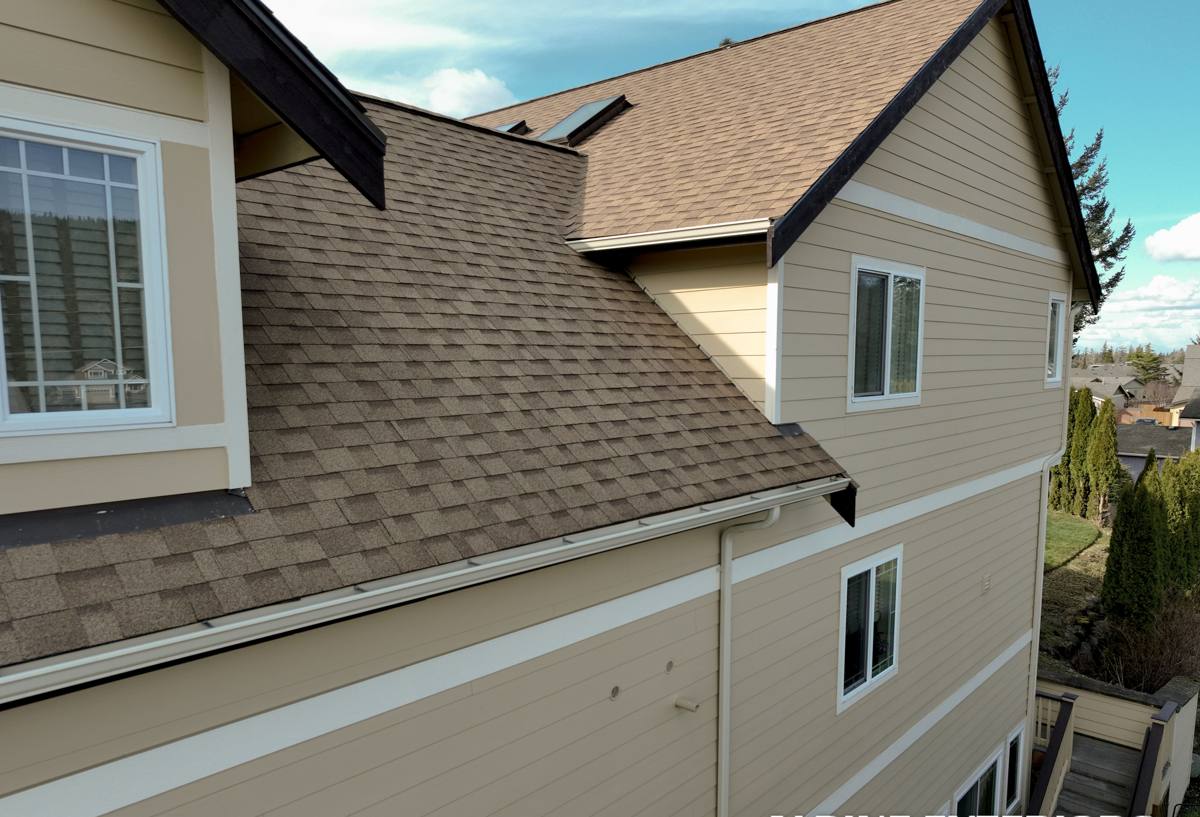
Signs a Birch Bay Home Needs Window Replacement
Not every drafty window needs full replacement — sometimes it's a caulking or weatherstripping fix. But in a marine environment, certain signs point to a problem that repair won't solve.
- Fogging or moisture trapped between panes (the seal has failed and can't be repaired)
- Soft, spongy, or discolored wood at the sill or bottom corners of the frame
- Visible corrosion or chalky white buildup on metal hardware or frames
- Windows that are difficult to open, close, or lock — a sign the frame has swollen or warped
- Persistent drafts or a noticeable temperature difference near the window on windy days
- Moss or dark staining building up on the sill or the siding directly below the window
- Paint that keeps peeling or bubbling on the interior or exterior trim, even after repainting
- Noticeably higher heating bills without any other explanation
If you're seeing two or more of these on the same window, replacement is usually the more cost-effective route than another round of caulk and paint.
What a Correct Window Replacement Job Actually Involves
The window itself is only part of the equation. In a high-moisture, salt-air environment like Birch Bay, how the window is installed matters as much as what brand it is. A good window installed poorly will leak. A mid-grade window installed correctly will often outperform it.
Removing the Old Window Without Damaging the Opening
The rough opening — the framed hole the window sits in — needs to come through removal intact. Rushing this step, or prying out an old frame carelessly, can crack siding, tear existing weather barrier, or widen gaps that then have to be patched instead of sealed properly the first time.
Flashing and Weatherproofing
This is the step that determines whether a window leaks in five years or twenty. Proper installation means flashing tape and weather-resistant barrier are layered correctly — bottom to top, like shingles — so any water that gets behind the exterior cladding drains out and away from the wall framing instead of pooling at the sill. In a driving-rain climate, sill pan flashing at the bottom of the opening isn't optional; it's the difference between water draining out and water sitting against wood.
Insulation and Air Sealing
Gaps around the new frame get filled with low-expansion foam or backer rod and sealant, not stuffed with fiberglass insulation alone. Fiberglass batting doesn't stop air movement or bulk water the way a proper seal does, and a gap that's insulated but not air-sealed will still feel drafty.
Trim, Caulk, and Finish Work
Exterior trim and caulking are the last line of defense, not the first. Caulk that's asked to do the job flashing should have been doing will fail early, especially with the UV exposure and temperature swings common on the water. We finish with the assumption that some water will eventually reach the flashing layer — because in this climate, over enough years, it does — and the whole assembly is built to manage that, not just to look sealed on install day.
Choosing the Right Frame Material for a Salt-Air, High-Rain Environment
Frame material has a bigger effect on long-term performance near the bay than most homeowners expect. Here's how the common options hold up under Birch Bay conditions specifically:
| Frame Material | Salt Air / Corrosion Resistance | Maintenance | Typical Lifespan Here |
|---|---|---|---|
| Vinyl | Good — won't rust or corrode; UV-stable formulations hold up well | Low — occasional cleaning of tracks | 20–30 years |
| Fiberglass | Excellent — dimensionally stable, resists corrosion and warping | Low | 30+ years |
| Aluminum | Poor to fair unless marine-grade and well-coated — prone to pitting near salt air | Moderate to high | 15–20 years near the water |
| Wood / Wood-clad | Fair — needs a sound exterior cladding and consistent upkeep to protect the wood core | High — repainting/resealing on a regular cycle | Varies widely with maintenance |
We don't push a single "best" material on every job — a wood-clad window with proper cladding and a disciplined maintenance schedule can still be the right call for a homeowner who wants that look. But we'll tell you honestly what upkeep it needs to hold up on a bay-exposed wall, rather than let you find out the hard way.
Our Process for a Birch Bay Window Replacement
- On-site assessment. We look at each window's exposure — bay-facing walls, shaded/mossy areas, and existing sill or frame damage get evaluated separately, since a north wall and a bay-facing wall on the same house can be in very different condition.
- Honest scope and estimate. You get a clear picture of which windows need full replacement versus which can wait, and what frame/glass options fit your budget and the exposure of that specific wall.
- Careful removal. Old windows come out without damaging the rough opening, siding, or interior trim any more than necessary.
- Inspection of the opening. Any hidden rot, soft framing, or failed weather barrier found once the old window is out gets flagged and addressed before the new window goes in — not covered over.
- Proper flashing and sealing. Sill pan flashing, weather barrier integration, and air sealing are done to shed water outward, built for wind-driven rain, not just a calm-day install.
- Install, level, and secure. The window is set, shimmed, and fastened so it operates smoothly and the frame stays square as the house settles.
- Interior and exterior finish. Trim, caulk, and paint or stain are completed to match the surrounding work.
- Final walkthrough. We test operation, check the seal, and go over basic care with you before we call the job done.
Cost Factors for Window Replacement in Birch Bay
There's no single number that applies to every home, but the main variables that move the price are consistent. Broadly, homeowners in this area should expect a range that depends heavily on frame material, window size, and how much of the surrounding wall needs repair — a straightforward swap into a sound opening costs far less than a replacement where rot repair or resizing is involved.
- Frame material — vinyl is typically the most budget-friendly; fiberglass and wood-clad cost more upfront but bring different maintenance profiles
- Glass package — double-pane versus triple-pane, and low-E coatings, affect both cost and energy performance
- Window size and configuration — larger picture windows or multi-panel bay/bow configurations cost more than standard single or double-hung units
- Condition of the opening — hidden rot or water damage discovered on removal adds repair cost, but skipping that repair just guarantees a failure later
- Number of windows done at once — bundling several windows into one project is usually more cost-effective than doing them one at a time over several years
- Access and second-story work — harder-to-reach windows take more labor time
We'd rather walk your specific windows and give you real numbers than quote a range that doesn't mean much for your house.
Why Hiring a Crew That Already Works Birch Bay Matters
A window installer who mostly works inland jobs may not think twice about sill pan flashing or corrosion-resistant hardware, because most of their projects don't need to. A crew that regularly works properties in Birch Bay and along the Whatcom County shoreline treats those details as standard practice, not upgrades — because we've seen what happens when they're skipped: sills that rot from the inside out, hardware that seizes within a few winters, and caulk-only "fixes" that fail the first time a real storm rolls in off the water.
Local experience also means knowing which walls on a Birch Bay property typically take the worst exposure — usually west- and southwest-facing walls that catch the prevailing wind and rain — and which spots tend to stay damp long enough to grow moss even in a well-maintained home. That knowledge shapes how we sequence a job and where we spend extra care on flashing and drainage, rather than treating every window on the house identically.
Maintenance That Extends Window Life Near the Bay
A correctly installed window still benefits from a bit of seasonal attention in this climate. It's not a heavy workload, but skipping it shortens the life of even a good installation.
- Rinse salt residue off frames and glass a few times a year, especially on bay-facing windows
- Clear moss and debris from sills and window wells before it holds moisture against the frame
- Check and lubricate hardware (tracks, locks, hinges) annually so salt buildup doesn't seize moving parts
- Inspect exterior caulk lines each spring and fall for cracking or separation
- Keep gutters and downspouts clear so runoff isn't sheeting down over window heads
- Trim back vegetation that keeps a window shaded and damp for extended periods
Get a Straight Answer for Your Home
Every house on the bay wears its exposure differently — a window on a sheltered wall might have another decade left, while one on the windward side may already be past the point of a simple fix. If you're not sure which situation you're in, we're glad to take a look, walk you through what we find, and give you a straightforward, no-pressure estimate using the form below.