 Ferndale
 Windows Take a Beating in Sandy Point
Sandy Point sits close enough to the water that its homes deal with a different set of stresses than houses a few miles inland in Ferndale or elsewhere in Whatcom County. Salt-laden air, wind-driven rain coming straight off the water, and a wet season that stretches for months all work on a window's weak points — the frame corners, the sealant lines, the hardware, the flashing behind the trim. A window that would last decades in a sheltered inland yard can start failing years early out here if it wasn't installed with that exposure in mind.
This page is about window installation specifically for Sandy Point properties: what the climate actually does to windows and their installation, what a correct job looks like, and how we approach the work differently because we've done it in this exact area.
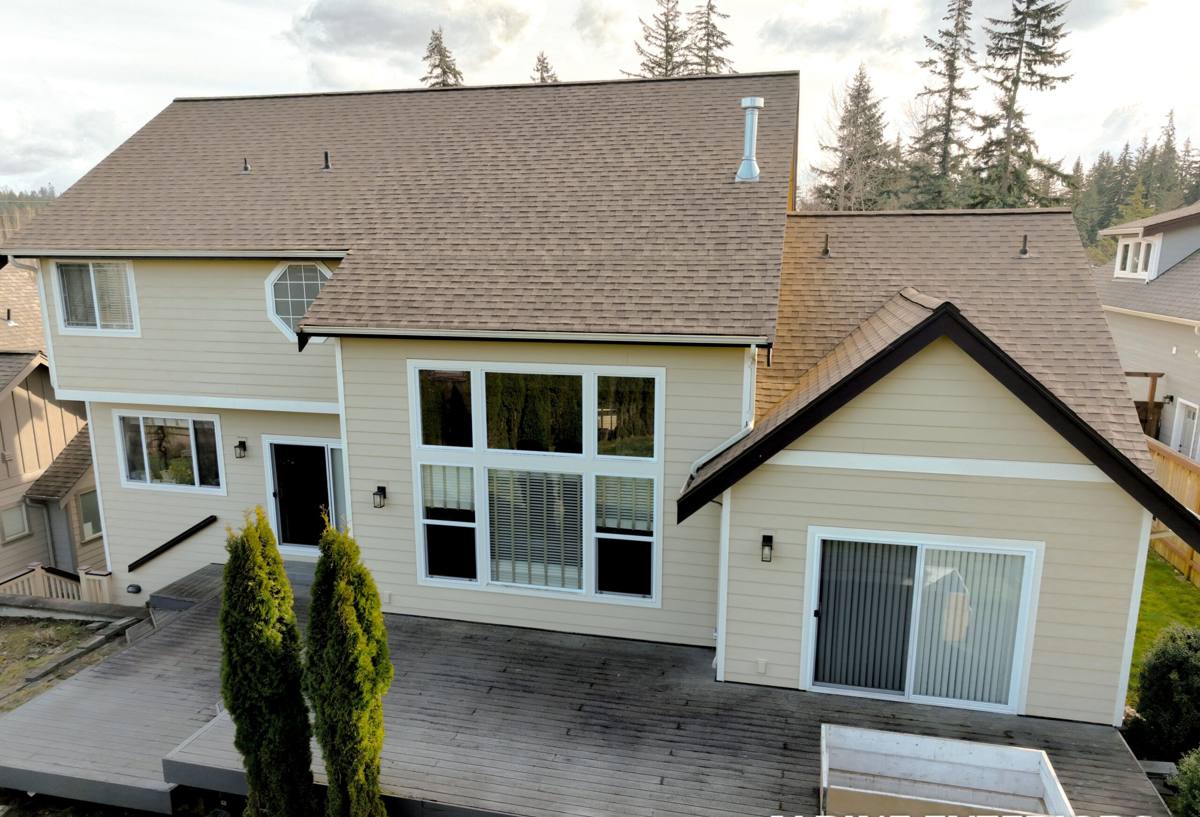
What the Local Climate Does to Windows
Salt Air and Metal Components
Airborne salt is corrosive to unprotected metal. Over time it attacks hinges, cranks, locking hardware, and screws — especially on the weather side of a house facing open water. Cheaper hardware finishes can start pitting or seizing well before the glass or frame shows any wear. This doesn't mean every metal part fails; it means hardware selection and finish quality matter more here than they would on a similar home set back from the shoreline.
Driving Rain and Water Intrusion
Rain that falls straight down is fairly easy to shed. Rain that's being pushed sideways by wind off the water is a different problem — it gets forced up under trim, into gaps around the frame, and behind flashing that wasn't lapped correctly. Most window leaks we find in this area aren't glass or frame defects at all; they're installation-detail failures where water found a path the flashing didn't account for.
A Long Moss and Moisture Season
Western Washington's wet months last a long time, and shaded or north-facing walls in Sandy Point can stay damp for weeks at a stretch. Moss, algae, and mildew growth around window trim and sills isn't just cosmetic — sustained dampness against wood trim or sheathing is what eventually leads to soft spots and rot if the water isn't being shed and drained properly.
What a Correct Window Installation Actually Involves
A window installation is really a small water-management project with a window in the middle of it. The window itself is only part of what determines whether it performs well for the next 20-plus years.
Flashing and Drainage
Every opening needs flashing that's lapped in the correct order — sill pan first, then side flashing, then head flashing — so that any water that does get past the exterior finish drains back out rather than into the wall. On a home exposed to wind-driven rain, we treat this step as non-negotiable, not optional trim work.
Sealant, Not Caulk-and-Hope
Sealant has a job: it's the last line of defense, not the first. Relying on a heavy bead of caulk to compensate for missing flashing is a shortcut that tends to fail quietly, behind the wall, long after the crew is gone.
Air Sealing and Insulation
The gap between the window frame and the rough opening needs to be filled with an appropriate low-expansion foam or backer rod and sealant — not stuffed with fiberglass insulation alone, which does little to stop air movement. Poor air sealing here shows up as drafts, condensation on cold mornings, and higher heating bills.
Level, Plumb, and Square
A window that's out of square will bind, won't lock properly, and will wear its weatherstripping unevenly. This is basic craftsmanship, but it's also the first thing that gets rushed on a job that's trying to move too fast.
Choosing a Window Built for This Exposure
There's no single "correct" window material for every home — it depends on the home's exposure, budget, and maintenance appetite. For Sandy Point specifically, we weigh corrosion resistance and moisture tolerance more heavily than we would inland.
| Frame Material | Salt Air / Coastal Performance | Maintenance | Typical Trade-Off |
|---|---|---|---|
| Vinyl | Good — won't corrode or rot | Low; occasional rinsing to clear salt residue | More limited color and hardware finish options |
| Fiberglass | Very good — dimensionally stable, resists corrosion | Low | Higher upfront cost than vinyl |
| Wood, unclad | Poor on exposed elevations without diligent upkeep | High — regular painting/sealing required | Best appearance, but a real maintenance commitment near salt air |
| Wood, aluminum- or fiberglass-clad | Good on the exterior face; interior still wood | Moderate | Good middle ground, but clad seams and hardware still need quality finishes |
Hardware finish matters as much as frame material. On any window going into a wall that takes direct weather off the water, we recommend corrosion-resistant hardware finishes over standard-grade options, even if it costs a bit more up front — it's cheaper than replacing seized cranks or locks in a few years.
Our Process for a Sandy Point Job
- On-site assessment — we look at each opening individually, not just the window itself. Sill condition, existing flashing, trim, and any signs of past water intrusion all factor into the plan.
- Honest scoping — if we find soft sheathing or trim rot behind an old window, we tell you before we start, not after we've already opened it up.
- Weather-aware scheduling — openings are only exposed to the elements for as short a window of time as possible, and we plan around forecasted wind and rain rather than pushing through it.
- Removal and opening prep — old flashing, damaged trim, or compromised sealant gets replaced, not sealed over.
- Correct flashing and sealant sequence — sill pan, side flashing, window, head flashing, sealant — in that order, every time.
- Install, shim, and air seal — set level and plumb, low-expansion foam or backer rod at the gap, interior air seal completed.
- Exterior trim and finish — trim reinstalled or replaced, caulked, and finished to shed water going forward.
- Walkthrough — we test operation, locking hardware, and check the exterior seal with you before calling it done.
Warning Signs We Commonly Find on Older Sandy Point Homes
If you're not sure whether your windows need attention, these are the signs we see most often on homes in this area that have been through a few decades of coastal weather:
- Soft or spongy trim or sill wood when pressed with a thumb
- Cranks, hinges, or locks that are stiff, gritty, or corroded
- Visible gaps or cracked caulk lines around the frame exterior
- Condensation or fogging between panes on double- or triple-glazed units
- Drafts near the window on a windy day even with it fully closed
- Moss, algae, or dark staining building up on the trim or sill
- Peeling paint or bubbling finish on wood trim near the frame
- Difficulty opening, closing, or latching the window smoothly
Keeping New Windows Performing Long-Term
A well-installed window still benefits from a little upkeep in a salt-air, high-moisture environment. Rinsing exterior glass and frames periodically clears salt residue before it can etch glass or dull hardware finishes. Keeping gutters and downspouts clear reduces water sheeting down over window heads. And a quick look at exterior caulk lines once a year — recaulking if they've cracked or pulled away — keeps the sealant doing its job as the first small line of defense it's meant to be, backed up by the flashing underneath it.
Why a Crew That Works This Area Regularly Matters
Window installation isn't exotic work, but installing correctly for wind-driven rain off open water is a different job than installing on a sheltered inland wall. A crew that regularly works Sandy Point and similar Whatcom County shoreline properties has already seen how flashing details, hardware choices, and trim materials hold up — or don't — in this specific exposure. That's the kind of judgment that shows up years later as a window that still operates smoothly and stays dry, rather than one that needs to be redone.
If Sandy Point has a homeowners' or community association with exterior guidelines, we're glad to work within those requirements as part of the project — just let us know up front so it's accounted for in the plan.
Get a Straightforward, No-Pressure Estimate
If you're dealing with drafty, foggy, or hard-to-operate windows — or you just want an honest look at what shape your current windows are in — we're happy to come take a look. Use the form below to request a free estimate, and we'll walk the openings with you and tell you plainly what we find.