 Ferndale
 Window Installation for Blaine Homes: What the Climate Demands
Blaine sits right up against the water, close enough to the Strait of Georgia and Semiahmoo Bay that salt-laden air is a fact of daily life, not an occasional nuisance. Add in the driving rain that comes sideways off Puget Sound during fall and winter storms, plus a moss season that can stretch from October well into spring, and you have a climate that is genuinely hard on window openings. Windows here don't fail because they're old — they fail because moisture found a way in years before anyone noticed, and by the time it shows up as a soft sill or a foggy pane, the damage is already behind the wall.
We're a Ferndale-based crew, and Blaine is inside our regular service area — not a stretch job we take once a year. That matters more than it sounds like it should, because window installation is one of those trades where local weather knowledge changes the actual technique, not just the sales pitch.
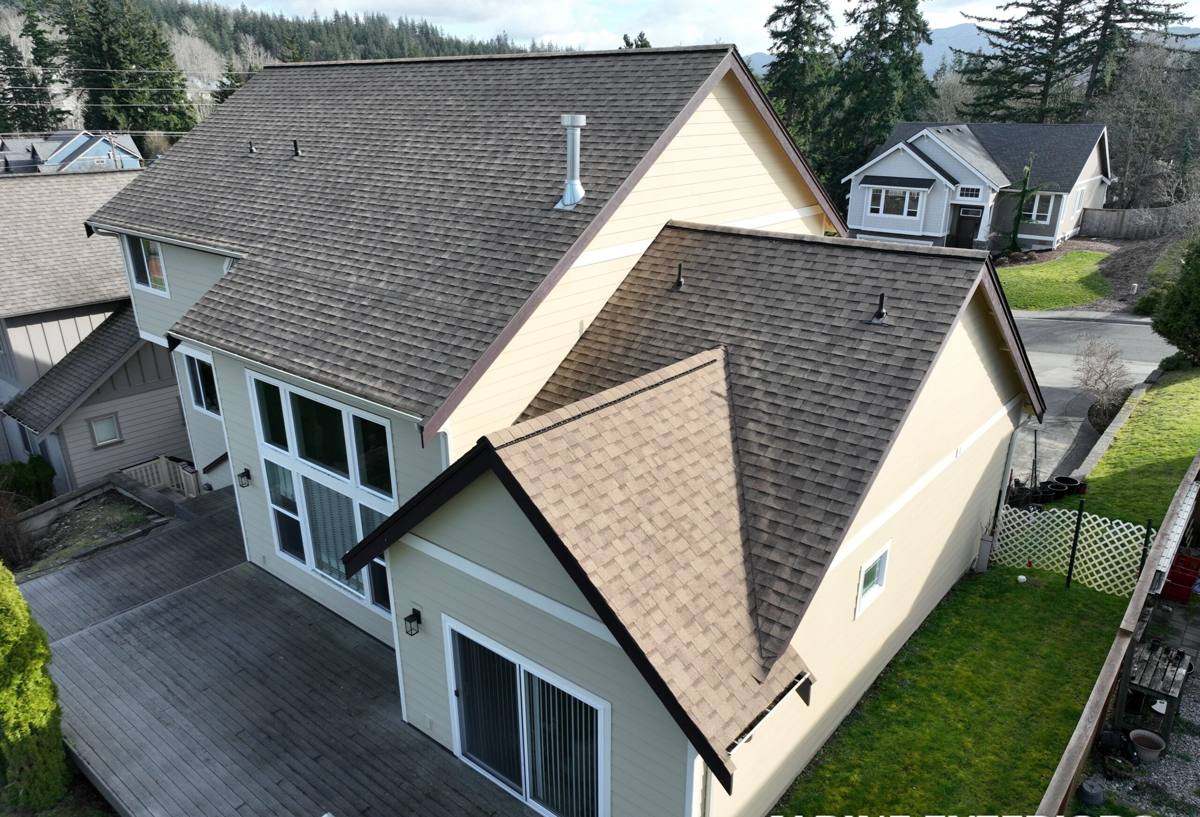
What Coastal Whatcom County Weather Does to a Window Opening
Salt Air and Corrosion
Airborne salt accelerates corrosion on anything metal — window fasteners, flashing, hardware, and especially lower-quality aluminum components. It also breaks down certain sealants and finishes faster than they'd wear inland. This is why material choice and hardware quality matter more in Blaine than they would twenty miles east.
Driving Rain and Water Intrusion
Wind-driven rain doesn't just fall on a window — it gets pushed sideways into any gap in the flashing or seal. A window that would perform fine in a calmer climate can leak in Blaine simply because the installation didn't account for wind-driven water finding the path of least resistance around the frame.
Moss, Shade, and Slow-Drying Walls
Many Blaine lots carry mature tree cover, which keeps siding and trim damp longer after a storm and gives moss a foothold on north-facing walls and window sills. Slow-drying wall assemblies mean any water that does get behind a window opening has more time to cause rot before it evaporates. Good installation reduces how much water gets in; good ventilation and drainage details reduce how long any that does get in stays there.
What a Correct Window Installation Actually Involves
A window installation is really a waterproofing job with a window in the middle of it. The window itself is usually the easy part — the flashing, sealing, and integration with the existing wall system is where quality is won or lost.
Removal and Opening Prep
Once the old window is out, the opening gets inspected for hidden rot, especially at the sill and lower corners, which is where water damage almost always shows up first in this climate. Any soft or compromised framing gets addressed before a new window ever goes in — installing a good window into a rotten opening just hides the problem for a few more years.
Flashing and Weatherproofing
Proper flashing directs water down and out and away from the wall cavity, not just around the window frame. This includes sill pan flashing, correctly lapped house wrap, and head flashing sequenced so each layer sheds water onto the layer below it — never the reverse. Given how much wind-driven rain Blaine sees, this sequencing is not optional detail work; it's the part of the job that determines whether the window is dry in ten years.
Setting, Shimming, and Sealing
The window has to be set plumb, level, and square, shimmed correctly so it isn't relying on the fasteners to hold its shape, and sealed with the right sealant for the substrate and exposure. An out-of-square window binds, doesn't lock tight, and lets in more air and moisture than a properly set one — even if it's the exact same window model.
Interior and Exterior Finish Work
Interior trim, insulation around the frame, and exterior caulking and trim all get finished so the window looks right and performs right. Skipping insulation around the frame is a common shortcut that shows up later as a cold draft or condensation ring around the window edge.
Choosing the Right Window for a Blaine Property
There's no single "best" window material — there's a best fit for a given home, budget, and exposure. Here's how the common options actually compare for a salt-air, high-rain coastal setting like Blaine.
| Material | Moisture & Salt-Air Behavior | Maintenance | Typical Lifespan |
|---|---|---|---|
| Vinyl | Won't corrode or rot; performs well in salt air | Low — occasional cleaning | 20–30 years |
| Fiberglass | Very stable in moisture and temperature swings; strong seal retention | Low | 30-plus years |
| Aluminum | Prone to corrosion and pitting in salt air unless heavily coated | Moderate to high near the coast | 15–25 years, shorter near salt exposure |
| Wood / Wood-clad | Attractive but needs a sound exterior clad or finish to resist coastal moisture | High — regular finish upkeep | Varies widely with maintenance |
For most Blaine homes, we steer people toward vinyl or fiberglass because they hold up to salt air and driving rain with the least ongoing upkeep. Wood-clad windows can still be the right call on a home where the look matters more than low maintenance, but we're honest about the trade-off going in: that finish needs attention, and skipping it in this climate shortens the window's life fast. Bare aluminum, without a strong protective coating, is generally something we steer away from this close to the water — not because it can't work, but because the maintenance burden and corrosion risk are higher here than they'd be inland.
How Our Process Works
- Free on-site estimate — we look at your current windows, the openings, and any signs of past water intrusion, and talk through what fits your home and budget.
- Written scope and pricing — you know exactly what's being replaced, what materials are used, and what the flashing and sealing plan looks like before any work starts.
- Opening inspection at removal — if we find hidden rot or damage once the old window is out, we tell you before proceeding, not after the fact.
- Installation — proper flashing, shimming, insulation, and sealing, done to hold up against Blaine's wind-driven rain and salt air.
- Final walkthrough — interior and exterior finish checked, windows operate smoothly, and the site is cleaned up.
Why a Crew That Already Works Blaine Matters
Window installation done right depends on understanding the specific way weather attacks a building in a specific place. A crew that mostly works dry, inland jobs may not default to the flashing detail or sealant choice that a coastal, high-wind-driven-rain area like Blaine actually needs — not out of carelessness, just because it's not what they see day to day.
Being based in Ferndale means we're not learning Whatcom County's coastal weather patterns on your project. We see the same salt-air corrosion, the same driving-rain leak points, and the same moss and shade issues on homes throughout this stretch of the county, and we build the installation around those realities from the start. It also means if a question comes up after the job — a settling sound, a question about care — we're a short drive away, not a company that was passing through.
Signs Your Current Windows Need Attention
Not every window problem means a full replacement, but these are the signs worth having looked at, especially given how much moisture Blaine's climate puts against a home:
- Fogging or condensation between panes of a double-pane window (a sign the seal has failed)
- Soft, discolored, or bubbling trim or sill wood around the window
- Visible gaps, drafts, or daylight around the frame when the window is closed
- Difficulty opening, closing, or locking the window smoothly
- Moss or persistent green staining building up on the sill or lower trim
- Noticeably higher heating bills with no other explanation
- Peeling paint or swelling on interior trim near the window
What Affects the Cost of Window Installation
Every home is different, so we don't quote sight unseen, but the main factors that move price up or down are consistent:
- Window material — vinyl is typically the most budget-friendly, fiberglass costs more upfront but often less over its lifespan, wood-clad costs more and adds ongoing maintenance
- Opening condition — hidden rot or framing damage found during removal adds repair work before the new window can go in
- Number and size of windows — larger openings and specialty shapes take more time and material
- Access and site conditions — second-story or hard-to-reach windows take longer to work safely
- Full-frame vs. insert replacement — a full-frame replacement (removing down to the studs) costs more than an insert but is often the right call when there's water damage to address
As a broad range, homeowners in this area typically see window installation priced anywhere from a few hundred dollars per window for a straightforward insert replacement to well over a thousand per window for larger units, premium materials, or full-frame work with repairs. The only way to know what your home actually needs is a look at the openings in person.
Get a Straight Answer, Not a Sales Pitch
If you're dealing with drafty, foggy, or hard-to-operate windows on a Blaine property, it's worth having someone look at the actual openings before assuming you need a full replacement — sometimes it's a smaller fix. We offer free, no-pressure estimates, and we'll tell you honestly what your windows need, whether that's full replacement, a partial fix, or just a few more years of life. Reach out using the form below to get a local crew's honest read on your windows.